Why shifting dogs to shelters in Delhi-NCR became the national headline?
A thread.
#Delhi#StreetDogs#IndiaNews
Free link (no signup required!) to the full story: https://t.co/YLOfIbOgDM
At Dot, we try to build an experience that feels like an extension of our stories: simple, friendly and thoughtful. It’s one of the things that sets us apart. (Unlike many of our competitors, we’ve had dark mode and offline reading since day one. Just saying!)
Over the past couple of months, we’ve been keeping track of all the features, fixes, and improvements you’ve asked for, and have been steadily working our way through the list.
Just last week, we rolled out an update across the website and our iOS and Android apps. If you haven’t already, go ahead and update them from the App Store! Some of these changes are big, others are subtle, but all of them are here to make your time with Dot a little better.
Dot is yours as much as it is ours, and many of our best ideas have come directly from you! Thanks for reading (or listening), and for being part of this growing little world.
Find the complete list of updates on "A Whole Bunch of New Things at Dot", and let us know what you liked best in the replies!
Read it here: https://t.co/fH9np943ah
#DotNews #BetterJournalism
Reddit’s CEO recently pledged that the site “will remain written by humans and voted on by humans.” And we found that statement to be really intriguing.
1/n
#DotExplains#Reddit#WhyItMatters
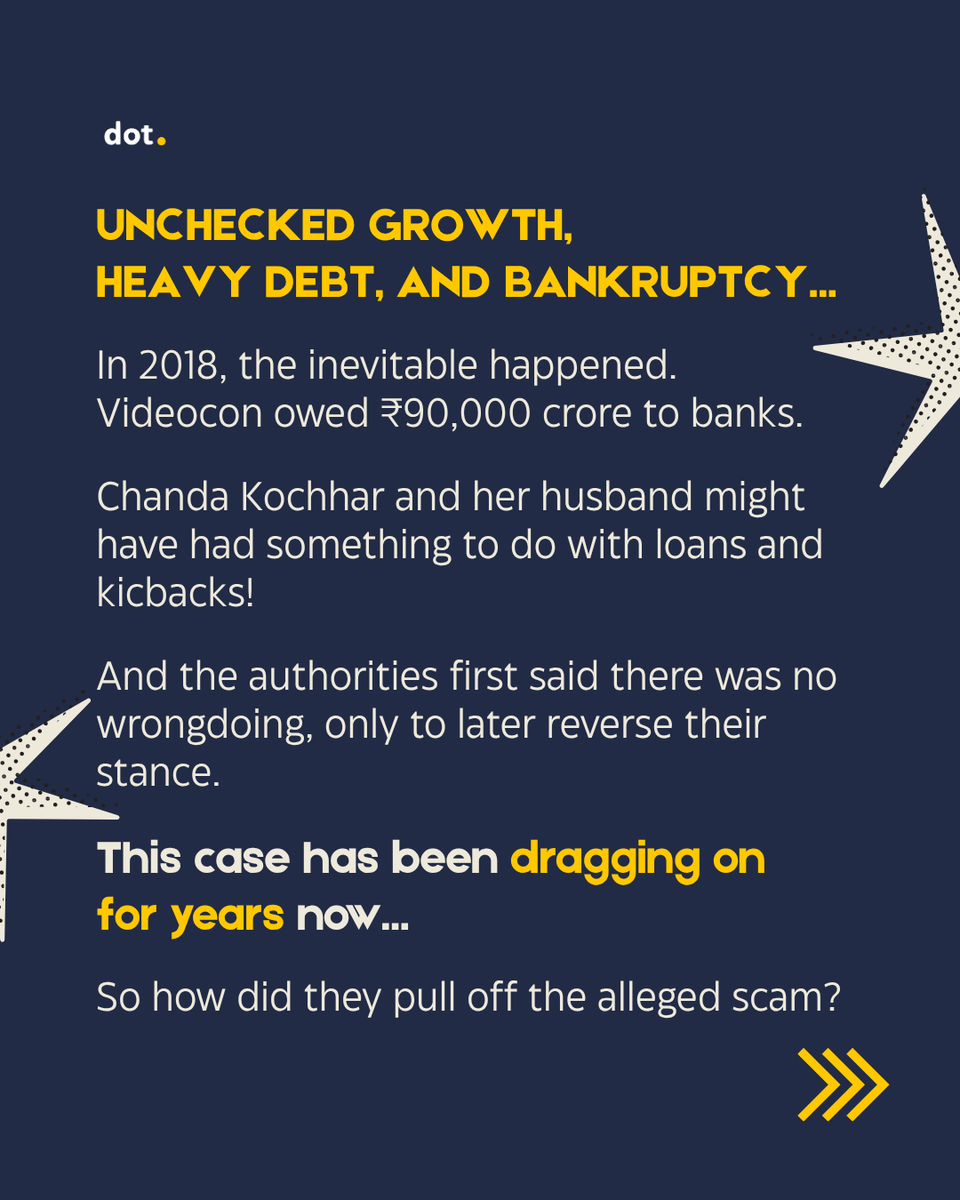
"Appellate Tribunal Upholds Seizure Of Ex-ICICI Bank CEO Chanda Kochhar's Assets In Videocon Loan Case."
That’s the headline screaming across financial news platforms this week.
So what exactly happened? And why are these two names in the news?
It gets a bit twisty, but we've broken it down into a simple and friendly explainer of an alleged scam that throws up some big questions, about governance, greed, and what happens behind closed doors. Let's dive in!
Read or listen to "Dirty Laundry & Clean Cheques" on the Dot app.
https://t.co/nkP5vgNpxz
#DotExplains #ICICIBank #ChandaKochhar #Videocon #ICICIVideoconLoan #WhyItMatters
Every Sunday we step away from the news cycle to talk about things — mundane or extraordinary — that you might wonder about on a lazy afternoon.
If you’re a millennial or older, you probably know what an analog camera was. Of course, back then, they were just called cameras. The word “analog” came later, once digital ones took over.
These cameras used tiny reels of film, which meant you only got a handful of shots. You had to plan it well, get everyone in the frame, and hope no one blinked. Then came the long wait. ‘Developing’ the film took days. But when the glossy prints finally came back, they became permanent fixtures in your family albums!
Today, we’ll talk about those cameras. How did they actually work? And what happened to Kodak, the company at the center of the revolution, which somehow faded away quietly, almost poetically, like an old photograph left too long in the sun. Let’s dive in!
#DotExplains #SundayEdition #AnalogCameras #Kodak
“I have been speaking to Coca Cola about using REAL Cane Sugar in Coke in the United States, and they have agreed to do so. I’d like to thank all of those in authority at Coca-Cola. This will be a very good move by them — You’ll see. It’s just better!”
That’s US President Donald Trump for you.
“As part of its ongoing innovation agenda, this fall in the United States, the company plans to launch an offering made with U.S. cane sugar to expand its Trademark Coca‑Cola product range. This addition is designed to complement the company’s strong core portfolio and offer more choices across occasions and preferences.”
And that’s the Coca-Cola Company for you.
If you found it hard to make sense of either of them, don’t worry, because there’s always Dot for you!
At the center of it all is something called high-fructose corn syrup (HFCS), a sweetener that Coca-Cola and the government are now looking to (at least partially) replace. Why was it used in the first place? And why replace it now? And what does it mean for taste, health, and economics? Let’s find out!
Read or listen to the full story in “Can You Taste The Feeling?” on the Dot app.
https://t.co/2uXT0dDzek
#DotExplains #CocaCola #Sugar #USA
One of our Dotties, Dr. Bhargav, a professor at IIM Indore, wrote to us asking if we could break down the recent fuss over India’s inequality rankings.
It all started two weeks ago, when the Government of India’s Press Information Bureau (a body that shares information with the media) put out a headline-grabbing report: “World Bank Places India Among World’s Most Equal Societies.”
Right at the center was this statement: "India ranks fourth globally in income equality with a Gini score of 25.5."
Many rejoiced. Others were skeptical, as the ranking didn’t quite match what they were seeing on the ground. So what’s really going on here? And what’s this Gini thing anyway? Let’s break it down, Dot-style!
Read "The Gini Is Out of the Bottle" here: https://t.co/9Hb26AUZup
#DotExplains #GiniIndex #InequalityRankings #IncomeEquality #India
India's Ministry of Home Affairs (MHA) announced that preparations for Census 2027 have started. The census will be conducted in two phases, with reference dates of 1 March 2027 for most part of the country, and 1 October 2026 for the snow-bound Himalayan region. And this time, the census will include digital data collection as well as caste enumeration.
Politicians across party lines have both demanded as well as opposed a caste census for decades. After all, policies should be based on real numbers, not old estimates. And what better way to get that than through the Census?
But this story isn’t about political parties or whether caste-based reservations are good or bad (that’s a story for another day). It’s about a fundamental question: Why do we make policies based on caste but don’t actually count caste?
Let’s break it down, no sides taken!
Read or listen to "Broken People" for free today: https://t.co/lq88mBfeKR
#DotExplains #Census2027 #IndiaNews #WhyItMatters
Stray dog. Street dog. Community dog. Free-ranging dog. They all more or less mean the same thing.
If you’ve ever (and you certainly have) spotted a dog sleeping near a chai stall, chasing kids in the park, or just lounging by the roadside, you know who we’re talking about. These dogs technically belong to no one, or maybe, to everyone. And some might ask, why should they have to “belong” to anyone at all?
But lately, it looks like Man’s relationship with his best friend is going through a rough patch. At least, that’s what several headlines from this month seem to suggest.
◉ RWAs ask the government to take steps to tackle stray dog menace.
◉ Delhi HC asks state government to frame policy on rehabilitating stray dogs.
◉ Delhi Government looking for long-term solution to stray dog menace: CM Rekha Gupta.
So, is the stray dog situation really getting worse? What do the courts and the law have to say about it? And is there a way to deal with it that’s both legal and compassionate?
Let’s dig in with today’s story “Who Let the Dogs Out?”
https://t.co/NVZi81CXE5
#DotExplains #StrayDog #StreetDog #IndianPariahDog #Delhi #DogBiteCases #DelhiHighCourt #SupremeCourtOfIndia #NewsThatMatters
We think you'll love Dot, if you're someone who is curious about how the world works.
You'll find here, daily explainers for what really matters. One story (nearly) every day on relevant topics across policy, business, technology & culture etc. Stories for everyone, not just experts
Whatever your level of familiarity, you’ll never feel lost with our simple, 5-minute explanations.
No clickbait. No propaganda. No hysteria. A refreshingly different way to understand our world without the noise and nonsense. Beyond superficial information and facts, we help you connect dots across time and space to put things into perspective.
Affordable pricing that puts you before advertisers. Zero ads or sponsored posts.
Pay only ₹59 a month, after 1 month of free trial.
Checkout our website: https://t.co/Z0O68B40dg
or
Download the app now: https://t.co/6GUtP92jT1
India officially submitted its bid to host the 2036 Olympics to the International Olympic Committee (IOC) recently. PM Modi even called it the “nation’s dream” in his Independence Day speech last year.
Ahmedabad, the city chosen to host this mega event, has sports infrastructure projects worth ₹6,000 crore in the pipeline! Add to that the world’s largest stadium (controversially) named after the PM himself. And for the first time, IOC has allowed multi-city hosting, so there’s room for collaboration with cities like Mumbai and Delhi.
But this also brings back reminders of a cautionary tale from the last time we hosted a major international sporting event—the 2010 Commonwealth Games in Delhi. Sure, it gave us shiny new roads, bridges, and airport terminals, but it also made headlines for corruption scandals amounting to an enormous ₹70,000 crore.
Add to that the fact that from 1968 onward, every single Olympic Games has gone past its original estimates. It’s practically tradition at this point. This means the games either end up making a lot less profit than expected (if we’re being kind) or sink into losses (if we’re being more realistic).
Turns out, hosting the Olympics is a lot like competing in them— it takes a great deal of preparation and relentless persistence. Often, you end up losing. But sometimes, you win. So, the big question is: will it all be worth it?
#DotExplains #Olympics2036 #Ahmedabad #IndiaNews
Butter made from air.
That’s the ludicrous claim we came across recently and that sounded almost too good to be true.
But we did some digging. Turns out, it’s not science fiction. And it’s not limited to just science labs either.
It comes from a U.S.-based startup called Savor. And one of their investors and believers is a pretty smart guy named Bill Gates.
So how does this work? What problem is it solving? And is it safe to eat? Let’s find out!
The state elections in Bihar are set to take place later this year, and they’re already drawing plenty of attention. But this time, it’s not the usual suspects of poll promises, caste equations or fiery speeches. Instead, the spotlight has landed on something quite unexpected.
At the center of the controversy is the Election Commission of India (ECI) itself. Yes, really! And the reason is an ambitious exercise called the Special Intensive Revision, or SIR. What exactly makes it “special” and “intensive”? And what does the Supreme Court have to say about it?
Get ready to dive into a fascinating (and sometimes bewildering) tangle of paperwork, identity proofs, and the big question of who’s “franchised” and who isn’t. Don’t worry. We’ll keep it simple, friendly, and unbiased as always!
Read or listen : https://t.co/cUPPUbnvh7
Bihar elections are upon us, but what’s the debate about citizenship documents!?
Read or listen to a simple explainer at @www_dot_news : https://t.co/g4NHLXq49a