HE STOLE $60 MILLION AND THEN HAD TO WAIT 28 DAYS BEFORE HE COULD TOUCH IT.
that delay is the only reason any of this story exists.
2016. ethereum is eleven months old.
a project called The DAO launches — an investment fund with no managers, run entirely by code. you put in ETH, you get tokens, the token holders vote on where money goes.
people love it. it raises around 12 million ETH from more than 11,000 people. roughly $150 million. the largest crowdfund in history at that point, and close to 15% of all ether in existence.
the pitch was that code removes the need to trust anyone.
now the detail almost nobody remembers.
the bug was public before the attack.
researchers had written about a flaw in how these contracts handled repeated calls. it was discussed openly. the warning was six days old when someone used it.
17 june 2016. the attacker calls the withdraw function — and calls it again before the contract has finished updating his balance.
the contract keeps paying out against a balance it never decrements.
3.6 million ETH leaves. about a third of the fund. roughly $60 million.
and then nothing happens.
because the stolen funds land in a "child DAO" — a structure the contract itself created — and child DAOs carry a 28-day waiting period before anything can be withdrawn.
the thief had the money. he could not move it. and everyone could watch it sitting there.
what followed was four weeks of the strangest argument in crypto's history.
a group of developers who called themselves the robin hood group used the exact same exploit to drain the remaining funds before the attacker could come back for them. same attack, opposite direction.
the attacker, through an intermediary, published a letter claiming the ETH was a legal reward because he had only used the contract as written.
then he threatened to bribe miners — reportedly up to 1 million ETH and 100 BTC — to block any attempt to reverse it.
and the community had to answer a question nobody had ever faced.
the entire promise of the technology was that the record cannot be changed. no authority, no reversals, code is law.
but the code, as written, had just handed $60 million to a stranger. following the rules exactly.
so: do you honour the rule, or do you save the money?
20 july 2016, block 1,920,000. the network hard forks. the chain's state is rolled back to before the attack. roughly 85 to 89% of voting ETH supports it. the funds go into a recovery contract and holders get their ETH back.
but not everyone follows.
a minority keeps running the original chain — the one where the hack still stands, because to them reversing it destroyed the only thing that made it different from a bank.
that chain is ethereum classic. it still exists today. so does the attacker's 3.6 million, on that side of the split.
and here's the price of the principle: on the forked chain, that same 3.6 million ETH would be worth billions today. on ethereum classic, it's a fraction of that.
what to take from this:
→ "the code is the contract" sounds clean until the code does something nobody intended. then somebody has to decide, and that somebody is people
→ the bug was public six days before it was used. disclosure is not a fix. patching is
→ a delay saved this. a 28-day lock on large withdrawals is now standard practice, and it exists because of this incident
→ decentralised doesn't mean nobody is in charge. it means it's unclear who is, until the moment it matters
ten years on, the argument that split ethereum in two has never actually been settled. both chains are still running, and each one is a live answer to the same question.
save this for the next time someone tells you the blockchain can't be changed.
On 15 July 2020, three teenagers controlled Obama, Biden, Musk, Gates, Bezos and Apple at the same time.
Four steps. Not one of them was code.
They sold it for $117,000 — and that price is the most disturbing part. https://t.co/RqkZofIj1q
SHE RAISED BILLIONS ON A CRYPTOCURRENCY THAT DIDN'T EXIST. NINE YEARS LATER, THE FBI STILL CAN'T FIND HER
not a bad coin. not an overvalued one.
there was nothing underneath it at all.
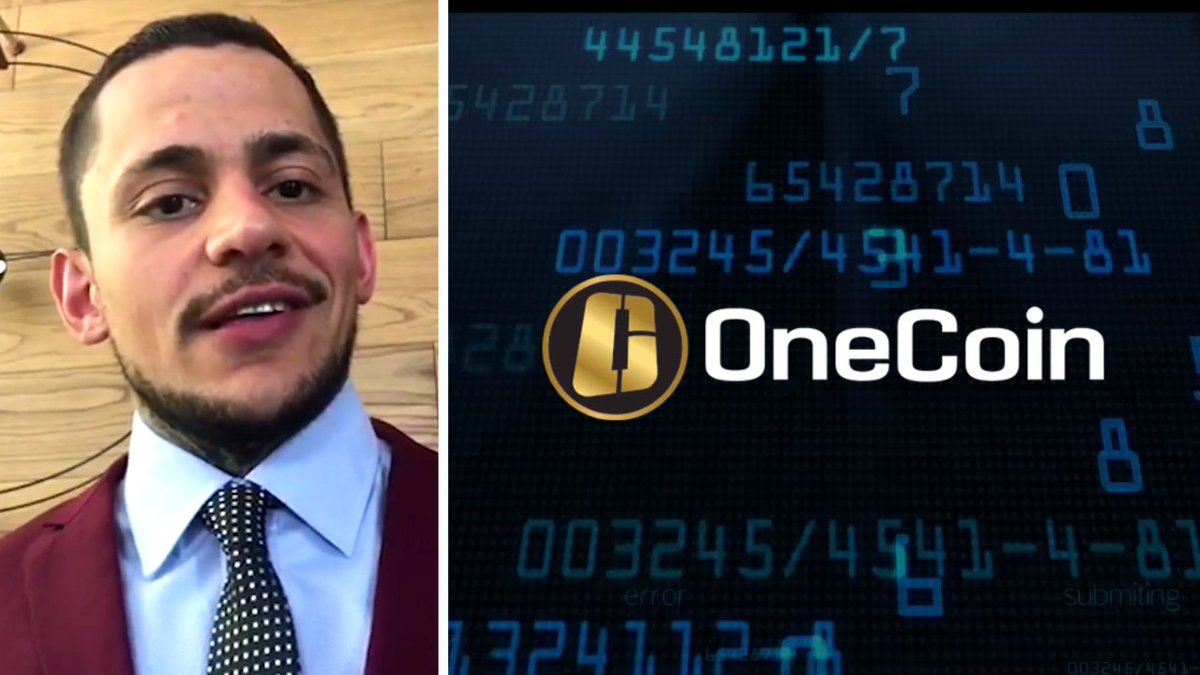
ruja ignatova had a law doctorate and a mckinsey line on her cv. in 2014 she stood on a stage and said onecoin would kill bitcoin.
then she filled wembley arena. walked out in a ball gown. the crowd screamed her name.
nobody in that building could do the one thing that would have ended it.
check the chain.
bitcoin's ledger is public. anyone can verify any transaction, right now, for free. onecoin had no public blockchain at all.
so where did the price come from?
the company. and it only ever went up.
that's the entire trick. no exchange. no order book. no buyer on the other side. the value lived in a spreadsheet owned by the people selling it.
and the pitch never sounded like crypto. you bought "educational packages" and the tokens came free with them. you brought in friends. you earned on what they brought in.
which meant the victims weren't traders. they were people who had never owned crypto and trusted the woman on stage.
prosecutors later put the take in the billions, across more than a hundred countries.
october 2017. the investigation is closing in. she boards a flight from sofia to athens.
that is the last confirmed sighting of her. nine years ago.
everyone around her fell. her brother pleaded guilty. her co-founder got 20 years. the lawyer who moved the money got ten.
she's on the fbi's ten most wanted list. there's a reward. investigators have theories.
none of them end with her in custody.
and people are still paying for it. the coin can't be sold. the packages can't be refunded. many of the biggest losers put in savings they were promised would double.
four things that would have caught it:
→ if you can't verify a transaction on a public chain yourself, you don't own crypto. you own a database entry someone else can edit
→ a price that only goes up isn't a strong asset. it's an unpriced one. real markets have sellers
→ getting paid to recruit people is the definition of a pyramid, whatever sits on top of it
→ credentials aren't diligence. the doctorate was real. the mckinsey line was real. neither said anything about the coin
bitcoin's actual breakthrough was never the price.
it was that nobody has to trust anybody to check the ledger.
onecoin sold the word "crypto" with exactly that part removed. a hundred countries didn't notice.
tomorrow: the exchange founder who died with the only password — and what investigators found when they finally opened the wallets.
save this. the check in the first bullet takes 30 seconds and would have saved every person in this story.
This video was supposed to find you in 2011, not 2026
Dude was mining Bitcoin in his garage back then, pulling like 2 BTC a day.
Absolutely insane story.
ROCKSTAR BUILT A WHOLE SOCIAL NETWORK IN GTA 6 AND GAVE YOU NO UPLOAD BUTTON.
The camera works. Snapmatic is back. The feeds are live and moving.
You just can't post to them.
Jason and Lucia are fugitives. A digital trail is the one luxury they don't get.
Fourteen years of GTA taught players that the phone is for showing off.
This one is for watching everyone else do it.
A 15-YEAR-OLD STOLE $24 MILLION WITH SOMEONE ELSE'S PHONE NUMBER. HE WAS NEVER CHARGED.
He didn't hack a bank. He didn't crack a password. He didn't write a single line of malware.
He got a phone number moved to a new SIM card.
That was enough.
January 7, 2018. Irvington, a quiet village 20 miles north of New York City.
Ellis Pinsky is 15. A former chess kid who grew up on Xbox Live, where he met people who talked their way into other people's accounts. Court records allege he'd been involved in cybercrime since he was 13.
His target: Michael Terpin. A crypto veteran. Co-founder of one of the first angel networks for digital currency startups. His firm had helped launch over 100 coin offerings.
If anyone knew how to protect crypto, it was him.
Here's how it went.
Pinsky bribed an employee at an AT&T authorized retail store. The employee bypassed security and moved Terpin's number to a SIM card Pinsky controlled.
Terpin's phone went dead. Every text meant for him now landed on a teenager's phone.
Pinsky clicked "forgot password." The reset codes came to him. He got into Terpin's Microsoft OneDrive.
Inside was a document with Terpin's crypto credentials.
Written down. In the cloud.
He emptied the wallets. About 3 million Triggers tokens. Roughly $24 million.
A Florida man named Nicholas Truglia provided an account to receive the coins, which were converted into Bitcoin. Truglia kept at least $673,000 for himself.
Pinsky ended up with 562 bitcoin, then worth close to $10 million.
What does a 15-year-old do with that?
A $50,000 Patek Philippe watch.
About $100,000 in cash, kept in a $40 safe from Amazon. Under his bed.
An $870 private jet flight on a discounted "empty leg."
That's his version.
Terpin's lawsuit tells a different one. Multi-million-dollar watches. Manhattan nightclubs. Private jets. It alleges Pinsky bragged about stealing more than $100 million from various victims, and told friends he was invincible and would never get caught.
Now the detail that should make you angry.
This wasn't the first time. Terpin had already reported a fraudulent SIM swap to AT&T in 2017. A federal court later found the 2018 loss was foreseeable.
Then the market stepped in.
Pinsky's lawyers reached out to prosecutors in 2019. In February 2020, he handed back the 562 bitcoin, the watch, and the cash from the safe.
By then, the bitcoin was worth under $2 million.
Terpin waited until Pinsky turned 18. Then he sued him for $71.4 million under racketeering law.
In 2022, Pinsky agreed to a $22 million judgment. No admission of guilt. He says he has nothing left. Terpin said he'd take the first $22 million Pinsky earns.
Criminal charges? None. The Justice Department confirmed it. Terpin says he was told why: Pinsky was a minor.
Pinsky later sat down with Rolling Stone. Hacking, he said, felt like a video game. Then it got real.
His words: "I was guilty, after all."
Truglia pleaded guilty. 18 months in federal prison. Over $20 million in restitution.
Then Terpin went after the phone company.
AT&T argued there are no guarantees in cybersecurity. A lower court agreed. In 2024, a federal appeals court unanimously reversed it, ruling a carrier can be liable when its security failures let hackers into customer accounts.
The case later settled.
What to take from this. Your phone number is not security. It's a key that a store clerk can hand to someone else.
1. Stop using SMS codes for anything with money. Use an authenticator app or a hardware key.
2. Call your carrier and turn on a SIM lock or port-out PIN. US rules adopted in 2023 require carriers to offer account locks.
3. Never keep seed phrases or passwords in a cloud document. Not Notes, not Drive, not OneDrive.
4. If it happened to you once, assume it will happen again.
One of the most connected people in crypto lost $24 million to a teenager with a bribe and a "forgot password" button.
The adult who provided the account went to federal prison. The kid who ran the heist went to college.