Okay this is genuinely insane.
SpaceX just unveiled a satellite whose only job is to run AI. Not internet. Not GPS. Just compute, floating in orbit.
It's called AI1, and the reason behind it breaks your brain.
AI data centers on Earth are hitting a wall, not a chip wall, a physics wall.
They need staggering amounts of power and water just to stay cool, and we're running out of grid and land to build them.
So Musk's answer is: stop building them on Earth.
In orbit, the sun never sets. Free power, 24/7. No water for cooling, you just radiate heat into the vacuum of space. The two things choking AI on the ground barely exist up there.
And here's the wild part: Musk says it's easier to build than a Starlink satellite. Strip out the complex antennas and it's "a lot of solar cells, a radiator, and some laser links."
One AI1 carries the compute of an Nvidia GB300 rack, the same hardware data centers fight over down here.
AI1 is just the first one. The plan is a constellation of up to a million of them.
And the timing isn't an accident, SpaceX goes public this week at a ~$1.75 trillion target. This isn't a rocket company anymore. It's positioning itself as the power grid for AI, in space.
The race for AI compute just left the planet. Literally.
@SpaceX
The SpaceX IPO is only the beginning.
The picks and shovels powering the space economy will create the next generation of billionaires.
Satellite management, ground stations, and ground support equipment all benefit from recurring contracts, government demand, and fragmented markets.
The US military has officially branded China’s most powerful civilian tech giants as military entities.
In a massive escalation of the tech cold war, the Pentagon finalized its annual Section 1260H update, formally designating Alibaba, Baidu, and BYD as "Chinese military companies" operating directly or indirectly within the United States. Washington asserts that these corporate giants are deeply entangled in Beijing’s military-civil fusion strategy, serving as conduits for the People’s Liberation Army to access cutting-edge civilian innovations in artificial intelligence, e-commerce, and electric vehicles.
While the designation does not impose immediate blocking sanctions on the private sector, it triggers a severe operational countdown for defense contractors and global supply chains. Beginning June 30, 2026, the Department of Defense is legally barred from securing or renewing contracts with any of the listed firms. Simultaneously, strict new defense regulations will penalize any US entities that engage lobbyists for these blacklisted Chinese firms, setting the stage for a sweeping indirect procurement ban in 2027 that will target any products containing their components.
The reputational and financial fallout is already vibrating through global markets, triggering an immediate drop in Alibaba’s stock as institutional investors scramble to reassess compliance risks. Although Alibaba, Baidu, and BYD have forcefully rejected the Pentagon's classification, asserting they are strictly independent commercial enterprises, Beijing is poised for a fierce diplomatic and economic response. The line between Chinese commerce and military power has been officially erased by Washington, forcing global enterprises to rapidly purge these entities from their networks.
#NationalSecurity #TechWar #Alibaba #Baidu #BYD #Pentagon #SupplyChain #Geopolitics2026
As someone who partially grew up among European elite kids like him, this reminds me just how incredibly hollow some of them are.
For a quick background, I went to one of the poshest high schools in France (Janson de Sailly, for those who know) and, afterwards, to what was at the time - and probably still is - the most expensive undergraduate school in Europe (EHL in Lausanne, Switzerland).
Needless to say, many of my classmates were from unbelievably privileged backgrounds. Just in my classroom in Lausanne I had the son of a (very famous) Russian oligarch, the son of Italy's largest real estate developer and the son of Spain's largest real estate developer (funnily, the latter two were flat mates).
Another classmate of mine came from the richest family in Naples, Italy and - while we were at school - his father (known in Naples under the nickname "Il Sultano") got arrested for having bribed half of Naples's city council - which, if you know Naples, ought to tell you something.
These were the kids I was doing group projects on business ethics with (literally) 😅
Anyhow, my story, and probably my luck, was that - before going to high school in Paris - I was raised in very normal public schools in the South of France where my friends were anything but wealthy. Their parents were farmers and everyday workers.
Which means - and I'd come to realize this was very important in life - that it was easy for me to understand how big a mistake it is to see money as identity and meaning - and to confuse someone's net worth with their actual worth.
What really struck me at the time was the contrast with my "poor" classmates of earlier in my life. They couldn't define themselves by what they had - by definition - and this forced them to reach deeper for their identity: their skills, knowledge, humor, etc.
Rich kids can skip that entire process, and the tragedy is that most of them do: they reach for the readymade identity that money provides. I remember being incredibly frustrated by many of my classmates, like "ok, I get it, your dad is rich and you own a lot of nice things but who are YOU, what else is there?" The answer, more often than not, was nothing.
To be fair, there were exceptions. One of my classmates I was most impressed by came from one of Zurich's wealthiest families (which, if you know Zurich, means insanely wealthy) yet he was almost OCD in not showing he had money: driving the shittiest car imaginable, living in a small studio, etc. He was very intellectual, very contrarian, and clearly at war with the idea that his family's wealth ought to define who he was.
I only discovered who he actually was when I started my first company and he approached me to invest: to discuss the investment I went to one of his family homes, which it turned out was a literal palatial castle on the shores of Geneva lake. The guy had decided to live in a small rundown studio when he literally had a castle sitting empty a 5-min drive away.
THAT I was impressed by: it's easy to see that money isn't meaning when you don't have any. To see it when you have more than almost anyone - when everyone around you is organized around the opposite assumption - is much harder. But to actually live it, to choose the studio when you have the castle keys in your pockets - with no audience to applaud you for that - that shows real depth.
At the end of the day, I think, the real distinction isn't between rich and poor but between people who exist from the inside out and people who exist from the outside in.
Wealth just happens to make it incredibly easy to be the latter, to skip the work of becoming someone and settle for a borrowed identity that glitters from the outside but is hollow all the way through. A Potemkin village identity.
This is actually a real societal issue, and magnified by social media (with idiotic posts like this one 👇): the more "outside in" folks out there, the less people with genuine internal anchors, the more fragile everything becomes.
When you think about it, everything that genuinely matters in a society is built by people who think for themselves: they take the world in, pass it through something genuinely their own, and give back something that didn't exist before: an idea, a conviction, a stand.
Every reform, every invention, every act of moral courage in history came from someone with an internal anchor strong enough to resist the current. Remove those people and all you have left is the current.
This isn't new, by the way. Most ancient traditions warn against exactly this, from the Bible (the golden calf story) to Confucius, who built his entire ethics around the distinction between the exemplary person (the Junzi, 君子) - oriented around internal cultivation and righteousness - and the petty person (Xiaoren, 小人), oriented around profit and gain. The junzi builds himself from the inside, the xiaoren chases what's outside.
So please, do not make the mistake of being impressed by wealthy people flaunting their wealth. Don't focus on the glitter, focus on the hollowness it's trying to hide.
Ultra High Net Worth Individuals (UHNWI) do own yachts for tax reasons, but not because they are a modern replacement for palaces.
Most of the world runs residency-based taxation. As in, if you stay over 183 days somewhere you become a taxable base. The US is the outlier, as it taxes you regardless of where you live, based on citizenship.
That difference produces two entirely distinct wealth architectures.
European UHNWI have a structural incentive to stay mobile. Not being in one place too long is itself a tax strategy. Yachts happen to serve that lifestyle perfectly - flag-registered in favourable jurisdictions, moving between anchorages, never accumulating residency days (and benefiting from things like Cypriot 2 month stay non-dom status). The tax regime does not cause yacht ownership, but it makes yachts a remarkably efficient asset class for people whose wealth depends on being nowhere in particular.
This is why European UHNWI do a yearly circuit - Wimbledon one week, Cannes another, the WEF, the Biennale. The social calendar is not separate from the tax strategy. They are the same thing. This also mirrors the itinerant courts of the past, where the aristocracy would move around from one part of the kingdom to another throughout the year, according to king's mood.
American UHNWI face the opposite constraint. Citizenship-based taxation means mobility cannot solve the problem. So they optimise differently - dynasty trusts, LLCs, state domicile arbitrage. They are not less sophisticated. The same economic incentive just produces a completely different behavioural output when the underlying regime changes.
QF ini berat.
Ada kating gw MA17, sekarang lagi fokus di QF dan dia emang jenius.
Kalau memang tertarik bisa baca2 dan perdalam mathnya.
(Karena gw cmn manusia biasa) mungkin mathnya:
- teori peluang
- statistika math
- kalkulus
- proses stokastik
- kalkulus stokastik
Dsb
again the most import list for anyone who wants break into AI labs which have potential to be next OpenAI or Anthropic!!
without PhD this is the most practical guide https://t.co/01jEZ8gNf6
There was Chinese PhD student who wrote a dissertation on this in the 2000s. American and Taiwanese chip makers were not interested. Guess where he went after 2019
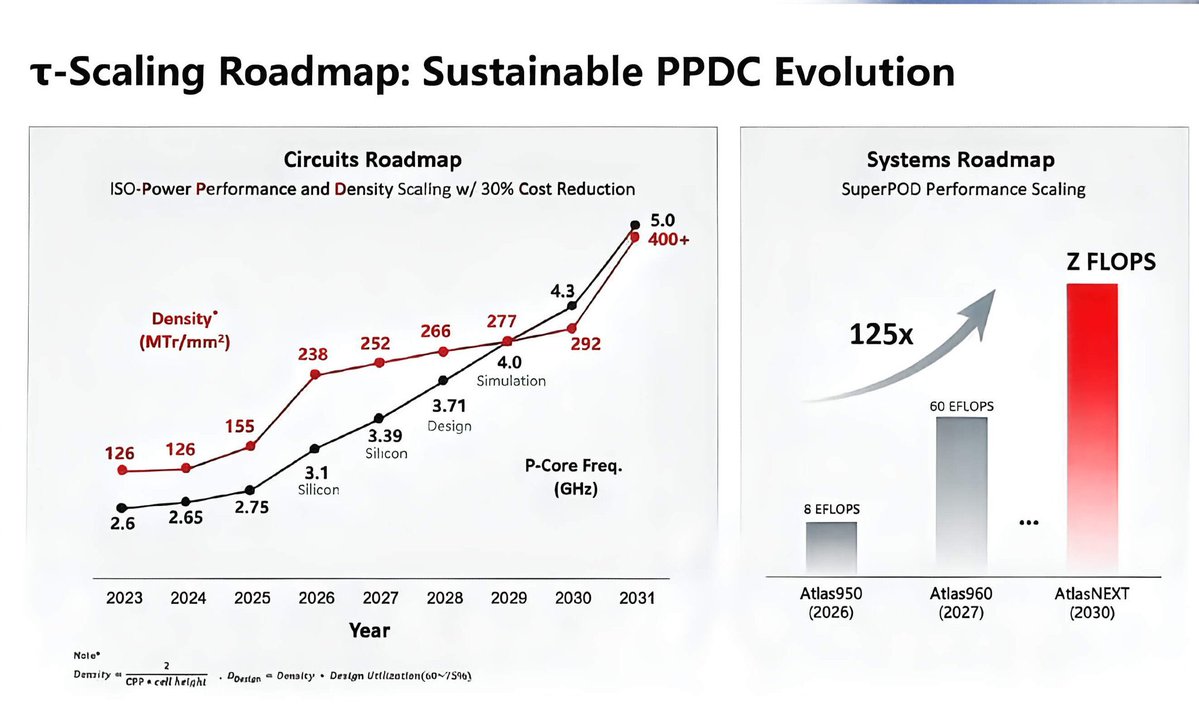
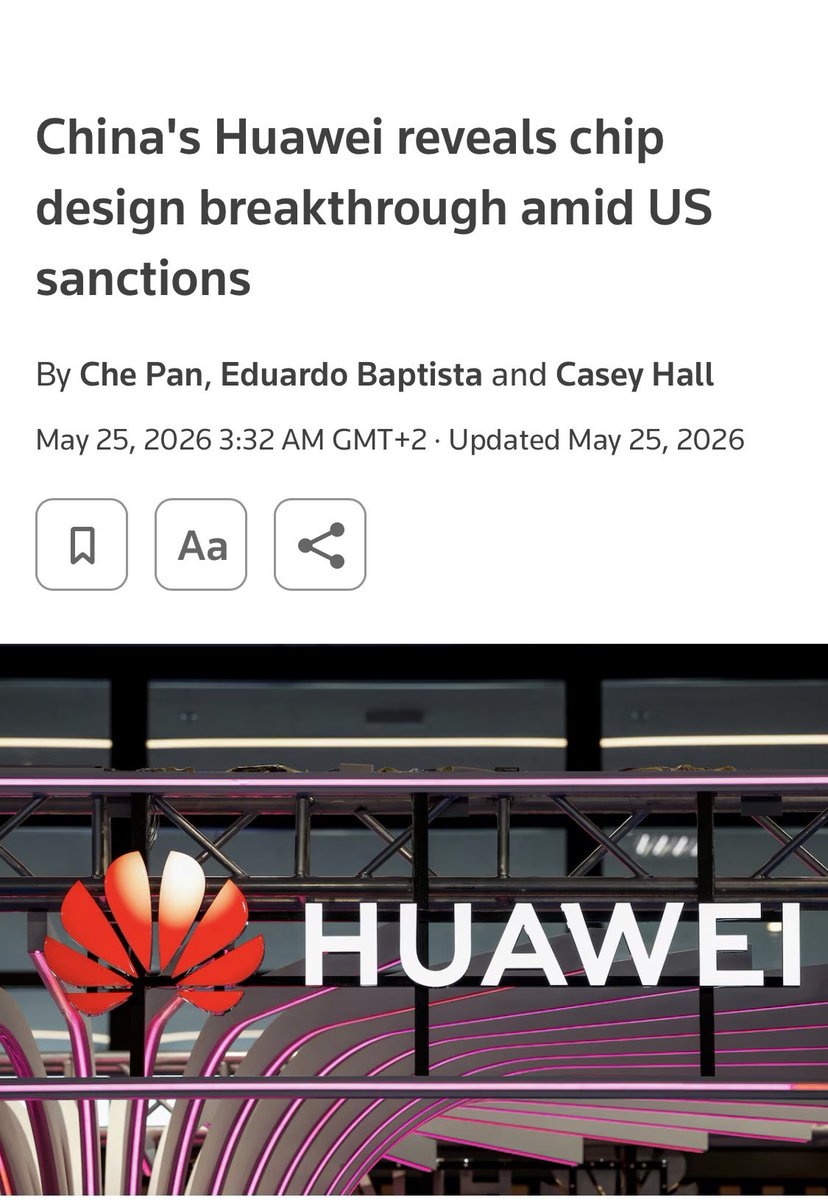
franchement l'annonce de Huawei hier à Shanghai vient de mettre noir sur blanc ce que j'essaie de vous faire comprendre ici depuis des années
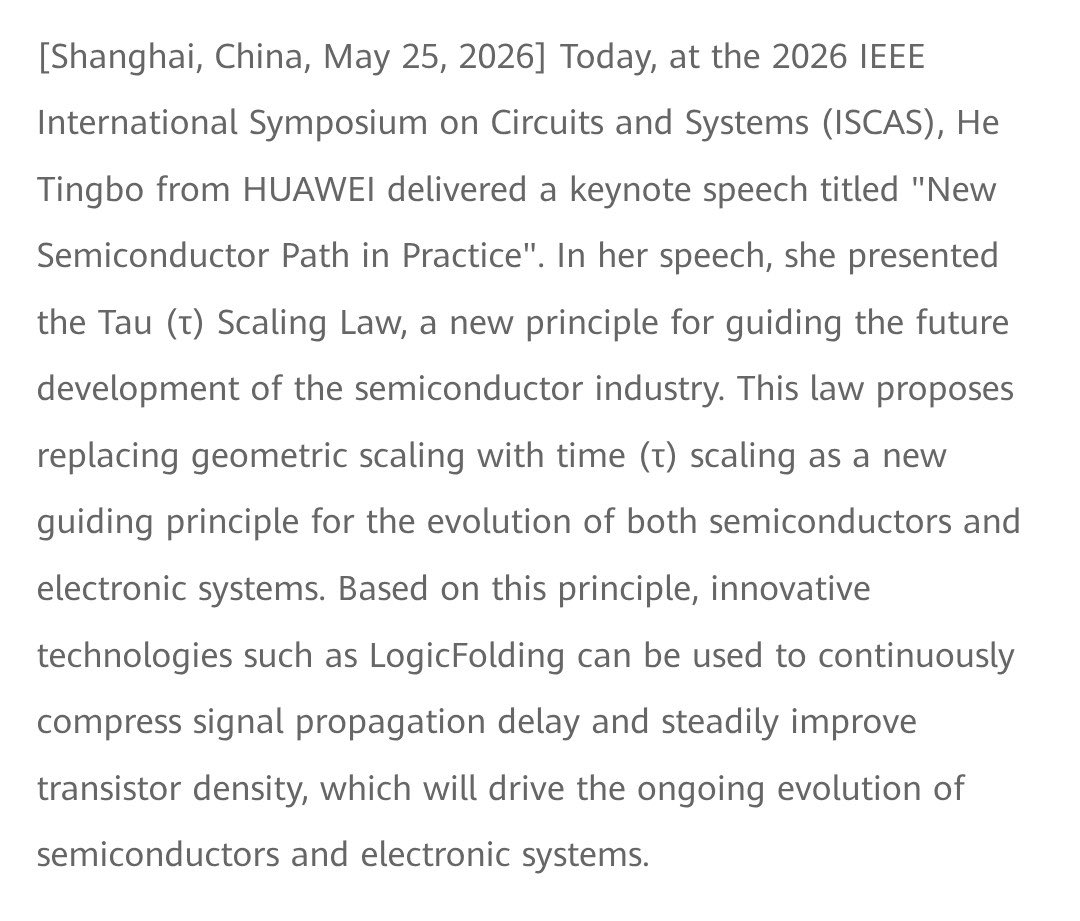
pour vulgariser Huawei vient d’annoncer au sympoisum ieee iscas une nouvelle loi physique qui remplace la loi de moore, ils l’appellent la tau scaling law et elle change littéralement le paradigme du semiconducteur mondial, en gros au lieu de continuer à rétrécir les transistors ce qui se heurte à des limites physiques quantiques infranchissables, ils optimisent dorénavant la constante de temps tau à 4 niveaux simultanément et obtiennent des gains de performance équivalents à ce que les américains atteignent avec leur lithographie euv à 200 millions de dollars la machine, sauf qu’eux n’ont pas accès à cette lithographie depuis les sanctions de 2019
la Chine dépasse donc la silicon valley sur son propre terrain et la rend périmée et ce qui se joue réellement est l'exact contraire de ce que Washington imaginait en décidant des sanctions de 2019
en ce sens je crois que très peu de gens ont pris la peine de regarder vraiment les slides de la présentation parce que le coeur de la rupture se cache ailleurs que dans le concept marketing de tau scaling law, il se trouve dans un détail technique que seuls quelques ingénieurs spécialisés ont remarqué (et que je suis parti fouiller haha), il existe visiblement un procédé de collage entre couches de silicium avec un espacement + petit que 2 micromètres, ce qui transforme les fils verticaux reliant les différentes couches d'une même puce en chemins de calcul à part entière, ils maîtrisent là l'intégration en 3 dimensions au sens fort pendant que le reste du monde raisonne encore sur un seul plan horizontal
pour moi la meilleure image c'est celle d'un architecte qui construit une tour pendant que ses concurrents continuent d'étaler des maisons individuelles à l'horizontale, intel et tsmc se battent pour graver des transistors toujours plus minuscules parce que leurs lithographies euv les enferment dans cette logique, huawei coupé de ces lithographies depuis 2019 a choisi un autre combat, raccourcir au maximum le temps qu'un signal électrique met pour traverser l'ensemble du système, cette durée qu'ils nomment tau et qu'ils minimisent simultanément au niveau du composant du circuit de la puce et de la machine complète, c'est de la physique réelle présentée dans la conférence ieee la plus sérieuse au monde sur le sujet
d’ailleurs les chiffres font réfléchir, allez jeter un coupé d’œil et vous allez voir que la densité de transistors monte de 126 à plus de 400 millions par millimètre carré entre 2024 et 2031, la fréquence des coeurs grimpe de 2,6 à 5 gigahertz, même la performance des systèmes complets fait x125 en 4 ans entre 2026 et 2030 & surtout 381 puces ont déjà été fabriquées en série selon ces principes depuis 2020, autant dire qu'ils ont commencé à changer de paradigme dès la première vague de sanctions américaines, 6 années de travail discret pendant que les analystes occidentaux les croyaient en mode survie mdr ce que tout le monde prenait pour de la résistance était en réalité un virage stratégique médité et mené avec la patience d'un peuple qui voit à 50 ans (la vision à très long terme de la Chine dont je vous parle souvent )
je vous le répète depuis des années ici, les sanctions occidentales accélèrent la politique industrielle et tech de Chine au lieu de la freiner, elles l'obligent à inventer le monde d'après pendant que l’occident reste coincé dans celui d'avant, d’ailleurs pour info même BYD a créé la batterie LFP face au blocage du nickel et il domine désormais le marché mondial de la voiture électrique, deepseek a conçu son architecture multi-head latent attention face au blocage des puces h100 et il a divisé par 10 le coût des grands modèles de langage, Huawei vient de poser logicfolding et tau scaling face au blocage de l'euv et il redessine déjà la trajectoire mondiale du semiconducteur jusqu'en 2031
SpaceX is actively hiring world-class engineers/physicists for SpaceXAI, even if you have zero prior experience in AI. Smart humans figure it out fast.
Please send an email with ~3 bullet points demonstrating evidence of exceptional ability to [email protected].
Countries get the cabinets they pay for. Singapore pays its Foreign Minister about S$1.1m, around US$800,000. The salary is benchmarked to 60% of the median income of the top 1,000 Singaporean earners. That is why you can get Vivian Balakrishnan, former eye surgeon and hospital chief executive, implementing @karpathy's external brain idea (link below). The speech shows deep understanding of AI and fills one with confidence about Singapore's future.
The UK Foreign Secretary earns roughly £165,000: the MP salary plus a ministerial salary of about £67,000. The ministerial part is frozen since the crisis and is down by roughly a third in real terms since 2010. This is what a junior Magic Circle lawyer earns.
Spain pays its ministers around €85,000. So you do not get a surgeon who has run hospitals. You get a party loyalist who has never run anything.
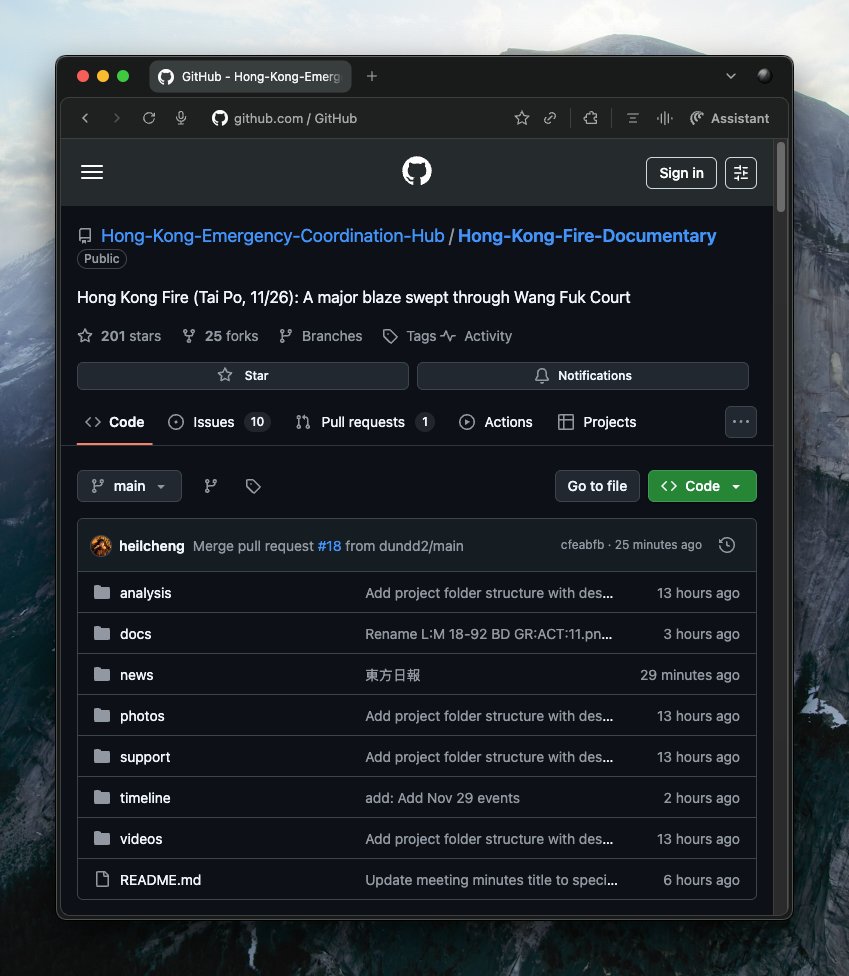
For the Hong Kong Fire, we built an open, centralised database to preserve all verifiable information, news reports, footage, technical analyses, contractor details, volunteer/community support records, official responses, and follow-up developments.
rejected by a16z speedrun officially
- citizenship asked during 1) initial application, 2) pre interview form, 3) follow up email, and 4) reconfirmed again in the final 10 min interview together with visa status
- hongkongese, no visa, delware corp without china/hong kong business
- told: “you’re solo founder and due to political change, we cannot fund it, but we like u/ur video”
not sure if this is related to broader us-china tensions, or things like reports of china blocking the manus meta deal, but as a hongkongese faced political dramas in hong kong & just trying to build a career in the us, i unfortunately seem to be caught in the middle
Kalau Indonesia keluar dari UNCLOS (padahal negara kita salah satu yg berjuang untuk meratifikasinya), maka seluruh laut dengan jarak 12 mil dari daratan di antara pulau-pulau akan dideclare menjadi laut internasional oleh negara-negara punya kepentingan dalam pelayaran melalui perairan kita.
Selama ini RI sudah bekerjasama dengan Thailand, Malaysia dan Singapura dalam misi pengamanan Selat Malaka melalui patroli udara EIS (Eyes In the Sky) yang diinisiasi sejak sekitar 2009.
Masing-masing negara bergantian melaksanakan patroli udara sepanjang Selat Malaka, dan hasil patrolinya disampaikan ke tiap negara untuk data yang jika sewaktu-waktu ada kontijensi maka semua angkatan perang negara tersebut akan berkolaborasi melaksanakan pengamanan bersama.
This guy literally hacked Polymarket with a hair dryer 💀
Happened in Paris.
On Polymarket, temperature bets were settled using a single sensor near Charles de Gaulle Airport.
He figured out the exact location, showed up in person, and placed a bet on an “impossible” outcome 22°C when the market expected 18°C.
Then he pulled out a hair dryer and heated the sensor.
The artificial spike got recorded as the daily high → market settled → he cashed out.
Did it twice.
Walked away with ~$34K.
While everyone’s arguing over indicators and alpha, this guy is out here doing IRL market manipulation.
Congrats to Ling Zhang for defending & completing her PhD! During her PhD, she specialized in in log processing and management, structured text search, and database query processing! She is now at @databricks on their Query Optimization team!
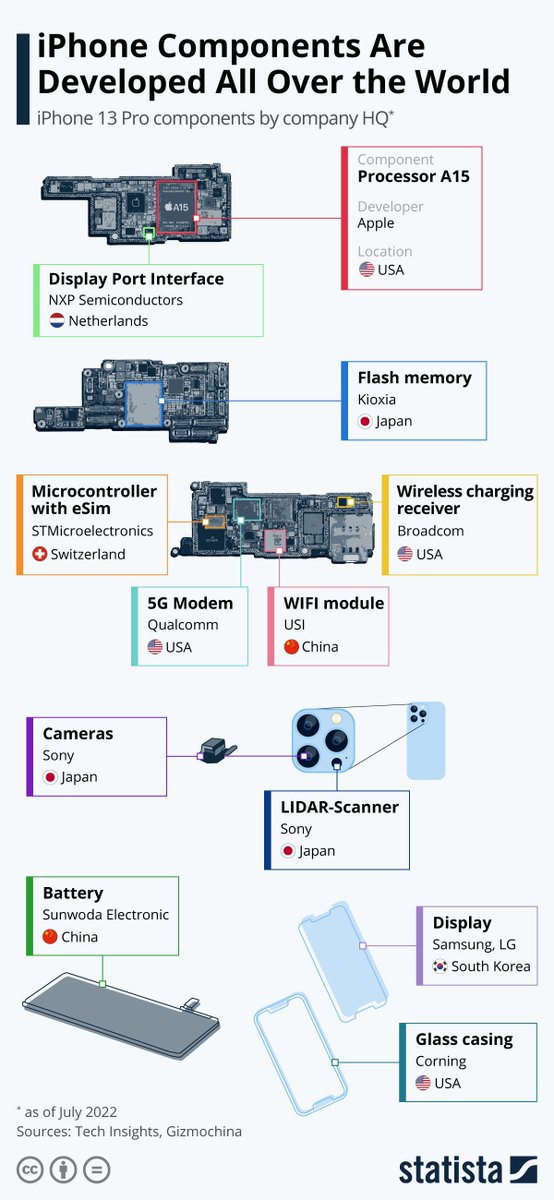
China only contributes ~5% to an iPhone.
That’s the part most people don’t know.
Because it breaks the “Made in China = made by China” narrative.
Teardown and value-added studies consistently show:
- China’s role is mainly final assembly plus some lower-value parts
- The domestic value added is typically in the low single digits, often around 3–6% depending on the model
- Earlier models like the iPhone 7 showed roughly 3–4% of factory cost coming from China
Where the real value sits:
- U.S. (Apple): design, software, chips architecture, and a large share of profits
- Japan, South Korea, Taiwan: displays, memory, cameras, and advanced components
- Europe and others: specialized high-end parts
Apple alone captures 40%+ of the final price through design, ecosystem, and branding.
Here’s the key point most people miss:
When an iPhone ships from China, trade data counts it as a China export, even though most of the value was created elsewhere.
So when U.S. smartphone imports from China drop sharply (from 90% to 25%), it doesn’t mean the product disappears.
It means assembly moved.
Same components. Same suppliers. Different location.
China still matters for scale.
But in terms of profit and value, assembly has always been the lowest-margin and most replaceable part.
source: https://t.co/x9DQVYXzSI
#SupplyChain #Apple #China #India #Vietnam #GlobalTrade #Decoupling #TechEconomy #Geopolitics #Manufacturing