In the early 1990s, elites decided that the U.S. and Britain would transition to a postindustrial, services-based economy, anchored in finance.
Bill Clinton and Robert Rubin were the vehicle to accomplish this goal in the U.S. while Tony Blair and Gordon Brown were the agents to implement this plan in the U.K.
Legions of well-educated economists assured us that this was all a good thing.
Free trade deals were passed, manufacturing jobs were shifted overseas, the working class was crushed — but that held down wages and inflation so for a few years it seemed like it was working.
The results since then have been absolutely catastrophic. Promised retraining never really happened and never would have worked anyway — 60 year old former factory workers with only a high school diploma are not going to become computer programmers. Rust belt towns saw disability rates for chronic pain skyrocket.
Big Pharma flooded these depressed communities with opiates. The annual death toll from opiates across former factory towns resembles a war — but with only one side fighting, it's actually just a massacre.
The U.S. didn't make anything so it resorted to financial gimmicks which inflated the stock market and then collapsed the economy in the early 2000s and then again in 2008. The U.S. economy has never recovered.
We engaged in numerous protracted wars in the Middle East because military contractors still controlled the government and the economy needed some sort of stimulus. War Keynesianism is not very efficient though — bombing people in mud huts does not produce a very big multiplier effect.
Ultimately there were too many unneeded workers and seniors on disability, Social Security, and Medicaid. So elites decided the U.S. and Britain would transition to an economy anchored in pharmaceuticals.
Suddenly every cough, sniffle, and rash was rebranded as an existential threat to humanity that must be countered with a whole-of-society response and vaccine mandates for everyone.
When that didn't generate enough profits, elites resorted to gain-of-function research to manufacture pandemics. These engineered outbreaks would create markets for endless toxic vaccines and "treatments" that enslave the working class via iatrogenic injury and kill off seniors and the disabled.
Many of the same elites who sold us on the wisdom of a postindustrial, services-based economy, anchored in finance, now promoted the virtues of the pharmaceutical-based economy.
It's the most cynical economic development strategy in human history. And it will continue until we stop them from doing this to us.
Good expert call on Bloom Energy $BE with a former VP at Plug Power - pretty bullish
Hyperscalers did not evaluate Bloom against gas turbines and select Bloom. They selected turbines, discovered they could not get them, and Bloom was the alternative that checked enough boxes.
Gas turbines from Mitsubishi, GE Vernova, Siemens and Hitachi remain the incumbent workhorse, but his read is that if the order is not already placed, you are not energizing before 2030. Reciprocating engines sit in the same position: Caterpillar, Jenbacher, Generac, Wärtsilä, all effectively sold out. Transformers, switchgear and substation equipment carry 60 month lead times.
What Bloom offered was availability plus modularity. A claimed 90 day time to power on smaller blocks, which he believes is credible at modest scale and unlikely at large scale, plus a build-as-you-go capital profile. Turbines want a single large plant. Behind-the-meter deployment wants building blocks you can add to as long as you have secured the land and the gas tap.
> Why the Turbine OEMs Will Not Simply Close the Window
Turbine and engine OEMs are deliberately not expanding capacity. They suspect the order book is double and triple booked, and they fear being left with stranded factory capacity when projects fail to reach FID. His analogy is the semiconductor capacity cycle, where consecutive quarters of poor absorption caused structural damage.
Their posture, as he characterizes the consensus from trade shows and industry conversation: you cannot buy it from me, you cannot buy it from my competitor, you will wait.
If that discipline holds, Bloom's window is measured in years rather than quarters, which is materially longer than the market appears to assume. Bloom's product is closer to a solid state electrochemical device than a precision machined turbine, drawing on an entirely separate supply chain that can be ramped faster.
> Levelized Cost: A Premium, But Not a Prohibitive One
He built his own LCOE model rather than relying on published work, which he found rested on unexamined assumptions. His output:
Gas turbine: roughly 4.5 to 7 cents per kWh
Bloom: just over 7 cents unsubsidized, below that with federal incentives
Reciprocating gas engine: roughly 8 to 10 cents
Diesel: high teens to mid 20s
The critical observation is that this is not a 3x premium for speed. That pattern collapses the moment supply normalizes, because buyers drop the expensive option as soon as the cheap one is obtainable. A single digit cent premium does not collapse, because the hyperscaler business case still clears at that price.
The offset to Bloom's higher capital cost is efficiency: 60 to 65 percent, against roughly 55 percent for a gas turbine and roughly 45 percent for a reciprocating engine. Bring capex down and the LCOE gap narrows or inverts.
> Where Bloom Ranks Today
Asked to stack rank for a hyperscaler buyer, he puts Bloom third, behind turbines and engines, purely on track record rather than physics. His analogy: you know exactly what you get from a Caterpillar engine or a GE Vernova turbine the way a Toyota buyer knows what he is getting. No buyer has that reflex for a Bloom box yet.
The open questions the buying community has not resolved: real world availability, whether maintenance cadence matches or beats turbine schedules, and the roughly 10 year stack replacement cycle. On that last point he offers a mild positive read-across, noting that in the PEM industry stack rebuild intervals came in longer than originally modeled.
The path to second or first place requires two things running together: two to four years of collective industry uptime data, and capex reduction. Oracle, Nebius, Brookfield and AEP are the proof points that will settle it. On whether they will work, he says "the jury is still out," while noting early evidence reads favorably.
> Non-Combustion as an Unpriced Permitting Asset
The Bloom box does not combust natural gas. It runs an electrochemical reaction. The consequences stack up in a specific and useful way:
NOx, SOx and particulate emissions at or very near zero, leaving local air quality unaffected
Roughly 65 dBA at three feet, which he compares to a lawnmower at fifty feet, meaning nearby highway noise dominates
Zero net water consumption, with startup water recycled as steam
Materially easier local permitting
Each of those neutralizes a specific community objection, and the pushback is accelerating. New York State's one year moratorium is the marker he points to, alongside complaints in other jurisdictions about power draw, water use and air quality.
His honest caveat: to date these attributes have played essentially zero role in purchase decisions. Availability and cost drove everything, and he assumes very little of Bloom's performance so far reflects environmental considerations.
If pushback becomes electoral, and he says he is watching whether candidates start running on it, then zero emission on-site generation stops being a nice-to-have and becomes the only permittable option across large parts of the country. He expects this to bite first at the 20, 50 and 100 MW sites going into actual neighborhoods rather than at the West Texas mega-campuses.
> Market Share Trajectory
Data center demand forecasts he is working from run 40 to 60 GW per year. Bloom's share today sits in single digits. His trajectory:
Five years: 15 to 18 percent
Ten years: 25 to 28 percent
Upside case, if emissions constraints become binding in enough jurisdictions: 40 to 50 percent
The constraint that drives the upside case is geographic. Not everyone can replicate what Microsoft and Chevron are doing on the West Texas gas fields. Once data centers have to disperse into places that care about permitting, the zero emissions conversation becomes unavoidable.
> The Bear Case He Actually Respects
Execution, not demand. He flags this above everything else.
Bloom has roughly 1.5 GW deployed against a backlog he characterizes as roughly 20 GW. On Sridhar's own description of the factories, that a visitor will see build activity and factory expansion activity running simultaneously, the expert's reaction is blunt. To an industrial engineer, expanding while still trying to build is a very risky proposition. Doable, but it is the precise point at which fast-scaling companies break, and he notes this is the classic failure mode for startups that find themselves in this position.
Q1 was clean. The Q2 print, due around the 28th, is the next checkpoint on whether execution is holding.
The secondary risks are demand-side and none of Bloom's own making: hyperscale capex circularity, bubble risk, and whether community pushback genuinely slows the build or simply reroutes it to Texas.
> Scandium: Directionally Fair, Materially Overblown
On the short thesis that Bloom cannot secure enough scandium, he says the report has some points but overstates them. His rebuttal runs on three tracks.
Cost sensitivity. Scandium is a dopant in the zirconium ceramic electrolyte, used at very low concentration, valued because it tolerates the 800 to 900 degree operating temperature. Even if it were 2 percent of materials cost, which he considers extraordinarily high for a dopant, a doubling in price takes it to 4 percent. Bloom likely has the pricing power to pass that through, and a half point efficiency gain would offset it in LCOE terms. His conclusion: more price risk than supply risk over the next couple of years.
Supply structure. Scandium is almost never mined primarily. It sits in the tailings of titanium, cobalt, aluminum, iron and lithium operations and is generally left behind. The binding constraint is processing capability, not geological availability, and that processing capacity is being built with national security tailwinds behind it. Scandium-aluminum alloys matter for 3D printing, fighter aircraft skins and missiles, which places it squarely in the critical minerals policy agenda.
Company mitigations. Bloom has spent 20 years reducing scandium loading per gigawatt. He located a patent application substituting cerium and yttrium, both more available, and Bloom holds IP on recovering scandium from mine tailings. He reads Bloom's willingness to address the topic directly, rather than deflect, as evidence they take it seriously rather than evidence of vulnerability. Non-Chinese supply exists: he points to Sumitomo's Philippines cobalt operation, which publicly identifies Bloom as a customer. Bloom does not disclose suppliers, and the short report's supply map traces its merchants back toward China.
> The Competitive Set
FuelCell Energy. Molten carbonate rather than solid oxide, but functionally similar: high temperature, slow start, direct natural gas, suited to stationary baseload. Why they never scaled into this comes down to inertia and strategic drift. Their historical focus was a trigeneration box producing hydrogen, power and heat, deployed for applications like Toyota Mirai fueling at the Port of LA. When hyperscale demand arrived they had nothing to show. His read on the pivot: they saw the multiple Bloom trades at and asked why not us.
Ceres Power. UK based, probably second globally in solid oxide IP. Pure licensing model, which means most licensees stay invisible. The disclosed one is Weichai, moving from small C&I units up to hyperscale scale. He doubts Weichai exports into the US successfully but expects success in China.
Microturbines and aeroderivatives. TurboCell in the BorgWarner orbit, plus aero engine derivatives repurposed as stationary generators. Everything gets a look right now because buyers are desperate for speed to power.
Stealth entrants. He assumes several exist that have not been announced, precisely because Ceres-style licensing deals do not get publicized.
Asked whether Bloom owns the US market today, his answer: "Pretty much now they do."
> Why Hydrogen Never Worked, and the Read-Through to Plug
Useful because he lived it from the inside. Delivered liquid hydrogen bottoms out near $8 per kilogram. Run that through the efficiency stack and fuel cost alone lands around 54 cents per kWh, before equipment, labor, warranty or service. He stopped modeling at that point. Even at a hypothetical $4 per kilogram you land near 25 cents, still a non-starter against a 7 cent Bloom box.
Plug built a 3 MW unit at its Latham campus that passed Microsoft's full backup generator protocol, the first non-diesel, non-gas system ever to do so. Microsoft publicized it as a breakthrough and then walked away inside six months once the cost picture clarified. Plug's INVISTA facility was outfitted to build stationary modules for the data center market and effectively none of it shipped. Three sites total, including Calistoga in PG&E territory for public safety shutoff backup, and an EV charging site that existed only because a grid connection was unavailable. Both are showpieces that draw tours. Neither is repeatable.
source: Tegus
The Democrat Party has no leader, no agenda for our nation except to take our money and use it to resettle the foreigners they need to win elections, and their establishment and socialist wings are actively tearing each other apart.
The middle class and working class paid its wealth tax already. When the billionaires crashed the economy, got bailed out, borrowed at 0%, supported wars they wouldn’t serve in, offshored manufacturing to China, suppressed wages via H-1B and open borders.
People are tired of the tweets.
People are tired of the speeches.
People are tired of the memes.
The fatigue with the circus is real.
You've run out of time to arrest the traitors.
A serious country would not have government unions.
We all know they block accountability, light trillions on fire, and prevent competence in so many critical areas.
They only exist because they bribe the left, which expands broken govt bureaucracies to help fund their party.
I am proud to introduce a constitutional amendment requiring federal judges to be natural-born citizens.
Judges should have lifelong allegiance to the United States, and the United States only.
End of story.
America’s workforce is under assault from three directions at once:
Imported labor.
Offshored labor.
Automated labor.
Today I’m releasing the Plumb Legislative Proposal Series - three focused concept frameworks built to put American workers first.
R.E.C.L.A.I.M. Act
Temporary pause on new employment-based visas + government-wide audit + real penalties for fraud before any further expansion.
R.E.T.A.I.N. Act
American data stays in America, stored, processed, and accessed only by U.S. persons on U.S. soil.
R.E.P.A.Y. Act
When AI drives significant displacement, large employers must exhaust internal redeployment first and provide real workforce restoration benefits.
No more expanding broken systems, no more shipping jobs and sensitive data overseas, no more treating American workers as disposable when machines or visas become cheaper.
America should fully understand, secure and enforce its labor and immigration systems before expanding them.
If you believe the middle class is under attack and American citizenship should still mean something - share this. Let’s force the conversation
After the $100,000 H-1B fee, US companies paid for eight visas since September 2025.
Eight.
And those were for Chinese citizens.
If the program was about irreplaceable geniuses, firms would pay. They did not. They were buying cheaper labor with a visa stamp, and a real price t
Iowa is outsourcing their IT work to Cognizant. The fine print gives some workers 12 months of job protections but also outlines the replacement rate for employees after that timeframe - guess where the jobs are going to go…
The signed rate sheet has an offshore hourly rate column for "Location 1," identified as India. The rates are already negotiated:
Service desk agent: $60/hr onsite, $18/hr India
Security specialist: $135/hr onsite, $32.62/hr India
Project manager: $146/hr onsite, $37.40/hr India
Solution architect: $160/hr onsite, $45/hr India
How are Americans living in America supposed to compete with the cost of labor in India?
When you’re taxed on what you own, what you earn, and what you buy and it’s spent in ways you don’t agree with — that’s not freedom.
Nine states have no income tax:
• 5 of them rank in the top 10 for GDP growth nationwide
• 4 of them rank among the highest for net in-migration
Reducing the number of taxes = freedom.
The same two things are said repeatedly by CEOs and politicians and news media. But almost never at the same time.
1) AI will automate millions of jobs.
2) The USA must bring in unlimited H-1B's.
Both cannot be true.
They don't make any sense together.
Now that election fraud is in the spotlight, this video is arguably the most concrete evidence that the Dems use illegals to cheat.
Flashback to 11/04/2016: Then President Obama openly encouraged illegals to vote in the 2016 election, and assured them that ICE and Federal law enforcement will NOT seek them out or deport them if they vote.
Just four days before the 2016 election, Obama told illegals to vote, and that he would not arrest them for it. Plain as day.
This is exactly why we need US MIL/ICE at polling stations in deep blue counties, because we need the illegals to be afraid to vote. We need the exact opposite of what Obama did in 2016. We need the illegals to know that if they try to cheat in our elections, they will be arrested.
Whenever someone on the Left says the Dems don’t cheat in elections, or that illegals don’t vote, show them this video. Obama openly told the illegals they were safe to vote.
TREASON!
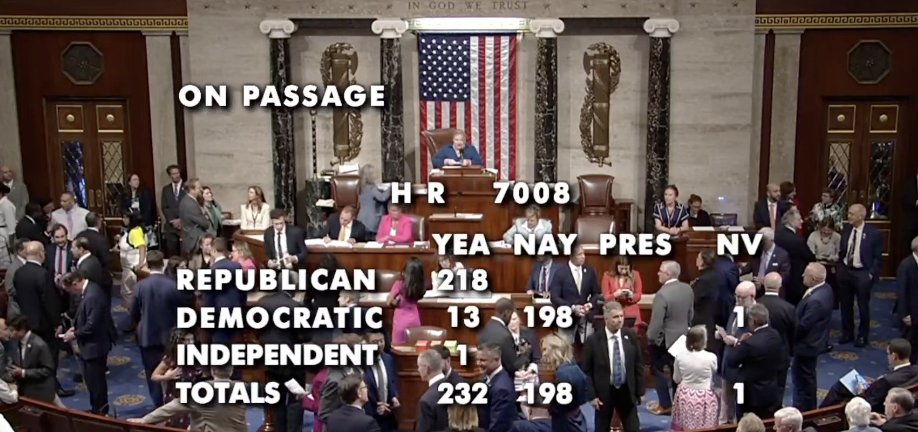
90% of Americans agree that members of Congress should not be able to trade stocks.
90% of Americans also agree that you should have to show an ID to vote.
198 Democrats just voted against both.
All 11 offer free healthcare to illegals and DO NOT require Voter ID:
DC
California
Illinois
Maine
Massachusetts
Minnesota
New Jersey
New York
Oregon
Vermont
Washington
These 11 account for:
144 Electoral College votes
143 House Seats
16 Senate Seats
The fraud is staggering…
The United States has no debt or obligation to the Third World.
All foreign aid programs, domestic welfare benefits extended to non-citizens, and existing immigration systems should be terminated.
Update on the H-1B visa holders donating to federal political campaigns - July 22 2026
We are now at 36 cases, and we are doing that solely by matching the names of suspected H-1B landlords to the FEC database. We have close to 2,000 names, so we have a large sample. We looked through 25-30% of the list.
With a much larger sample size, the 80/20 split between Democrats and Republicans was plain wrong. It is more like 95/5. The more recently arrived H-1B visa holders are more likely to support the democrats, and more likely to support DSA-affiliated candidates compared to the average American. We found more than one Bernie Bro.
Moreover, we found one Pakistani citizen who donated to Kamala Harris in 2019. The issue of foreign nationals donating to political candidates is not limited to Indian nationals.
Capitalism is a powerful force for good. It benefits everyone, especially those who lean in and help build the future.
But it’s under attack (again). Wealth taxes, price controls, government-run grocery stores, asset seizures. Fear is being used as a political lever and an excuse for control. I’ve seen this play out before, it leads nowhere good.
I lived in Buenos Aires in 2008 when the Argentine government seized $30B in private pensions to ‘protect’ citizens from the financial crisis. Then they froze access to the dollar and nationalized companies. Within a decade, inflation was over 50%. The elites had miraculously moved their money, leaving regular people to take the financial hit.
Politicians are selling collectivism out of the same playbook used by Argentina, Venezuela, and the former Soviet Union: promise protection, concentrate power, tighten the fist. And the costs fall on the poorest people in society who are unable to protect themselves.
Capitalism isn't perfect. But it’s far better than every alternative that’s been tried. Millions of people making independent decisions, with the free market rewarding the best ideas, will out-build any central planner.
BREAKING: Trump is overhauling federal science funding by directing the roughly $200 billion annual research budget away from traditional university grants and toward artificial intelligence and individual scientists, per WSJ
New reports suggest China is providing Iran with targeting information used to attack our forces.
The CCP is already undermining America through espionage, influence campaigns, and data theft.
They're our adversary.
That's why I introduced the Stop CCP Visas Act. We shouldn't be training the next generation of CCP leaders.