@TexasPreacher But Murray was mistaken. As William Young points out in the Minority Report, Murray's "Free Offer" rests upon a passible God and a logical contradiction.
https://t.co/umKBXre7kh
Is there a “final justification” for Christians? We deny.👇
“Although our justification will be fully declared on the last day (our good works also being brought forward as the sign and proof of its truth, Mt. 25:34–40),
still falsely would anyone maintain from this a twofold gospel justification – one from faith in this life (which is the first); the other (and second) from works on the day of judgment
(as some hold, agreeing too much with Romanists on this point).”
- Francis Turretin
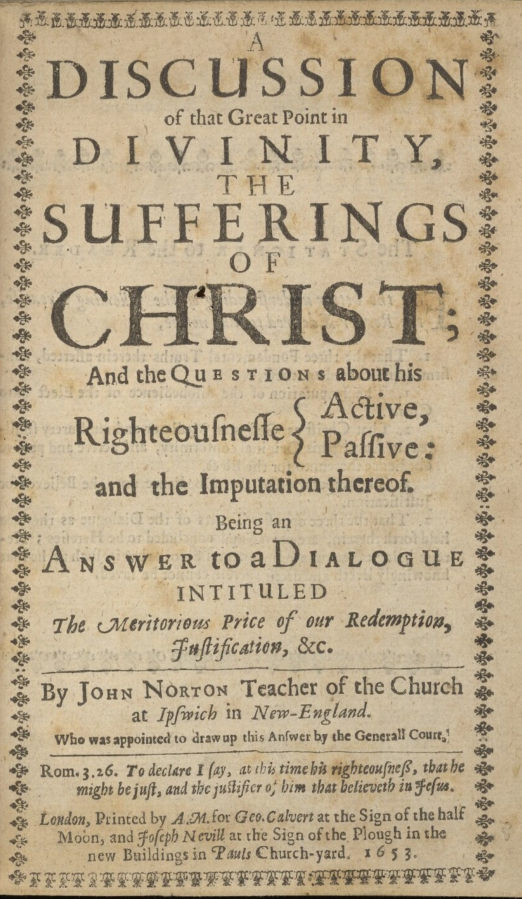
Baxterianism was not accepted in the New England Churches. Cotton Mather recommends John Norton's work as a refutation for Richard Baxter's views:
"[All these are Mr. Baxter’s words, in his “𝐷𝑒𝑓𝑒𝑛𝑐𝑒 𝑜𝑓 𝐶ℎ𝑟𝑖𝑠𝑡,” chap. II.]
These things, which our churches with amazement behold Mr. Baxter thus calling 𝑓𝑖𝑐𝑡𝑖𝑜𝑛𝑠, 𝑓𝑎𝑙𝑠𝑒ℎ𝑜𝑜𝑑𝑠, 𝑓𝑜𝑟𝑔𝑒𝑟𝑖𝑒𝑠, 𝑖𝑔𝑛𝑜𝑟𝑎𝑛𝑡 𝑐𝑜𝑛𝑓𝑢𝑠𝑖𝑜𝑛𝑠, and 𝑔𝑟𝑜𝑠𝑠 𝑒𝑟𝑟𝑜𝑟𝑠, were defended by Mr. Norton, as the “faith once delivered unto the saints;” nor do our churches at this day consider them, as any other, than “glorious truths of the gospel;” which, as they were maintained by Mr. Norton. So two divines, which were the scholars of Mr. Norton, well known in both Englands, Nathanael and Increase Mather, (𝑭𝒓𝒂𝒕𝒓𝒖𝒎, 𝒅𝒖𝒍𝒄𝒆 𝑷𝒂𝒓!) and a third, a worthy minister of the gospel, Mr. Samuel Willard, now living in the same house from whence Mr. Norton went, unto “that not made with hands,” have in their printed labours most accurately expressed them and confirmed them. Hence, although as, on the one side, I have this passage of Mr. Baxter’s in a letter from him, written but a few months before he died, “I am as zealous a lover of the New-England churches as any man, according to Mr. Norton’s and the Synod’s model:” so, on the other side, the memory of Mr. Baxter is on many accounts 𝑧𝑒𝑎𝑙𝑜𝑢𝑠𝑙𝑦 𝑙𝑜𝑣𝑒𝑑 among the churches of New-England, yet espousing the principles for their establishment, wherein Mr. Norton had appeared: nevertheless, inasmuch as Mr. Baxter, just before his entrance into his “everlasting rest,” requested of my parent, then in London: “Sir, if you know of any errors in any of my writings, I pray you to confute them after I am dead.” I thought it not amiss to regard so far the 𝑔𝑜𝑠𝑝𝑒𝑙-𝑡𝑟𝑢𝑡ℎ𝑠 𝑜𝑓 𝑗𝑢𝑠𝑡𝑖𝑓𝑖𝑐𝑎𝑡𝑖𝑜𝑛 at this day labouring, as to take occasion from the mention of Mr. Norton’s book, to say, that in that one book of his, there is a 𝑐𝑜𝑛𝑓𝑢𝑡𝑎𝑡𝑖𝑜𝑛 of Mr. Baxter, who seems to oppose those things, which the churches of New-England judge cannot be denied without 𝑐𝑜𝑟𝑟𝑢𝑝𝑡𝑖𝑛𝑔 𝑜𝑓 𝐶ℎ𝑟𝑖𝑠𝑡𝑖𝑎𝑛𝑖𝑡𝑦, and 𝑠𝑢𝑏𝑣𝑒𝑟𝑡𝑖𝑛𝑔 𝑜𝑓 𝑡ℎ𝑒 𝑔𝑜𝑠𝑝𝑒𝑙."
From: Magnalia Christi Americana
Baxterianism was not accepted in the New England Churches. Cotton Mather recommends John Norton's work as a refutation for Richard Baxter's views:
"[All these are Mr. Baxter’s words, in his “𝐷𝑒𝑓𝑒𝑛𝑐𝑒 𝑜𝑓 𝐶ℎ𝑟𝑖𝑠𝑡,” chap. II.]
These things, which our churches with amazement behold Mr. Baxter thus calling 𝑓𝑖𝑐𝑡𝑖𝑜𝑛𝑠, 𝑓𝑎𝑙𝑠𝑒ℎ𝑜𝑜𝑑𝑠, 𝑓𝑜𝑟𝑔𝑒𝑟𝑖𝑒𝑠, 𝑖𝑔𝑛𝑜𝑟𝑎𝑛𝑡 𝑐𝑜𝑛𝑓𝑢𝑠𝑖𝑜𝑛𝑠, and 𝑔𝑟𝑜𝑠𝑠 𝑒𝑟𝑟𝑜𝑟𝑠, were defended by Mr. Norton, as the “faith once delivered unto the saints;” nor do our churches at this day consider them, as any other, than “glorious truths of the gospel;” which, as they were maintained by Mr. Norton. So two divines, which were the scholars of Mr. Norton, well known in both Englands, Nathanael and Increase Mather, (𝑭𝒓𝒂𝒕𝒓𝒖𝒎, 𝒅𝒖𝒍𝒄𝒆 𝑷𝒂𝒓!) and a third, a worthy minister of the gospel, Mr. Samuel Willard, now living in the same house from whence Mr. Norton went, unto “that not made with hands,” have in their printed labours most accurately expressed them and confirmed them. Hence, although as, on the one side, I have this passage of Mr. Baxter’s in a letter from him, written but a few months before he died, “I am as zealous a lover of the New-England churches as any man, according to Mr. Norton’s and the Synod’s model:” so, on the other side, the memory of Mr. Baxter is on many accounts 𝑧𝑒𝑎𝑙𝑜𝑢𝑠𝑙𝑦 𝑙𝑜𝑣𝑒𝑑 among the churches of New-England, yet espousing the principles for their establishment, wherein Mr. Norton had appeared: nevertheless, inasmuch as Mr. Baxter, just before his entrance into his “everlasting rest,” requested of my parent, then in London: “Sir, if you know of any errors in any of my writings, I pray you to confute them after I am dead.” I thought it not amiss to regard so far the 𝑔𝑜𝑠𝑝𝑒𝑙-𝑡𝑟𝑢𝑡ℎ𝑠 𝑜𝑓 𝑗𝑢𝑠𝑡𝑖𝑓𝑖𝑐𝑎𝑡𝑖𝑜𝑛 at this day labouring, as to take occasion from the mention of Mr. Norton’s book, to say, that in that one book of his, there is a 𝑐𝑜𝑛𝑓𝑢𝑡𝑎𝑡𝑖𝑜𝑛 of Mr. Baxter, who seems to oppose those things, which the churches of New-England judge cannot be denied without 𝑐𝑜𝑟𝑟𝑢𝑝𝑡𝑖𝑛𝑔 𝑜𝑓 𝐶ℎ𝑟𝑖𝑠𝑡𝑖𝑎𝑛𝑖𝑡𝑦, and 𝑠𝑢𝑏𝑣𝑒𝑟𝑡𝑖𝑛𝑔 𝑜𝑓 𝑡ℎ𝑒 𝑔𝑜𝑠𝑝𝑒𝑙."
From: Magnalia Christi Americana
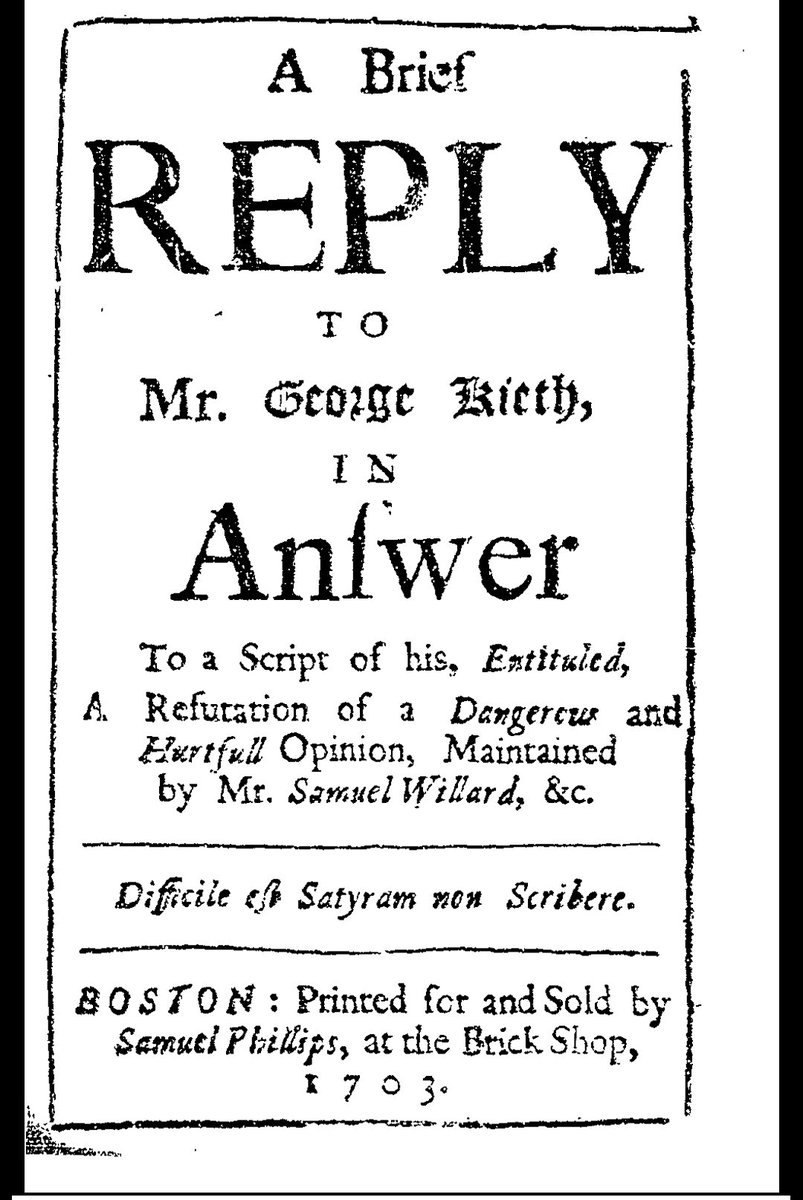
"It is a commonly received Doctrine, in the most of our 𝘗𝘳𝘰𝘵𝘦𝘴𝘵𝘢𝘯𝘵 𝘊𝘩𝘶𝘳𝘤𝘩𝘦𝘴 and 𝘈𝘤𝘢𝘥𝘦𝘮𝘪𝘦𝘴, That God concurs unto every operation of Second Causes, so as, immediately, and by himself, to influence upon every action of the Creature, and consequently into every effect, and so is the Immediate principal, and whole cause of that action and effect, as he is the first cause, as well as the Creature is, as the second cause: and that there is, not only a simultaneous, but also a previous Concurse, or rather Precurse of God to be acknowledged. And Dr. 𝘛𝘸𝘪𝘴𝘴𝘦 bringeth in 𝘈𝘳𝘮𝘪𝘯𝘪𝘶𝘴 himself acknowledging, 𝘛𝘩𝘢𝘵 𝘎𝘰𝘥𝘴 𝘤𝘰𝘯𝘤𝘶𝘳𝘳𝘪𝘯𝘨 𝘵𝘰 𝘵𝘩𝘦 𝘢𝘤𝘵 𝘰𝘧 𝘴𝘪𝘯, (𝘪.𝘦. 𝘵𝘰 𝘵𝘩𝘦 𝘢𝘤𝘵 𝘸𝘩𝘪𝘤𝘩 𝘪𝘴 𝘴𝘪𝘯𝘧𝘶𝘭𝘭, 𝘰𝘳 𝘵𝘰 𝘸𝘩𝘪𝘤𝘩 𝘴𝘪𝘯 𝘥𝘰𝘵𝘩 𝘢𝘥𝘩𝘦𝘳𝘦) 𝘪𝘴 𝘯𝘦𝘤𝘦𝘴𝘴𝘢𝘳𝘺, 𝘧𝘳𝘰𝘮 𝘵𝘩𝘦 𝘯𝘢𝘵𝘶𝘳𝘦 𝘰𝘧 𝘵𝘩𝘦 𝘊𝘳𝘦𝘢𝘵𝘶𝘳𝘦, 𝘢𝘯𝘥 𝘵𝘩𝘦 𝘓𝘢𝘸 𝘰𝘧 𝘊𝘳𝘦𝘢𝘵𝘪𝘰𝘯; 𝘢𝘯𝘥 𝘵𝘩𝘢𝘵 𝘵𝘩𝘦 𝘋𝘪𝘷𝘪𝘯𝘦 𝘔𝘰𝘳𝘢𝘭 𝘓𝘢𝘸 𝘱𝘳𝘰𝘩𝘪𝘣𝘪𝘵𝘪𝘯𝘨 𝘰𝘧 𝘴𝘪𝘯, 𝘤𝘢𝘯𝘯𝘰𝘵 𝘵𝘢𝘬𝘦 𝘰𝘧𝘧 𝘵𝘩𝘪𝘴 𝘢𝘴𝘴𝘪𝘴𝘵𝘢𝘯𝘤𝘦. And reason it self tells us, that the Creature, which dependeth entirely upon God, both for the upholding of its being, and for all its actions, cannot possibly so much as think one thought, without this concurse; nor can it maintain its order of causality it without such a precurse."
— Samuel Willard, 27.
@ParticularBapt Scholastic view of Free will in light of Divine Decree. Muller quotes it a few times in his response to Paul Helm in his article 'Neither Libertarian Nor Compatabilist'
There are two kinds of conditions, conditions of connexion and federal conditions. We must distinguish between the two to properly understand the Nature of the Covenant of Grace. I. Chauncy explains:
11. (1) [F]ederal Conditions are Terms agreed on in Covenant-contract between the Parties, whereupon the Promises made become due by Reward and Debt: And this supposeth, that the Terms proposed be accepted before it become a Covenant. A Covenant is not forced; and therefore if the Covenant of Grace were made upon conditional Terms with Sinners, it could not be a Covenant-Agreement consummated, till they had first accepted the Terms.
(2) It always supposeth there is a Power and Ability in the Party on whom the Covenant-Condition lies to be performed, previous to the Proposal of the said conditions, otherwise they would be vain and absurd. Hence to assert Faith or Obedience to be the Federal Conditions, doth unavoidably throw Men into the Arminian Doctrine of Free-Will, and of a Natural Power in Man to provide for his Salvation in the performance of the said Federal Conditions. But we affirm, neither Faith it self; no, not the Gift of the Spirit that works Faith, nor our Union to Christ, no Gifts that accompany Salvation, are Federal Conditions. Christ in the Exercise of his Mediator’s Office in his Humiliation and Exaltation, is the only Federal Condition where all entitling Conditions particularly mentioned in the Gospel are lodged and treasured up, and are freely by Christ bestowed on us.
12. There are also Conditions of Connexion by way of Order and Dependance of things one upon another, which are rationes rerum inter se, and belong to Logick, and they arise from all Arguments Artificial or Inartificial, Prime and Ort, Simple or Compare, Consentany or Dissentany, and they run in a Connex Axiom, when the said Conditionality is express’d. As thus, Si animal est homo est rationale; si figura est triangularis est trilateralis: If a Creature be a Man, he is a Rational Creature. If a Figure have 3 Corners, it hath three sides; all things in the World are capable of coming under this kind of Conditionality; yea, the most absolute Beings: As if God be the first Cause, he is the Creator of all things. In this Sense Creation is a condition of Salvation. If a Man be saved, he must be created. So Election a condition, if a Man be saved, he must be elected; but Election is not a Federal Condition. So if a Man believe he shall be saved, Believing is a condition of connexion to Salvation; If a Man have the Spirit of Christ, he shall believe unto Salvation; but neither Faith nor Union are Federal Conditions. A state in Grace is a condition to a state in Glory by way of connexion in the Promise: But one is not a Federal Condition of another; but both come in the Gift of Grace. In this Sense the Covenant of Promise contains all the Conditions of Order and Dependance in the Exhibition and Performance: The Hearing the Word is the Condition of Faith, but hearing the Word is not a Federal Condition: So the giving the Spirit is the condition of Union to Christ and Faith, Faith the condition of receiving Pardon and living in Holiness. And the giving of Pardon the condition of receiving it, Holiness the condition of seeing God and eternal Happiness: But these kind of Conditions are not Federal entitling to the Promise, but are contained in the Promise, and denote only the connexion and dependance of one promised Benefit upon another. (cf. Witsius de foed. 196)
— Chauncy, 116-117.
There are two kinds of conditions, conditions of connexion and federal conditions. We must distinguish between the two to properly understand the Nature of the Covenant of Grace. I. Chauncy explains:
11. (1) [F]ederal Conditions are Terms agreed on in Covenant-contract between the Parties, whereupon the Promises made become due by Reward and Debt: And this supposeth, that the Terms proposed be accepted before it become a Covenant. A Covenant is not forced; and therefore if the Covenant of Grace were made upon conditional Terms with Sinners, it could not be a Covenant-Agreement consummated, till they had first accepted the Terms.
(2) It always supposeth there is a Power and Ability in the Party on whom the Covenant-Condition lies to be performed, previous to the Proposal of the said conditions, otherwise they would be vain and absurd. Hence to assert Faith or Obedience to be the Federal Conditions, doth unavoidably throw Men into the Arminian Doctrine of Free-Will, and of a Natural Power in Man to provide for his Salvation in the performance of the said Federal Conditions. But we affirm, neither Faith it self; no, not the Gift of the Spirit that works Faith, nor our Union to Christ, no Gifts that accompany Salvation, are Federal Conditions. Christ in the Exercise of his Mediator’s Office in his Humiliation and Exaltation, is the only Federal Condition where all entitling Conditions particularly mentioned in the Gospel are lodged and treasured up, and are freely by Christ bestowed on us.
12. There are also Conditions of Connexion by way of Order and Dependance of things one upon another, which are rationes rerum inter se, and belong to Logick, and they arise from all Arguments Artificial or Inartificial, Prime and Ort, Simple or Compare, Consentany or Dissentany, and they run in a Connex Axiom, when the said Conditionality is express’d. As thus, Si animal est homo est rationale; si figura est triangularis est trilateralis: If a Creature be a Man, he is a Rational Creature. If a Figure have 3 Corners, it hath three sides; all things in the World are capable of coming under this kind of Conditionality; yea, the most absolute Beings: As if God be the first Cause, he is the Creator of all things. In this Sense Creation is a condition of Salvation. If a Man be saved, he must be created. So Election a condition, if a Man be saved, he must be elected; but Election is not a Federal Condition. So if a Man believe he shall be saved, Believing is a condition of connexion to Salvation; If a Man have the Spirit of Christ, he shall believe unto Salvation; but neither Faith nor Union are Federal Conditions. A state in Grace is a condition to a state in Glory by way of connexion in the Promise: But one is not a Federal Condition of another; but both come in the Gift of Grace. In this Sense the Covenant of Promise contains all the Conditions of Order and Dependance in the Exhibition and Performance: The Hearing the Word is the Condition of Faith, but hearing the Word is not a Federal Condition: So the giving the Spirit is the condition of Union to Christ and Faith, Faith the condition of receiving Pardon and living in Holiness. And the giving of Pardon the condition of receiving it, Holiness the condition of seeing God and eternal Happiness: But these kind of Conditions are not Federal entitling to the Promise, but are contained in the Promise, and denote only the connexion and dependance of one promised Benefit upon another. (cf. Witsius de foed. 196)
— Chauncy, 116-117.


![1six8nine's tweet photo. Baxterianism was not accepted in the New England Churches. Cotton Mather recommends John Norton's work as a refutation for Richard Baxter's views:
"[All these are Mr. Baxter’s words, in his “𝐷𝑒𝑓𝑒𝑛𝑐𝑒 𝑜𝑓 𝐶ℎ𝑟𝑖𝑠𝑡,” chap. II.]
These things, which our churches with amazement behold Mr. Baxter thus calling 𝑓𝑖𝑐𝑡𝑖𝑜𝑛𝑠, 𝑓𝑎𝑙𝑠𝑒ℎ𝑜𝑜𝑑𝑠, 𝑓𝑜𝑟𝑔𝑒𝑟𝑖𝑒𝑠, 𝑖𝑔𝑛𝑜𝑟𝑎𝑛𝑡 𝑐𝑜𝑛𝑓𝑢𝑠𝑖𝑜𝑛𝑠, and 𝑔𝑟𝑜𝑠𝑠 𝑒𝑟𝑟𝑜𝑟𝑠, were defended by Mr. Norton, as the “faith once delivered unto the saints;” nor do our churches at this day consider them, as any other, than “glorious truths of the gospel;” which, as they were maintained by Mr. Norton. So two divines, which were the scholars of Mr. Norton, well known in both Englands, Nathanael and Increase Mather, (𝑭𝒓𝒂𝒕𝒓𝒖𝒎, 𝒅𝒖𝒍𝒄𝒆 𝑷𝒂𝒓!) and a third, a worthy minister of the gospel, Mr. Samuel Willard, now living in the same house from whence Mr. Norton went, unto “that not made with hands,” have in their printed labours most accurately expressed them and confirmed them. Hence, although as, on the one side, I have this passage of Mr. Baxter’s in a letter from him, written but a few months before he died, “I am as zealous a lover of the New-England churches as any man, according to Mr. Norton’s and the Synod’s model:” so, on the other side, the memory of Mr. Baxter is on many accounts 𝑧𝑒𝑎𝑙𝑜𝑢𝑠𝑙𝑦 𝑙𝑜𝑣𝑒𝑑 among the churches of New-England, yet espousing the principles for their establishment, wherein Mr. Norton had appeared: nevertheless, inasmuch as Mr. Baxter, just before his entrance into his “everlasting rest,” requested of my parent, then in London: “Sir, if you know of any errors in any of my writings, I pray you to confute them after I am dead.” I thought it not amiss to regard so far the 𝑔𝑜𝑠𝑝𝑒𝑙-𝑡𝑟𝑢𝑡ℎ𝑠 𝑜𝑓 𝑗𝑢𝑠𝑡𝑖𝑓𝑖𝑐𝑎𝑡𝑖𝑜𝑛 at this day labouring, as to take occasion from the mention of Mr. Norton’s book, to say, that in that one book of his, there is a 𝑐𝑜𝑛𝑓𝑢𝑡𝑎𝑡𝑖𝑜𝑛 of Mr. Baxter, who seems to oppose those things, which the churches of New-England judge cannot be denied without 𝑐𝑜𝑟𝑟𝑢𝑝𝑡𝑖𝑛𝑔 𝑜𝑓 𝐶ℎ𝑟𝑖𝑠𝑡𝑖𝑎𝑛𝑖𝑡𝑦, and 𝑠𝑢𝑏𝑣𝑒𝑟𝑡𝑖𝑛𝑔 𝑜𝑓 𝑡ℎ𝑒 𝑔𝑜𝑠𝑝𝑒𝑙."
From: Magnalia Christi Americana](https://pbs.twimg.com/media/HLwZSeHaIAASLBB.png)

![1six8nine's tweet photo. There are two kinds of conditions, conditions of connexion and federal conditions. We must distinguish between the two to properly understand the Nature of the Covenant of Grace. I. Chauncy explains:
11. (1) [F]ederal Conditions are Terms agreed on in Covenant-contract between the Parties, whereupon the Promises made become due by Reward and Debt: And this supposeth, that the Terms proposed be accepted before it become a Covenant. A Covenant is not forced; and therefore if the Covenant of Grace were made upon conditional Terms with Sinners, it could not be a Covenant-Agreement consummated, till they had first accepted the Terms.
(2) It always supposeth there is a Power and Ability in the Party on whom the Covenant-Condition lies to be performed, previous to the Proposal of the said conditions, otherwise they would be vain and absurd. Hence to assert Faith or Obedience to be the Federal Conditions, doth unavoidably throw Men into the Arminian Doctrine of Free-Will, and of a Natural Power in Man to provide for his Salvation in the performance of the said Federal Conditions. But we affirm, neither Faith it self; no, not the Gift of the Spirit that works Faith, nor our Union to Christ, no Gifts that accompany Salvation, are Federal Conditions. Christ in the Exercise of his Mediator’s Office in his Humiliation and Exaltation, is the only Federal Condition where all entitling Conditions particularly mentioned in the Gospel are lodged and treasured up, and are freely by Christ bestowed on us.
12. There are also Conditions of Connexion by way of Order and Dependance of things one upon another, which are rationes rerum inter se, and belong to Logick, and they arise from all Arguments Artificial or Inartificial, Prime and Ort, Simple or Compare, Consentany or Dissentany, and they run in a Connex Axiom, when the said Conditionality is express’d. As thus, Si animal est homo est rationale; si figura est triangularis est trilateralis: If a Creature be a Man, he is a Rational Creature. If a Figure have 3 Corners, it hath three sides; all things in the World are capable of coming under this kind of Conditionality; yea, the most absolute Beings: As if God be the first Cause, he is the Creator of all things. In this Sense Creation is a condition of Salvation. If a Man be saved, he must be created. So Election a condition, if a Man be saved, he must be elected; but Election is not a Federal Condition. So if a Man believe he shall be saved, Believing is a condition of connexion to Salvation; If a Man have the Spirit of Christ, he shall believe unto Salvation; but neither Faith nor Union are Federal Conditions. A state in Grace is a condition to a state in Glory by way of connexion in the Promise: But one is not a Federal Condition of another; but both come in the Gift of Grace. In this Sense the Covenant of Promise contains all the Conditions of Order and Dependance in the Exhibition and Performance: The Hearing the Word is the Condition of Faith, but hearing the Word is not a Federal Condition: So the giving the Spirit is the condition of Union to Christ and Faith, Faith the condition of receiving Pardon and living in Holiness. And the giving of Pardon the condition of receiving it, Holiness the condition of seeing God and eternal Happiness: But these kind of Conditions are not Federal entitling to the Promise, but are contained in the Promise, and denote only the connexion and dependance of one promised Benefit upon another. (cf. Witsius de foed. 196)
— Chauncy, 116-117.](https://pbs.twimg.com/media/HEzoqtQboAA8GqB.jpg)


