With Treasury yields above 4%, this question has never been more pressing. At Confluence 2025, we'll explore whether stablecoins must evolve beyond simple payment rails to remain competitive, and what this means for issuers, regulators, and users.
Join the conversation on October 30 in New York City.
This fundamental design choice raises critical questions for KYC, AML, and regulatory frameworks. Do bearer tokens offer unique benefits for certain asset classes and markets, or do they create significant compliance risks? How are jurisdictions approaching this balance between privacy and regulatory oversight?
At Confluence 2025, we're tackling the questions that matter. Join us on October 30 as leading practitioners explore this pivotal intersection of innovation and regulation.
As DEX volumes surge and regulatory pressures mount on centralized platforms, this isn't just a philosophical debate; it's about the future architecture of global markets. At Confluence 2025, industry leaders will examine whether DEXs can truly scale to institutional needs while maintaining their core principles.
October 30. New York City. Where bold questions meet practical answers.
If you’re wondering why the US policy conversation about DeFi goes around and around forever, I have a theory. FWIW I think most of the dialogue around the defi topic from the pro crypto side misses the point the hawks are driving towards. The fundamental viewpoint reflected in the democrat proposal we saw yesterday doesn’t really spring from the question “are these players different from tradfi players or not?” Which is generally what you hear on the pro crypto side of things (or at least a major component of the argument). It appears instead to spring from the fervent belief that payments and finance must be tightly regulated. They are inherently dangerous and so it’s a “if it can’t be regulated it really can’t exist” sort of thing - as one policy maker said about a decade ago (on another topic I believe). And as we all know because government can’t do it alone, private sector entities must be obligated by law to monitor, report, deter, and block. It just so happens that because they are actual intermediaries these tasks are easily (but expensively) woven into their services.
In other words, this is all about third party crime, not how an intermediary is dangerous to its customer. (You also hear crypto focus on the latter a lot - again kinda missing the point that this antagonism is mainly driven by.)
It seems to me that to get them to back down, you have to do one of two things. First, you would have to convince them that their view about regulatory control of finance and payments is wrong and pervasive intelligence and control is unwarranted or even bad. I think you have equal chance of convincing them that the laws of physics are make-believe, or their religion is false and another is true. Basically, not good.
Or, the infrastructure needs to be very popular and basically incapable of giving anyone the ability to perform the law enforcement deputy functions they want performed. Popularity means banning it would be political suicide (we ain’t there yet) and the capability issue means there is no level of compulsion that could get the desired result.
Ironically, I’ll note, that world seems closer to the cypher punk ideal than what crypto looks like now. Whether we ever actually get there . . . ?
Anyways, just my thoughts on why educating “this stuff is different” has thus far failed as a primary argument. And probably won’t work. This policy view wants it regulated because they view it as a national necessity to control these aspects of society. And they will hand out assignments as they deem appropriate, notions of comity or treating different things differently be damned.
This is why the best policy strategy has always been advancing the tech. Make it incapable of control and make it extremely popular. But as we all know that takes time. So here we are.
Policymakers working on DeFi regulation need to understand how non-custodial front ends are totally different from centralized TradFi products.
This piece explains why Web3 front ends cannot be regulated as if they were Web2 services.
@RebeccaRettig1@amandatums@LazPieper 👏👇
And nearly all Bitcoin and Ethereum ETFs because the SEC keeps delaying approval of other crypto ETFs. Must be great for these two crypto to be always given a market advantage by American regulators.
The internet gave everyone a voice. Crypto will give everyone free access to money and fairer financial systems.
When access to finance is universal, borders matter less and value moves at digital speed.
The ripple effects: governments rethink money and finance evolves into an open-source system - inevitably onchain.
This future is closer than most think and that's why @Coinbase is building the rails to onboard the next billion.
Earlier this week, NASAA (state securities guys and gals) sent a letter asking Congress to block federal digital asset rules. This is not about protecting investors, but turf protection.
There is no interest in weakening state enforcement authority. States play an essential role in stopping fraud and protecting consumers. But, for years state regulators have sued legitimate developers instead of stopping scams.
Developers deserve clarity, not chaos. The patchwork of state rules has already driven innovation, jobs, and capital overseas. We cannot lead the world in digital assets with 50 referees calling different games.
Federal market structure legislation will give America one modern framework for digital assets. It keeps strong enforcement but adds clarity and consistency that help consumers and innovators.
Federal clarity now. Innovation here at home.
WATCH: Bitcoin hits a record high as crypto mining fuels soaring US power demand. Ciara Lee breaks down the biggest crypto headlines of the week https://t.co/ZNpWeqMEBS
‘The United States is maybe a decade behind… in trying to address digital assets… we want people to feel safe [to innovate and experiment]’ - Chair Atkins at @FordhamCrypto
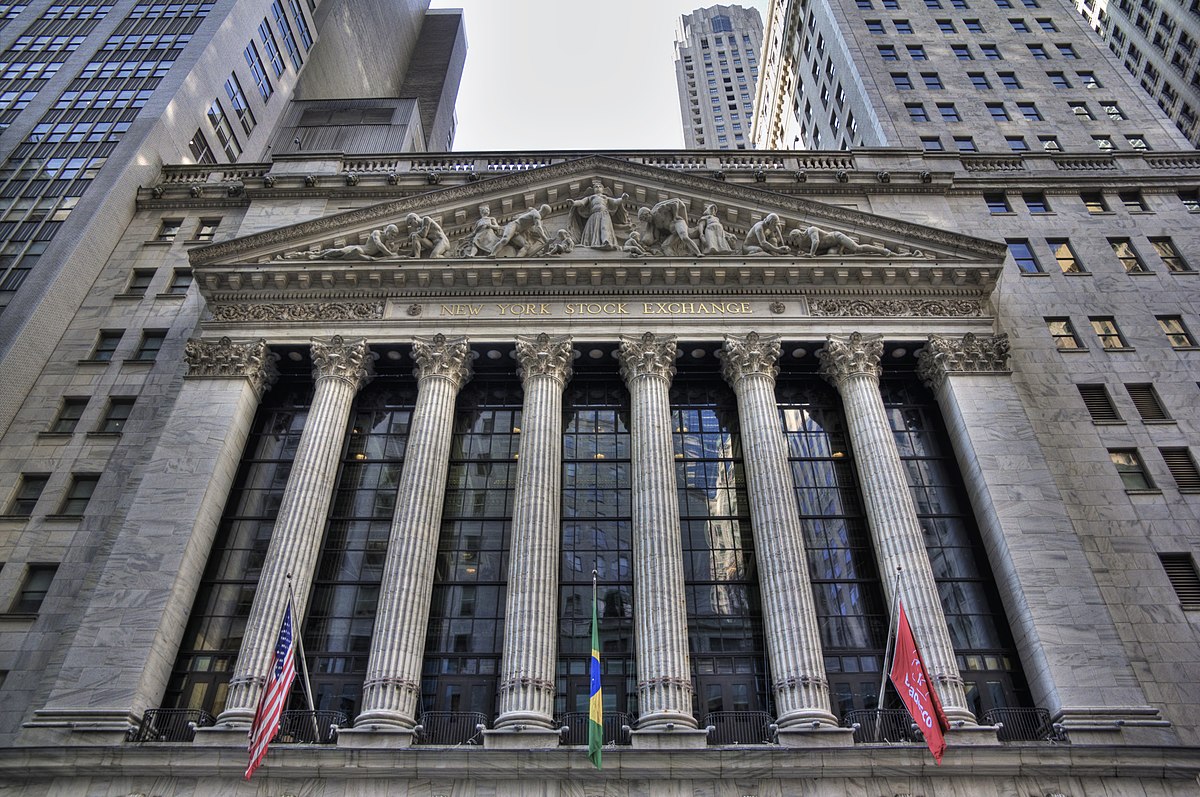
🏦BREAKING: The NYSE is nearing a $2B investment in crypto prediction market Polymarket, in a deal that could value the platform at up to $10B.
The deal is expected to provide the regulatory credibility needed for its U.S. market re-entry.
@FranciscoMemor reports.