Intel (INTC) Note Takeaways:
•Big Raise for Foundry Capacity
◦Intel 3: +80% (mainly Ireland) by end-2028 (vs end-2026)
◦18A: +100% (Arizona) by end-2028 (vs end-2026)
◦14A: Strong ramp in Oregon
•Capacity Drivers:
◦Robust server CPU demand
◦18A yields improving to ~80%, EMIB to 90-95% in recent weeks
◦Major U.S. fabless on pipeline
◦Major smartphone maker to start with 18A-P (tablets/PCs) + committed to 14A capacity
◦TeraFab project late-2028
•18A Capacity Shift:
Pathfinder Lake volume wafer capacity → Clearwater Forest (CWF) starts 3Q26, with full volume 1Q27 (expected to be ~1/3 of total 18A wafers)
•Financial Matrix:
◦IFS to turn profitable in 2H27
◦DCAI revenue +39% YoY in 2026E / +30% in 2027E
•Nvidia Collaboration: Likely includes x86 CPUs → PC (RTX + Nova Lake in 2027) → Server CPUs (Intel x86 IP + foundry) in late 2028
•TP Raised to $135
TSMC fumbles Copackaged optics for the Nth time like some fucking donkeys and now the whole industry is limping towards NPO, and the pod bros who price the entire AI TAM off Nvidia’s BOM line items still can’t actually explain what the problem is. So let me do the engineering for you, since clearly nobody on here will.
The bottleneck was never can you make light go through a waveguide. It’s all fucking thermals which is downstream of packaging. Specifically, how do you get a photonic engine onto the same substrate as a switch ASIC or XPU without your yield falling off a cliff and your reliability failing.
TSMC’s answer is CoWoS where they bolt everything onto one big monolithic silicon interposer. Cute, until you hit the reticle limit and start duct-taping interposers together (CoWoS-S, then -R, then -L, soon -PleaseStop). Every chiplet and HBM stack you add to that single interposer compounds your defect probability and one bad die leads to a five-figure package going into the dumpster. CoWoS is thermally retarded and the whole industry knows this and it’s why capacity “can’t expand” and Jensen is acting like a bouncer in the front of a club choosing who gets pass the velvet rope.
There is ONLY one company that will make copackaged optics work and expand in the rack… it’s not Lumentum, it’s not Coherent, it’s fucking INTELLLL.
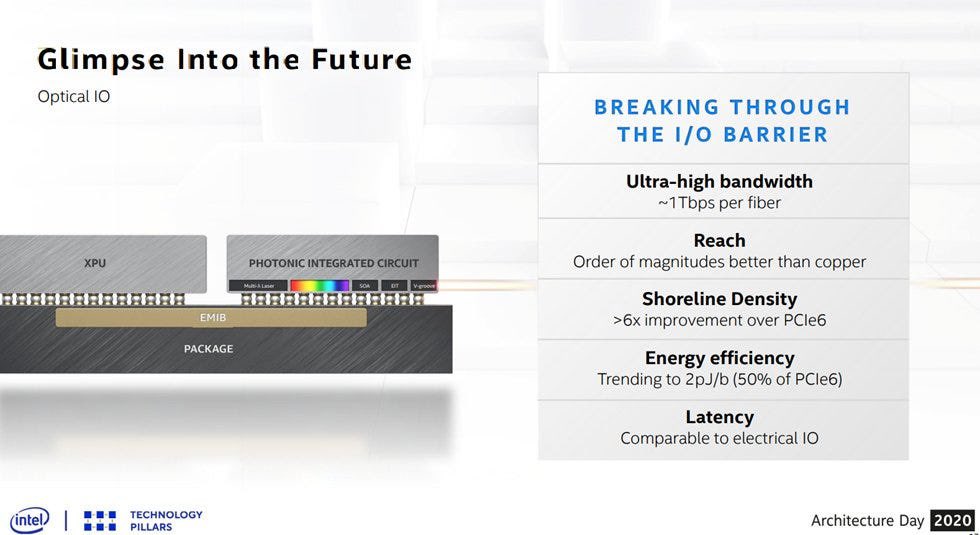
Intel’s EMIB gets rid of a giant reticle limited interposer and replaces it with a tiny silicon bridge that does the high-density coupling locally, exactly where you need it. You localize the hard part and the thermals in one area and your yield is ridiculously high. Comparing EMIB & CoWoS is so funny cause EMIB is north of 95% yield with like 12 reticle size equivalent package while CoWoS falls off a cliff after 5.5 reticles it’s that bad…now imagine adding thermally sensitive photonics.
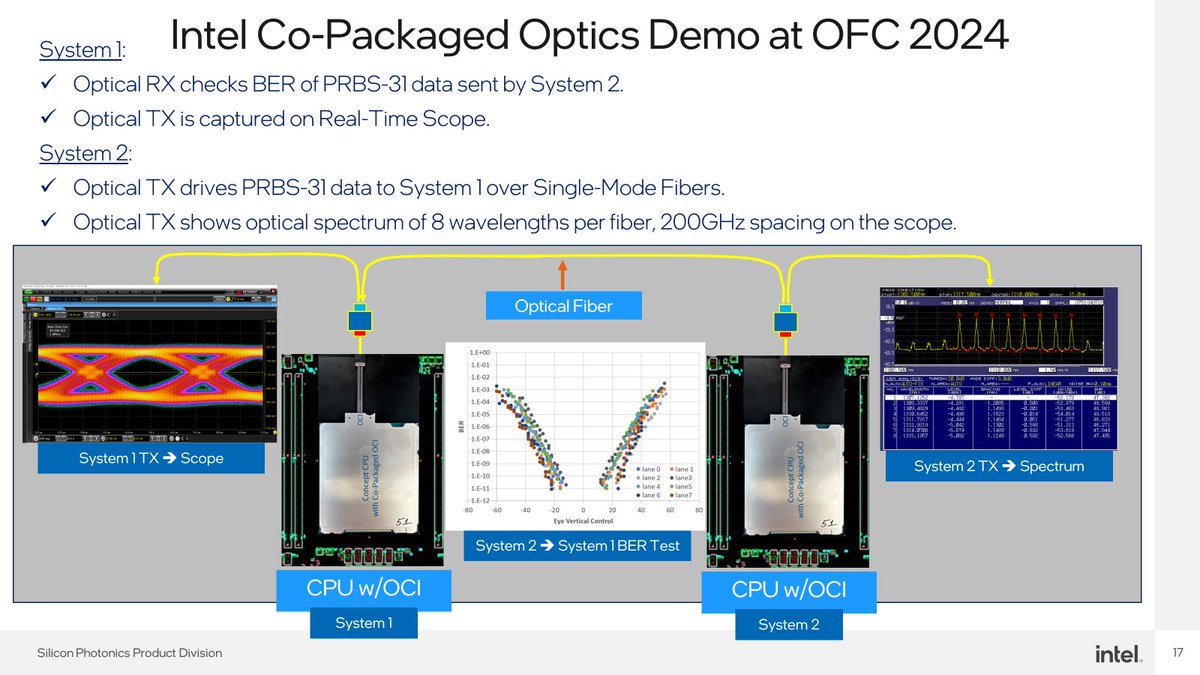
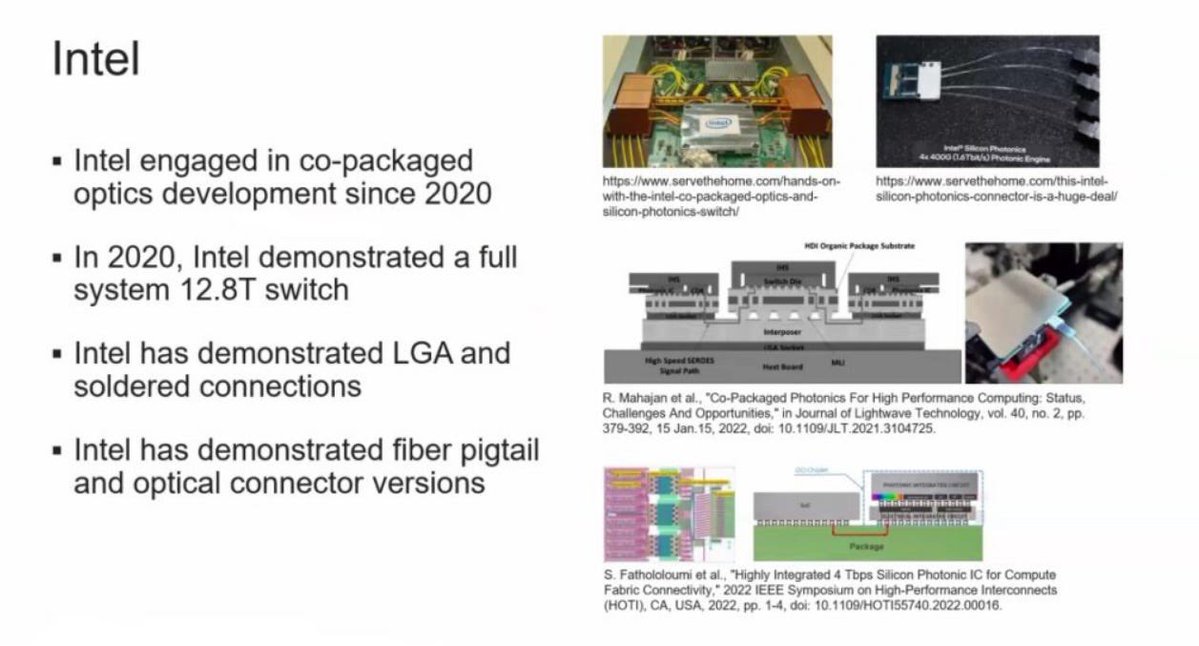
People don’t know this but Intel has been doing silicon photonics in-house for ~25 years... In 2024 they showed an Optical I/O chiplet doing 2 Tbps bidirectionally at ~5 pJ/bit, with the PIC and EIC co-packaged right against the ASIC and it’s all because of EMIB. And even more critically than that, they’ve actually run the fiber-attach and reliability/test flow to JEDEC-grade standards already, which everyone hand-waves until their links flap in production.
My prediction is clear: Intel will capture over 90% of the copackaged silicon photonics market in the next five years because there is NO ALTERNATIVE.
Al Naslaa: the Saudi rock formation that looks like it was cut in half by a giant laser
The sandstone formation is famous for its remarkably straight split. While some speculate about aliens, geologists say natural fracturing and erosion are the most likely cause
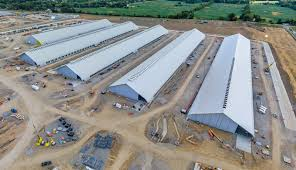
Meta is building dozens of massive tents at campuses across the US, sticking billions of dollars of chips inside, and powering them with off-grid turbines.
The AI race has officially entered its Mad Max phase.
Over the last month, I reviewed hundreds of documents and satellite images for Cleanview's latest report on behind-the-meter data centers. Meta's data center strategy, which is very visible from space, was one of the weirder approaches I came across.
Mark Zuckerberg recently ditched the data center designs that Meta had perfected over the last decade and told his team to stick tens of thousands of chips in tents outside their data center in New Albany, Ohio. Each of these chips costs about $60,000. Zuckerberg plans to stick billions of dollars worth of them in the tents.
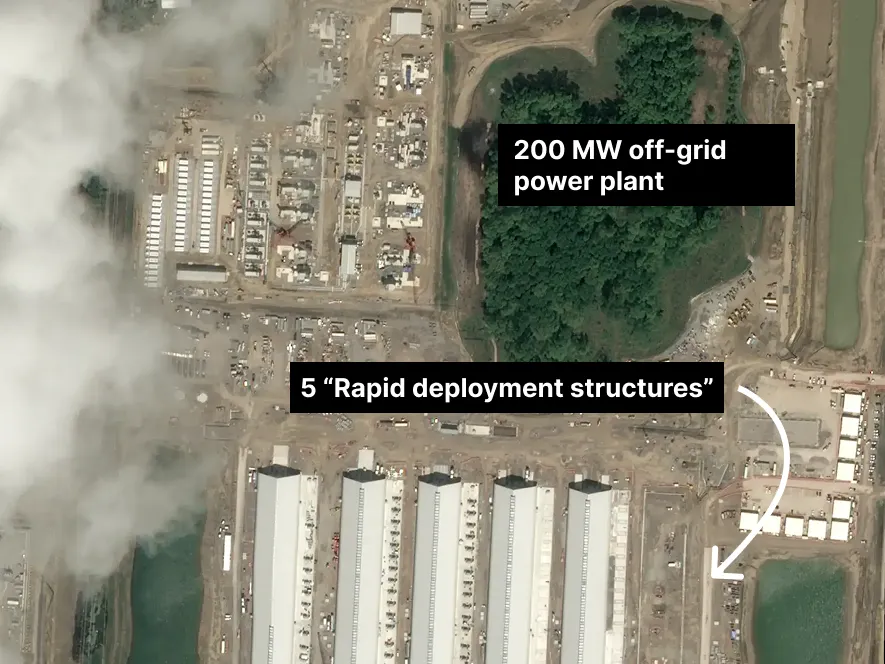
The strategy has helped cut the time to build compute in half. The first five buildings at Meta’s New Albany, Ohio data center took between two and three years to build. Meta started building five ~125,000 square foot tents between April and June of 2026, according to city permits. Satellite images show the structures have all been built.
To power those "rapid deployment structures", as they are officially named, Meta signed a 10-year deal with Williams to build a pair of 200 MW off-grid power plants. Those power plants began construction about a year ago and are nearly complete.
Meta is using the same strategy to build a data center in Tennessee, bringing the total count of tent data centers to three.
Strategies like this are part of the reason behind-the-meter data center capacity is growing so quickly.
In Cleanview's report, I found that there's currently about 2 GW of BTM capacity online today. By the end of the year, it will likely be 3 GW—equivalent to three nuclear power plants. By the end of 2027, it could be as high as 13 GW—more than the power demand of NYC.
I've been talking to a lot of reporters about this research. When I told one reporter about these tents and other companies powering their data centers with jet engines, he said, "It's like a scene out of the movie Mad Max."
This is a really interesting paper about stock performance.
If you bought $AMD at the close every day and sold at the open the next day, over decades you’d have gotten a whopping +4,555,517% return.
But if you bought at the open every day and sold at the close the same day, you’d have lost almost everything – down -99.94%.
This pattern holds across every major market globally. This just reiterates that time IN the market beats anything else.
Other examples:
$MU: overnight +138,330,342% – intraday -99.92%
$NVDA: overnight +221,715% – intraday -99.7%
Same stocks. Completely opposite outcomes depending on when you hold it, overnight risk premium pays, intra day trading doesn’t.
So OpenAI and Anthropic are both designing their AI chips. And next week Trump will meet them and demand equity shares of them. And USG invested in $INTC which is now very aggressively expanding its ASIC business, already onboarding Microsoft and Amazon and others. Did you connect the dots here? Very likely $INTC will also get involved in chip designs of OpenAI and Anthropic and their future chips’ fabrication and packaging.
Intel is deepening our collaboration with Foxconn to build next‑gen AI infrastructure for data centers, edge AI, and physical AI. Our collaboration aims to give data center and cloud customers AI racks that are denser, more power‑efficient, and ready for the next wave of agentic workloads. Thank you, Young Liu and Jerry Hsiao, for your partnership.
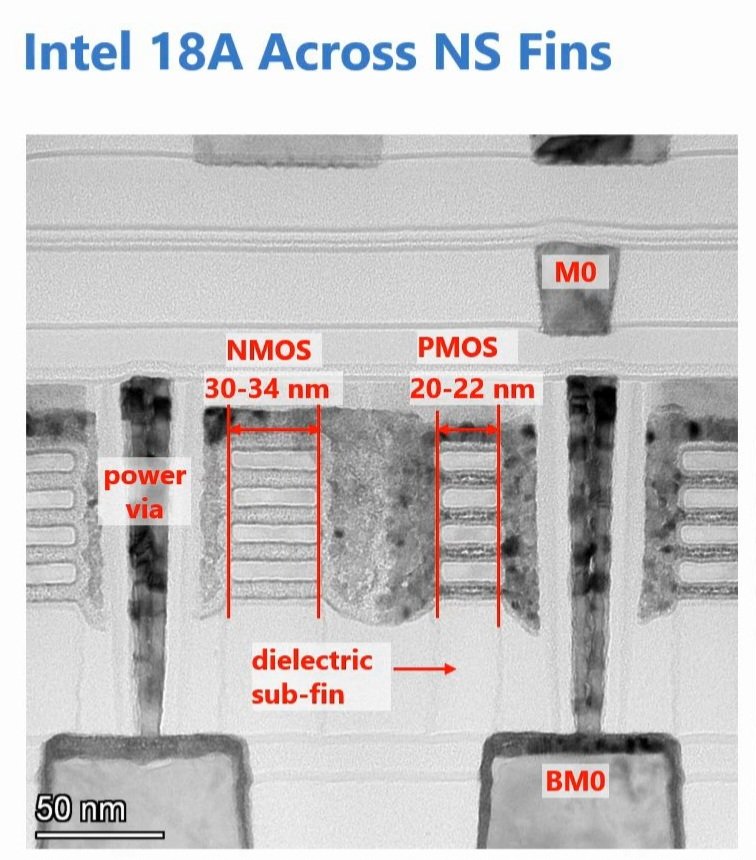
Intel 18A is a game changer. This is an absolutely amazing TEM image of the nanosheet & power via patterning at play here in this device. Flawless.