🚨 nasa you have to see this
50 Grok Bot agents rebuilt one of your own planets overnight for $200, and it looks better than anything in the archive
TRAPPIST-1 e, catalogued in 2017, never once photographed: 0.92 Earth radii, 0.692 Earth masses, a year that lasts 6.101 days, 249 kelvin, orbiting 0.02925 AU from a 2566 kelvin red dwarf, 40 light years out, 7 worlds in the system.
every figure burned into that panel came out of NASA's exoplanet archive over one public url and carries its own citation. the cities are mine and the frame says so
turns out the build is five moves, and none of them are the ones people demo:
1. pull the data before a single frame exists. the archive answers a plain GET at https://t.co/CUayvLhkPg, takes sql, returns csv across all 6,000 confirmed planets. hand one bot that url and it stops inventing numbers forever
2. shard by shot, not by task. a bot drives one screen at a time, so speed comes from more bots and never from a smarter one. one bot per shot, all of them on their own cloud machines at once
3. keep every recorded skill under 10 minutes, because that is the hard cap. split it: "log in and start the render" is one skill, "check it and download it" is a second on a 5 minute schedule. a long job is a chain of short skills, not one long recording
4. do not let bots message each other to coordinate. they loop, and the loop quietly eats your quota. give them one shared folder and have each drop a file when its shot lands
5. run the last bot in a clean context holding the source csv and nothing else, and make it check every number on the panel against the row it came from
honest ceiling: 10 minutes per recording and one screen per bot, so 50 of them buys width and not speed
bookmark this. all 50 prompts go up in 24 hours ↓
@Starlink Somebody needs to invent this bracket for people who live in apartment buildings. I had to return my Starlink for not having enough angle for reception. @elonmusk
Blender tutorials are about to age very badly.
In this demo, Kimi K3 gets two character references and a plain-English request. Minutes later, it builds the first version inside Blender. The user asks for a better horn, Kimi edits the same scene, and the character starts moving.
This is not another AI tool generating one lucky image. It is working with an actual editable 3D project, then changing the geometry after feedback instead of restarting from zero.
It still needs human direction, because the first result is rarely the good one. But blockouts, repetitive edits, Blender Python, and basic iteration are becoming a conversation rather than hours of clicking through menus.
Kimi K3 + Blender MCP is basically turning 3D modeling into: describe it, inspect it, complain about it, and let the AI fix it.
If you start a faceless YouTube channel today, you could be making $9500/month by August 2026.
Usually, I charge $87 for this guide, but today I'm giving it away for free.
Like + comment "YouTube" & I'll send you my guide for FREE.
Must follow me to get DM.
Free for next 48 hours.
Free City Assets for Three.js are live!
🏙️ 23 assets: towers, shops, street furniture, cars
🎨 4 palettes: Day, Warm, Cool, NIGHT
📦 Need the full set? 66+ assets await (single pack or with All-Access Pass)
Downloads available on our website now 🔥
Reused a character set from another app I made. The 3D models were generated with Tripo, and the prompt used the same images that were used to generate those models
https://t.co/JIjccT20o1
Made a game character selection screen with GPT-5.6 Sol
Started with a few character images generated with GPT Image 2
Then asked GPT-5.6 to design a polished game character screen around them
Here's what it came up with
Almost every robot you see... runs on this equation.
Not AI. Not machine learning. PID.
For over 100 years, this simple control algorithm has been quietly keeping robots balanced, drones stable, industrial machines precise, and even rockets on course.
Most people never hear about it. Yet without PID, many of today's robots wouldn't even stand upright.
If you could only learn ONE control algorithm in robotics... this would be it.
What's the most impressive application of PID you've seen?
🎥 Media: medcorreia ( Instagram )
⚠️ This content is shared for informational purposes only. CTO Robotics Media is a media platform and does not own or develop the technology shown. Credit belongs to the original creators.
I coded a Sagittarius A* simulation: the supermassive black hole at the center of the Milky Way, about 27,000 light-years away and roughly 4 million solar masses. UI controls adjust disk intensity, lensing, bloom, and simulation speed.
🚨 Anthropic just showed a 27-minute workshop on how to actually do prompts for Claude.
Taught by the people who built it.
Free. No registration. No paywall.
I've seen $300 courses that don't cover what they teach in the first 8 minutes.
Watch it and bookmark it now.
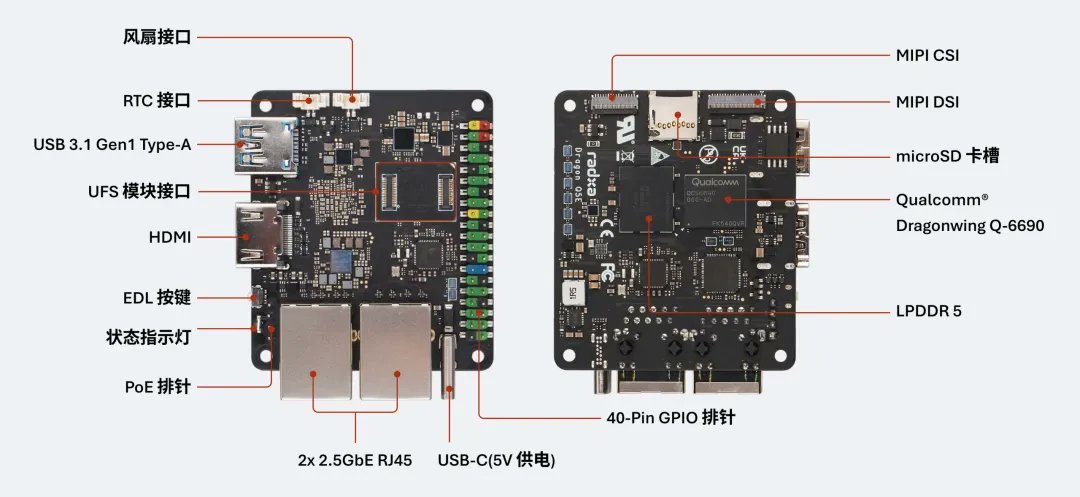
.@RadxaComputer expands its partnership with @Qualcomm with 22 SBCs, SoMs, NAS systems, and clusters planned.
https://t.co/m6uPWxUYff
Notably, the Radxa Q8E SBC is powered by a @Snapdragon 8cx Gen3 SoC, and the more compact Radxa Q5E dual 2.5GbE SBC by a Dragonwing QCS6690 SoC.
The company is also working on two NAS systems. The 6x M.2 NVMe socket DragonStation, and the 4-bay DragonBay NAS using 3.5-inch SATA drives.