Open-source project to create no-code, neat dashboards for Home Assistant on ESP32-based display devkits.
https://t.co/LzWQytwkof
The Tessera firmware adds a layer to ESPHome firmware for display management, touchscreen handling, dashboard rendering, tiles, plugins, and more. It works with the Tessera Screen Manager, which provides a Home Assistant interface to configure screens, manage layouts, install firmware, and push updates. The solution is designed to be easy to use with a drag-and-drop editor, and users don’t need to know anything about YAML or MQTT.
It works with 2.8-inch to 10.1-inch displays from Waveshare, Guition, CYD, and others.
Open-source hardware CNC machine with integrated CAM software for PCB, 2D, 3D, and rotary milling
https://t.co/8J7sRhIlrv
InMachines Piccola CNC is designed for PCB prototyping and machining wood, plastics, and soft metals such as aluminum, brass, and copper. The machine features a 150 × 150 × 70 mm work area, belt-driven ball screws on all three axes, ER11 collets, and a choice of 100W or 200W spindles.
Its integrated CAM software uses EasyTrace5000 for PCB fabrication and Kiri:Moto for general 2D, 3D, and rotary machining. All hardware and software resources will be released after the Kickstarter campaign is over.
Sponsored: VZMORE iX9 Max mini PC is now $151.84 off for Black Friday 2026.
https://t.co/OORXnhhSrV
The Windows 11 Pro computer is powered by a 16-core/22-thread Intel Core Ultra 185H paired with 24 GB of LPDDR5-5600 memory and a 1 TB NVMe SSD. It supports up to four simultaneous displays via HDMI 2.0 and USB4 ports, offers six USB Type-A ports, two 40 Gbps USB4 ports, and two 2.5 GbE ports, as well as Wi-Fi 7 and Bluetooth 5.4 wireless connectivity.
It’s now available for $797.16 ($151.84 off) with the coupon code IX9CNXBFOFF. Details in the link above.
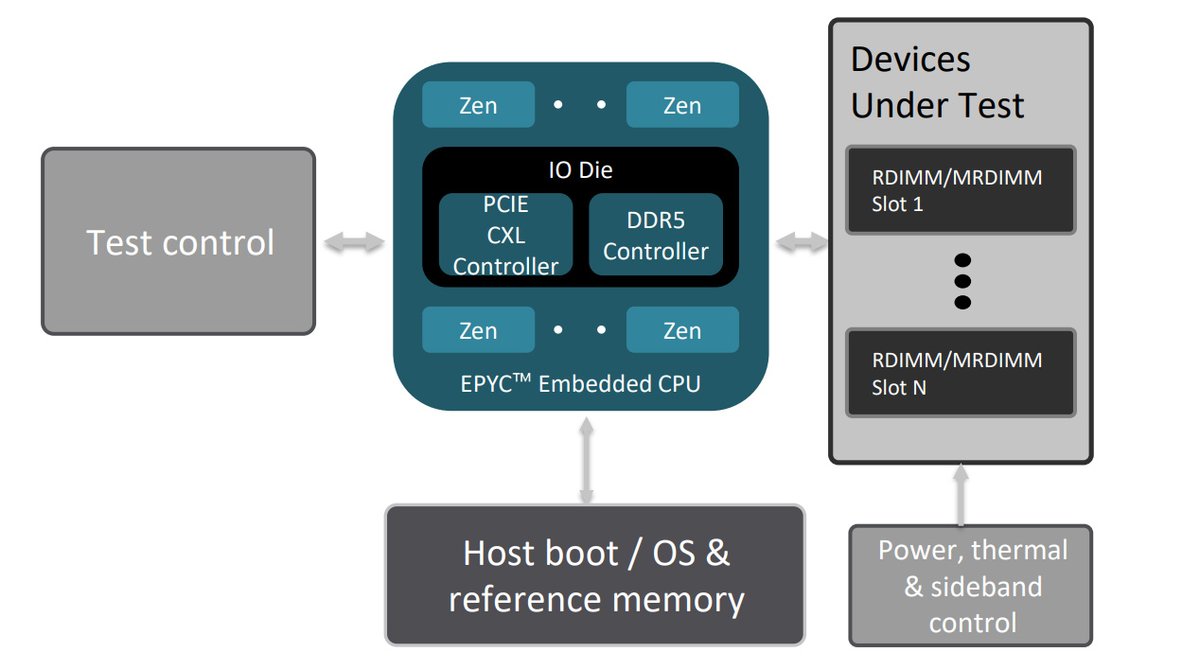
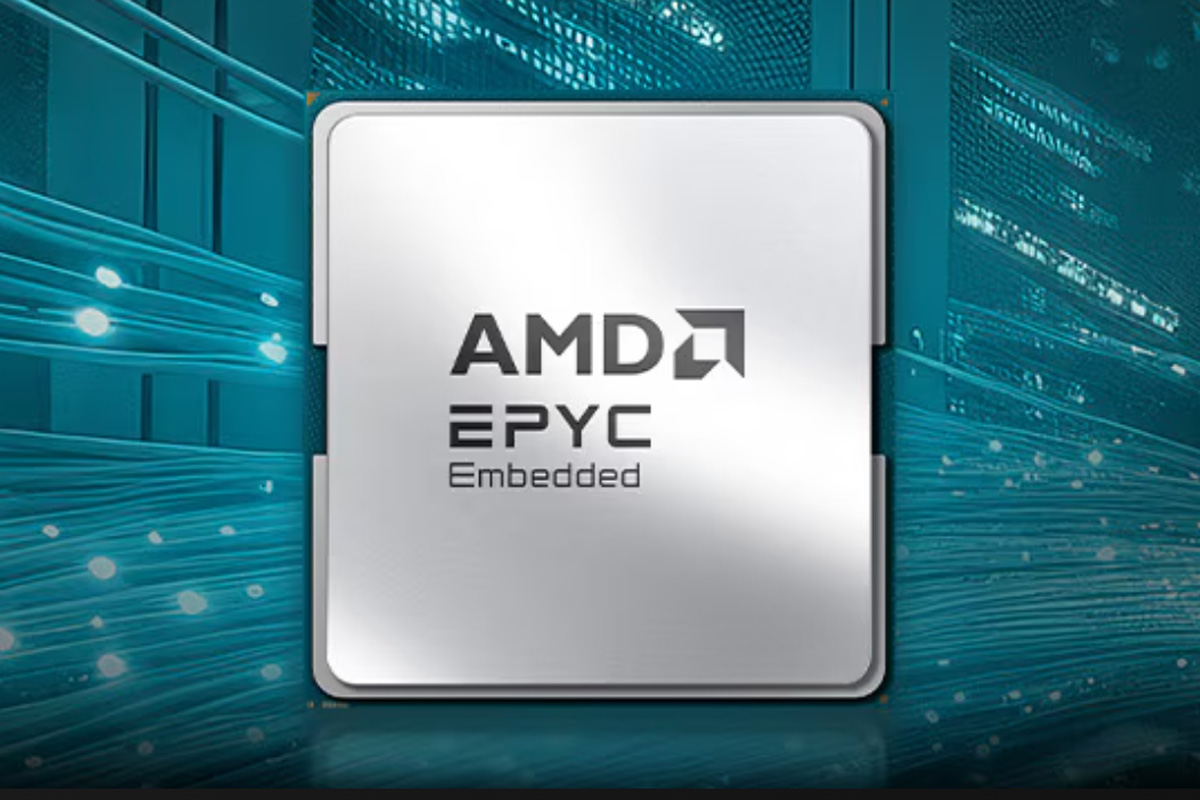
.@AMD Ryzen EPYC Embedded 9005 series CPUs offer up to 256 Zen6c cores, 96-lane PCIe Gen 6, up to 1.6 TB/s memory bandwidth.
https://t.co/m9mJLkGU62
Designed for semiconductor automated test equipment (ATE), networking appliances, firewalls, and enterprise storage controllers, the new embedded processors also feature up 1GB of L3 cache, 16-channel DDR5 memory with RDIMM and MRDIMM support, and CXL 3.1 connectivity.
AMD provides embedded-focused firmware and software support, ongoing security updates, and development documentation. The platform also supports enterprise reliability features such as memory error correction, fault containment, and telemetry for long-term system maintenance.
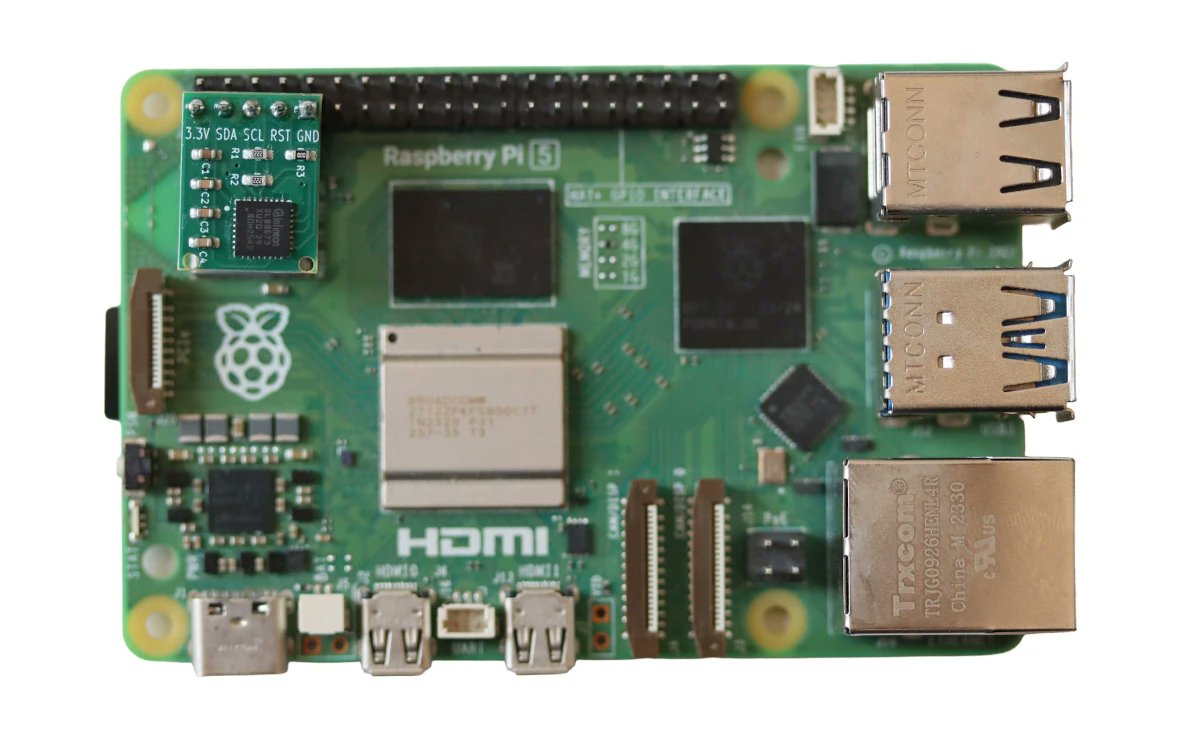
4-in-1 Raspberry Pi HAT with RTL-SDR, LoRa, GNSS, and RTC.
https://t.co/MCWTenYzO2
Hacker Gadgets RTL-SDR/LoRa/GPS/RTC HAT features an RTL2832U+R860 combo supporting 100 kHz to 1.74 GHz frequency and 100 kHz-28.8 MHz HF direct sampling, a Semtech SX1262 LoRa transceiver supporting Meshtastic firmware, a GPS + Beidou/GLONASS GNSS module, and an NXP RTC. Users can select between U.FL and SMA versions depending on the type of antennas they plan to use.
Raspberry Pi OS 64-bit is recommended, and the company provides documentation to get started with all features of the 4-in-1 HAT.
Review of @TimekettleTech LiveTalk AI translation earbuds
https://t.co/mYK5bho8nD
The earbuds work with the Timekettle app for Android or iOS. We tested all four AI translation modes: face-to-face, voice calls, live translation, and multimedia translation.
The AI translation features work as advertised, but there may be a lag of a few seconds, and translations are not always perfect due to a lack of contextual awareness.
7-inch ESP32-S31 touch display devkit with a 100 Mbps Ethernet port.
https://t.co/33akMzyNRK
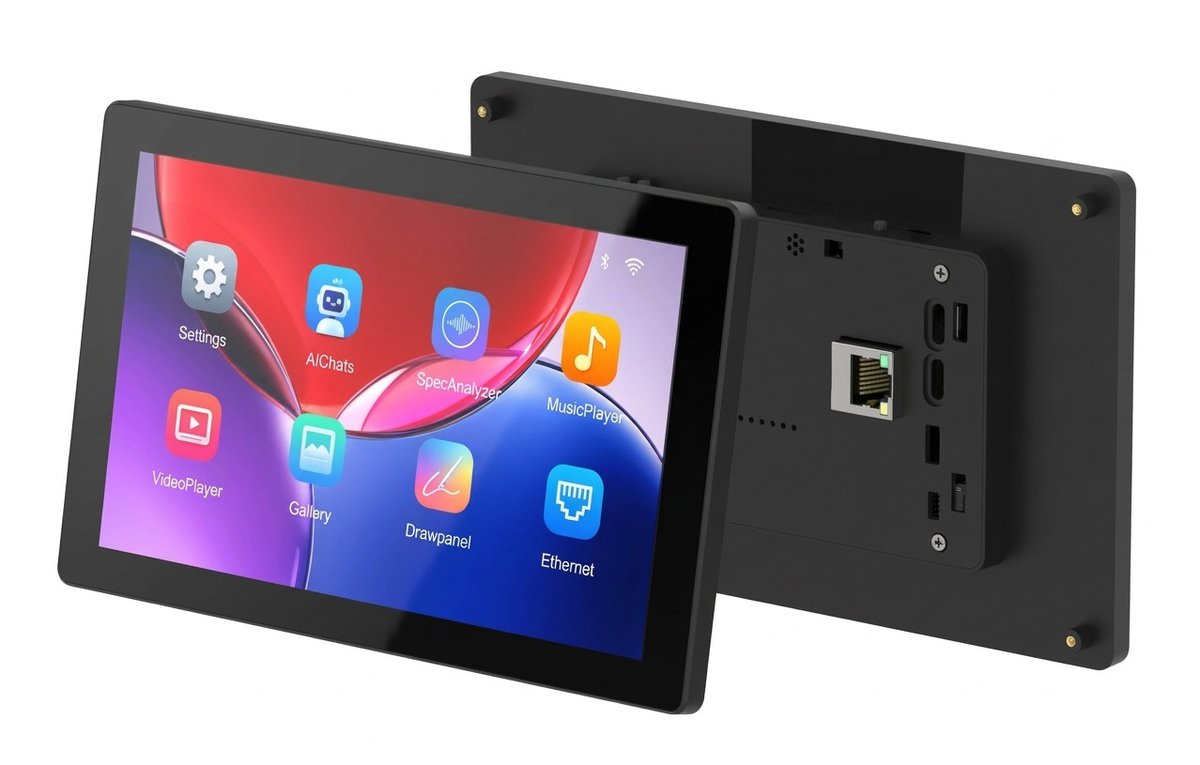
The GUITION JC1060F570C features 16MB SPI flash and 16 MB PSRAM, iFI 6, BLE 5.4, 802.15.4, and Ethernet connectivity, a speaker and a microphone, two USB-C ports, UART, I2C, and RS485 connectors, and more.
It can be programmed with the Arduino IDE or the ESP-IDF framework. It's also relatively cheap, selling for under $30 on AliExpress with an enclosure: https://t.co/q1AayjCAG4
ESP32-S3-based IoT controller that takes daisy-chained modules over UART.
https://t.co/hQMsMqS9cz
@M5Stack Chain Captain features 16MB SPI flash and 8MB on-chip PSRAM, a 1.54-inch color display, a speaker and a microphone, a motion sensor, IR Tx/Rx, Chain and Grove 4-pin ports, a 15-pin GPIO header, and several buttons and RGB. It’s powered by an 800 mAh battery that can be charged at 5V through USB-C or any of the expansion connectors.
It can be programmed with the Arduino IDE, the UIFlow2 visual programming IDE, or the ESP-IDF framework. The Chain protocol enables connecting multiple UART modules in series.
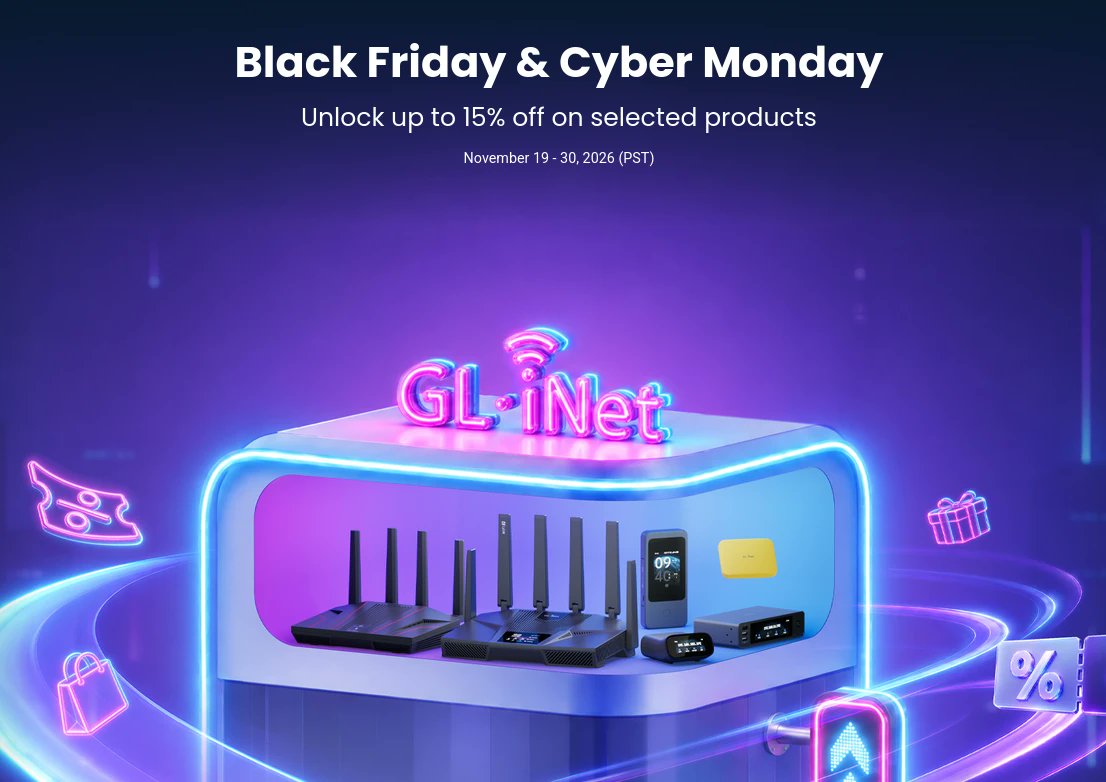
International deals and coupons for Black Friday and Cyber Monday 2026.
https://t.co/wmcl1SE9uT
We focused our list on maker and IoT products such as MCU dev kits, SBCs, mini PCs, networking equipment, 3D printers, laser engravers, and so on.
More will be added in the comments section on the CNX Software website, as new deals come along.
ESP32-S31 devkit with 4.3-inch color touchscreen, optional DIN rail enclosure.
https://t.co/7oblXpUHil
@Waveshare00 ESP32-S31-Touch-LCD-4.3C development kit features an ESP32-S31-WROOM-1 module with 16MB flash and 16MB PSRAM, a 4.3-inch 800×480 touchscreen display, RS485 and CAN Bus interfaces, and more. It also offers a wider 7V-36V voltage input and 3.7V Lithium battery support.
The company provides 16 code samples using the ESP-IDF 6.1 framework to demonstrate hardware features.
Open-source hardware TPM 2.0 I2C security module for Raspberry Pi SBCs.
https://t.co/wFHiysSvFP
@AnaviTechnology I2C TPM 2.0 add-on board is based on the @Infineon Optiga SLB 9673 TPM 2.0 chip and is available with horizontal or vertical headers.
It works out of the box with Raspberry Pi OS (and other Pi-compatible distributions) and is especially useful for disk encryption, secure key storage, and cryptographic operations, but also works as a True Hardware Random Number Generator (TRNG).
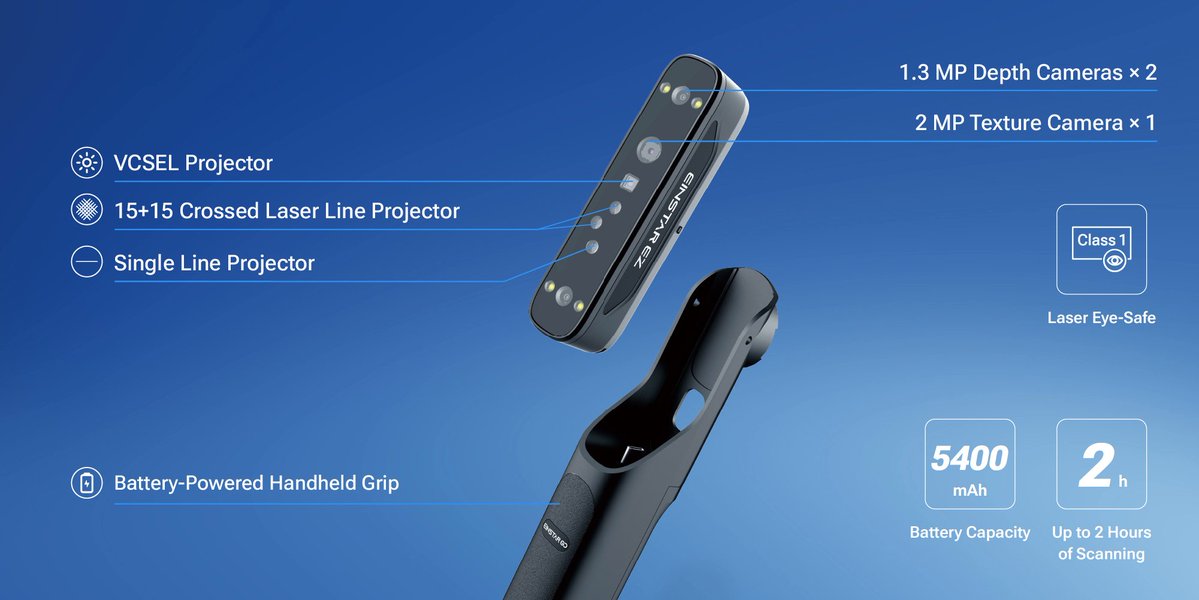
Sponsored: @Shining3D EINSTAR EZ GO: an AI-powered mobile 3D Scanner
https://t.co/yL1Q917rfh
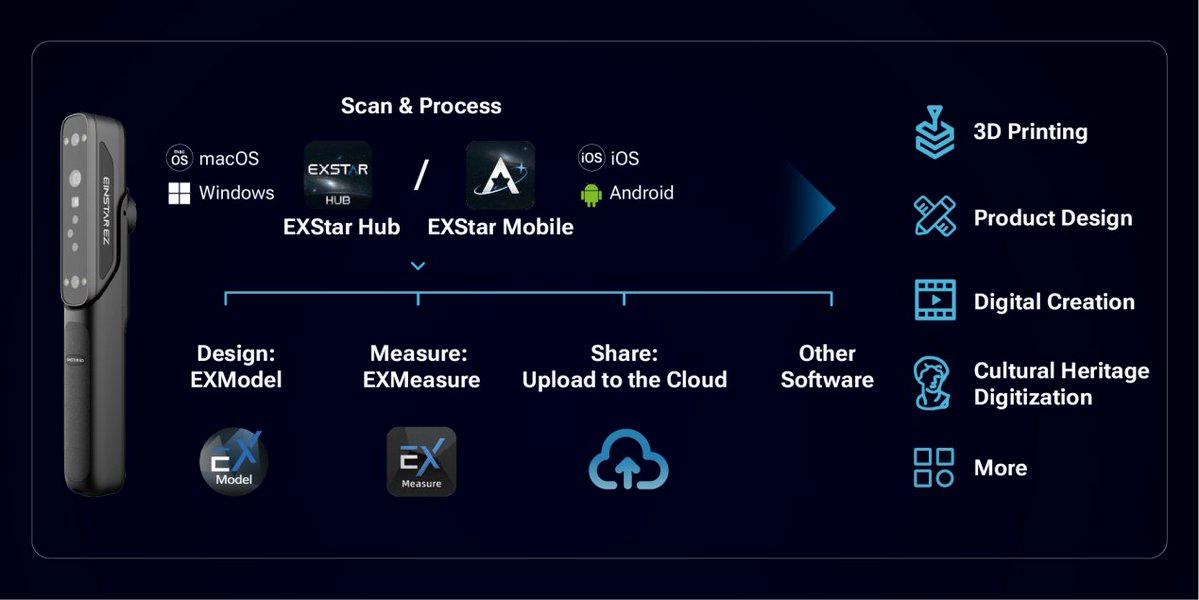
The 3D scanner combines wireless mobile scanning, versatile laser and infrared technologies, and AI-powered tracking and assistance.
Scanning is only the beginning. With cloud-powered 3D Gaussian Splatting processing and seamless integration with the SHINING 3D software ecosystem, including ShiningSpace, EXModel, and EXMeasure, EZ GO helps turn real-world objects into digital assets and digital ideas into creations.
Smart Home controller with IR blaster, Matter 1.3, 2.4 GHz WiFi, and Bluetooth 4.2.
https://t.co/AuEZaTgba6
@SwitchBot Hub 4 features a color display, physical controls (buttons and knob), and the company's Hello Kata voice control solution. It supports over 101,000 infrared appliances, including air conditioners, televisions, projectors, fans, streaming devices (Fire TV, Apple TV, and Android TV), and more. The hub can also control Bluetooth HID devices, SwitchBot devices, and Matter devices via on-screen touch shortcuts and the rotary knob.
Hub configuration and adding IR/Bluetooth control devices are done through the SwitchBot app for Android/iOS. Sold for $119.99 on Amazon: https://t.co/JKNxmArbGn
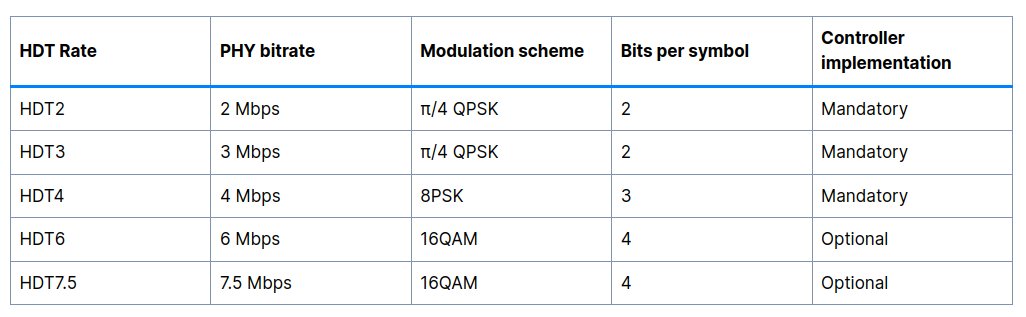
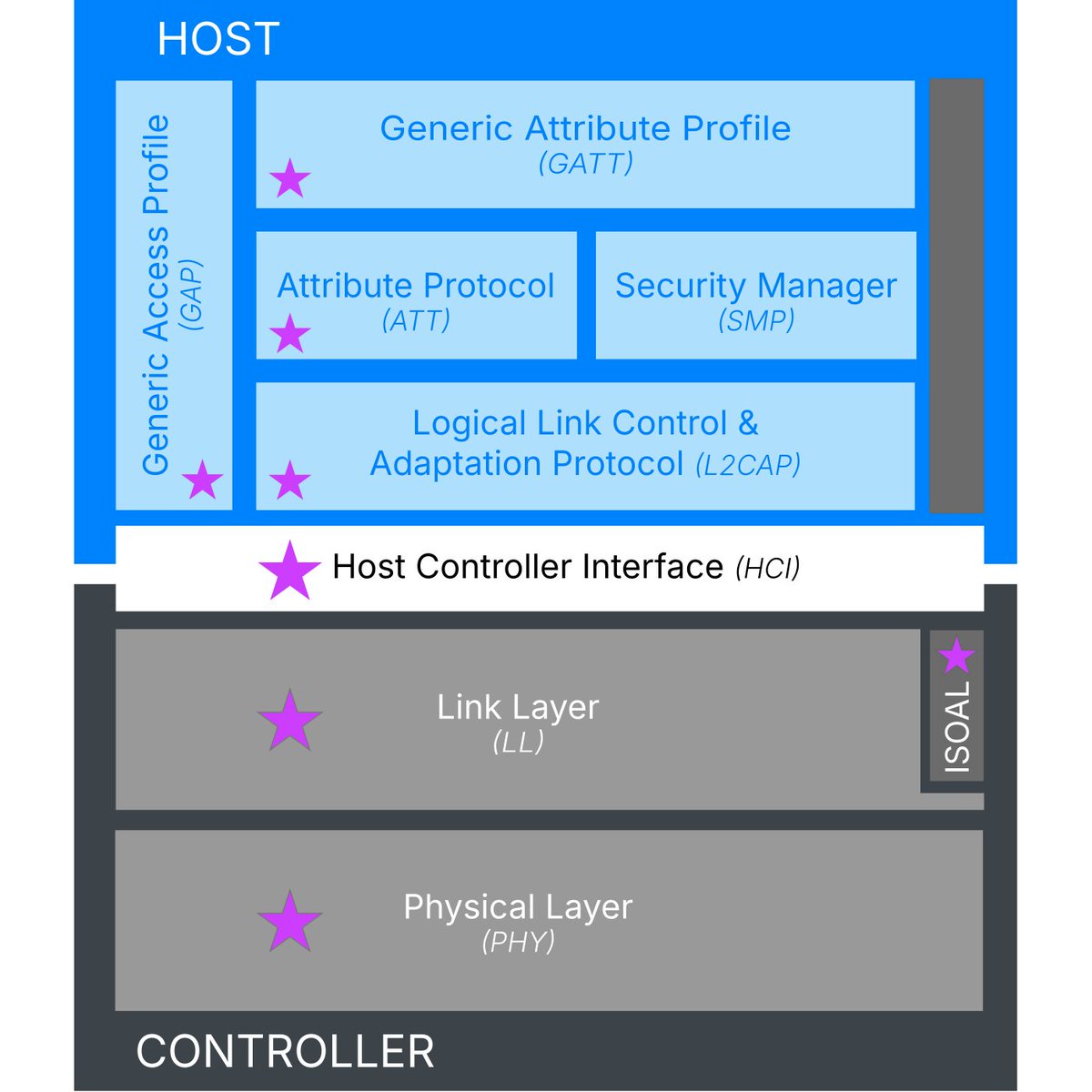
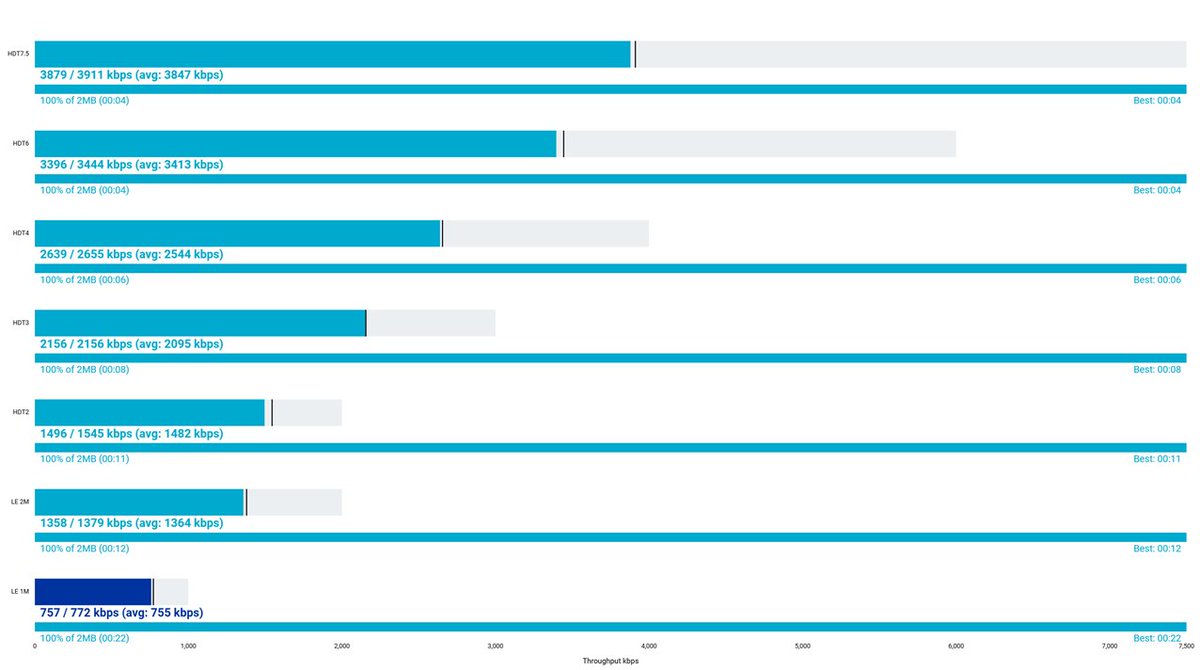
.@BluetoothSIG 7.0 specification released with HDT (High Data Throughput) enabling up to 7.5 Mbps bitrate
https://t.co/hzL4byQdd7
Other key changes include Bluetooth LE Isochronous Parameter Update (IPU), Bluetooth Encryption Key Schedule (EKS), Bluetooth Transient Application Key (TAK), and Bluetooth Encryption Production Debugging (EPD).
While LE 2M/1M is still ideal for low-power applications, HDT will be great for lossless audio, syncing fitness data from wearables, PC peripherals with small displays, and external AI processing (on a smartphone) for smart glasses.
Breadboard simulator that runs in web browsers.
https://t.co/f5LPPmEbAs
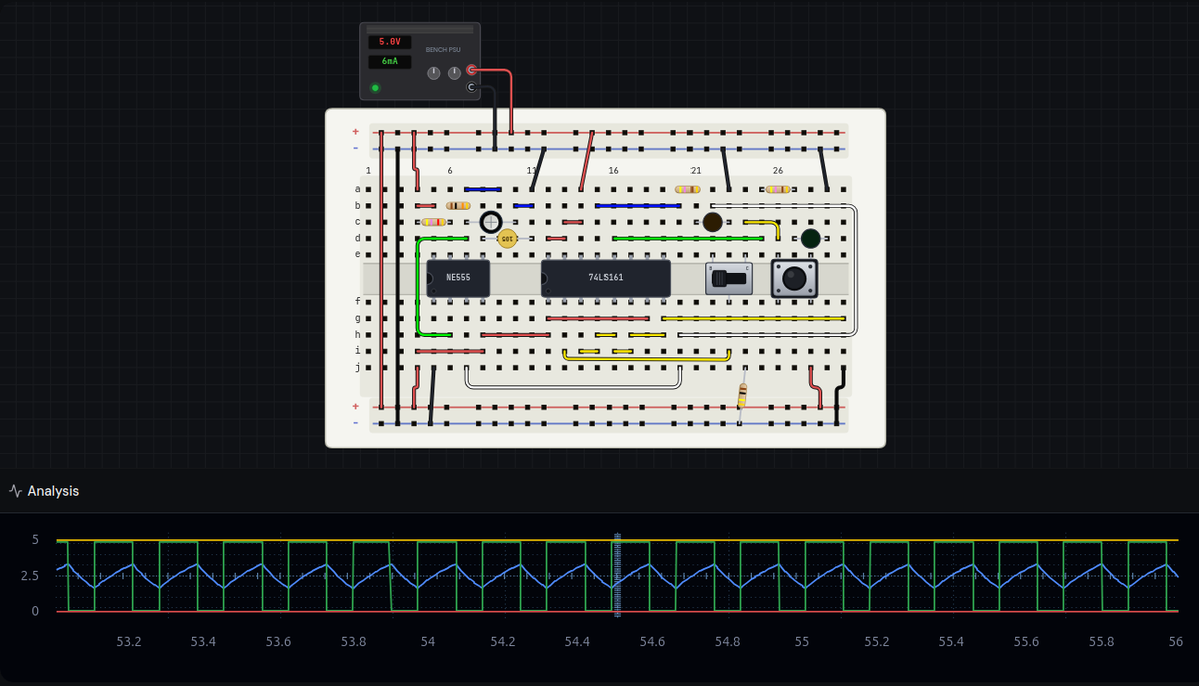
The de:volt simulator lets users place parts and wires on a breadboard, and the circuit runs live the whole time as you build it. The project aims to be as close as a real breadboard would be. It reports errors and warnings, and you can monitor pins with its built-in oscilloscope and/or multimeter.
For instance, an LED with no resistor burns out, a weak battery sags under load, a motor pulls current, and a 555 on the 4-channel scope shows its timing capacitor charging and discharging.
We quickly tested it with an LED circuit and a Raspberry Pi RP2040 board. It's free to use, except for premium features (AI, logic analyzer, etc..).
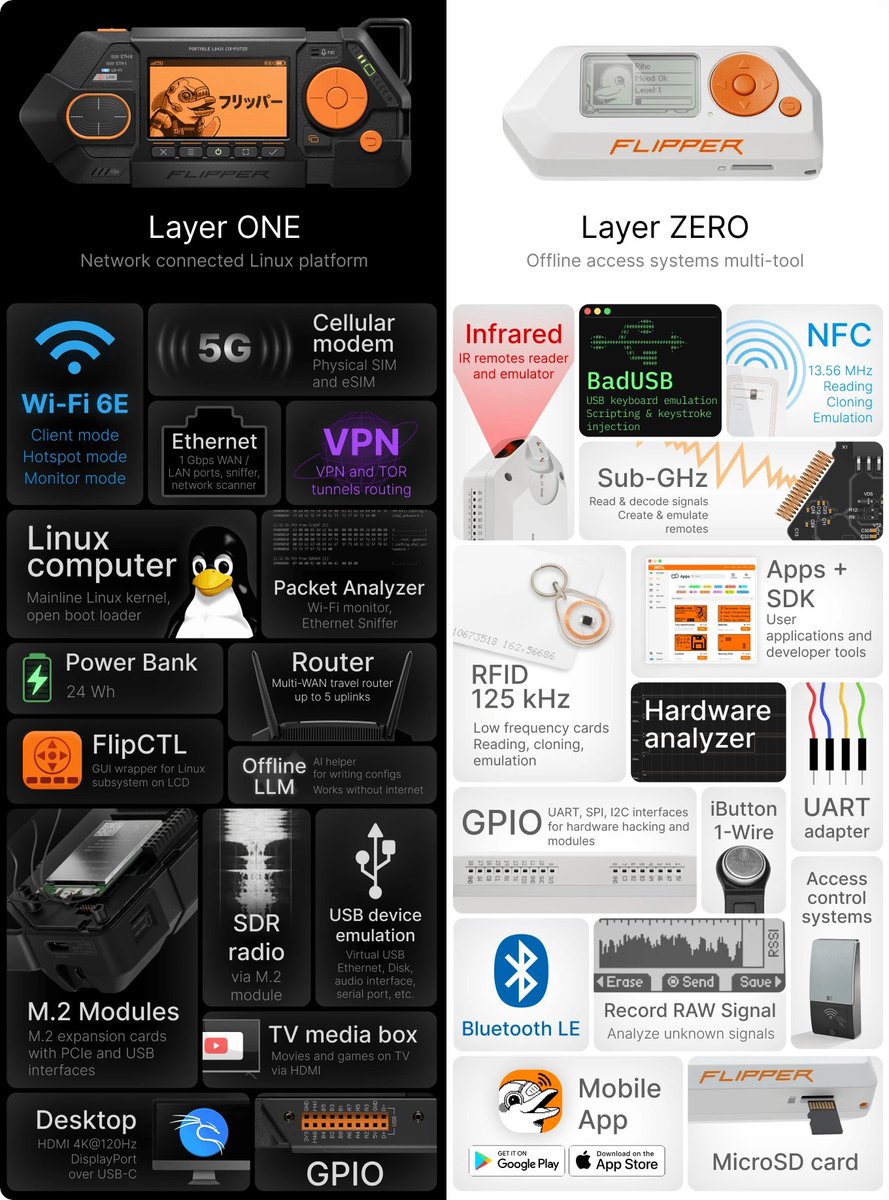
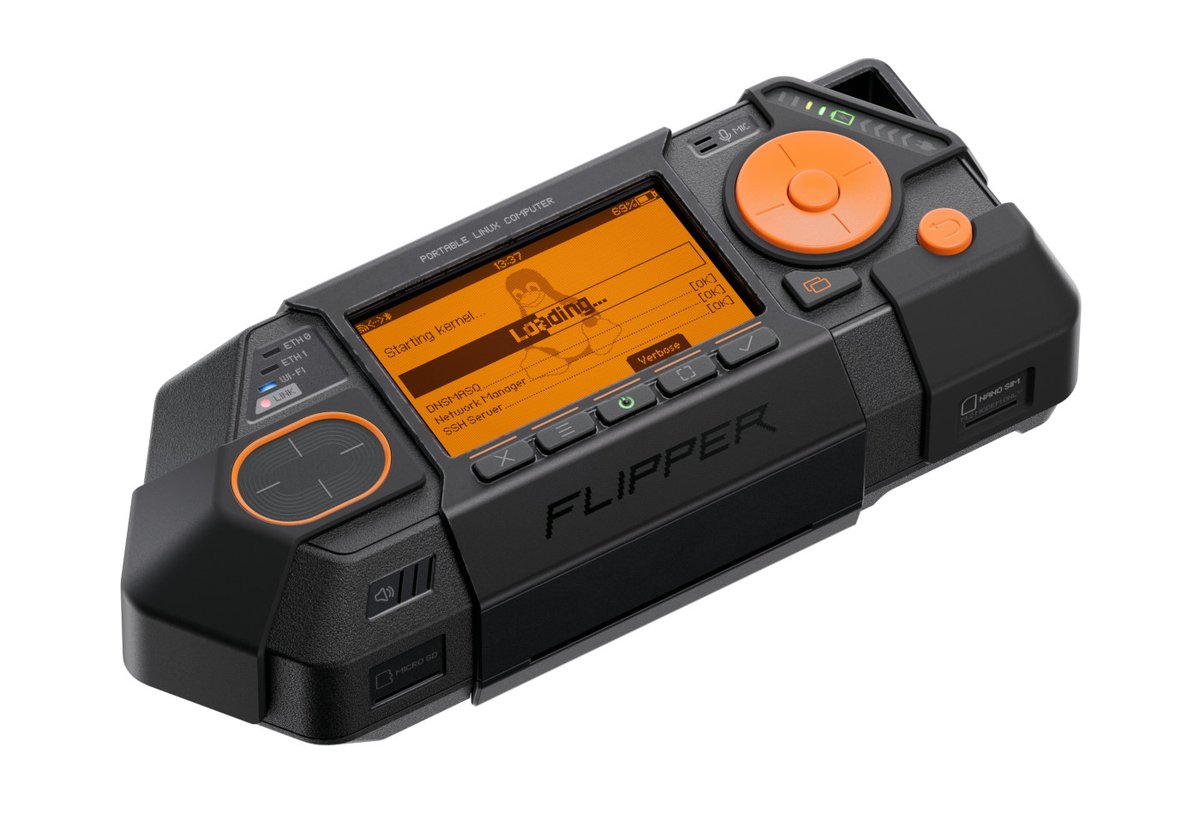
Flipper One Arm-based network multitool has just launched on Kickstarter. $10 million has been raised so far.
https://t.co/HZMFQrsamo
The device features a Rockchip RK3576 octa-core Arm Cortex-A72/A53 SoC running Linux and a Raspberry Pi RP2350 microcontroller for low-level control.
Built-in connectivity includes Gigabit Ethernet, Wi-Fi 6E, and Bluetooth 5.2, but @Flipper_Net also designed add-on modules for 5G cellular connectivity, LoRa (Meshtastic/MeshCore), and SDR (Software-Defined Radio).
The project is open-source hardware with Altium hardware design files, Linux (Debian-based Flipper OS), FlipCTL UI framework, and other resources available publicly.
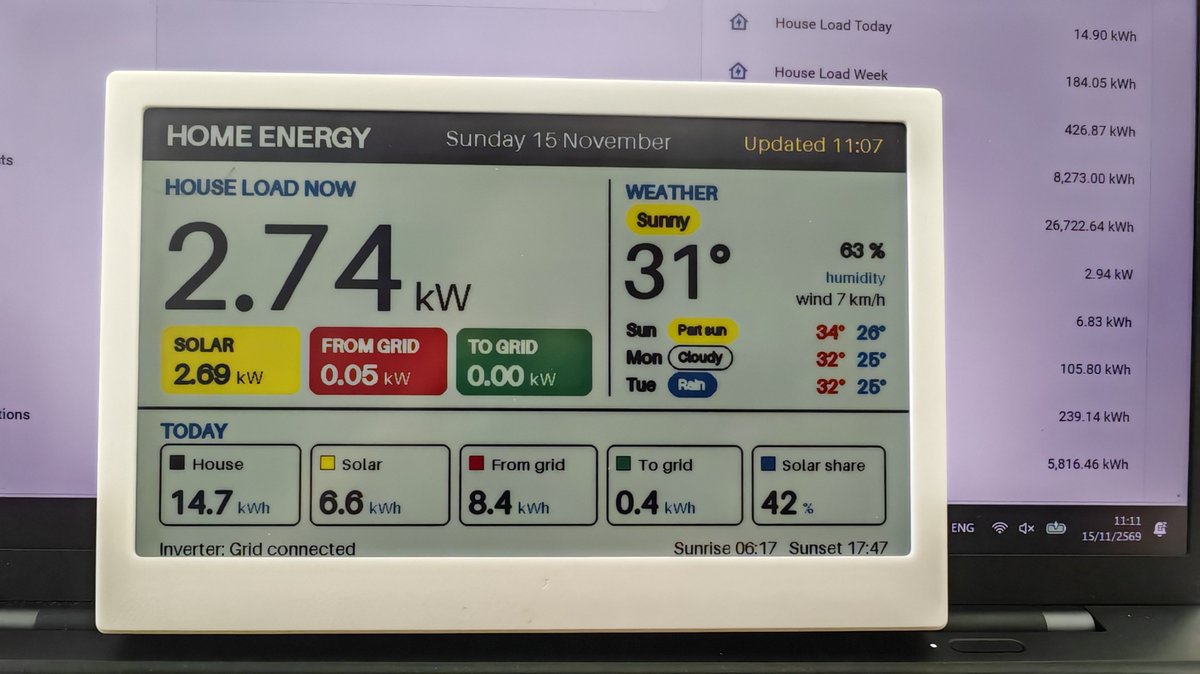
Review of @seeedstudio OpenDisplay 4.26″ Mono Kit and OpenDisplay 7.3″ Color Kit.
https://t.co/1nKYRFA6Xi
The two @NordicTweets nRF52840-based BLE e-paper kits were first tested with the pre-installed OpenDisplay firmware to load images over Bluetooth LE.
We then switched to OpenDisplay's Home Assistant integration to show dashboards with display information, sensors, weather, and solar power installation data.
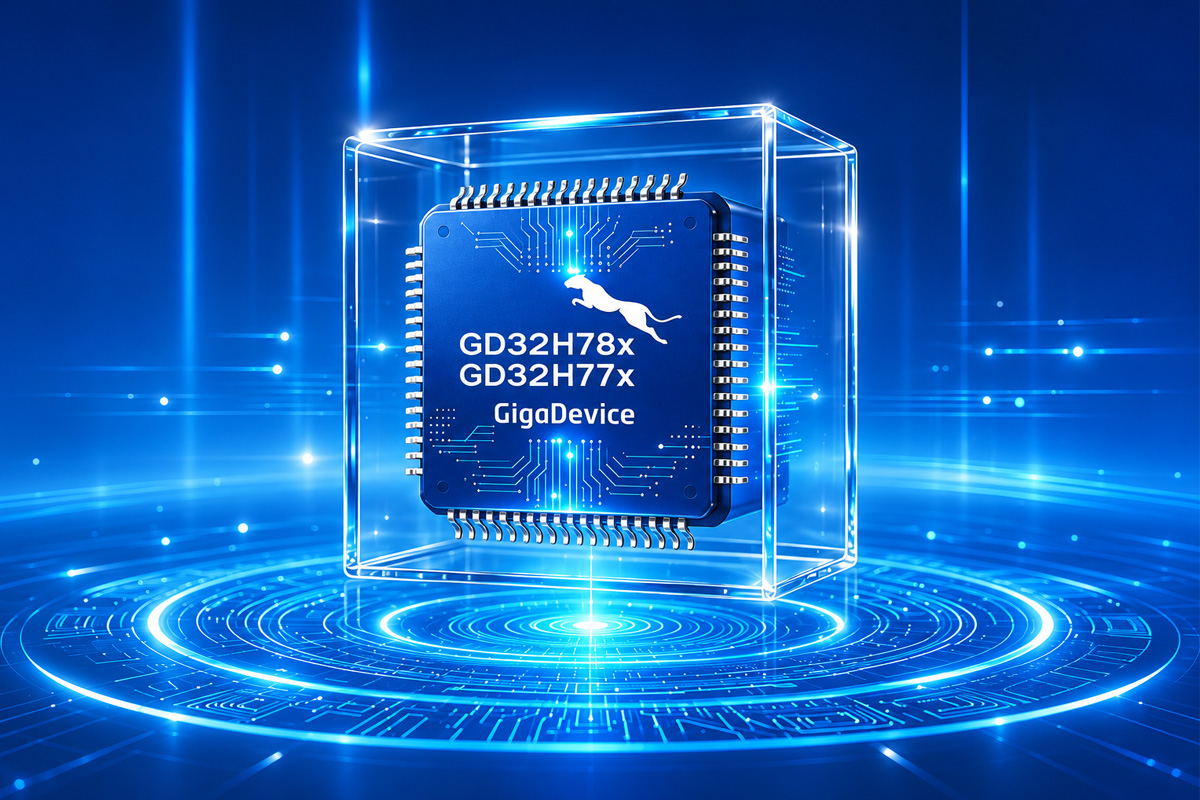
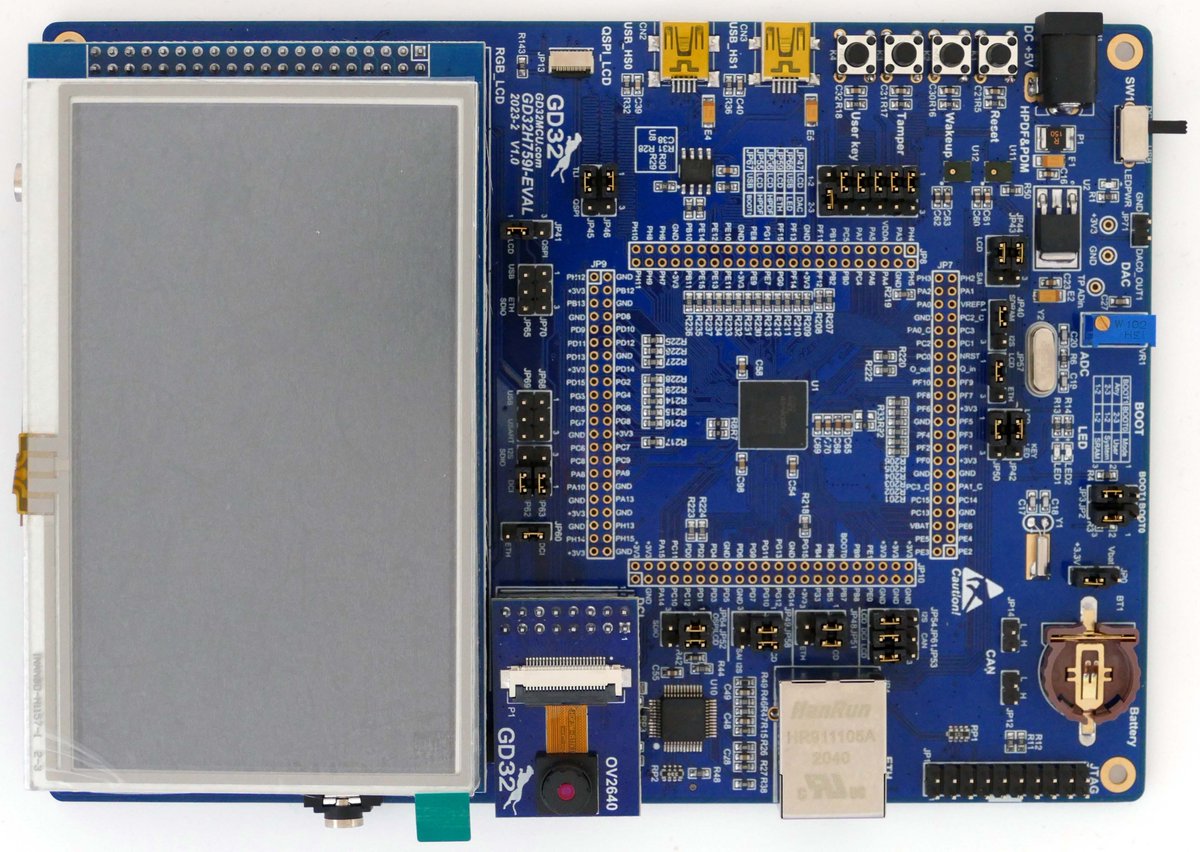
GigaDevice adds industrial 750 MHz SKUs to its GD32H7 Arm Cortex-M7 microcontroller family with up to 9.5 MB flash and 1.125 MB SRAM.
https://t.co/KmotJZVv3I
The GD32H77R is built for compact robotic joints and servo drives, with an integrated EtherCAT controller, Ethernet PHYs, and motor encoder interfaces. The GD32H78D/77D is for industrial HMI with MIPI DSI, graphics acceleration, and audio interfaces. The GD32H78E/77E is designed for industrial motion control, with EtherCAT and encoder support for multi-axis motor systems. The GD32H789/779 is the general-purpose option, offering high-resolution ADCs, digital filtering, and various communication interfaces for industrial automation.
Firmware development can be done through the GD32 Embedded Builder IDE, Keil MDK, or IAR Embedded Workbench. The company also offers three development boards for industrial HMI, EtherCAT-based industrial automation, and general-purpose industrial applications