If you have some money lying around and are wondering what to invest in, buy Bitcoin (while its at around 60,000). It's at the 61.8 fib level and technically has shown upward momentum signs, and then wait till price its at around 170,000🚀🚀
Thank me in a year's time. $BTC
Incredible survival strategy and climbing skills on display as a lioness pursues a baboon into the highest branches of a tree. 🦁🌿
🎥: Bruno African Safari
#WildlifePhotography#AfricanSafari#BigCats
𝗥𝗲𝗮𝗹𝗶𝘁𝘆 𝗕𝗲𝗵𝗶𝗻𝗱 𝗠𝗲𝘀𝘀𝗶-𝗬𝗮𝗺𝗮𝗹 𝗣𝗵𝗼𝘁𝗼𝘀𝗵𝗼𝗼𝘁:
Many people have wondered how five-month-old Lamine Yamal, born into an ordinary, working-class family with no influential football connections, ended up in a photoshoot with Lionel Messi.
The answer is beautifully simple: PURE CHANCE
In late 2007, the Spanish newspaper Sport and UNICEF were producing a charity calendar featuring Barcelona players with babies. Yamal’s parents entered him into a public raffle, and he was among the children randomly selected. Messi, then a shy 20-year-old rising star, happened to be the Barcelona player assigned to their session.
The shoot took place at Camp Nou, where photographer Joan Monfort captured Messi holding and gently bathing baby Lamine as his mother watched nearby. Nobody involved knew that the child would later join Barcelona, wear the iconic No. 10 and become one of football’s biggest stars.
The photos remained largely forgotten until Yamal’s rise brought them back into the spotlight. Now, nearly two decades later, that anonymous baby and the young footballer holding him will lead Spain and Argentina against each other in the 2026 World Cup Final.
No influence. No special connections. Just a raffle, a charity photoshoot and a coincidence that now feels like destiny.
#Fıfaworldcup #lionelmessi #lamineyamal #ARGvsESP
I’m going to take my time with this one. If you’re busy, save this post and read it later. If you’re a night owl like me, this is a good late-night read.
Do you know the worst thing about Cristiano Ronaldo?
It’s that he set the standards for what defines a legend… and in the end, he couldn’t even live up to the standards he created himself.
After winning Euro 2016, Ronaldo said:
“You can’t become a legend until you win a trophy with your national team.”
It was an obvious dig at Messi.
Argentina had just lost the 2014 World Cup final to Germany, and Messi was going through the toughest period of his international career. Those words only added fuel to the fire.
Where was the respect for a rival, Ronaldo?
The surprising part was that social media completely embraced that narrative. Messi was labeled a bottler, while Ronaldo was declared the winner of the rivalry—at least in the media, not on the pitch.
Then Messi retired from international football, came back, won the Copa América, and suddenly they were level in major international trophies.
What happened next?
Ronaldo fans started saying that one Euro is worth more than a hundred Copa Américas, claiming there was no competition in South America. Not true—but that became the excuse.
Then Messi went on to win the World Cup.
This time, the excuses changed again.
They claimed FIFA had fixed the tournament for Messi. That the World Cup was scripted in his favor. They simply didn’t know what else to say.
Then Ronaldo himself came out with one of the strangest quotes imaginable:
“A legend’s career can’t be defined by just seven games.”
At first glance, it sounds reasonable.
But beneath it was another attempt to diminish what Messi had achieved.
Before the World Cup, they insisted it would be Ronaldo’s tournament. On paper, Portugal had a fantastic squad. If the manager couldn’t get the best out of them, that’s Portugal’s problem—not Ronaldo’s.
Yet that same Portugal squad wasn’t any weaker than the Argentina team Messi led to the 2014 World Cup final—the same team people mocked Messi for not carrying to the title.
Just a couple of days ago, Ronaldo said:
“The World Cup doesn’t define my career, whether I win it or not.”
A statement that directly contradicts what he had said years earlier, when he admitted that winning the World Cup would make him feel completely fulfilled.
Now you’re 41 years old, Cristiano.
By your own standards:
* You have 5 Ballon d’Ors, not 8.
* You have one European Championship, not two Copa América titles.
* You never won the World Cup.
* You have four European Golden Shoes, while Messi has six—even though you’re an out-and-out striker.
So what now?
Will you keep playing until the next World Cup and become the first player to appear in one at 45, hoping to finally win it?
If we judged you by the standards you created, you wouldn’t qualify as a legend.
Of course, nobody actually judges you that way. Everyone still recognizes you as one of football’s greatest legends.
The real mistake was comparing Ronaldo to Messi in the first place.
That rivalry was exaggerated from the beginning by the media and figures like José Mourinho.
Messi conquered every major trophy available to him, shattered records that once seemed untouchable, and at 39 years old he’s still competing with Kylian Mbappé and Erling Haaland—the stars of the next generation—for the Golden Boot. And honestly, he could still win it.
What made Messi beloved by so many fans is that he never tried to diminish Ronaldo’s achievements.
Ronaldo, on the other hand, repeatedly made comments that many interpreted as attempts to downplay his greatest rival’s accomplishments—and that’s never an admirable trait.
Cristiano helped create a generation that thinks belittling other people’s achievements while constantly glorifying your own is a way to establish dominance.
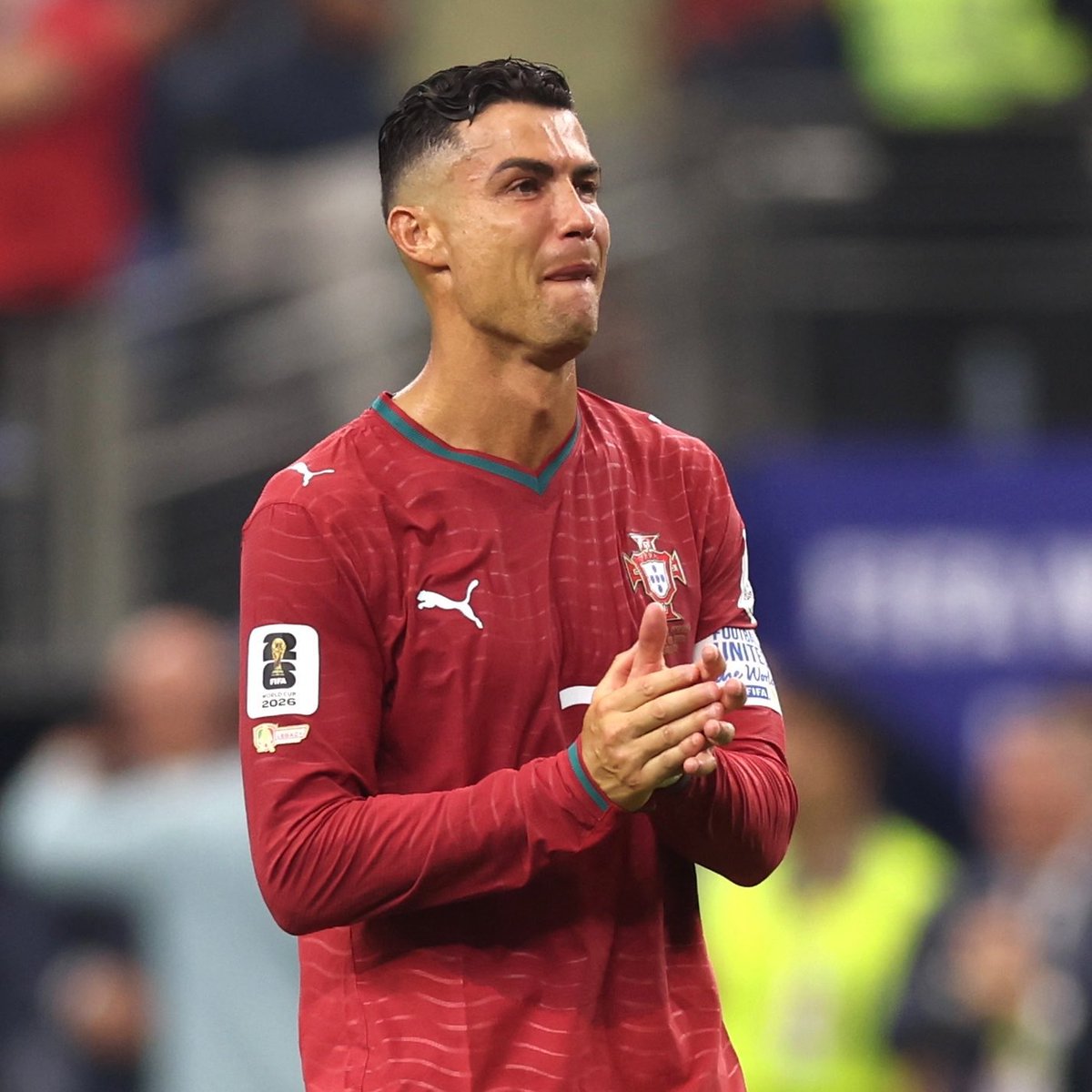
Good bye. Ronaldo.