October 21, 1805:
The British fleet and the combined French-Spanish fleet fought a decisive battle off Cape Trafalgar.
For the British commander Nelson, however, the prelude to this battle was a chase lasting several months and spanning the Atlantic.
The story begins in March of that year.
At the time, Napoleon was preparing to invade Britain. He needed the fleet to temporarily control the English Channel and open a passage for the army to cross.
He therefore arranged for the French fleet to break the blockade, rendezvous in the Caribbean to draw British forces away, and then return to Europe to concentrate strength.
Nelson’s task was to keep watch on the fleet commanded by the French admiral Villeneuve.
At the end of March, Nelson tried to set a trap.
He first showed his fleet near Barcelona, then moved it south of Sardinia, hoping the French would sail south to avoid the British position and run straight into the interception zone.
Villeneuve initially headed in that direction, but after learning the British fleet’s new position from a merchant ship, he turned west. The British scouting ships that had been shadowing the French also lost contact.
Nelson had missed them.
Once the enemy left his sight, he had to judge whether they were leaving the Mediterranean or would attack Naples, Sicily, or even Egypt.
In early April, Nelson was still searching near Sardinia and Sicily. The French fleet, however, had already passed through the Strait of Gibraltar, received Spanish reinforcements, and sailed into the Atlantic.
When the news reached Nelson, he immediately headed west in pursuit but was delayed by headwinds. By the time he exited the Mediterranean in early May, the enemy was nearly a month ahead.
On June 4, Nelson arrived at Barbados.
He had chased them to the Caribbean, yet still did not know the enemy’s exact position. False intelligence then sent him south toward Trinidad, while the combined Franco-Spanish fleet was operating farther north.
The two sides missed each other again.
Nelson then turned north and reached Antigua. From information gathered along the way, he judged that the enemy had most likely already returned to Europe, and he decided to turn east and pursue.
This was still a decision made with uncertainty. He knew he could not wait any longer, but he did not know which port the enemy would finally make for.
Before departing, Nelson sent the Curieux back to Britain with intelligence.
This small warship encountered the combined fleet en route, judged that it might be heading for northwestern Spain, and raced the news back to the Admiralty. As a result, the British were able to adjust their deployment and, on July 22, intercept the combined fleet, capturing two Spanish ships of the line.
Nelson himself, however, never caught up with that main action.
After returning to Europe, he first sailed north to reinforce the British fleet, then returned to Britain for rest and refit. Villeneuve, after various turns, led the combined fleet into Cadiz in August.
By this time, Napoleon had already shifted his army eastward and set aside that year’s plan to invade Britain. The combined fleet’s later orders were changed to enter the Mediterranean and transport troops to support operations toward Italy.
In September, Nelson put to sea again.
On the evening of the 28th, he arrived off Cadiz and resumed command of the fleet. This time he kept the main body farther out at sea, left scouting ships close to the port to watch, and used intermediate ships to relay signals.
He waited for Villeneuve to leave port.
At 9:30 a.m. on October 19, word finally arrived that the enemy was sailing. Nelson immediately ordered the fleet to pursue southeastward to intercept them toward the Strait of Gibraltar.
This time the scouting ships did not lose contact. After nightfall they continued to follow the combined fleet closely and report its movements by signal.
On the morning of October 21, Nelson finally sighted the opponent he had been tracking for months.
(To be continued in the replies)
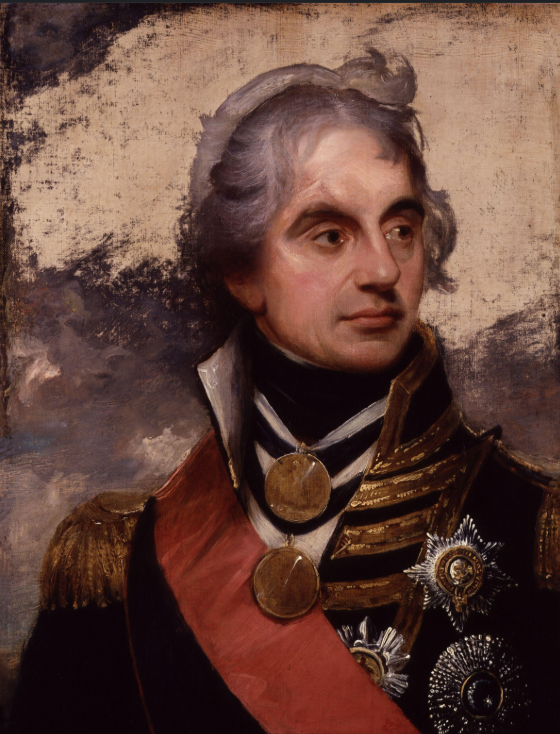
Nelson’s portrait
HMS Victory
@b1rkh0ff Oops, the link wasn't working earlier so it got cut off. Come check out my history stories if you're into history! LOL
https://t.co/E6od8wLllz
October 21, 1805:
The British fleet and the combined French-Spanish fleet fought a decisive battle off Cape Trafalgar.
For the British commander Nelson, however, the prelude to this battle was a chase lasting several months and spanning the Atlantic.
The story begins in March of that year.
At the time, Napoleon was preparing to invade Britain. He needed the fleet to temporarily control the English Channel and open a passage for the army to cross.
He therefore arranged for the French fleet to break the blockade, rendezvous in the Caribbean to draw British forces away, and then return to Europe to concentrate strength.
Nelson’s task was to keep watch on the fleet commanded by the French admiral Villeneuve.
At the end of March, Nelson tried to set a trap.
He first showed his fleet near Barcelona, then moved it south of Sardinia, hoping the French would sail south to avoid the British position and run straight into the interception zone.
Villeneuve initially headed in that direction, but after learning the British fleet’s new position from a merchant ship, he turned west. The British scouting ships that had been shadowing the French also lost contact.
Nelson had missed them.
Once the enemy left his sight, he had to judge whether they were leaving the Mediterranean or would attack Naples, Sicily, or even Egypt.
In early April, Nelson was still searching near Sardinia and Sicily. The French fleet, however, had already passed through the Strait of Gibraltar, received Spanish reinforcements, and sailed into the Atlantic.
When the news reached Nelson, he immediately headed west in pursuit but was delayed by headwinds. By the time he exited the Mediterranean in early May, the enemy was nearly a month ahead.
On June 4, Nelson arrived at Barbados.
He had chased them to the Caribbean, yet still did not know the enemy’s exact position. False intelligence then sent him south toward Trinidad, while the combined Franco-Spanish fleet was operating farther north.
The two sides missed each other again.
Nelson then turned north and reached Antigua. From information gathered along the way, he judged that the enemy had most likely already returned to Europe, and he decided to turn east and pursue.
This was still a decision made with uncertainty. He knew he could not wait any longer, but he did not know which port the enemy would finally make for.
Before departing, Nelson sent the Curieux back to Britain with intelligence.
This small warship encountered the combined fleet en route, judged that it might be heading for northwestern Spain, and raced the news back to the Admiralty. As a result, the British were able to adjust their deployment and, on July 22, intercept the combined fleet, capturing two Spanish ships of the line.
Nelson himself, however, never caught up with that main action.
After returning to Europe, he first sailed north to reinforce the British fleet, then returned to Britain for rest and refit. Villeneuve, after various turns, led the combined fleet into Cadiz in August.
By this time, Napoleon had already shifted his army eastward and set aside that year’s plan to invade Britain. The combined fleet’s later orders were changed to enter the Mediterranean and transport troops to support operations toward Italy.
In September, Nelson put to sea again.
On the evening of the 28th, he arrived off Cadiz and resumed command of the fleet. This time he kept the main body farther out at sea, left scouting ships close to the port to watch, and used intermediate ships to relay signals.
He waited for Villeneuve to leave port.
At 9:30 a.m. on October 19, word finally arrived that the enemy was sailing. Nelson immediately ordered the fleet to pursue southeastward to intercept them toward the Strait of Gibraltar.
This time the scouting ships did not lose contact. After nightfall they continued to follow the combined fleet closely and report its movements by signal.
On the morning of October 21, Nelson finally sighted the opponent he had been tracking for months.
(To be continued in the replies)
Nelson’s portrait
HMS Victory
On the morning of October 21, 1805, off Cape Trafalgar in Spain, the combined French and Spanish fleet appeared before the British.
The British had 27 ships of the line. The enemy had 33.
Nelson decided to attack.
His flagship, HMS Victory, would lead one column of British ships straight at the enemy center. The other column, under Collingwood, would be led by HMS Royal Sovereign and attack the rear of the combined fleet.
Nelson intended to cut through the enemy line and concentrate force on part of it before the ships ahead could turn back to help. He had already told his captains that if the signals were unclear, they should close with an enemy ship and support their own.
The plan required every ship to understand his intentions, and it required the leading ships to take the risk.
The wind that day was very light.
Victory led the advance but could only slowly close the distance in the light breeze.
The enemy ships lay across her path and could use the guns on both sides of their hulls. Victory approached bow-on, so most of her broadside guns could not yet bear. She had to pass through that fire before she could bring her own guns fully into action.
Nelson directed the whole fleet. Victory herself was commanded by her flag captain, Hardy. The two men were on the ship together as she closed the enemy.
Near noon, Victory hoisted the signal that later became famous:
“England expects that every man will do his duty.”
Royal Sovereign was the first to break through the enemy line and enter close action. Victory was still pressing toward the center.
Enemy shot kept striking her. Sails and rigging were damaged, and casualties began to mount. Nelson and Hardy remained on the quarterdeck as Victory continued forward.
The French also tried to stop the breakthrough.
The captain of Redoutable, Lucas, brought his ship close to the French flagship Bucentaure, trying to protect the flagship and block the British path. He later wrote that his men would rather lose their own ship than see the flagship taken.
Victory still passed across the stern of Bucentaure and broke through the enemy line.
Her port-side guns opened fire on the French flagship. The shot entered through the stern and raked along the decks. Other British ships followed through the gap, and the fighting quickly became a close-quarters melee.
After the breakthrough, the danger to Victory was not over.
She lay alongside Redoutable, their rigging entangled. French marksmen fired down onto the British decks from the tops. Lucas ordered his men to prepare to board.
HMS Temeraire then joined the fight on the other side of Redoutable. Several great ships were crowded together, firing at point-blank range while men on deck exchanged musket fire.
At about 1:15 in the afternoon, a musket ball from Redoutable struck Nelson in the left shoulder, passed into his chest, and injured his spine.
He fell on Victory’s quarterdeck and was immediately carried below for treatment.
According to the ship’s surgeon Beatty, as he was being carried down Nelson still noticed that the tiller ropes had not yet been repaired and told someone to remind Hardy. He then covered his face with a handkerchief so the crew would not recognize their badly wounded commander.
The fighting continued above.
British ships kept coming into action. Ships in the center and rear of the combined fleet surrendered one after another. Hardy later went below and reported to Nelson that the British had captured many enemy ships and that no British ship had struck its colors.
Nelson heard the news of victory.
At about 4:30 in the afternoon, he died of his wounds on board Victory.
That day the combined fleet lost 17 ships of the line captured and one destroyed by explosion. No British ship was sunk or captured, but many were heavily damaged and still had to face the coming storm.
Victory herself was badly battered.
The flagship that had led the way into the enemy line had to be towed to Gibraltar by other ships for repair. Of roughly 820 men on board, nearly one-fifth were killed or wounded.
She left the battlefield with the victory, and carrying Nelson’s body.
It was Nelson’s last battle.
It was also Victory’s last battle. She continued in service afterward, but never fought in another naval action.
Nelson’s body was brought back to Britain on Victory.
On January 9, 1806, Britain gave him a state funeral and buried him in St Paul’s Cathedral in London.
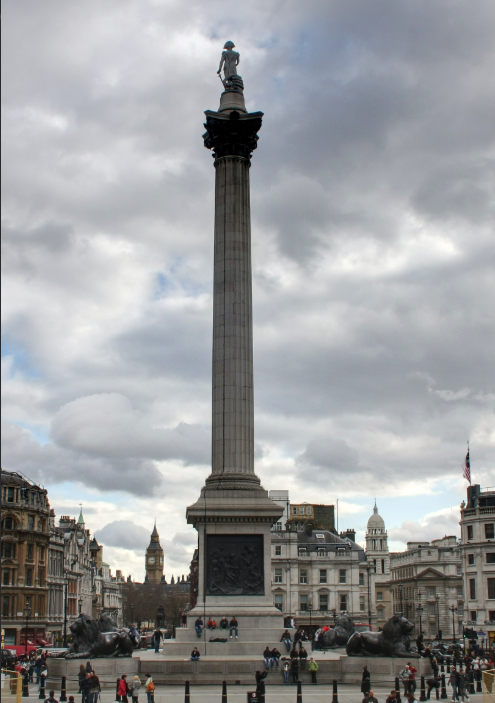
In 1843, Nelson’s Column was completed in Trafalgar Square in London.
His statue stands high on the column, commemorating the admiral who died on the day of victory.
If you enjoyed this, please like and repost—it would mean a lot to m
Nelson’s Column
The Damaged HMS Victory En Route to Gibraltar
The Battle of Trafalgar: Two British Columns Breaking Through the Enemy Line