Add your perspective. What would "true healthcare" look like to you?
Discuss with me on @LifeNetwork_AI: https://t.co/XcwxEzS47c
Code: 3VRY6IB
#LifeAITestnet#HealthcareAI
I'm jumping into Life AI Testnet Phase 1 to debate Health, AI & Blockchain.
Earn rewards, turn ideas into action, and help build the future of intelligence healthcare.
Join me: https://t.co/XcwxEzS47c
#LifeAITestnet
🩺 Community Question:
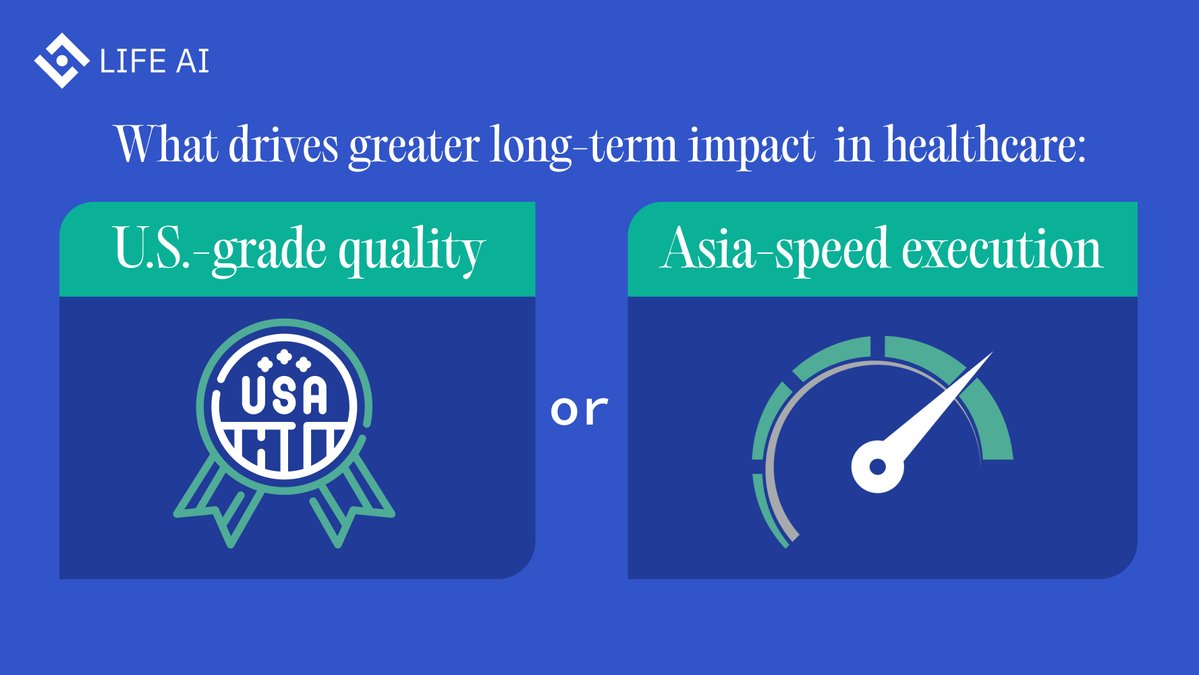
In medical innovation, what drives greater long-term impact:
U.S.-grade quality for rigorous validation and strict regulation
or Asia-speed execution for faster approvals and rapid scale?
Viewpoint A: U.S.-Grade Quality
Through institutions like the U.S. Food and Drug Administration, the U.S. emphasizes deep clinical validation before approval.
Rigor reduces risk, protects trust, and supports durable breakthrough innovation.
Viewpoint B: Asia-Speed Execution
Countries such as China and India accelerate approvals and deploy innovations at scale.
Faster access can save lives, especially in high-burden diseases.
👇 Drop A or B and share your perspective.
🩺 Community Question:
In medical innovation, what drives greater long-term impact:
U.S.-grade quality for rigorous validation and strict regulation
or Asia-speed execution for faster approvals and rapid scale?
Viewpoint A: U.S.-Grade Quality
Through institutions like the U.S. Food and Drug Administration, the U.S. emphasizes deep clinical validation before approval.
Rigor reduces risk, protects trust, and supports durable breakthrough innovation.
Viewpoint B: Asia-Speed Execution
Countries such as China and India accelerate approvals and deploy innovations at scale.
Faster access can save lives, especially in high-burden diseases.
👇 Drop A or B and share your perspective.
Think about the last time healthcare surprised you, good or bad.
That experience is worth sharing.
Jump in with @LifeNetwork_AI: https://t.co/XcwxEzS47c
Code: 3VRY6IB
#LifeAITestnet#HealthcareAI
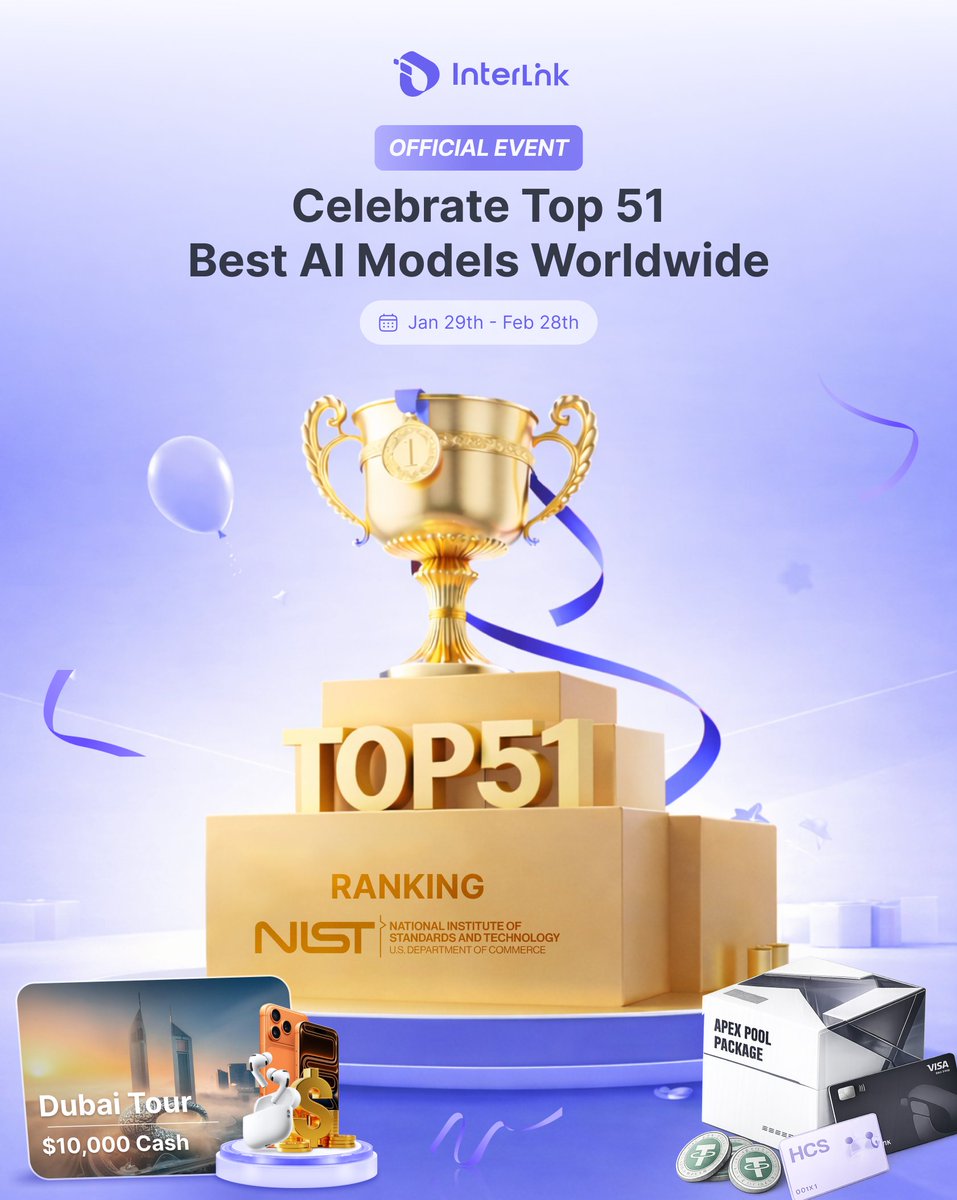
🚀 OFFICIAL EVENT TO CELEBRATE TOP 51 BEST AI MODELS WORLDWIDE
InterLink has officially entered the Top 51 Human-AI Models worldwide by NIST – U.S. National Institute of Standards and Technology, and to accelerate our journey toward 6 million global users - the Core Team is launching a 30-day global campaign - CELEBRATE TOP 51 BEST AI MODELS WORLDWIDE
Time: Jan 29th - Feb 28th
Platform: https://t.co/vcExxs77ib
🏆 Two mechanisms - One campaign - Running in parallel.
🔹 1. Leaderboard - Top 100
Built for the most impactful contributors who drive real growth.
How it works
• Earn Leaderboard Points from App Referrals (F1 + F2)
• Your total points determine your rank in the Top 100
Rewards
- USDT
- Dubai experience trip
- Apple Combo
- Samsung flagship devices
- And other premium rewards
🔹 2. Pool Rewards - 5 Pools
Designed for everyone, based on your total accumulated points.
How it works
• Points come from referrals, campaign participation, and daily sharing
• Reach higher Pools → unlock higher-value Reward Boxes
• For each pool you unlock, you will receive one gift box - The more you unlock, the more you get.
Rewards
- Qihong Tickets
- HCS
- Random USDT
- InterLink Virtual Visa Card
🔢 Point system (Shared, Different Outcomes)
• F1 - Direct App Referral: +100 points
• F2 - Indirect App Referral: +50 points
• Referral Campaign: +20 points
• Enter inviter code & submit: +20 points
• Follow @inter_link X and Facebook & share campaign launch post: +5 points / 24h
(*) Follow and share official campaign launch post on both X & Facebook official
👉 Same points - two ways to get rewards:
• Leaderboard ranking
• Pool unlocking & Reward Boxes
Compete at the top or progress at your own pace - everyone has a path to win.
THE CELEBRATION STARTS NOW!!!.
Grow the network. Earn your place. Unlock real rewards!!!
---------
CELEBRATE TOP 51 BEST AI MODELS WORLDWIDE
📅 Duration: 30 days (Jan 29th - Feb 28th)
📍 Format: Leaderboard & Pools rewards
📍 Platform: https://t.co/vcExxs77ib
#InterLink #ITLG #ITL
💊 Community Question:
Can AI help discover and develop new medicines much faster and cheaper than traditional methods?
Viewpoint A:
Yes. AI can rapidly test millions of drug ideas, cut early research time and costs dramatically, and in some cases bring medicines to patients years faster.
Viewpoint B:
Not fully. AI helps at the start, but human trials are still slow, expensive, and unpredictable, keeping overall drug development costly and time-consuming.
If AI is expected to change how medicines are made, is the impact already real or mostly promise?
👇 Drop A, B, or share your perspective.
Let your voice impact healthcare. Is the system supporting wellness or managing disease?
Join me here: https://t.co/XcwxEzS47c
Code: 3VRY6IB
#LifeAITestnet#HealthcareAI
💊 Community Question:
Can AI help discover and develop new medicines much faster and cheaper than traditional methods?
Viewpoint A:
Yes. AI can rapidly test millions of drug ideas, cut early research time and costs dramatically, and in some cases bring medicines to patients years faster.
Viewpoint B:
Not fully. AI helps at the start, but human trials are still slow, expensive, and unpredictable, keeping overall drug development costly and time-consuming.
If AI is expected to change how medicines are made, is the impact already real or mostly promise?
👇 Drop A, B, or share your perspective.
Earn by helping push healthcare forward.
One voice at a time shapes the future.
Join me: https://t.co/XcwxEzS47c
Code: 3VRY6IB
#LifeAITestnet#HealthcareAI
🩺 Community Question
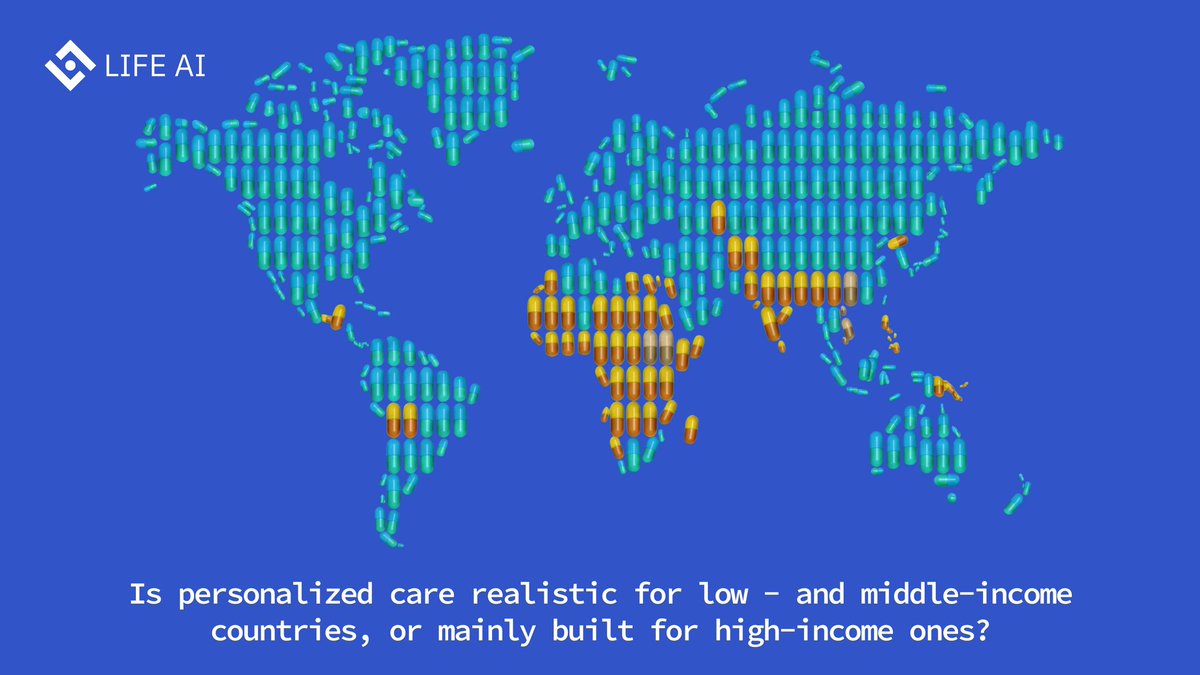
Is personalized care realistic for low- and middle-income countries (LMICs), or is it still a model built mainly for high-income countries (HICs)?
Viewpoint A: Gradually achievable in LMICs
Personalized care can scale over time. Costs of genetic and digital tools are falling, AI-driven insights are becoming more accessible, and hybrid models already work in areas like oncology and chronic care. With the right partnerships and focus, personalization doesn’t have to remain a luxury.
Viewpoint B: Not practical for most LMICs
For many LMICs, personalized care remains unrealistic. High costs, limited infrastructure, workforce gaps, and unequal access make large-scale adoption difficult. Healthcare systems should prioritize proven, low-cost interventions like vaccination, screening, and basic prevention.
Or is the future of healthcare built by combining both approaches?
👇 Drop A, B, or share your perspective.
Tag someone who should weigh in on this.
🩺 Community Question
Is personalized care realistic for low- and middle-income countries (LMICs), or is it still a model built mainly for high-income countries (HICs)?
Viewpoint A: Gradually achievable in LMICs
Personalized care can scale over time. Costs of genetic and digital tools are falling, AI-driven insights are becoming more accessible, and hybrid models already work in areas like oncology and chronic care. With the right partnerships and focus, personalization doesn’t have to remain a luxury.
Viewpoint B: Not practical for most LMICs
For many LMICs, personalized care remains unrealistic. High costs, limited infrastructure, workforce gaps, and unequal access make large-scale adoption difficult. Healthcare systems should prioritize proven, low-cost interventions like vaccination, screening, and basic prevention.
Or is the future of healthcare built by combining both approaches?
👇 Drop A, B, or share your perspective.
Tag someone who should weigh in on this.
Why do we trust systems that only see us when we're unwell? Debate to earn with @LifeNetwork_AI and rethink the model.
Jump in with me: https://t.co/XcwxEzS47c
Code: 3VRY6IB
#LifeAITestnet#HealthcareAI
🩺Community Question:
Should healthcare prioritize personalized care for individuals, or one-size-fits-all care for everyone?
Viewpoint A: One-size-fits-all as the default
Standardized care is more practical, affordable, and equitable for large populations and resource-limited settings. It delivers consistent, proven outcomes at scale, reduces disparities, and avoids the high cost and access barriers of full personalization.
Viewpoint B: Shift to personalized care
Personalized care is more precise, effective, and preventive. Leveraging genetics, AI, and real-world insights enables better outcomes, fewer side effects, and long-term cost savings as personalization becomes increasingly accessible.
Have you benefited from standardized care or struggled because it wasn’t personalized enough?
👇 Share A, B, or a short personal insight.
Tag someone who should be part of this conversation.
🩺Community Question:
Should healthcare prioritize personalized care for individuals, or one-size-fits-all care for everyone?
Viewpoint A: One-size-fits-all as the default
Standardized care is more practical, affordable, and equitable for large populations and resource-limited settings. It delivers consistent, proven outcomes at scale, reduces disparities, and avoids the high cost and access barriers of full personalization.
Viewpoint B: Shift to personalized care
Personalized care is more precise, effective, and preventive. Leveraging genetics, AI, and real-world insights enables better outcomes, fewer side effects, and long-term cost savings as personalization becomes increasingly accessible.
Have you benefited from standardized care or struggled because it wasn’t personalized enough?
👇 Share A, B, or a short personal insight.
Tag someone who should be part of this conversation.