I am super excited to share this educational video that I had GPT-6 Astra create from a single prompt: “Create a 5 minute educational video about T cells,” cells that I had devoted most of my life studying!
I also had Astra to use the Remotion plugin for the video generation. Astra also used Imagegen to create the visuals, it also suggested to use HeyGen for narration (have not used that before) and then assembled the entire educational video on its own one-shot, including what to say, how to explain it!
The result is so incredibly well made that, narration, the animations are all so perfectly created that even with 35 years of experience studying T cells, I really don’t think I could have explained this any better myself! The quality is also better than anything I had seen before, Astra is far ahead of all models now!
I’ve also been creating much longer and more advanced videos on T cells, immunology, and related topics, and I’m now planning to build an entire video lecture series and put it all on a dedicated website.
I am just having the time of my life making these, it actually makes me emotional to be able to magically create these with few prompts!
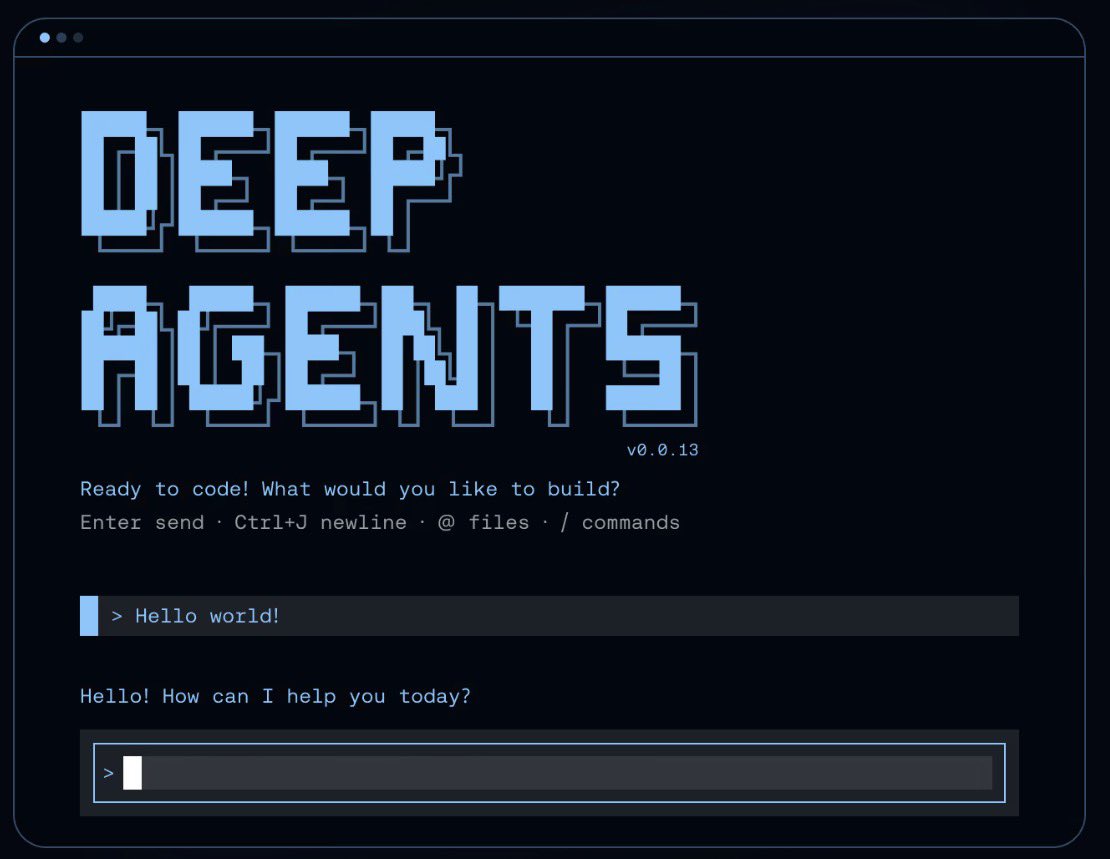
LangChain tiene un harness open source inspirado en Claude Code.
se llama Deep Agents y permite construir agentes con:
- filesystem
- memoria persistente
- manejo de contexto
- skills
- subagentes
- human in the loop
vos elegís el modelo, conectás tus propias tools y personalizás el resto.
básicamente, la infraestructura para construir agentes avanzados sin arrancar desde cero.
les dejo el repo:
https://t.co/ZOTYmDnvgZ
Cambio mucho mi conjunto de productos de IA este mes de septiembre:
- Claude → cancelado (sigo usando el de la empresa).
- Codex → 20 USD (subiré a 100 casi seguro).
- https://t.co/id2vi9tGc0 → 70 dólares (ideal para tener a los Hermes funcionando todo el día).
- Grok → 99 USD (agarré una suscripción barata por 3 meses; luego bajará a 40 USD con Twitter Premium).
- Cursor → 20 USD (subiré al plan de 60, creo, para seguir usando Grok y Grok Bot).
hace unos meses escribí este artículo para explicar cómo funciona Claude Code y ya superó las 2M de impresiones.
si querés aprender a usarlo bien, enfocáte en estas partes:
1) agent loop
2) tools
3) context y memory
4) hooks
5) skills
6) subagents
además, te dejo en los comentarios otro artículo que escribí específicamente sobre Skills.
🤖 La centralización total es el futuro. Llamemoslo concentración si suena mejor. Nvidia hace las GPU más populares para correr modelos abiertos. Hugging Face hostea todos los modelos abiertos más toda la comunidad. Y ahora Nvidia tiene una manera directa de venderte su compute para que corras tu modelo abierto favorito.
hay 3 prompts que uso siempre para aprender algo nuevo:
1) "explicame [tema] desde first principles"
2) "¿cuál es el 20% de [tema] que necesito entender para aprender el 80%?"
3) "haceme preguntas sobre [tema] para detectar qué partes todavía no entendí"
entender → priorizar → validar.
🧵 La gente de a pie no entiende bien cómo funciona el retorno de un activo core de real estate.
Ven que alguien compra un edificio a un 5% cap rate y piensan:
“¿Para qué coño vas a inmovilizar millones para ganar un 5%?”
El problema es que ese 5% NO es el retorno de la inversión.
Es simplemente una foto del día que compras.
Vamos a verlo con un ejemplo muy sencillo.
Compramos un edificio por $10M.
Genera $500.000 de NOI.
$500k / $10M = 5% cap rate.
Y pensamos mantenerlo durante 10 años.
¿Por qué tanto?
Porque comprar y vender real estate es caro.
Impuestos, abogados, brokers, financiación…
Rotar constantemente activos puede destruir muchísimo retorno.
Así que vamos a mantenerlo.
Y asumamos algo bastante aburrido:
El NOI crece solamente un 2% anual.
Año 1: $500k
Año 5: ~$541k
Año 10: ~$598k
Primera cosa que mucha gente no entiende:
el NOI sube, pero tu precio de compra no.
Pagaste $10M.
Así que ese edificio que inicialmente producía un 5% sobre coste, en el año 10 produce aproximadamente:
$598k / $10M = 6%
Pero aquí viene lo interesante.
Si aumenta el NOI, también aumenta el valor del edificio.
Simplificando:
Valor = NOI / Cap Rate
Si dentro de 10 años el mercado sigue pagando un 5% cap:
$598k / 5% = ~$12M
Es decir:
Compraste por $10M.
No has asumido ninguna compresión del cap rate.
Simplemente has aumentado el NOI un 2% anual.
Y ahora tienes un activo de ~$12M.
Pero todavía nos falta una capa.
La deuda.
Supongamos que financiamos el 60% de la compra.
$6M deuda.
$4M equity.
Y para hacer el ejemplo sencillo vamos a asumir un préstamo interest-only al 5%.
Es decir, no amortizamos principal durante los 10 años.
Pagamos:
$300.000 de intereses anuales.
Nuestro cash flow del primer año sería:
$500k NOI
$300k intereses
= $200k
Un 5% sobre nuestros $4M de equity.
Pero el NOI sigue creciendo.
La deuda no.
En el año 10:
$598k NOI
$300k intereses
= ~$298k
Ahora estamos cobrando aproximadamente un:
7,5% sobre nuestro equity inicial.
Y durante esos 10 años hemos ido cobrando cash flow.
Pero llega el año 10 y vendemos.
El edificio vale aproximadamente $12M.
Pagamos los $6M de deuda que siguen pendientes.
Nos quedan aproximadamente:
$6M.
Recuerda que nosotros pusimos inicialmente:
$4M.
Así que además del cash flow anual hemos creado aproximadamente $2M adicionales de equity.
Ahora metamos TODOS esos flujos en una IRR.
Inversión inicial:
-$4.000.000
Después recibimos aproximadamente:
Año 1: $200k
Año 2: $210k
Año 3: $220k
…
Año 10: ~$298k
Y además recuperamos aproximadamente $6M con la venta.
¿Resultado?
~10,2% IRR sobre nuestro equity.
Compramos un edificio a un…
5% cap rate.
Y terminamos obteniendo aproximadamente un…
10% IRR.
Sin asumir crecimiento espectacular.
Sin asumir compresión del cap rate.
Sin amortizar deuda.
Simplemente:
→ 2% de crecimiento anual del NOI
→ 60% de apalancamiento
→ deuda al 5%
→ 10 años de paciencia
Y esto explica por qué mirar solamente el cap rate lleva a conclusiones completamente equivocadas.
El retorno del real estate core viene de varias capas:
Cash flow.
Crecimiento del NOI.
Apreciación del activo.
Apalancamiento.
Y, en muchos casos, amortización de deuda.
Esta última ni siquiera la hemos incluido para simplificar el ejemplo.
El 5% cap rate solamente te dice cuánto NOI estás comprando HOY por cada dólar que pagas.
No te dice cuál va a ser tu retorno sobre equity durante los próximos 10 años.
Y entender esa diferencia es fundamental para entender por qué los grandes patrimonios compran activos core a rentabilidades iniciales que a mucha gente le parecen ridículas.
Esto es lo que sucede en las trincheras del real estate, donde hay barro, hace frío y una sola operación puede arruinarte.
MCP vs Skills
𝗠𝗖𝗣 𝗶𝘀 𝘁𝗵𝗲 𝗰𝗼𝗻𝗻𝗲𝗰𝘁𝗶𝗼𝗻 𝗹𝗮𝘆𝗲𝗿. It gives AI systems a standard way to connect to external systems and capabilities. MCP servers expose tools that the model can discover and invoke, whether that’s querying a database, calling an API, or taking action in another system. Instead of building one-off integrations, MCP gives agents a consistent interface for accessing those capabilities.
𝗦𝗸𝗶𝗹𝗹𝘀 𝗮𝗿𝗲 𝗿𝗲𝘂𝘀𝗮𝗯𝗹𝗲 𝗽𝗹𝗮𝘆𝗯𝗼𝗼𝗸𝘀 for how an agent should perform a task. A Skill packages instructions in a SKILL. md file, alongside optional scripts, references, and other resources. Rather than adding another service or integration, Skills run within the agent’s existing environment and give it task-specific procedures, conventions, and know-how it can load when needed.
MCP gives agents reach. Skills give them know-how. Together, they’re part of a broader shift toward AI taking a more active role in engineering work.
But as teams spend more on AI, there’s another challenge: understanding what that spend is actually contributing to their work.
That’s what Tempo’s new Workforce Intelligence was built to solve. It’s the first Atlassian Marketplace app to automatically connect AI activity and cost directly to the Jira work it touched, with cost rolling up from issues into epics and initiatives.
So instead of only knowing what AI tools cost, teams can 𝘀𝗲𝗲 𝘄𝗵𝗮𝘁 𝘁𝗵𝗮𝘁 𝘀𝗽𝗲𝗻𝗱 𝗮𝗰𝘁𝘂𝗮𝗹𝗹𝘆 𝗵𝗲𝗹𝗽𝗲𝗱 𝗯𝘂𝗶𝗹𝗱.
Try it free → https://t.co/nfaE18AYok
What else would you add?
——
♻️ Repost to help others learn AI.
🙏 Thanks to @TempoHQ #Tempo for sponsoring this post.
➕ Follow me ( Nikki Siapno ) to improve at AI and system design.
🚀 System Design Concepts Every Software Engineer Should Know!
From oad Balancers and Caching to Microservices, Message Queues, Search Systems, Notifications, Real-time Analytics — these are the building blocks behind scalable applications like Netflix, Amazon, Uber,...
#TuBarcoSolidario Tras la cancelación del Petronio Álvarez en Cali a raíz del terremoto, varios cocineros decidieron seguir trabajando con entregas a domicilio. Luz Asprilla, proveniente del Chocó, ofrece la sazón de su departamento en Cali a través de su cocina oculta. Su menú incluye desde arroz bochinche hasta pasteles chocoanos.
Para apoyarla, puedes solicitar el menú y hacer tu pedido al 3236417190. Hay envíos a toda Cali.
@AnthropicAI acaba de publicar cómo se construyen agentes e-commerce.
Son DOS agentes:
→ Shopping agent: busca, compara, arma el carrito, responde políticas, recuerda al cliente.
→ Merchant agent: listings, inventario, precios, campañas.
REPOOO👇
#NoticiasCali | Más de 20 días después del terremoto, Camilo Oyola recuerda cómo sobrevivió al colapso del edificio Ana Pilar, en Cali.
Sus perros, Kahlo y Picasso, lo despertaron minutos antes del desplome. Camilo quedó atrapado entre los escombros, fue rescatado con graves lesiones, pero perdió a sus dos compañeros de vida.
Hoy, entre el dolor, la fe y la gratitud, cuenta cómo esta tragedia cambió para siempre su manera de entender la vida.
esto, en el fondo, es un problema de routing.
OpenRouter ya muestra una forma interesante de resolverlo: vos mandás la request y el sistema decide qué modelo usar.
la lógica es más o menos así:
1) identifica qué tipo de tarea tiene enfrente
2) mira qué modelos concentran más uso y gasto para ese tipo de trabajo
3) tiene en cuenta cuánto querés priorizar costo
4) con esas señales, elige entre los modelos que mejor encajan
5) actualiza esa decisión con datos recientes, así que puede adaptarse cuando aparece un modelo nuevo
esto importa porque no todas las tareas necesitan el modelo más potente.
usar uno caro para algo simple desperdicia recursos. pero elegir siempre el más barato también puede bajar la calidad.
la idea es mover esa optimización al sistema.
vos definís la tarea y cuánto querés gastar.
el router decide qué modelo usar.
CPU vs GPU vs TPU vs NPU vs LPU, explained visually:
(bookmark this)
5 hardware architectures power AI today.
Each one makes a fundamentally different tradeoff between flexibility, parallelism, and memory access.
> CPU
It is built for general-purpose computing. A few powerful cores handle complex logic, branching, and system-level tasks.
It has deep cache hierarchies and off-chip main memory (DRAM). It's great for operating systems, databases, and decision-heavy code, but not that great for repetitive math like matrix multiplications.
> GPU
Instead of a few powerful cores, GPUs spread work across thousands of smaller cores that all execute the same instruction on different data.
This is why GPUs dominate AI training. The parallelism maps directly to the kind of math neural networks need.
> TPU
They go one step further with specialization.
The core compute unit is a grid of multiply-accumulate (MAC) units where data flows through in a wave pattern.
Weights enter from one side, activations from the other, and partial results propagate without going back to memory each time.
The entire execution is compiler-controlled, not hardware-scheduled. Google designed TPUs specifically for neural network workloads.
> NPU
This is an edge-optimized variant.
The architecture is built around a Neural Compute Engine packed with MAC arrays and on-chip SRAM, but instead of high-bandwidth memory (HBM), NPUs use low-power system memory.
The design goal is to run inference at single-digit watt power budgets, like smartphones, wearables, and IoT devices.
Apple Neural Engine and Intel's NPU follow this pattern.
> LPU (Language Processing Unit)
This is the newest entrant, by Groq.
The architecture removes off-chip memory from the critical path entirely. All weight storage lives in on-chip SRAM.
Execution is fully deterministic and compiler-scheduled, which means zero cache misses and zero runtime scheduling overhead.
The tradeoff is that it provides limited memory per chip, which means you need hundreds of chips linked together to serve a single large model. But the latency advantage is real.
AI compute has evolved from general-purpose flexibility (CPU) to extreme specialization (LPU). Each step trades some level of generality for efficiency.
The visual below maps the internal architecture of all five side by side.
To dive deeper into GPU specifically, Akshay wrote a detailed article on it.
It builds up from first principles why memory and compute compete, why that gap exists in the hardware, and what makes a workload memory-bound in the first place.
Read it below.
Más cosas guays de Orca:
tengo las 3 cuentas de Anthropic conectadas y, cuando agoto el plan o llego al límite de 5 horas, con un clic salto a la siguiente y sigo trabajando
Y con Codex exactamente lo mismo.
Parece una tontería, pero te ahorra bastante tiempo entre login, magic link, etc
estas son las partes clave que tenés que entender para construir agentes:
1) system prompt → define el objetivo, las reglas y los límites
2) tools → permiten buscar información y ejecutar acciones
3) loop y estado → decidir, actuar, observar y repetir
4) retrieval y memoria → traer el contexto necesario y recordar lo importante
5) guardrails y human in the loop → limitar riesgos y pedir intervención humana cuando sea necesario
6) tracing → mostrar qué hizo y dónde falló
7) evals → medir resultados y detectar regresiones
el verdadero desafío está en conectar todo:
darle el contexto adecuado, las tools que necesita y una forma clara de comprobar si hizo bien su trabajo.