@tleilax___ Would be interesting to know how "Once on Demurrage, Always on Demurrage" scenarios played out where it applied.
Have you heard about cases where charterer had to pay for 4 months?
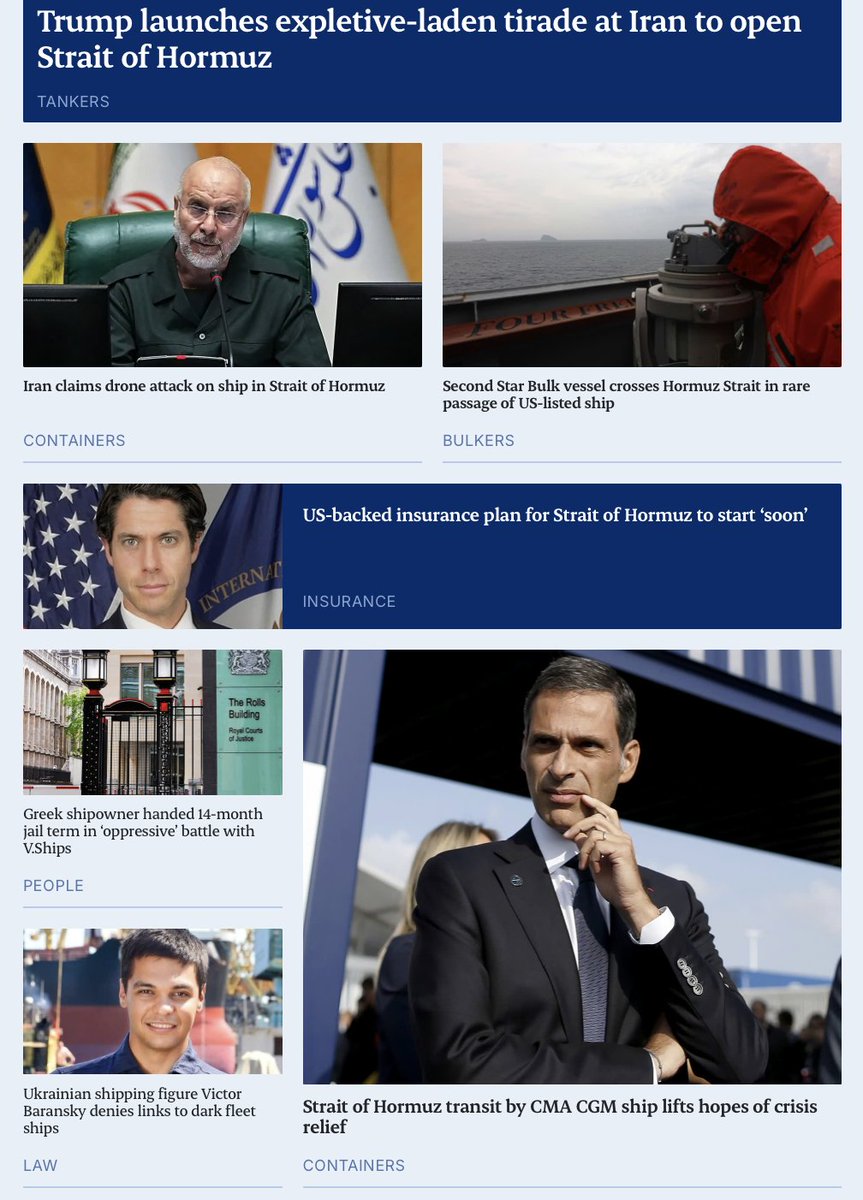
Stay away from the noise and focus on the math and the facts. What is this "Hormuz transit" the news headlines are talking about? What matters are the facts.
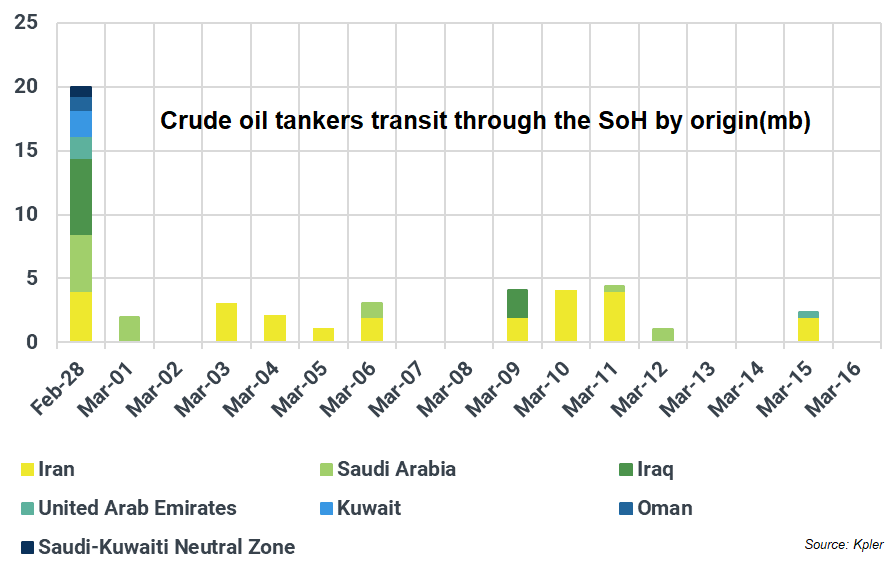
What is the size of the tankers? Are they laden or in ballast? What type of cargo are they carrying?
The reality is that only Iranian crude has passed through the strait, and for all intents and purposes, the strait remains effectively closed. Imagine what happens as each day passes. First, floating storage in the Middle East increases as they utilize ballast tankers.
Next, they fill up the onshore tanks. Once it reaches this point, Oil In Transit drops sharply, and floating storage stops growing.
Once the regional onshore tanks are full, they are forced into additional shut-ins. While the Middle East goes through this process, importing countries hold out by burning through their SPR and surplus waterborne crude.
From the next stage, starting with Asia, importing countries begin drawing down their commercial crude inventories. Many buyers have been holding off on bidding, waiting for the situation to ease.
Unless they are facing immediate force majeure, they are patient because the situation might stabilize and prices could crash. However in their onshore inventories, a significant portion consists of unavailable stocks (linefill and tank bottoms) and working stocks for operational flexibility.
Eventually the actual usable inventory begins to be drawn down, and if there’s no change in the flow by then... they will rush to wherever crude is still available and bid out of pure desperation.
That is all. And that is where we are headed. I’m telling you, there is a process and a setup that must be followed. If no change occurs while all those buffers are being burned, prices will skyrocket.
Right now it’s just a process. Don’t get buried in provocative headlines and noise during this transition. I understand why retail investors or tourists trading with cute seed of $300k get impatient without understanding all this.
But it’s honestly a bit pathetic to see even oil traders acting like mayflies.
#oott #iran
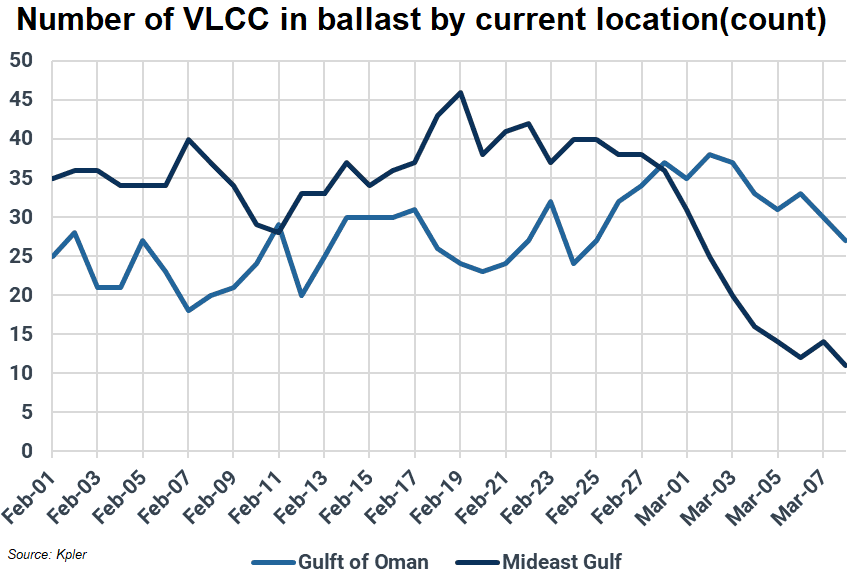
Exactly. To delay production cuts as long as possible, the best bet is to use floating storage while praying for at least a partial reopening of the Strait of Hormuz.
If transit resumes, those fully laden tankers can be flushed into the global market instantly. But that game is over now. The supply of ballast tankers in the Persian Gulf has run dry.
Unlike Iraq, Qatar, or Kuwait, the UAE and Saudis might hold out a bit longer, but with no more ballast tankers available, they’ll have to start filling up onshore storage.
Unlike US dollars, you can’t just print oil tankers out of thin air. Once the onshore tanks are topped off, shut-ins are inevitable.
The UAE and Saudis have Fujairah and Yanbu, but they won't be able to bypass everything.
The clock is ticking.
#oott #iran
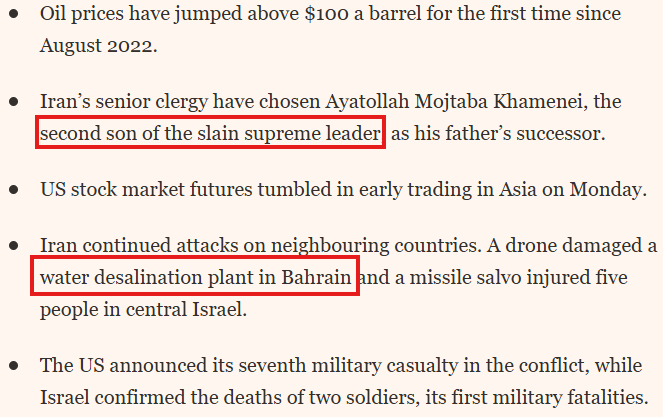
Now Iran also claims a water desalination plant on Qeshm was struck overnight.
We'll get image evidence that supports or rejects this claim in a day or two.
If it indeed happened, this is an escalation, from the US/Israeli. Targeting water serving civilians is a violation of many rules of war.
In any case, this confirms that Qeshm island is the focal point of the next phase of this conflict.
all calculations by chartering managers are destroyed within hours due to bunker volatility, much tougher to do a v/c fixtures now, regardless of ME, Atlantic or ECSA