One Platform. 96 Wells of Possibility.
In our previous post, we explored the signals that you can record from various biological models with the HyperCAM Delta and CorePlate™ 24 & 96W. Now we’re taking a look at a screening example which resulted in dose-dependent functional changes.
Using the HyperCAM Delta and CorePlate™ 24W, we accurately characterized a dose-response of primary rat hippocampal neurons under glutamatergic inhibition (NBQX & AP5).
What did we see:
• High-Quality Data: The high signal-to-noise ratio of all 1,024 electrodes per well resulted in tight error bars and highly reliable data points.
• Accurate Network Insights: Beyond simple firing rates, we captured dose-dependent shifts in network activity and connectivity, providing a deeper understanding of the compounds effect.
• Efficiency at Scale: Simultaneous recording across all wells and electrodes accelerated screening time.
As the concentrations of NBQX & AP5 increased, we observed clear reductions in functional activity, network activity and connectivity, highlighting the strength of HD‑MEA for functional drug screening.
Interested in applying high‑throughput functional screening to your drug discovery workflows, or want to know more about this example? Send us a message!
#3Brain #HDMEA #DrugDiscovery #Neuroscience #Biotech #HighThroughputScreening
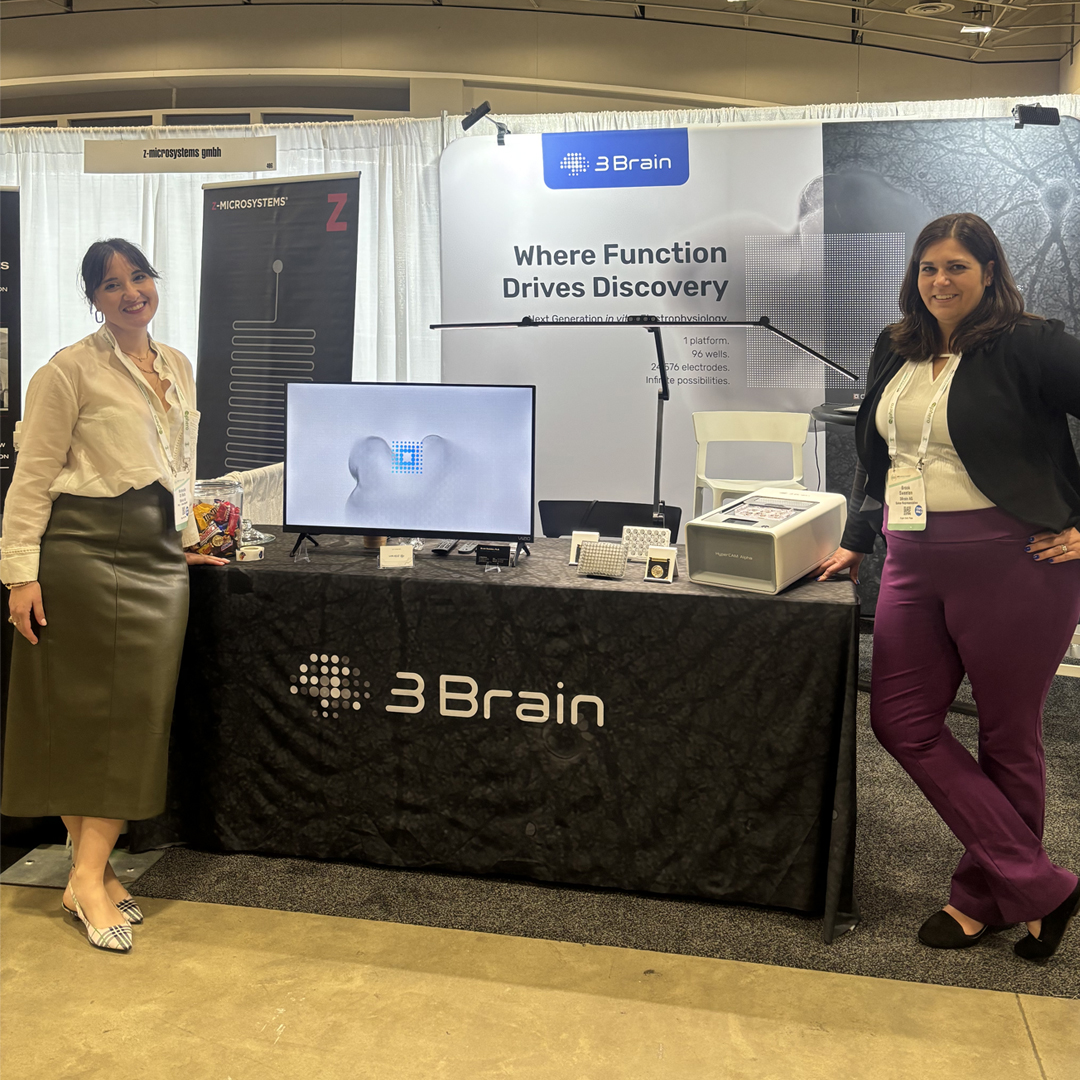
Last day at MPS World Summit 2026. Come find us before it's over!
What an incredible few days it's been. The conversations with researchers pushing the boundaries of microphysiological systems and human-relevant models have been genuinely energizing. This community never fails to inspire!
If we haven't connected yet, today is your last chance! Swing by Booth No. 404 to meet Antonella Di Bello and Brook Sweeten and let's talk about how 3Brain's CorePlate™ HD-MEA platforms can bring high-resolution, label-free functional readouts to your neuronal models — whether you're working with complex co-cultures or vascularized brain organoids.
We're here all day. Come say hi! 👋
One Platform. 96 Wells of Possibility.
In our last post, we explored the range of biological models supported by the HyperCAM Delta and CorePlate™ 24 & 96W. This week, we focus on the signals you can capture from each.
From fast neuronal spikes (action potentials) that can be analyzed to reveal single-cell activity and network dynamics of neuronal cultures and brain organoids, to brain organoid field potentials, through to physiologically relevant cardiac waveforms from cardiomyocytes, every signal is captured with precision and clarity.
Simultaneous recording across all wells and electrodes allows you to observe complex behaviors, compare conditions side by side, and accelerate decision making.
Stay tuned, next, we’ll take a closer look at a screening example of NBQX & AP5 on Rat Primary Hippocampal Cells with CorePlate™ 24W.
The MPS World Summit 2026 is just around the corner! Join us as we meet with scientists and researchers advancing microphysiological systems and human‑relevant models.
Whilst building physiologically relevant models is a huge challenge, being able to capture their functional complexity is just as important. Whether you're working with complex neuronal co‑cultures or vascularized brain organoids, 3Brain’s CorePlate™ enabled HD‑MEA platforms provide a high‑resolution, label‑free window into neuronal activity and connectivity.
Visit our booth No. 404, or come to our posters (317 & 319) to discover how our scalable CorePlate™ technology can deliver the functional validation your research demands.
#3Brain #MPSWorldSummit #OrganOnAChip #MicrophysiologicalSystems #HDMEA #TissueEngineering #DrugDiscovery
The RECI 2026 conference is just around the corner! Join the 3Brain team as we connect with researchers exploring ion channel function in neuronal cultures and organoids.
Understanding ion channel activity is fundamental to decoding neuronal behavior and disease mechanisms. From primary neuronal cultures to advanced brain organoids, 3Brain’s CorePlate™‑enabled HD‑MEA platforms provide label‑free, high‑resolution access to spiking activity and network dynamics in primary and iPSC‑derived models, enabling insights into how ion channel modulation, whether in disease or pharmacology, functionally impacts your in vitro systems.
Come to our talk with Sercan Deniz (@DenizPhd), or stop by our booth to discover how CorePlate™‑enabled HD‑MEA technology, available in single‑well, 6‑, 24‑, and 96‑well formats can support detailed, scalable functional investigation of your neuronal models.
#3Brain #IonChannels #HDMEA #Electrophysiology #Neuroscience #Organoids #DrugDiscovery
Excited to see this work on how we investigate neuroimmune interactions in human brain organoids and assembloids move from preprint to publication in Science Advances!
Building on their preprint, this newly published study from Wu et al. from the Yang group at Purdue University show that introducing human microglia into region‑specific brain organoids (cortical, striatal, and midbrain) gives rise to distinct, region‑dependent microglial states that actively shape neuronal development and circuit formation. They further extend this approach by generating microglia‑incorporated midbrain–striatal assembloids, allowing them to model a core circuit implicated in many neuropsychiatric disorders.
A major strength of the published work is the functional validation of these assembloids using the HyperCAM Alpha & CorePlate™ 6W which they leveraged in three key experiments.
1. By selectively activating Gq‑DREADDs in midbrain neurons with CNO, the authors demonstrated that increased activity propagates from midbrain to striatum, providing evidence of functional connectivity across the assembloid.
2. They modeled circuit‑level dysfunction in an autism spectrum disorder (ASD) assembloids carrying an SCN2A nonsense mutation, observing significantly elevated neuronal and network activity.
3. By pharmacologically blocking dopamine receptors, they showed a corresponding reduction in striatal activity, functionally confirming the role of projecting midbrain dopaminergic neurons in shaping striatal dynamics.
Together with this functional data, this published study displays how microglia act as active regulators of human neuronal circuitry, not merely immune bystanders, and highlights how HD‑MEA electrophysiology can dissect functional interactions within complex 3D brain models.
Congratulations to Jiaxiang Wu, Xiaoling Chen, Jingliang Zhang, Kyle Wettschurack, Morgan Robinson, Weihao Li, Yuanrui Zhao, Ye-Eun Yoo, Brody A. Deming, Yue Shu, Akila D. Abeyaratna, Zhefu Que, Dongshu Du, Matthew Tegtmeyer, Chongli Yuan, William C. Skarnes, Zhong-Yin Zhang, Jean-Christophe Rochet, Long-Jun Wu and Yang Yang for advancing this fantastic article from preprint to full publication!
Check out the paper here: https://t.co/CA3WFG3CfY
#3Brain #Neuroscience #iPSC #Electrophysiology #HDMEA #Organoids #Assembloids #ASD
One Platform. 96 Wells of Possibility.
When your biological models and screening needs evolve, your electrophysiology should scale with them.
From primary and iPSC‑derived neuronal and cardiac cultures to spheroids and brain organoids, the HyperCAM Delta with CorePlate™ 24 & 96W is designed for modern drug discovery & screening needs. Simultaneous recording of all wells and all electrodes allow you to obtain faster results, without compromising data quality.
Interested to know more about the biological models and applications for CorePlate™ 24 & 96W? Swipe through to explore!
Stay tuned, next up, a closer look at what CorePlate™ 24 & 96W enables you to record.
The INTERPHEX Japan 2026 conference is just around the corner!
As the pharmaceutical industry advances toward more advanced biologics and human‑relevant models, functional readouts are more important than ever.
Whether you are developing neuronal or cardiac cell-based assays, iPSC-derived models or screening compounds, 3Brain’s CorePlate™ enabled HD-MEA platforms provide a scalable, high-resolution, label-free window into functional activity, enabling precise insights into compound effects on neuronal and cardiac cells and supporting more informed drug discovery decisions.
Come to our talk on the 21stMay, visit us at booth 7-43, or find Cosmo Bio at booth 5-9 to discover how CorePlate™ enabled HD-MEA technology can enhance your screening workflows by bringing functional screening into modern drug discovery and development pipelines.
We look forward to seeing you in Tokyo!
#3Brain #INTERPHEX #Pharma #Biotech #HDMEA #Electrophysiology #DrugDiscovery
One Platform. 96 Wells of Possibility.
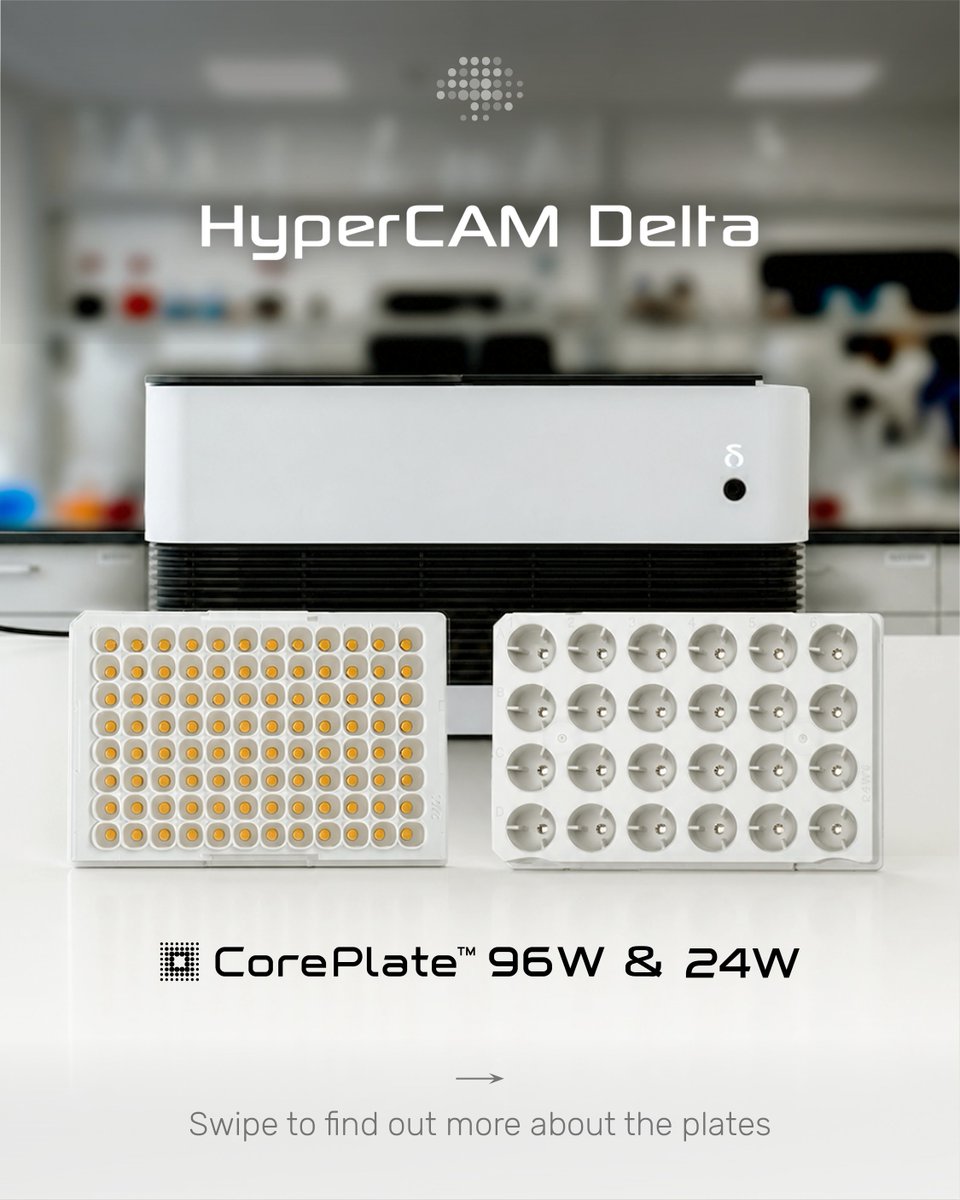
In our last post, we saw how the HyperCAM Delta enables scalable, high‑resolution electrophysiology to today’s most complex in vitro models, but do you know about the plates which make simultaneous recording from every well and every electrode possible?
Meet the CorePlate™ Multi-well series.
With the world’s first 96‑well HD‑MEA - CorePlate™ 96W, and CorePlate™ 24W, the HyperCAM Delta supports seamless progression from focused functional studies to high‑throughput screening and drug discovery all on a single platform.
Interested to know more about these plates? Send us a message: https://t.co/4RECeesKti
Stay tuned, next up, a closer look at the cell models and applications driving this platform.
The Advances in Cell‑based Screening in Drug Discovery 2026 conference @ELRIG_SCIENCE is just around the corner, visit us at booth #4 to see how CorePlate™ can support your journey toward human‑relevant drug discovery.
As the industry moves toward more predictive, cell‑based screening paradigms, functional data is becoming a critical decision‑making tool. Whether you are working with iPSC‑derived neuronal or cardiac models, complex 3D spheroids, or brain organoids, 3Brain’s CorePlate™ enabled multi‑well HD‑MEA technology delivers scalable, high‑resolution electrophysiology supporting both focused mechanistic studies and high‑throughput screening workflows.
Visit our poster with Axol Bioscience “Electrophysiological Analysis of axoCells™ Atrial and Ventricular Cardiomyocytes With CorePlate™ Enabled HD-MEA" presented by Sercan Deniz @DenizPhd to learn how we’re helping bridge the gap between complex in vitro biology and robust functional insights.
See you in Gothenburg!
#3Brain #ELRIG #Electrophysiology #CellBasedScreening #DrugDiscovery #HDMEA #iPSC #3DBiology
One Platform. 96 Wells of Possibility.
The HyperCAM Delta was engineered for high-throughput, high-precision functional screening of neuronal and cardiac cells.
By capturing functional activity simultaneously across 24,576 electrodes, it eliminates the trade-off between detail and speed. Researchers can now maintain high-resolution insights while accelerating toward large-scale discovery.
Keep an eye out for what’s coming next: a closer look at the plates that make this possible.
Find out more on our website: https://t.co/FBgUMsoajY
Translating Technology: Human Brain Slices as a New Screening Platform
Testing neuromodulation technologies such as magnetoelectric nanoparticles (MENPs) in relevant models can be a challenge. Although various in vitro and ex vivo platforms such as cell cultures, rodent brain slices, and organoids offer alternatives for screening neural implants before in vivo studies, each still falls short of reproducing the full structural and functional complexity of human brain tissue.
New research by Eggert et al., published in the Journal of Neural Engineering, is helping advance this field by establishing organotypic human brain slice cultures as a screening platform for neuromodulation techniques. Using CorePlate™, the team demonstrated spiking and field‑potential activity is present in fresh human brain slices treated with MENPs. Offering a high‑resolution, human‑relevant method which can help develop ideas from engineering concepts to clinical applications, providing an ethically preferable and early‑stage alternative to animal models for evaluating emerging neurotechnologies.
Huge thanks to Franz A M Eggert, Berkhan Genc, Sena Nur Arduc, Anouk Wolters, Kim Rijkers, Kristen Kozielski, Yasin Temel and Ali Jahanshahi at Maastricht University Medical Center (MUMC+).
Check out the paper here: https://t.co/Axez2nKgI2
#3Brain #HDMEA #electrophysiology #HumanBrain