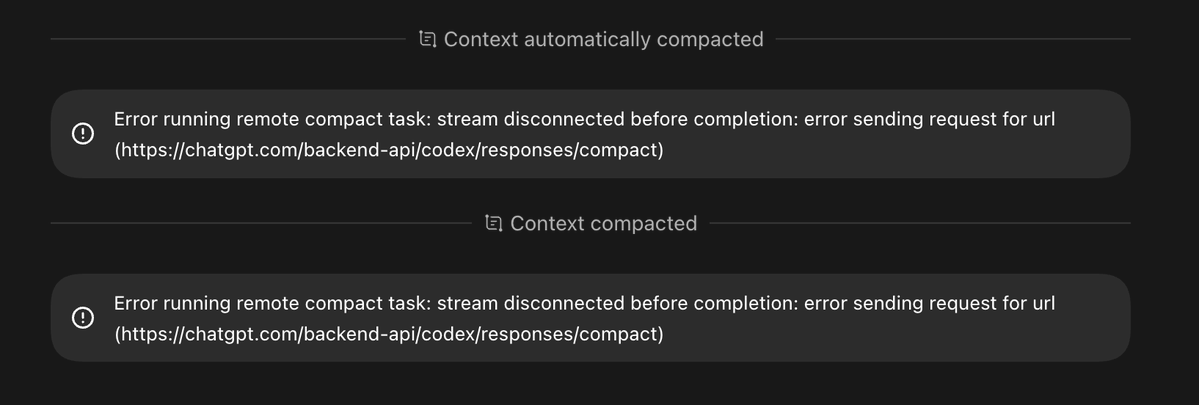
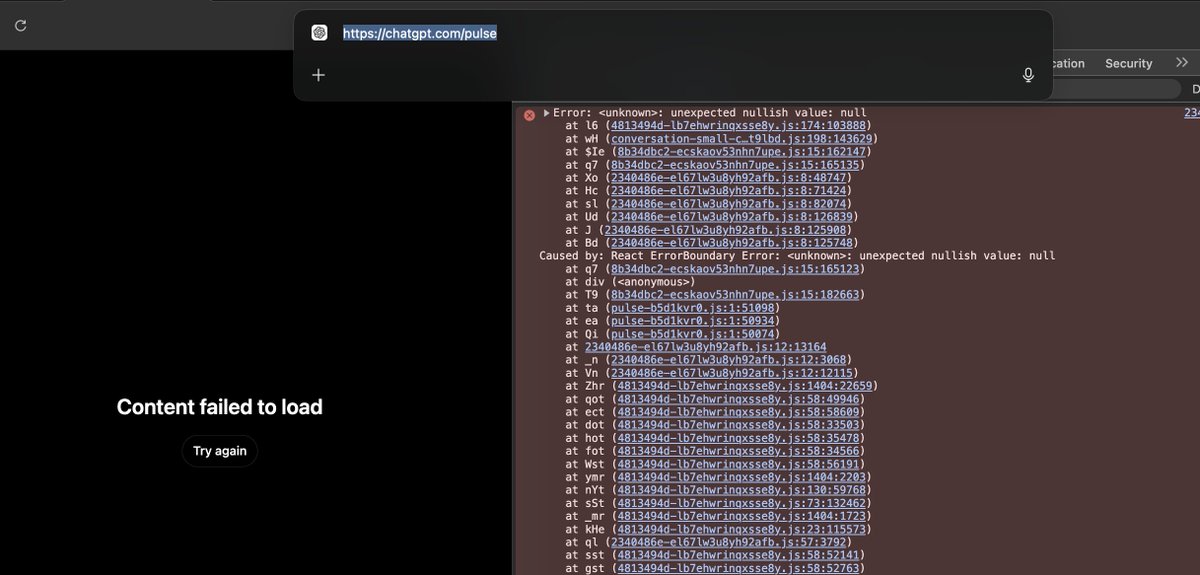
@thsottiaux The way you think about it is that the closer to the reset you use them, the less value they bring. You gotta have a beast of a workflow to use right after a reset. Burn - reset and carry on with regular workflows.
Whenever I don’t use codex for a task, I ask myself why and usually realize that there’s some missing context, I needed to write a skill, or I just didn’t think to use it.
Rarely is it because the task is outside of the capabilities of the model. Overhang right now feels large.
@ycombinator I had to use codex to run an monitor this for me because my laptop didnt have enough memory to process that much data. Good sign/bad sign? We'll find out when I finally get my results
I still don’t get how ChatGPT will make everything free???
AI is often framed as leading us toward abundance.That seems to be the end state in a lot of the optimistic narratives: Cheaper intelligence -> abundance for all. But I still can't connect the dots.
How do we get from a really good chatbot to cheaper travel, cheaper housing, or a cheaper bathtub in your house?
I think a good place to start is by looking at what is already abundant — and asking how it got there.
The first example I see is photography.
Photography used to be scarce. And it wasn’t just scarce because cameras were worse. It was scarce because there were many layers making it expensive or difficult:
camera access, film development, printing, storage, sharing.
For photography to become abundant, those layers had to be made redundant, or made super cheap.
Abundance is not one magical event. It is a collapse in layers of friction.
You can see the same pattern in other places too - software, information, communication, music etc.
That’s the line of thinking I want to keep exploring.
Mechanics of Abundance #1
Full back-office automation is now bottlenecked not by "lack of intelligence", but lack of good descriptions of the tasks that you want it to do. It currently seems like we need Artificial "General" Intelligence simply because we just can't figure out how to reliably describe what we do and how we make decisions. Give that a try - if the AI has a decent enough description of the process and access to the tools you use, you can actually automate just about anything. 80-90% of back office work is not that complicated.
Of my European friends
- one is burn out for years getting paid by the government to sit at home and not work (free money)
- one is building an app for people to use AI to apply for subsidies (free money) from the government
- one is building an app to get emission credits (free money) from the government
- one is trying to get subsidy (free money) for building this app below
Entire economy built on free money from the government
the loud AI story is models replacing creative work.
the quiet one is the drudgery of the back office evaporating — agents running procurement, AP, and renewals at 2am for three cents.
the second one is bigger.