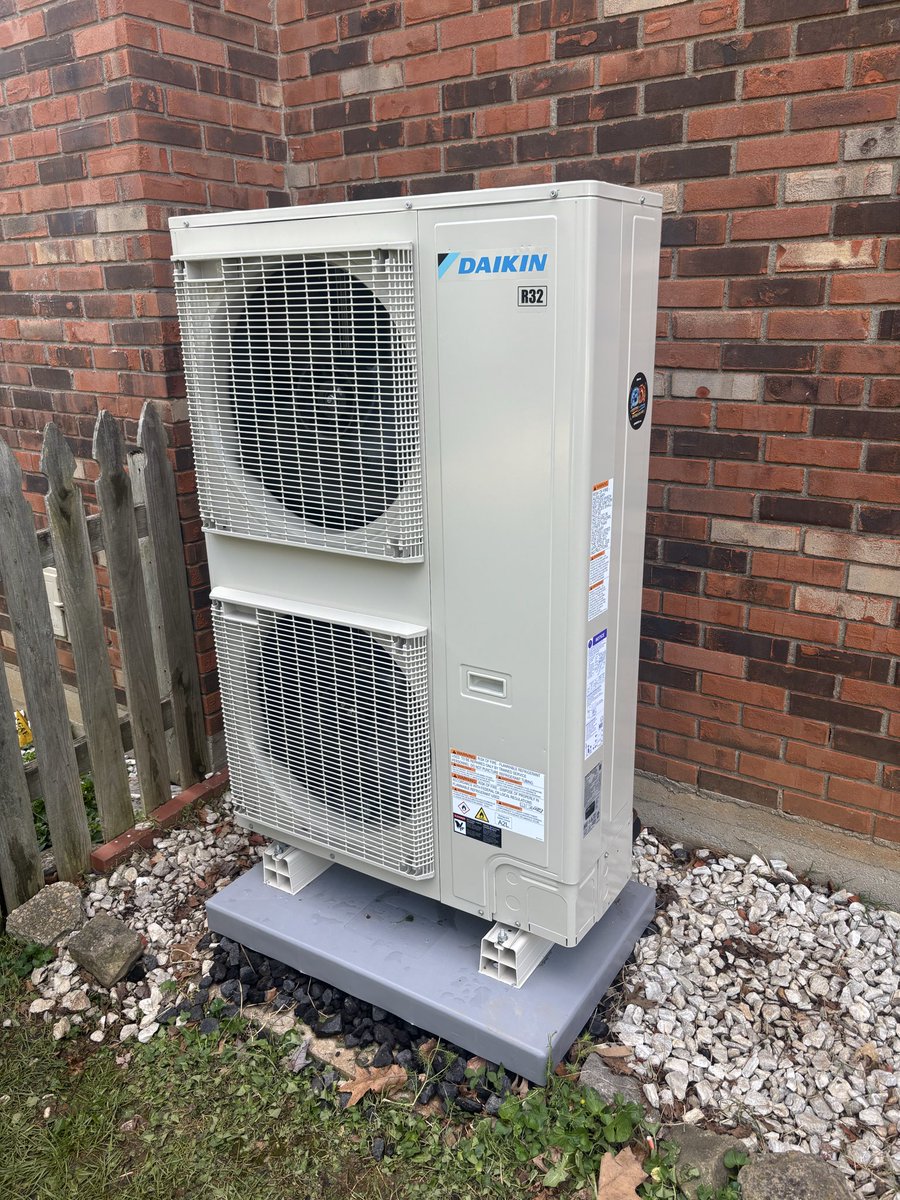
Also the contractor you choose is just as important as the system.
I want to shout out @3dhvac for being the most upfront and willing to give me exactly what I wanted.
If you’re in the KY/IN/OH area, check them out because they are the real deal.
They’re certified Daikin Comfort Pro contractors, and they are experts at installing these heat pumps.
They didn’t even know I posted this so hopefully they’ll get some more happy customers from it.
Most HVAC contractors in America are trying to keep you in the 1990s.
I had $15,000 cash to spend on a cold-climate heat pump.
Nearly every contractor I contacted tried to talk me out of it or over-quote me an outrageous amount to deter me away.
One guy spent 20 minutes explaining why variable-speed heat pumps are a scam. Another literally said he wouldn’t put one in his own house.
Why? My guess:
1) They are ignorant of the latest technology
2) They don’t have the training to install/service the new systems
3) Their pockets get filled from big box old school HVAC manufacturers if they sell them
Unfortunately, a new HVAC for most homeowners is very urgent so these contractors use this time crunch to overcharge or upsell inferior systems.
Luckily, I bought a couple of $130 window AC units to hold me over for 2 weeks while I reached out to 15+ contractors.
I received quotes ranging from $10,000 to over $24,000. Only 2 of the quotes included a modern cold-climate heat pump.
After price matching and negotiations, I ultimately chose a Daikin Aurora Fit cold-climate inverter heat pump + 97% modulating gas furnace (true dual-fuel setup)
Total cost after rebates = $13,000
This system usually goes for around $20,000.
Here are the key takeaways I wish I had known before I started shopping:
1. Always demand a real Manual J load calculation. Don’t settle for a “rule of thumb” or register count. I had 3 different contractors give me 3 different sizes until one actually ran proper software.
2. True variable-speed inverter technology is worth it especially in a multi-level home. It runs longer at lower speeds, gives much better dehumidification, smoother temperatures, and is noticeably quieter.
3. Dual-fuel (heat pump + high-efficiency gas furnace) is often the smartest move in mixed climates (like my home in Louisville). The heat pump handles most of the year efficiently while the furnace only kicks in on the coldest days (if necessary)
4. Shop aggressively and negotiate hard. Buy yourself some time with some temporary/portable units. I got competing quotes and used them to drive the price down significantly.
5. Duct sealing, correct sizing/tonnage, and proper installation matter more than most people realize especially in older homes.
6. Have a detailed checklist to vet each contractor. An extremely helpful guide I had throughout the process was from @energysmartwv
So why did I insist on cold climate heat pump?
• Way better temperature balance upstairs (even without zoning)
• Excellent dehumidification in humid summers
• Significantly quieter operation
• I’m expecting to save $60/month on electricity
• Less reliance on gas and possibly eliminating the need altogether
Modern cold-climate heat pumps are no longer experimental. They’re one of the smartest upgrades most homeowners can make right now.
Do your homework to make sure you are getting the best system possible for your home. Don’t let old school contractors keep you in the past.
Have you installed (or considered) a heat pump in a cold or mixed climate? Were the contractors helpful or did they try to talk you out of it?
If winter storm Blair has you and your family out in the cold in the Louisville ky , call 3d heating and cooling 5026989499 we are out braving the storm for you and yours! Also can contact us through our website https://t.co/Ez18yAwlif