Agreed …Price is irrelevant right now it is only relevant if you are purchasing shares on margin or own short dated call options or reflecting back at 5 year performance and frustrates that you missed out on s&p 500 returns. Future indeed looks bright! Patience is key and it would appear that things are coming together now! Hodl
@RebelNewsOnline Lol what about meech lake and the Charletown accord! Quebec had the right to reignite the will of the people twice but couldn’t muster the votes! Alberta will succeed
@MarkJCarney@EmmanuelMacron@Keir_Starmer I just learned something - I assumed the United States opened it. I didn’t realize we had such a strong presence on the Gulf. Thank you for this narrative 🙂
🚨 THIS HAS NEVER HAPPENED BEFORE
🚨 🚨NOBODY UNDERSTANDS
WHAT THEY JUST TRIGGERED. 🚨 🚨
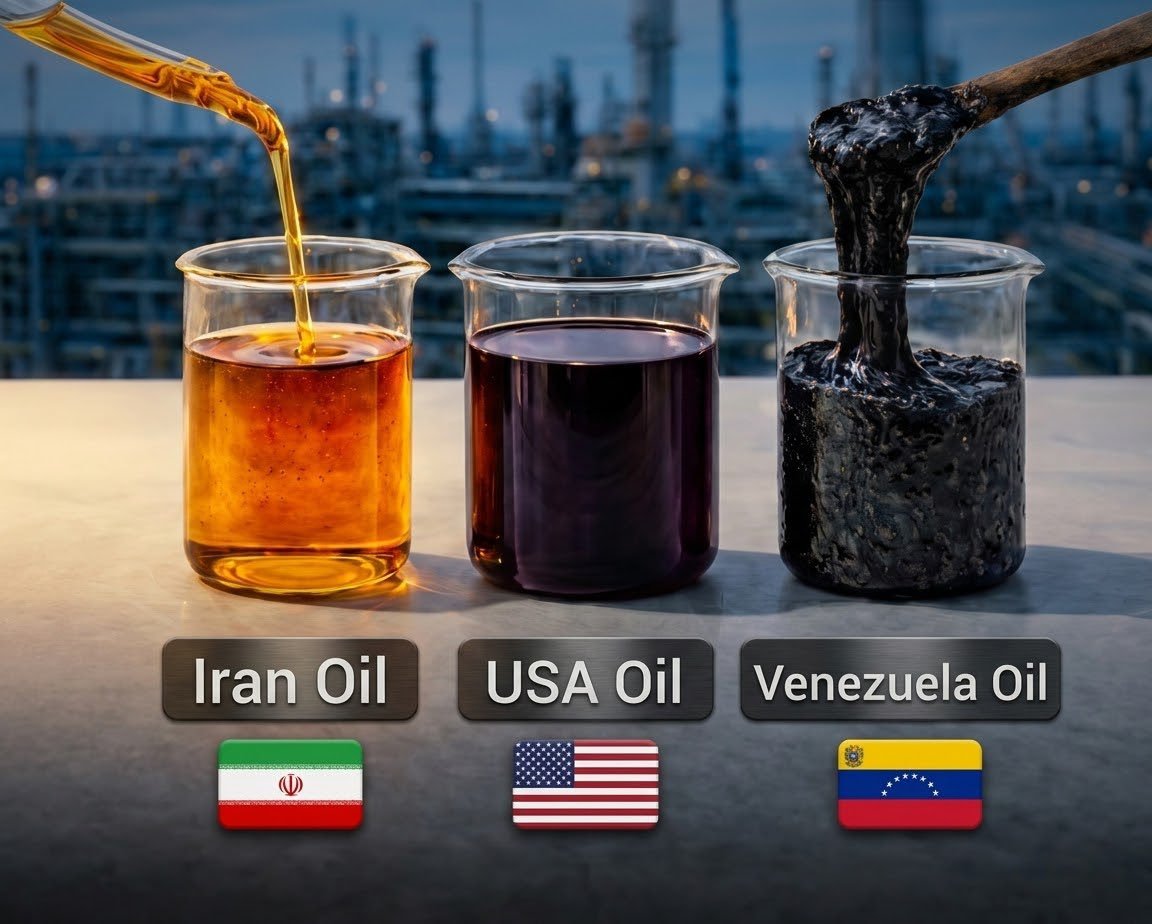
People always talk about Iranian oil in terms of barrels, but rarely about what’s actually inside them. That’s the key difference—and the reason Western refineries have quietly relied on back-channel networks through places like Dubai for years to keep getting it, even under sanctions.
Crude oil isn’t all the same. It’s a mix of hydrocarbons with different molecular weights, and that mix determines how easily it can be turned into the fuels refineries actually sell—like gasoline, diesel, jet fuel, and heating oil. The main measure here is API gravity. Higher API means lighter crude that’s easier and cheaper to refine, and it produces more of those high-value fuels. Lower API means heavier crude that takes more energy, more processing, and more expensive equipment, while producing more low-value leftovers.
Iranian Light crude sits right in a sweet spot, with an API gravity around 33–36 and moderate sulfur levels. It’s light enough to produce a lot of gasoline and middle distillates without high costs, but not so light that it limits what refineries can make. In industry terms, it’s close to an ideal blend.
Now look at the alternatives.
Venezuela’s Merey crude is much heavier, with very low API gravity and high sulfur. Refining it profitably requires specialized, expensive equipment like cokers and hydrocrackers. Some refineries are built for that—but it’s not interchangeable with Iranian crude. It’s a completely different type of input.
On the other end, US West Texas Intermediate is very light and low in sulfur. Sounds perfect in theory, but in practice it’s almost too light. Many refineries—especially in Europe and Asia—are designed for medium-grade crude, so they can’t just switch to WTI. They often have to blend it with heavier oils to make it work.
That’s where Iranian crude stands out. It fits right into the middle of the system. It doesn’t need the heavy-duty processing of Venezuelan oil or the blending adjustments required for ultra-light US shale. That balance is why it’s consistently in demand and often priced at a premium. It also explains why countries like India kept buying it despite sanctions, and why those complex trading networks through Dubai existed in the first place.
The Strait of Hormuz isn’t just a route for oil—it’s a route for this specific kind of oil that global refineries are optimized to process. If that flow gets disrupted, it’s not just about losing supply. It’s about losing the type of crude the system runs most efficiently on, forcing refineries to adapt with less suitable alternatives.
That’s what’s really baked into oil prices like $82—not just how much oil is available, but what kind it is.
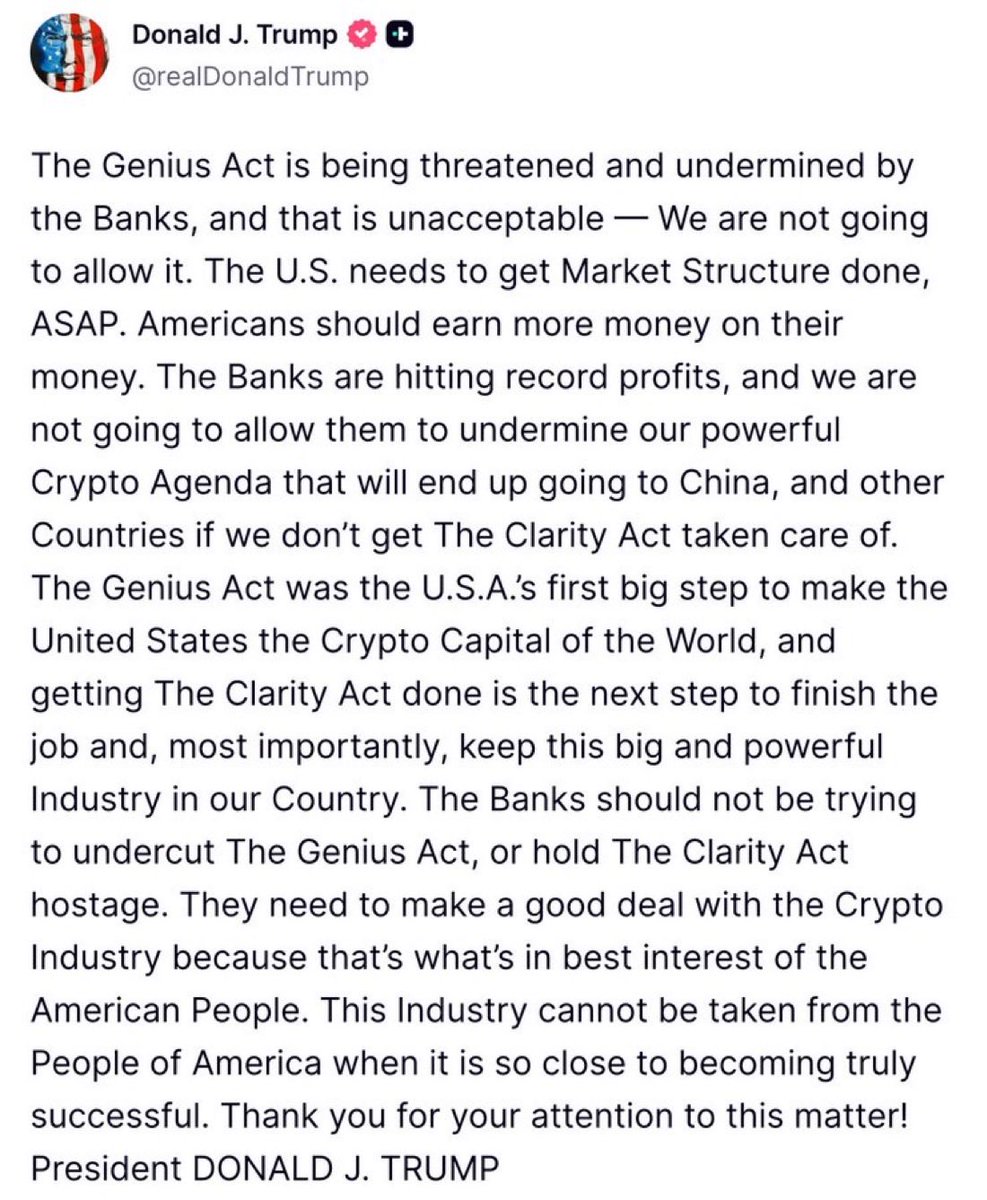
The “Big Banks”—the very institutions that have held a monopoly and screwed their customers for years, offering near-zero yields on retail Money Market Accounts while crushing low-balance accounts with exorbitant fees—are now doing everything they can to block the Crypto industry from offering real benefits, perks, and rewards on their platforms.
They are the greatest hypocrites and are in mass panic given they know they are losing the digital finance race! @worldlibertyfi
Elon Musk just confirmed that Tesla will deliver a Cybercab to a customer for $30,000 or less by the end of 2026.
You will be able to buy a Cybercab for personal use.
@PulseChainStats Ask Grok about RH - not exactly flattering. He is more liken to a conman. He gives the appearance of legitimacy but there is no substance. He hides and unable to visit may countries. Ask Grok.
Venezuela: The $60B+ Bitcoin "Shadow Reserve"
Markets focus on the $17T+ in Oil that Venezuela owns.
But what they don't know is that Venezuela one of the largest active $BTC holders in the world.
Similar in scale to both $MSTR and Blackrock.
Here's how this impacts markets and prices:
Intelligence reports indicate that the Venezuelan regime accumulated a "shadow reserve" of Bitcoin (BTC) and Tether (USDT) estimated at more than $60 billion. (HUMINT)
his hoard was built through "gold swaps" and the requirement that oil exports be settled in USDT to evade sanctions.
Intelligence cited by Whale Hunting (authored by Bradley Hope and Clara Preve) indicates that the accumulation began in 2018, coinciding with the aggressive liquidation of the Orinoco Mining Arc’s gold reserves.
- The regime likely converted ~$2B of gold proceeds into Bitcoin at an average price of $5K, which would have been around 400,000 BTC. At Jan 2026 price of ~$90K, that specific tranche alone would be worth $36B.
As the "Petro" experiment failed, the regime pivoted to using Tether (USDT) as a proxy for the petrodollar during cruide oil sales. However, Venezuela began to "Wash" that into Bitcoin, recognizing that USDT retains the ability to freeze addresses.
Given market intelligence, we can estimate that Venezuela has roughly:
Gold Swaps: 2018–2020, Gold Bars, Value Now: ~$45B - $50B
Petro-Crypto: 2023–2025, Crude Oil, Value Now: ~$10B - $15B
Mining Seizures: 2023–2024, ~$500M
Giving a grand total between 2018–2026: ~$56B - $67B in Bitcoin, implied at 660K+ Bitcoin, with a floor at 600K in Bitcoin.
That does not mean US has full control of the Bitcoin yet. The days following today will be defined by a high-stakes interrogation to secure the Bitcoin.
The U.S. will likely offer plea deals, reduced sentencing, or protection for family members in exchange for the surrender of seed phrases. Given the severity of the narco-terrorism charges, the leverage is there.
So now the revelation of the $60 billion hoard fundamentally alters the supply/demand dynamics of the Bitcoin market for 2026, as the Venezuelan reserve is estimated at: 600,000+ BTC.
This is 12 times larger than the German sale and 2 times larger than the U.S. government’s entire pre-raid stockpile.
In 2024, the German state of Saxony liquidated ~50,000 BTC ($3 billion). This 50K BTC sale caused a 15-20% market correction and weeks of bearish sentiment.
Now compare that to 600,000.
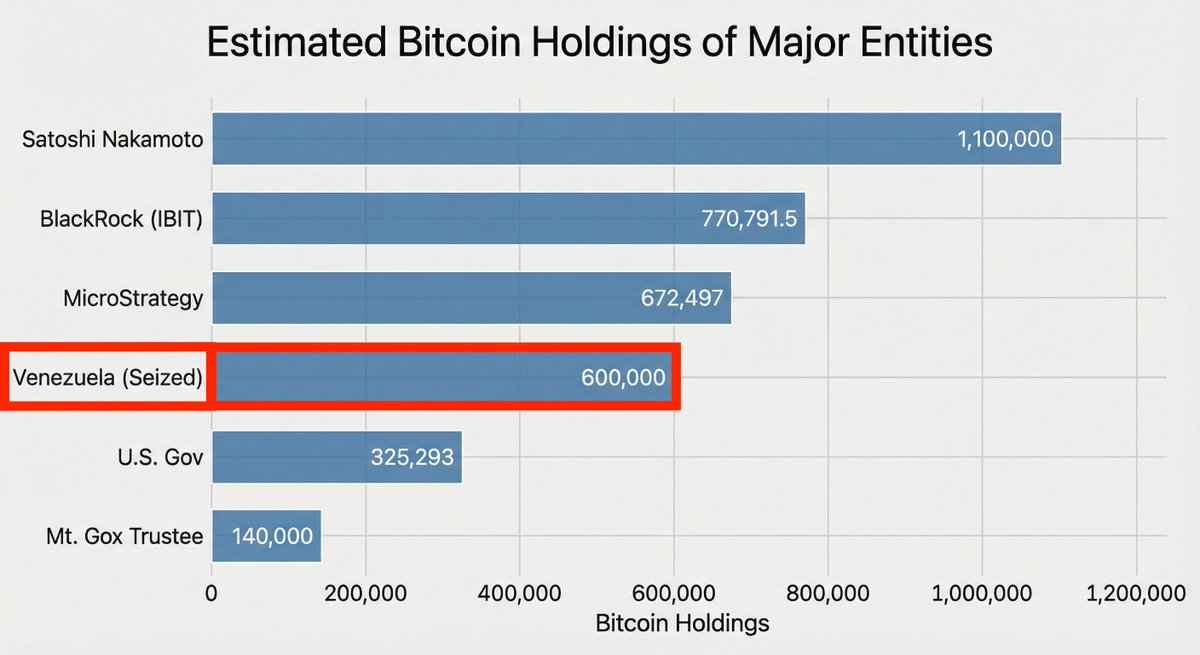
Here's the leading entity holders of Bitcoin:
1. Satoshi Nakamoto ~1,100,000
2. BlackRock (IBIT) ~770,791.5
3. MicroStrategy ~672,497
4. Venezuela (Seized) ~600,000
5. U.S. Gov ~325,293
6. Mt. Gox Trustee ~140,000
Now, here's what will likely happen from here:
The "Frozen Asset" (High Probability):
The assets are seized but immediately entangled in complex litigation Creditors file injunctions; the DOJ claims forfeiture. The keys are held in escrow by the U.S. Treasury, but the coins cannot move.
Short-term volatility due to uncertainty, followed by a bullish "supply shock" narrative.
Short-term volatility due to uncertainty, followed by a bullish "supply shock" narrative. The market realizes that 600,000 BTC (3% of circulating supply) have been effectively removed from the market for 5-10 years. This acts as a massive "lock-up," reducing liquid supply and supporting higher prices.
The "Strategic Reserve" Pivot (High Probability):
Influenced by the "Strategic Bitcoin Reserve" movement, President Trump orders the Treasury to hold the Bitcoin as a permanent U.S. asset.
This too acts as a massive lock up, reducing liquid supply and supporting higher prices.
The "Fire Sale" (Very Low Probability):
The U.S. DOJ declares the assets "perishable/volatile" and executes an immediate liquidation via Coinbase Prime or USMS auctions to fund the occupation costs.
However, this is unlikely due to Trump's positive stance toward Bitcoin "Reserves" from confiscating assets.
_
Results:
Markets have been looking at the massive oil reserve and beneficiaries, while ignoring the elephant in the room: Bitcoin.
The "second order effect" is likely a massive supply lock-up.
If the U.S. seizes these assets, they will likely move from "active liquid reserves" of a rogue state to "frozen sovereign assets" of the U.S. Treasury, reducing available supply and potentially acting as a catalyst for higher prices in Q1 2026.
There will likely be increased volatility. But for market participants shorting Bitcoin because of fears of "conflict", this event is generally seen as bullish for $MSTR and Bitcoin holders as this effectively locks up supply for many years to come.
If you’re wondering what is going on with $Bitcoin, $MSTR and JP Morgan, you need to listen to this👇
It’s probably the most important thing you’re going to read today.
H/t: @HodlMaryland
What is happening in crypto?
Over the last 41 days, crypto has erased -$1.1 trillion in market cap, or -$27 billion PER DAY.
Crypto market cap is now ~10% BELOW levels seen during the record -$19 billion liquidation on October 10th.
This is a structural move. Let us explain.
Pls plsx sacrifice is down 90 percent. The plan is to do the same thing and siphon more money. I guess people want to believe in something. The costliest of all follies is to believe in the parable untrue. I suggest RH stays in hiding - my guess is that he will be extracted from hiding.