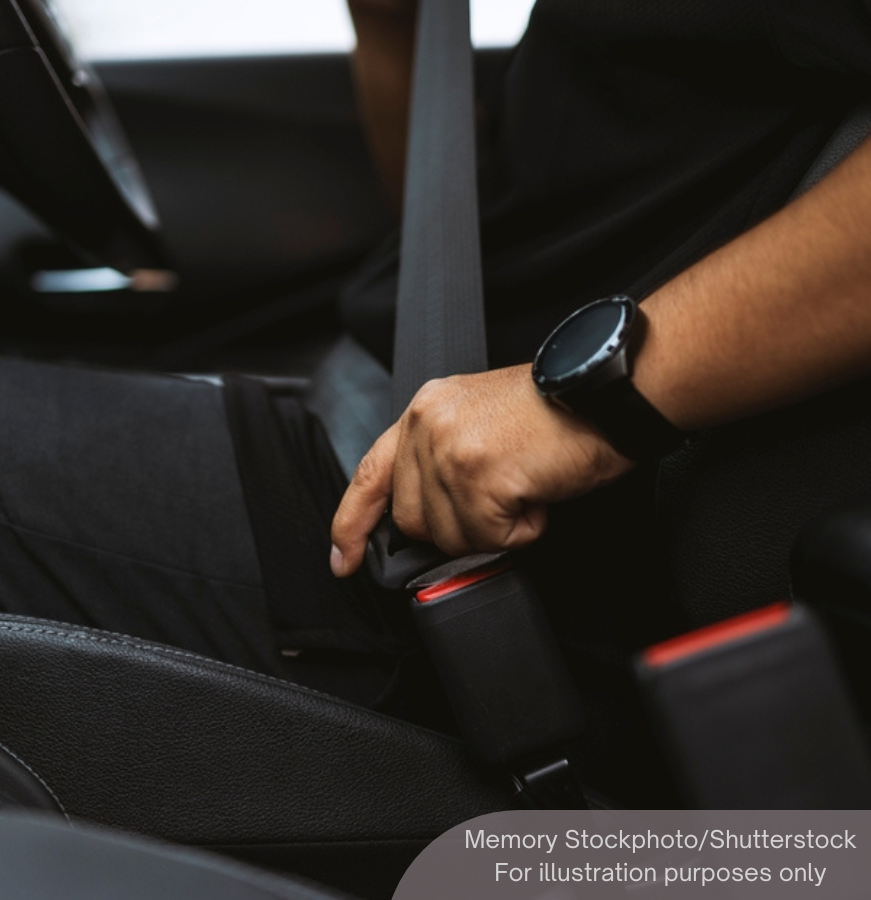
Drivers with good records can now receive an additional insurance premium discount of up to 10% on top of the existing no-claim discount.
The new Cermat Madani programme could reduce premiums by as much as 65%, with motorists' risk profiles being assessed based on driving records and traffic offences, said Transport Minister Anthony Loke.
🧵1
A man had wrapped the key to his ₹12 lakh car in aluminum foil.
At first, people thought maybe the key was damaged or someone was using a local hack.
But everyone was shocked when they heard the real reason.
He said, 'These days, cars are getting stolen without breaking them.'
Because now thieves do not break locks; they capture signals.
Nowadays, keyless cars continuously keep a signal connection with their key.
As soon as the key comes near, the car automatically unlocks.
But in a relay attack, thieves capture the signal of the key kept inside the house using one device,
and send the same signal to the car using another device.
The car thinks the key is nearby and quietly unlocks.
This is where this ordinary aluminum foil comes in handy.
Because the foil blocks the signal and the key's wireless signal cannot go outside.
That is, ₹10 foil can save a car worth lakhs multiple times.
Now many people have started keeping the key inside a drawer instead of near the door,
and some people are also using signal-blocking pouches worth ₹500-₹1000.
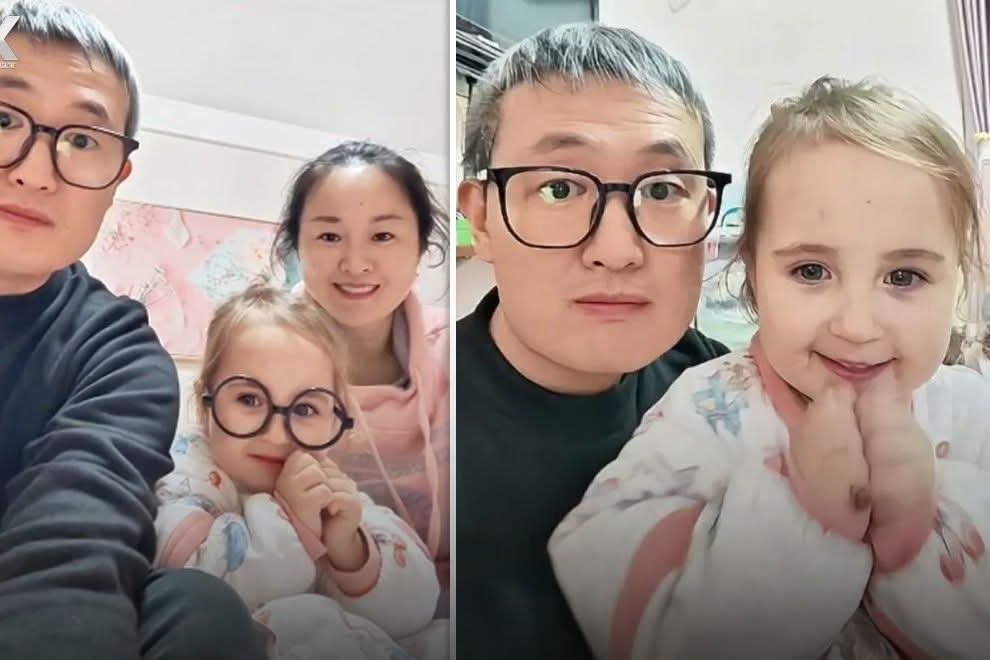
A Chinese couple thought their baby had been switched at birth because she had blonde hair and blue eyes. However, a DNA test confirmed she was their biological daughter. Later, they discovered that a distant ancestor on the father’s side had Russian heritage, and the recessive genes unexpectedly reappeared in their child.
Last bus 750 tu 23:30 tapi banyak orang kena sidai 2 mlm berturut2 tanpa update.
Pak cik B40 dlm gambar ni kena tidur sini tunggu bas keesokan pagi utk balik Shah Alam. Apa kebodohan ni @askrapidkl? 🤬
🚨 Top 5 Live Intelligence Dashboards You Should Be Watching
If you're tracking cyber threats, geopolitical tensions, or OSINT signals in real time, these platforms provide a powerful “single pane of glass” into what’s happening globally:
🌍 LiveUAmap – Real-time conflict and geopolitical event tracking
🔗 https://t.co/HV7wR0jxD4
📊 GDELT Project – Global event monitoring powered by AI across dozens of languages
🔗 https://t.co/Y3468LUhoI
🌐 WorldMonitor – Live global incidents, disasters, and security alerts
🔗 https://t.co/1qMzK0Dtaq
🛡️ SOCRadar Cyber Conflict Dashboard – Focused cyber threat intelligence (Iran–Israel context)
🔗 https://t.co/d4MNtnQ1OM
🧠 Pizzint – OSINT-driven monitoring of leaks, dark web activity, and threat signals
🔗 https://t.co/GutduD8Bif
These dashboards highlight how OSINT + real-time data + visualization are reshaping situational awareness for both cyber and physical threats.
👉 If you know other high-quality live intelligence dashboards, drop them in the comments — always looking to expand the list.
#OSINT #CyberThreatIntelligence #ThreatIntel #Geopolitics #DarkWeb #CyberSecurity #DDW #InfoSec #OpenSourceIntelligence
Went to the grocery store this morning
Bread, milk, eggs
$47.63
The screen asked if I'd like to round up to support a children's hospital
I pressed no
The cashier looked at me
The woman behind me looked at me
My wife looked at the ceiling
Again
This company made $14 billion last year
They can round up
Went to get gas after
The pump asked if I'd like to add $1 to support veterans
I support veterans
I pressed no
A $200 billion oil company asking me to fund their charity while I'm paying $3.89 a gallon
That's not philanthropy
That's outsourcing
Drove through for lunch
Taco Bell
The screen said "round up for education?"
A fast food company asking me to fund scholarships while paying their employees $11 an hour
I pressed no
My wife said "you know you're arguing with screens today"
She was right
But the screens started it
Went to the pharmacy
Picked up a prescription
$340 after insurance
The screen asked if I'd like to donate $1 to help families in need
I just paid $340 for a medication that costs $4 to manufacture
And now you want a dollar
I pressed no
The pharmacist said "it's just a dollar"
I said "it's never just a dollar"
She didn't respond
Got home
My wife said "you said no to a children's hospital, veterans, education, and families in need today"
I said "no. I said no to four corporations who want me to fund their goodwill so they can put it in their annual report"
She was quiet
Then she said "you're not wrong"
I said "I know"
She said "but you're still going to look like a monster"
I said "I'd rather look like a monster than quietly fund a billion-dollar company's PR strategy at the register"
She didn't disagree
But she didn't look at me either
Plz fix. Thx.
Sent from my iPhone
@DrDzul Dulu masa I study, I ada baca research paper ttg micro organisms in hospital. Siapa kata hospital tu sterile mmg tak betul lah.... I kalau dgr member² berniat nak dok hospital utk berehat mmg I gelak jer lah. I think dr dzul aware lah how dangerous this mould is.
BREASTMILK
She thought she was studying milk.
What she uncovered was a conversation.
In 2008, evolutionary anthropologist Katie Hinde was working in a primate research lab in California, analyzing breast milk from rhesus macaque mothers. She had hundreds of samples and thousands of data points. Everything looked ordinary—until one pattern refused to go away.
Mothers raising sons produced milk richer in fat and protein.
Mothers raising daughters produced a larger volume with different nutrient balances.
It was consistent. Repeatable. And deeply uncomfortable for the scientific consensus.
Colleagues suggested error. Noise. Statistical coincidence.
But Katie trusted the data.
And the data pointed to a radical idea.
Milk is not just nutrition.
It is information.
For decades, biology treated breast milk as simple fuel. Calories in. Growth out. But if milk were only calories, why would it change depending on the sex of the baby?
Katie kept digging.
Across more than 250 mothers and over 700 sampling events, the story grew more complex. Younger, first-time mothers produced milk with fewer calories but significantly higher levels of cortisol—the stress hormone.
The babies who drank it grew faster.
They were also more alert, more cautious, more anxious.
Milk wasn’t just building bodies.
It was shaping behavior.
Then came the discovery that changed everything.
When a baby nurses, microscopic amounts of saliva flow back into the breast. That saliva carries biological signals about the infant’s immune system. If the baby is getting sick, the mother’s body detects it.
Within hours, the milk changes.
White blood cells surge.
Macrophages multiply.
Targeted antibodies appear.
When the baby recovers, the milk returns to baseline.
This was not coincidence.
It was call and response.
A biological dialogue refined over millions of years. Invisible—until someone thought to listen.
As Katie reviewed existing research, she noticed something unsettling. There were twice as many scientific studies on erectile dysfunction as on breast milk composition.
The first food every human consumes.
The substance that shaped our species.
Largely ignored.
So she did something bold.
She launched a blog with a deliberately provocative name: Mammals Suck Milk.
It exploded. Over a million readers in its first year. Parents. Doctors. Scientists. People asking questions research had skipped.
The discoveries kept coming.
Milk changes by time of day.
Foremilk differs from hindmilk.
Human milk contains over 200 oligosaccharides babies can’t digest—because they exist to feed beneficial gut bacteria.
Every mother’s milk is biologically unique.
In 2017, Katie brought this work to a TED stage. In 2020, it reached a global audience through Netflix’s Babies. Today, at Arizona State University’s Comparative Lactation Lab, she continues reshaping how medicine understands infant development, neonatal care, formula design, and public health.
The implications are staggering.
Milk has been evolving for more than 200 million years—longer than dinosaurs walked the Earth. What we once dismissed as simple nourishment is one of the most sophisticated communication systems biology has ever produced.
Katie Hinde didn’t just study milk.
She revealed that nourishment is intelligence.
A living, responsive system shaping who we become before we ever speak.
All because one scientist refused to accept that half the story was “measurement error.”
Sometimes the biggest revolutions begin by listening to what everyone else ignores.
@yeobeeyin YB boleh tak tolong siasat pencemaran udara di daerah klang selatan? Bila buka pintu di waktu pagi boleh terbau asap. Hidung saya sangat sensitif YB. Saya tak pasti samada asma prevalent di kawasan saya. Utk mendapat janjitemu mmg mengambil masa juga. Tq in advance YB.
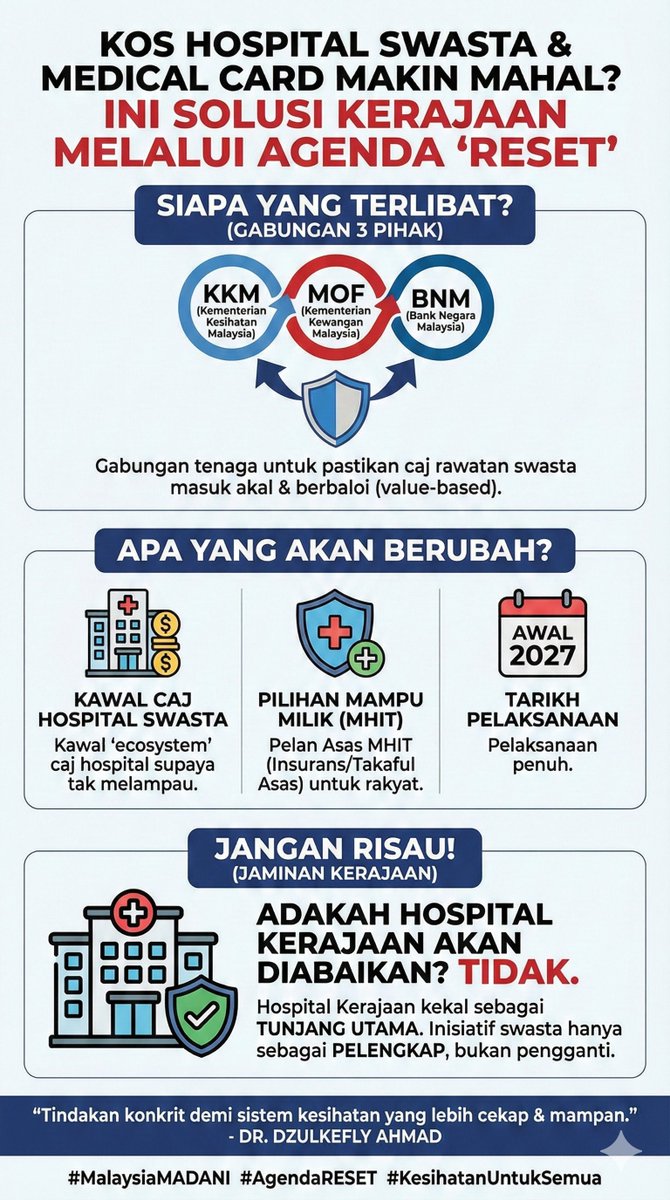
Saya cuba mudahkan tulisan Dr Dzul:
Isu medical card & caj hospital swasta yang naik mendadak sedang ditangani menerusi Agenda RESET (Gabungan KKM + MOF + BNM).
Poin penting:
1. Nak kawal caj swasta supaya berbaloi & tak melampau.
2. Hospital kerajaan KEKAL jadi tunjang, tak diganti.
3. Pelan insurans asas (MHIT) yang lebih mampu milik akan bermula penuh 2027.
Ini langkah yang baik dari @KKMPutrajaya!