Our @SuiNetwork thesis and why we're building on SUI;
a User-Friendly Layer 1! wallet-less, fast consensus ~400ms avg ttf w Mysticeti, and "infinite" scale 297k tps.
https://t.co/ule9lclA7I
Built by these legends and team
@b1ackd0g@EvanWeb3@EmanAbio@GDanezis@kostascrypto
@steipete
built cl-agent: a Codex-connected substrate for coding agents that captures episodes, replays relevant experience, and distills reusable skills across sessions without fine-tuning.
https://t.co/badO1MTpR9
Sui, Mysten Labs, George Mason University & Yale release a new version (after two years of research and peer review) of the most comprehensive study on the tools humanity has for private crypto transactions
2026 will be massive for private crypto solutions. Sui is leading with a dedicated global team of the strongest minds in zero-knowledge proofs.
article link in the 1st comment
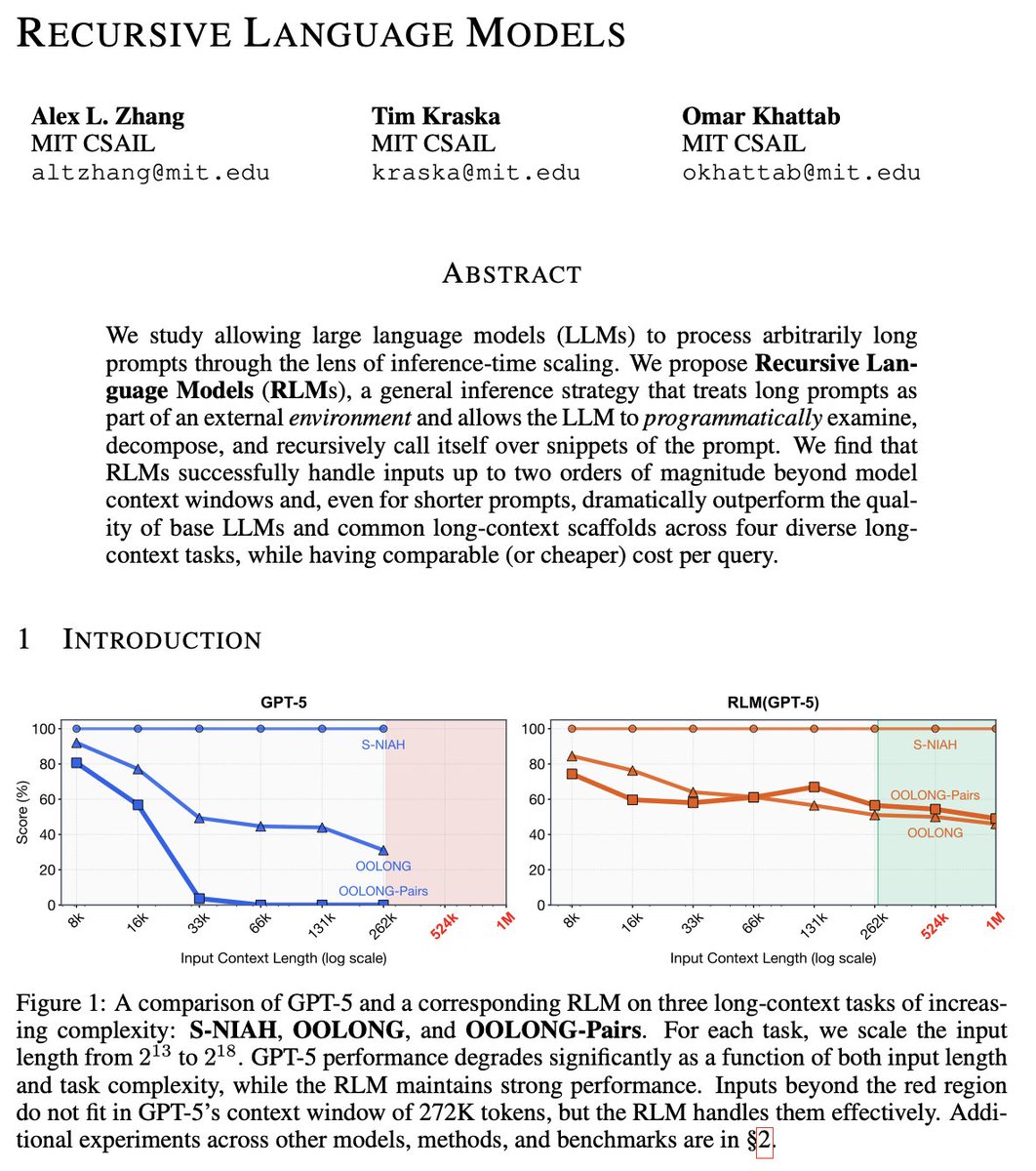
Much like the switch in 2025 from language models to reasoning models, we think 2026 will be all about the switch to Recursive Language Models (RLMs).
It turns out that models can be far more powerful if you allow them to treat *their own prompts* as an object in an external environment, which they understand and manipulate by writing code that invokes LLMs!
Our full paper on RLMs is now available—with much more expansive experiments compared to our initial blogpost from October 2025!
https://t.co/x47pIfIkTb
To accompany the AP2 announcement, I wrote a broader piece on how Mysten is thinking about problems in AI + how Sui/Walrus/Seal fit in. Agentic commerce is one of several problems we're interested in.
We’re excited to share our 2025 State of Crypto report.
This year’s story: the maturation of the crypto industry — with growing institutional adoption, the rise of stablecoins, better infrastructure, new consumer experiences, and long-awaited regulatory clarity.
Read the full report → https://t.co/P3gzQphOEx
Here are the biggest trends of 2025…
After many requests, Poseidon hash has been selected as the next native cryptography feature for Sui mainnet.
Poseidon is ideal for fast circuits inside Zero Knowledge Proof systems, where traditional hashes like SHA256 are too heavy. Poseidon works directly over prime fields, making ZK proofs cheaper, smaller, and faster.
⸻
2/ Why does this matter?
When verifying a Groth16 proof, developers normally expose many public inputs, increasing proof size, cost, and potentially data leakage.
With Poseidon on Sui, you can hash all those inputs inside the circuit and expose just one value on-chain or hash values off ZK and then just provide the hash output as ZK public input.
👉 The result: shorter proofs (always constant size), lower and constant gas independently on your inputs size, and cleaner privacy guarantees.
⸻
3/ This integration means Sui developers will be able to bridge off-chain computation and on-chain verification natively without sacrificing performance or elegance. We also allow up to 16 elements and if you need more, you just create a Poseidon Merkle tree over all of your inputs. It’s cryptography that feels seamless, composable, and programmable through Sui Move.
I can’t wait for this GitHub PR to be merged and start playing with cool ZK, zeeCat, zkLogin as account abstraction and zkTunnels.
Wild: Anthropic just proved that prompt engineering is dead. Context engineering is the new game, and it changes everything about building AI agents 🤖
For years, we obsessed over the perfect prompt.
The right words. The perfect phrasing. The magic sentence that makes GPT-4 finally understand what you want.
But Anthropic just dropped a reality check:
Prompts are the easy part. Context is the bottleneck.
Here's what they found:
→ LLMs have an "attention budget" like human working memory, but for tokens
→ More context = worse performance (they call it "context rot")
→ The transformer architecture creates n² relationships between tokens
→ Every token you add depletes focus exponentially
Translation? Stuffing your AI with information is like trying to focus while 50 people scream at you.
So what's the new playbook?
↳ Just-in-time retrieval
- Instead of loading everything upfront, agents pull data dynamically using tools
- Claude Code does this brilliantly: it uses grep, head, tail to analyze databases without ever loading full files into context
↳ Compaction
- Summarize the conversation when you hit limits
- Keep architectural decisions, discard redundant tool outputs
- Maintain continuity without context bloat
↳ Structured note-taking
- Agents write persistent notes outside the context window
- Pull them back only when needed
- Think: AI maintaining its own https://t.co/xZDZxFLBJK file
↳ Sub-agent architectures
- Specialized agents handle focused tasks
- Return compressed summaries (2k tokens) instead of raw exploration (50k+ tokens)
- Separation of concerns at the AI level
The shift is profound:
Before: "How do I write the perfect prompt?"
Now: "What's the minimal high-signal context that drives my desired outcome?"
This isn't just academic.
Goldman Sachs is using AI to draft S1s.
Perplexity is automating financial analysis.
Claude Code is refactoring entire codebases.
None of this works if you drown the AI in context.
The best AI engineers aren't prompt wizards anymore.
They're context architects.
I bet $BTC hits $110k before it retests $76.5k.
Y? The Fed is going from QT to QE for treasuries. And tariffs don’t matter cause “transitory inflation”. JAYPOW told me so.
I’ll expound on that in my next essay, that’s the TLDR for your TikTok peanut brain.
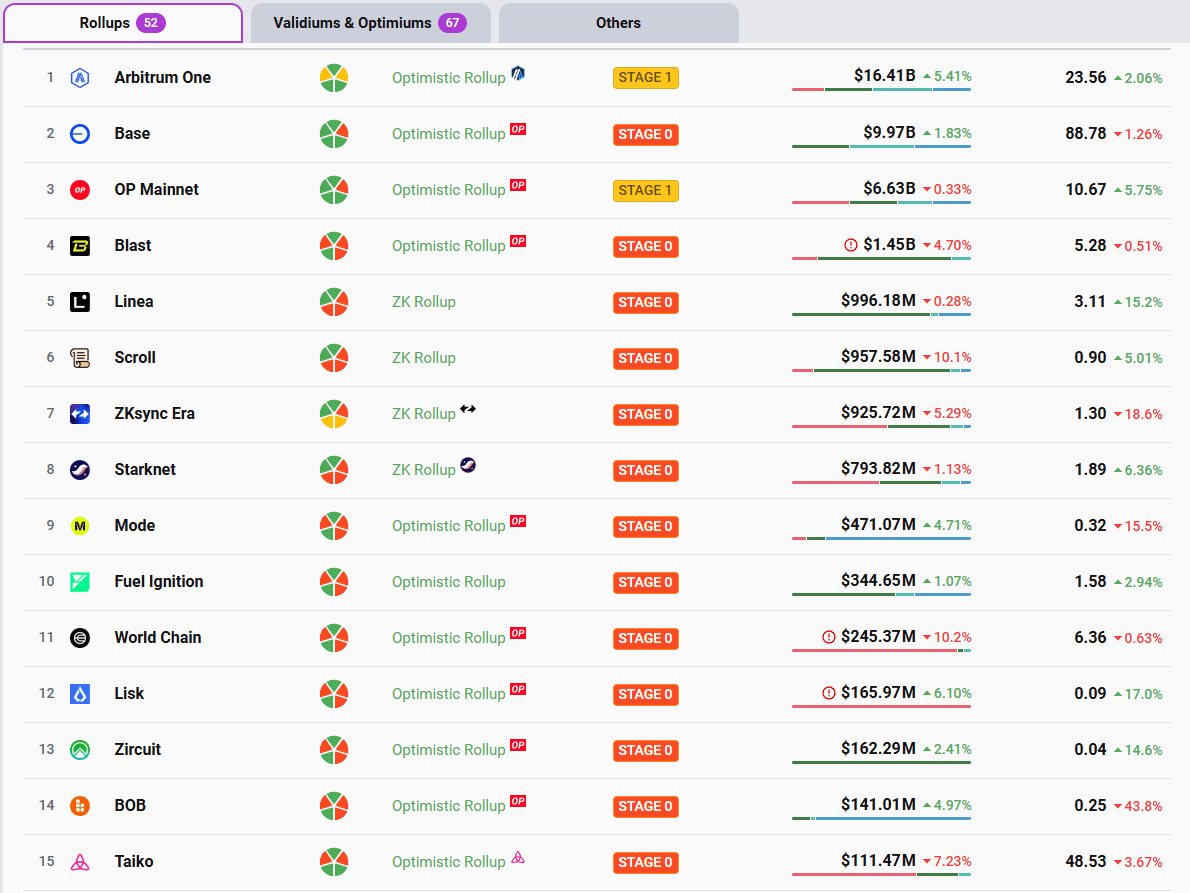
● Most Ethereum L2s Will Fail.
The most promising L2 at the moment are Base and Mantle.
Unless Ethereum Foundation develops "a concept of L2 hubs", 90% of L2 chains will not survive the next bear cycle.
Bullish on Solana DeFi.
Bitcoin is by far the most in-demand crypto asset, and to see increasing efforts to spread its adoption on Solana DeFi is really positive.
While this is still early, it’s yet another confirmation that Kamino is becoming a pillar of Solana DeFi that is building beyond the hype.
Here’s the main TL;DR of this initiative:
• cbBTC (natively wrapped Bitcoin SPL on Solana from Coinbase) is now available for deposit and borrow on Kamino.
• Kamino’s goal is to scale cbBTC on Solana aggressively by: 1. Attracting cbBTC inflows into Kamino 2. Scaling USDC borrowing against cbBTC.
• $25,000 weekly reward initiative is live to reward users borrowing USDC against cbBTC.
Congrats to the team for continuing to push the boundaries of DeFi on Solana. This is just the beginning.
Ngl, if your investment strategy is "betting on teams" then I think Kamino should be a no-brainer: Strong visions, relentless execution, and clear communication.
The future looks bright for Solana DeFi.