[#NeurIPS2026] Improving Context-Shift Robustness of Convolutional Networks via Context-Regularized Cross-Entropy
CNNs get distracted by spurious context.☹️
Idea: disentangle cross-entropy for each spatial region, and penalize those corresponding to context.🫨
It works well!🙂
ArXiv: https://t.co/0UA5MWQ0VA
Code: https://t.co/BN1kWE4WKP
Poster: https://t.co/T34bG0Gifa
If you'll be in Atlanta this December, ping me, let's get coffee! Also if you're attending NeurIPS in Atlanta, please stop by and say hi, it'll make my day😃
[#NeurIPS2026] Improving Context-Shift Robustness of Convolutional Networks via Context-Regularized Cross-Entropy
CNNs get distracted by spurious context.☹️
Idea: disentangle cross-entropy for each spatial region, and penalize those corresponding to context.🫨
It works well!🙂
Hi all, I have a new result I'm excited to share. It turns out that *all existing implementations* of softmax and cross-entropy (that's JAX, PyTorch, textbooks, etc) have a subtle bug --- two bugs, actually. A simple rewrite fixes both, and eliminates "slingshots" when grokking:
If you want to work with me as a DPhil one route (which includes funding) is via the Centres for Doctoral Training (CDT) at Oxford.
There are several of these and you apply to them direct. If you are admitted you can apply to me to be supervisor.
The deadlines are in January.
There are several of them including AIMS (autonomous Intelligent Machines and Systems), Healthcare, Ellison, Intelligent Earth etc)
I will put a link to the CDTs below in the comments , it will have full instructions on how to apply
you dont have to work with me, you can chose anyone, please let people know
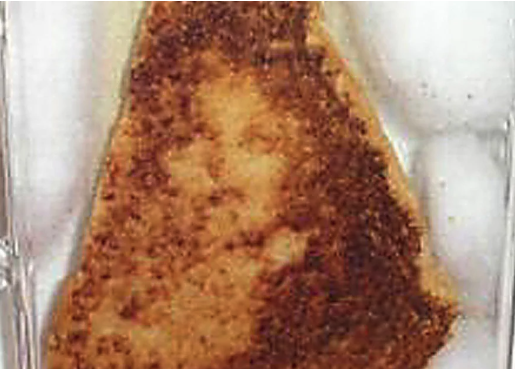
Mechanistic Interpretability be like..
We wanted to see what the bread slice is thinking when it is in the toaster. Is it taking its singing equanimously? thinking religious thoughts? or plotting revenge? (Face it--a vengeful singed slice is the last thing we want!)
But alas, the bread slice doesn't talk! Its thoughts are intricately encoded in its singe pattern.
So we devised a clever method--of showing the bread slice to a random Joe, asking him to describe its feelings.
Joe says that the slice is having a religious experience involving Mother Mary.
But is random Joe describing these feelings right?
To check, we called random artist Jane and asked her to render these thoughts back to the external appearance of a (different!) bread slice.
We co-trained Joe and Jane until they learn to auto-encode the real truth about the slice's thoughts.
We are finding this technique to be a great way to understand what the bread slice is thinking. The tehcnique is not always (or even sometimes) correct, but it gives us a great window into publishing bread slice thought related podcast articles.
Hope you find this research useful. #AIAphorisms
We're Optimal Intellect, a research lab from the team behind CVXPY. Today we're introducing Moreau: a GPU-native solver that's orders of magnitude faster than the best existing tools.
This is the key difference between in-domain and out-of-domain generalization, and we still have not truly solved out-of-domain generalization. It just turns out you can build world changing technology by throwing so much data at things that the entire universe is in-domain.
@NeelNanda5 [2/2] From the discussion at ~6m, perhaps using multiple activations / PCA reduced how much the explanation can update *without* changing the underlying prediction, which may explain why it improved alignment?
@NeelNanda5 [1/2] This was awesome. I'm also excited about leveraging interp in training; my approach focuses on reducing degrees of freedom of model parameters & input w.r.t. explanation, because this provably prevents malicious compliance. Then training against these enforces alignment!
@bitsgopew@ninja_maths The channel below in general is an absolute goldmine, but the video specifically talks about the visualization in the tweet above, makes it very intuitive:
https://t.co/oE99IpG7B5
I also recommend checking out 4.2.2. where prof talks about the connection with normal equations