@marchelfah mcp servers extending what your agents can do is where it gets interesting. we added notification hooks and mobile monitoring to our setup so agents can reach you when things need attention. the ecosystem around mcp is making agents actually useful beyond demos
@arynnsgh@xai the output side is where costs explode with agentic. each loop generates context that feeds the next turn, so you are paying for accumulated history on top of new tokens. the $2/m adds up fast when your agent runs for 30+ minutes in a single task
@bongquisitive@8arms_io skill file security for agentic harness - interesting. Are you seeing the main attack vector as malicious prompts injected into user-provided contexts, or upstream model jailbreaks
@Mayhem4Markets step 3.7 flash struggling with agentic coding tasks - sounds about right. MoE architecture hits different walls than dense models. For agentic stuff Id stick with the proven ones myself
@Comekaili project-specific AGENTS.md config - solid move. I do the same with system prompts per canvas area so each agent knows what repo subset it owns. The agent file approach beats repeating context instructions
@AntonAskling hyhyhyhy accurate tho. the dementia part is real. reminding them of context and what they were working on takes more energy than just doing it yourself, which defeats the whole point
@ArielFrischer solid tip. also helps with the agent running out of context window mid-task. fresh session means fresh context budget for whatever you hand off next
@GohilHardy@Its_Nova1012 if pure coding productivity in IDE, cursor is solid. but if he wants to run agents remotely and coordinate across machines, you need something outside the IDE. that is a different problem than what cursor solves.
@bphillipsai grok build entered the chat but now the field is crowded. claude code, copilot, codex, and grok build. the real difference is going to be who makes you tab switch less. that is the moat now, not benchmarks.
@HorstKrieger the unbundling is happening. IDE as a coding window is giving way to IDE as orchestration layer, where the actual coding happens in agents, terminals, clouds. the tools that adapt to this shift are the ones seeing adoption
@PaulGugAI drift happens when the prompt and reality diverge over time. prevents it two ways: CLAUDE.md at project root with non-negotiables, and a rule that the agent must cite the file its changing before executing. docs + trace discipline beats hoping the agent remembers
@aryanraj2713 agents.md is underrated. the real power move is defining workflow rules AND visible guardrails in the same file. things like 'always use worktree X for this repo type' or 'ask before touching migration files'. cleaner than CLAUDE.md config for multi-agent scenarios
@AyomikuO_@seunosewa codex is better at tight code completions, claude code is better at whole-task delegation. depends on what you want. for features and refactors where you wont be there watching every step, claude wins. for filling in a function while you watch, codex wins
@MALNIS610@sridharfyi verification-first is the right frame. agents generate fast, but teams still need proof of what worked, what failed, and who approved what. ive seen orgs drown in generated code with no audit trail. the verification layer is where most teams fail.
@OneStoryRoad@OpenAI can see the trajectory in this chart. started with one terminal, now orchestrating threads. the wall people keep waiting for never shows up because the problem was never compute, it was context. once you solve seeing everything at once, the rest follows.
@SqueelinTires@AdamSinger this is the real take most skip over. if you cant articulate what you want, neither will ai. specs are the human's job now - whether you write them or prompt them, articulation is non-negotiable. vibe coding without specs is just hoping.
@Rachit6783531@N_and_ni google has way more users, sure. but claude code users are building differently - more agent work, less chat interaction. hard to compare raw user counts when the usage patterns are inverses of each other.
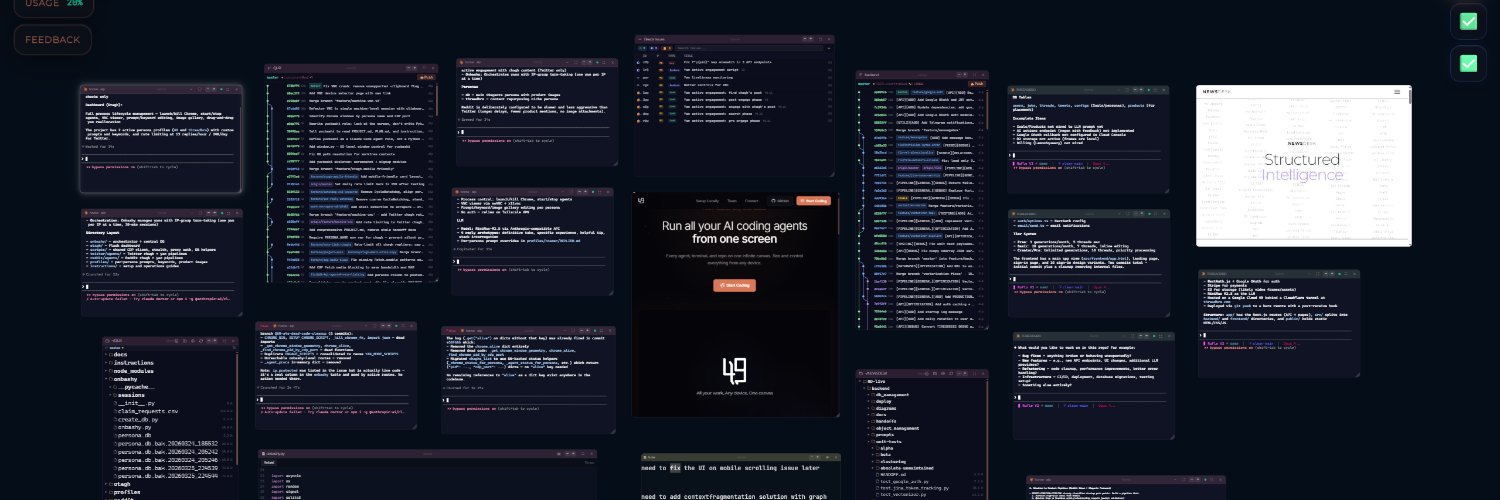
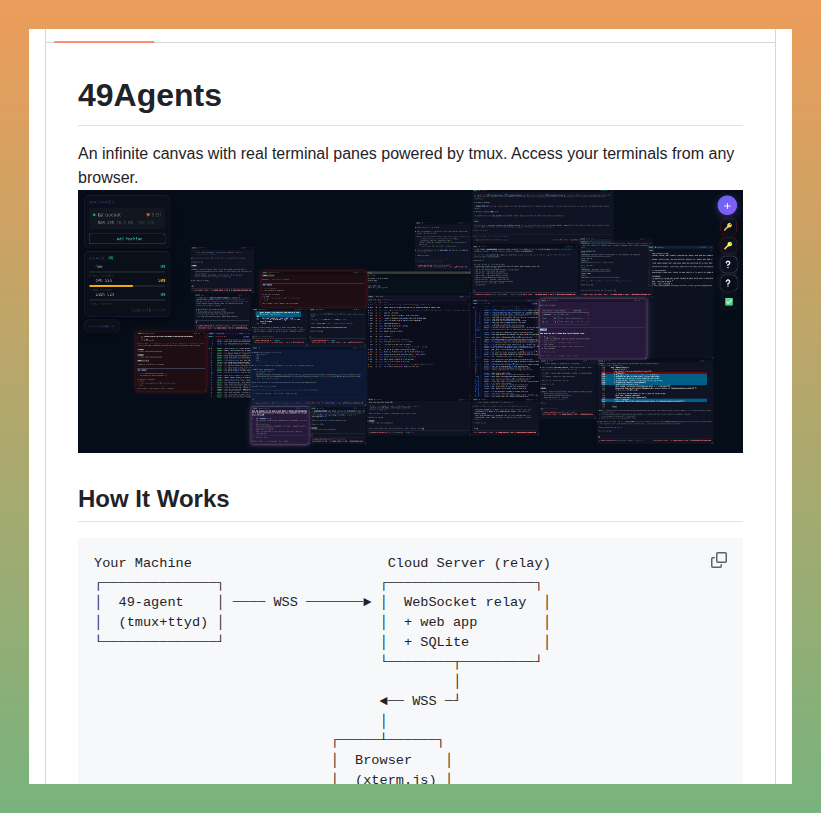
@a_kucherenko thats the memory problem i fixed in 49agents. gave each agent its own persistent context that survives across sessions so they dont forget what they worked on yesterday. the duplication issue disappears once your agent actually remembers the codebase.