1/2
The PHILIPPINES: Soon a FAILED-STATE?
By Engr. Lao
Corruption destroys money, institutions, and infrastructure.
But its most devastating casualty is the mind of a people.
A nation does not fall the moment its treasury is looted.
It falls the moment its citizens begin to adapt to being looted.
The slow death is psychological.
THE FIRST WOUND: LEARNING TO LOWER EXPECTATIONS
Decades of bribery, fake audits, ghost projects, political dynasties, and theatrical elections teach Filipinos a quiet lesson:
“Don’t expect too much.”
And so the Filipino mind bends.
We lower our standards until a functioning government office feels like a miracle.
We clap for politicians who merely show up.
We celebrate roads that took decades to finish.
We treat honesty like sainthood.
When a nation lowers its expectations, corruption no longer needs to hide.
It thrives in broad daylight.
A people who stop expecting better
will stop demanding better.
And a nation that stops demanding better
is already halfway to collapse.
THE SECOND WOUND: CONFUSING SURVIVAL WITH VIRTUE
Filipinos are endlessly praised for resilience.
But resilience has a dark twin: tolerance.
We learn diskarte.
We learn pasuway.
We learn backdoor channels, pakiusap, padrino, kilala-ko, lagay.
We convince ourselves that bending rules is “creative.”
That cheating the system is “just how you survive.”
That following the law is a luxury for the naive.
We turn coping mechanisms into character traits.
We begin mistaking brokenness for cleverness.
This is how corruption wins psychologically:
not by forcing dishonesty on the people,
but by making dishonesty feel normal.
THE THIRD WOUND: GLORIFYING THE VERY PEOPLE WHO ROB US
In countries with healthy political psychology, corrupt leaders are exiled, shamed, imprisoned, or erased from memory.
In the Philippines,
they get sequels.
A dynasty dies; its sibling resurrects.
A thief retires; his son campaigns.
A dictator falls; his heirs return as influencers.
And the people cheer.
Or shrug.
Or say, “Wala naman magbabago.”
This is not stupidity.
This is trauma.
When a population is repeatedly betrayed, abandoned, or punished for speaking out, the mind learns a protective mechanism:
we stop believing powerful people can ever be accountable.
So we vote based on entertainment.
We choose leaders who amuse us.
We cling to strongmen because they look decisive.
We excuse plunderers because “lahat naman sila magnanakaw.”
Psychologically, this is surrender wearing the mask of cynicism.
THE FOURTH WOUND: INTERNALIZED HELPLESSNESS
The most frightening consequence of normalized corruption is learned helplessness—
a condition where the citizen believes nothing they do will matter.
Why file a complaint if no one will read it?
Why expose a scandal if the whistleblower will be destroyed?
Why vote carefully if the dynasties always win?
Hopelessness becomes a national reflex.
The people stop resisting not because they agree…
but because they believe they are powerless.
A nation collapses the moment its citizens outsource their own future to fate.
THE FIFTH WOUND: MORAL EXHAUSTION
Corruption creates a moral climate where people are forced to choose between:
• being honest and getting left behind
• being dishonest and getting ahead
This psychological tension erodes the spirit.
Good people burn out.
Hardworking people give up.
Brave people get tired.
Dreamers leave the country.
The talented disappear abroad.
The nation slowly loses its best minds
and is left with those who have adapted
to mediocrity, manipulation, and survival-level thinking.
A country does not die because its enemies are strong.
A country dies because its good people become too tired to fight.
THE SIXTH WOUND: THE NORMALIZATION OF DECAY
When generations grow up seeing corruption as tradition,
the brain begins to adjust reality around it.
We stop imagining clean governance.
We stop imagining honest institutions.
We stop imagining a Philippines that works.
Taga usig na ngayon si Erwin Tulfo 🤣😂🤣
@SayChiz hindi mabisa yung mga sinabi mo kasi may 2 bastos kayong kasama.
Malakas ba yung Witness ng Team Laway kaya nag Withdraw ng 3 Articles 🤣🤣🤣
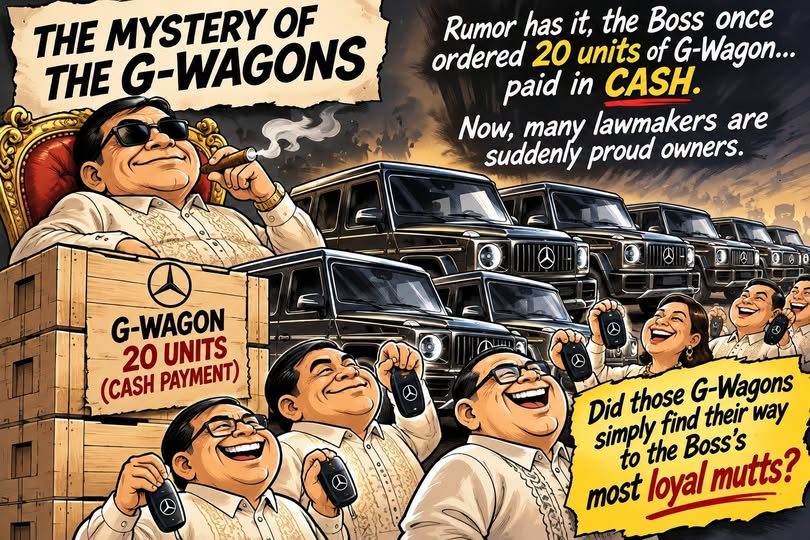
Kay Terry Ridon pala itong Mercedes-Benz G-Wagon. This can cost around P23-M if new ang halaga. Kung segunda-mano nasa P9 to P13-M ang tantiyahan, depende sa modelo, taon at kondisyon. Galing sa revolutionary taxes, o biyaya ng maleta? 🧳🤔