@rauchg@nextjs@vercel@nodejs Yes. Better python dependencies support.
Thanks for organizing help from the vercel team & attempting to resolve this.
https://t.co/rSj2XEV5X5
A Chinese developer just explained the shift from Loop Engineering to Graph Engineering better than anyone.
most people are still building agents the way that's about to be obsolete.
> why single-agent loops break and go "goal blind"
> the 4 parts of a graph: nodes, edges, state, policy
> 3 topologies that run everything: diamond, supervisor, pipeline
> Anthropic's 5 official workflow patterns
the punchline: it's not how many agents you run. it's the determinism you build with verifiers, code fallbacks, and reality anchors.
I broke the same architecture down with Kimi K3. Full A-Z guide below.
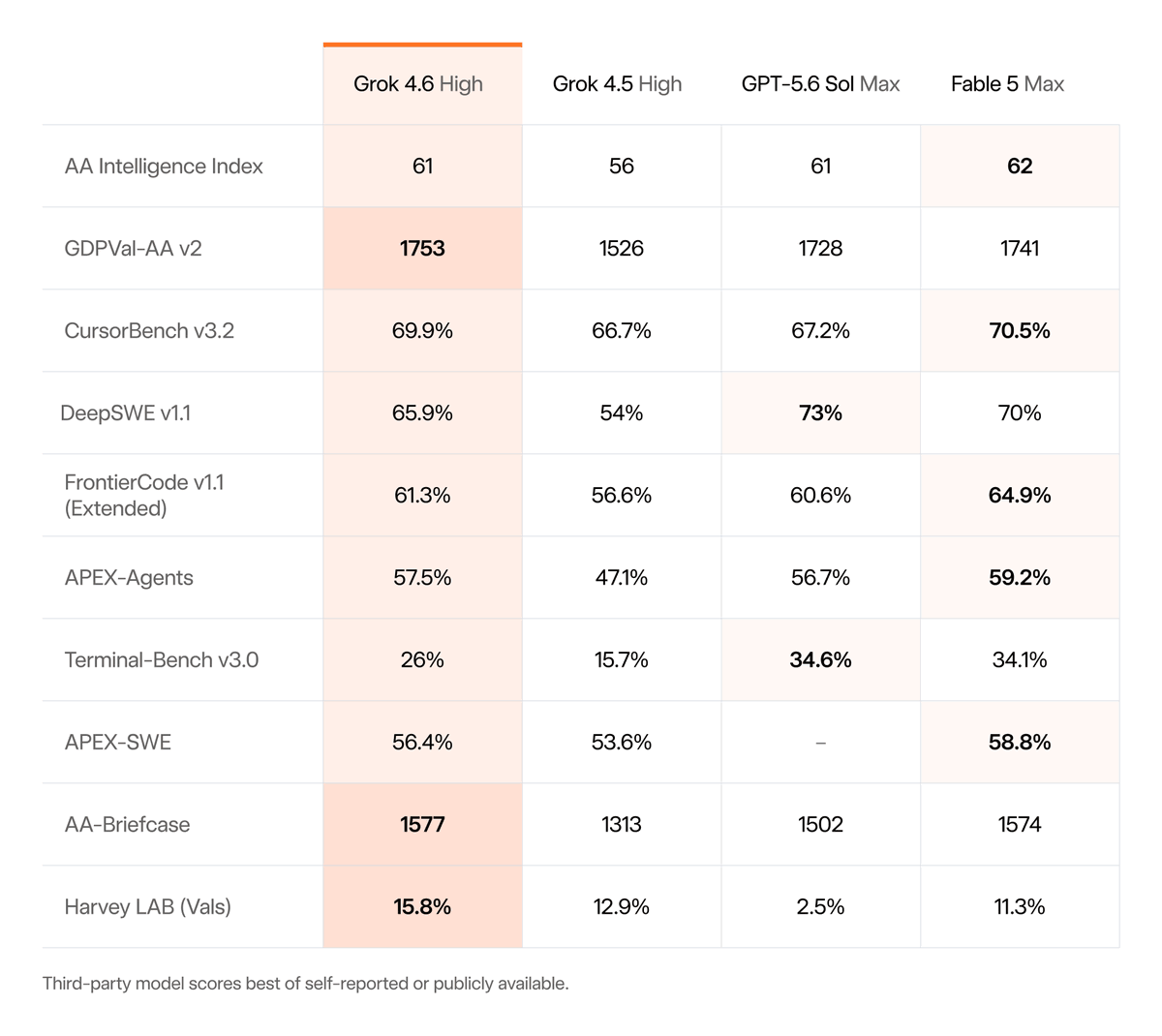
Frontier models are now competing on legal tasks now and the benchmark shows that why achieving high accuracy on legal tasks is not just about the model's capabilities but is also about building supporting infrastructure/harness to leverage and extend that capability.
My workloads have shifted to using Grok Models heavily in the last couple of weeks.
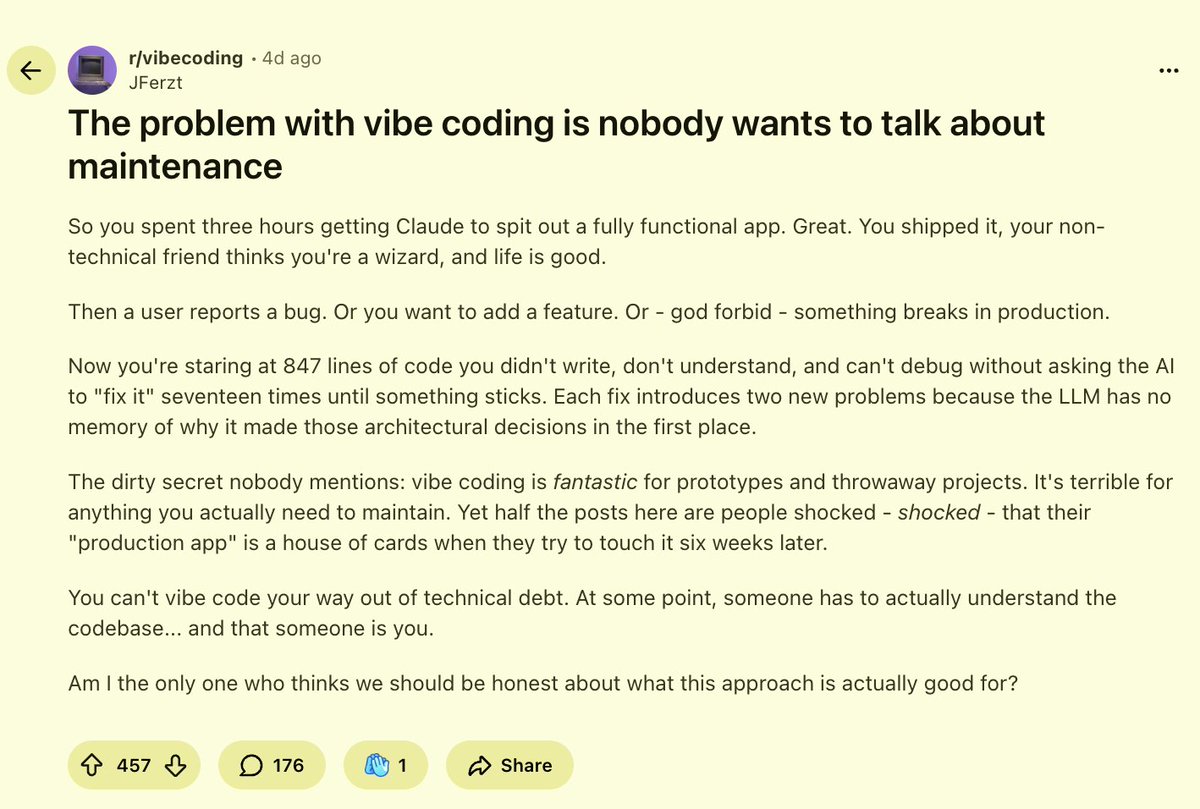
I don't understand how people can be so shitty at vibe coding. We build SaaS for our clients almost daily, and if you keep prompting Cursor mindlessly then yeah, it won't work. But if you guide it like you would a super smart intern, it does a really great job. BE GRATEFUL.
Dating advice: just do it
Selling advice: just do it
Writing advice: just do it
Coding advice: just do it
Fitness advice: just do it
Startup advice: just do it
We hear you 👂✨
SavvyWiseAI is getting smoother every week thanks to your feedback:
✅ Faster workflows
✅ Cleaner UI
✅ Research panel upgrades
✅ Reliable citations + docs
And yes… 📂 Folders are coming soon.
Keep the feedback flowing — you’re building this with us.
👉 [email protected]
🚀 SavvyWise Demo is Live!
AI-powered tax research & collaboration for Accountants & Tax Pros.
(Currently serving Australian Market)
⚡ Faster research
🤝 Easier teamwork
🧾 Smarter outcomes
⏳ Early access = FREE (for now).
https://t.co/7v728CWSPZ
@greptile is the perfect thing that we needed as a startup. Simple to set up. Started getting reviews in the existing PRs and it looks promising to get more reviews done from the team.
Congrats @greptile@dakshgup for recent raise!
two articles, two complete diff views
being a heavy user of ai coding tools like codex, claude code, cursor, etc, it's interesting to see how differently they handle code search.
under the hood, there are two broad approaches:
- literal string/keyword search (grep-based)
- semantic search (embeddings + vector dbs)
passing the right context is super important. it lets these agents understand huge codebase, reason and make changes
grep-based search: grep is extremely fast at matching literal strings. codex and claude code do a dozen of grep calls looking for definitions, usages, imports, tests.
pros:
- deterministic: function names, identifiers, and certain things need exact match, grep excels at that with no hallucinations
- scales to massive repos: grep doesn’t care if you have 100 files or 100k, it’ll churn through them
- it’s cheap infra-wise.
codex and claude code finds the right files automatically (thanks to agentic search and grep). we don’t need to manually tag a bunch of folders and files. super helpful in large or new codebase.
downsides when grep is overused:
- token bloat: dumps huge amount of code into the llm, eating context and driving up costs as repos grow
- time: with codex especially, i have noticed it takes such huge amount of time to go through the codebase and understand it
when queries are fuzzy or exploratory, semantic-based search works: index the whole repo into embeddings, store in a vector db, and retrieve by meaning. cleaner with fewer calls, higher-signal chunks, and the ability to handle fuzzier queries
indexing + semantic retrieval (basically rag applied to code). it feels tighter when reasoning about code structure, dependencies, and relationships. it obviously has its own tradeoffs too.
it will be an interesting experiment to build a small coding agent from scratch, plug in grep, semantic, even agentic search and watch how each shapes the way it “sees” a repo, and tweak the balance along the way.
Claude code is good.
Realised that our target customers are not familiar with generative ai interfaces so I literally designed a product tour and implemented that with it in very short span
It gives you a great headstart.
talk to your potential customers. great feedback helps you prioritise your tasks.
I had my first two potential client meetings today.
We were able to get an insane amount of learnings. We've already shipped most of the UX bugs by the EOD.
Checkout https://t.co/SPqm7d4sKU
@kmeanskaran I can relate to this to a very high extent. Leadership in a startup is difficult because it doesn't just involve dev/ml/ops, your responsibility will be widely expanded