Over the last two weeks, both the U.S. Government and Anthropic took significant actions that demonstrated their power to control access to AI by restricting what others can do with frontier models. This has been one of those moments that, once seen, will be hard to unsee, and it is significantly accelerating many businesses’ and nation states’ efforts to ensure reliable access to AI that no one else can terminate.
Anthropic first released Claude Fable 5, a version of its Mythos model with additional guardrails, including some restrictions that seem well justified on safety grounds (such as limitations on applying it to hacking, bioweapons, and so forth). However, it also restricted developers’ ability to use it to build competing LLM technology. This move was concerning, given that the whole AI community, including Anthropic, has benefitted tremendously from open research — indeed, the AI revolution was kicked off by my former team (Google Brain) freely publishing the Transformers paper!
Imagine if Microsoft’s terms of use barred anyone from using their tools to build competitive software, or if Google barred using it to search for information to work on competing search engines. Anthropic’s argument that it was unsafe for others to be able to make advances in AI also rang hollow. Initially, Anthropic silently degraded Fable 5’s performance for users detected to be working on LLM research through invisible interventions that weakened the model’s outputs without notifying the user. After significant backlash, it walked back this decision and decided to be transparent when it did this, but it still refuses to use its latest capabilities to help AI researchers.
This move represents a raw demonstration of power by Anthropic. It has used “safety” arguments to hinder potential competitors. Platforms succeed when they are viewed as stable, reliable partners that one can build on. The sudden rule changes by Anthropic (including a mandatory 30 day data retention policy for Fable usage) have made developers wonder about the stability of building on any one proprietary LLM provider, not just Anthropic.
The U.S. Government then shortly followed with an even greater demonstration of power. It used the Commerce Department’s authority to regulate technologies that may be national security threats to restrict exports of Mythos and Fable, requiring a license for use by any foreign national, whether inside or outside of the U.S., including employees of Anthropic. This led Anthropic to disable access to Fable to all users worldwide.
Sam Altman pointed out, referring to Anthropic, “It is clearly incredible marketing to say, ‘We have built a bomb, we are about to drop it on your head. We will sell you a bomb shelter for $100 million.’” But when one engages in this type of fear-based marketing, it increases the odds that the U.S. Government will agree with you and slap export controls on the bomb you say you have built.
To be clear, I don't think Anthropic has built anything like a bomb, and I don't think export controls on Fable are appropriate.
However, following the U.S. Government making this move, many nations, including U.S. allies, saw how the U.S. can suddenly yank their access to AI models. In many capitals around the world, this has spurred discussions on AI sovereignty and how others can ensure uninterrupted access to this critical technology.
For decades, many nations were comfortable having many parts of their supply chain rely on the U.S., China, and other major producers. Once a nation issues a threat, or takes action, to limit other nations’ access, other nations will rationally try to secure alternatives. For decades, semiconductor manufacturing in China made slow progress; once the U.S. moved to limit China’s access, China’s efforts kicked into high gear. Similarly, once China threatened U.S. access to rare earth minerals, U.S. efforts to secure alternatives accelerated. Now that it has become crystal clear that private U.S. companies and the U.S. government can limit, in short order, other nations’ access to frontier AI models, the incentive of others to invest more in alternatives like open source grows significantly. Of course, training frontier models is not easy, so it remains to be seen how successful they are, but we have crossed the rubicon.
Satya Nadella wrote an essay about the importance of building a healthy ecosystem on top of frontier AI technology. I heartily agree with him, and hope this week’s events will ultimately prove to be constructive steps toward this.
I hope we can build a more free, more open world, where research is freely shared, and laws and societal norms shape a level playing field that allows everyone to make progress. A silver lining of the events of these past two weeks is now that everyone better realizes key points of instability of the current system, we can all work to create a more stable foundation.
[Original text: The Batch newsletter]
Elon Musk genera tanta confianza en sus inversores que una empresa que factura 19.000 millones y pierde 9.000 vale más que Microsoft y que Amazon.
SpaceX cruzó ayer los 3 billones de capitalización en after hours. La cifra no apunta a los cohetes, apunta a lo que irá encima de ellos: la inteligencia artificial en órbita.
La tesis es clars. Starlink ya es la mayor red de datos del espacio, miles de satélites enlazados sobre todo el planeta. Starship abarata tanto poner masa en órbita que vuelve viable lo que hoy suena a ciencia ficción: centros de cómputo en el espacio, alimentados por energía solar continua, refrigerados por el vacío, procesando los datos allí arriba en vez de bajarlos a la Tierra. Un satélite que ve, decide y actúa con IA propia vale mucho más que uno que solo retransmite.
Quien controle la energía, el lanzamiento y la red de datos en órbita controlará la capa física sobre la que correrá la IA del futuro. El mercado valora eso. Por eso pone tres billones sobre la mesa.
Fable isn't the first.
In 1999 the department of defense blocked exports of the PowerMac G4 for crossing the 1 gigaflop threshold.
Steve Jobs turned it into an ad.
A toothpaste company has quietly killed the entire market research industry and nobody is talking about it.
Colgate published a paper showing you can predict real purchase intent at 90% accuracy by simply asking LLMs to roleplay customers.
And this is beyond insane.
If you ask an AI, "Rate this product from 1 to 5," it gives safe, middle-of-the-road garbage.
So researchers invented a method called Semantic Similarity Rating (SSR).
Instead of asking the AI for a number, they asked it to roleplay.
They gave the LLM a demographic profile. They showed it a product concept. And they asked it to write down its raw, unfiltered thoughts.
Then, they used a semantic model to translate those written thoughts into a numerical score.
The results are staggering.
Tested against 57 real corporate surveys and 9,300 actual human responses, the synthetic AI consumers matched real human buying behavior with 90% reliability.
They perfectly mirrored how different age brackets and income levels react to price changes.
And they provided detailed, qualitative feedback that was deeper and more critical than what actual humans wrote.
This destroys the economics of traditional market research.
You don't need to wait a month to see if a product will sell.
You can simulate 1,000 hyper-targeted customer interviews overnight.
You can A/B test pricing across every demographic instantly.
Nobel Prize winner Demis Hassabis just accidentally revealed who survives the next 5 years and who doesn't.
"One person who understands AI will outperform an entire startup team"
Most founders heard that and thought: "Oh no, I need to learn prompt engineering"
Wrong.
That's not what "understands AI" means anymore.
It means: building workflows. Chaining systems. Automating entire departments.
Not typing better questions into ChatGPT.
The split is brutal:
> 90% of people = still using AI like a calculator
> 10% of people = treating it like infrastructure
In 5 years, the 10% will run everything with half the headcount.
The 90%? Replaceable.
Which group are you in?
Watch the full breakdown. This is the only skill gap that actually matters right now.
Bookmark this. You'll want to reference it.
El paradigma de ingesta del segundo cerebro de Karpathy, donde tienes una carpeta donde echar tus datos en crudo y que luego un agente procesa y estructura para agregarla a una wiki o segundo cerebro, es un patrón escalable a otras tantas aplicaciones.
Yo en mi caso por ejemplo ya tenía creada una aplicación financiera que usaba un sistema similar: mis extractos bancarios, facturas, datos traídos de APIs, modelos de impuestos en pdf... todo en crudo en una carpeta. Con la idea de luego llamar a un agente que trabaje en dar orden y forma a esos datos (una única vez) para procesarlos adecuadamente de cara a que luego lo consuma una aplicación (en este caso en vez de Obsidian, un front-end).
Se me antoja como un nuevo tipo de aplicación con un patrón arquitectónico que funciona por poner en su diseño a un agente que cada cierto tiempo sale a pasear para dar orden al caos de la carpeta de datos. No es un script determinista que sepas que va a funcionar siempre igual, con lógicas encorsetadas a formatos concretos, sino que tiene la flexibilidad de comerse y procesar cualquier dato crudo que pongas en la carpeta.
Y donde además cualquier dato alimenta al sistema y lo mejora para hacerlo crecer.
Además, obviamente los agentes no sólo actúan como procesadores de esa información sino que luego se nutren de todo el sistema para poder hacerle consultas mucho más completas o hacer crecer tu aplicación con cada nuevo dato crudo que se agrega.
Estamos empezando a diseñar software alrededor de datos caóticos, confiando en las capacidades de una nueva capa agéntica. El usuario no se adapta al software sino que el software se adapta al caos del usuario.
So good
This well-known quote by Bill ‘The Lord of the Rings’ Russell keeps coming back to me today: «The best two words in sports: "Game Seven"».
:-)
#beatOKC#Wemby#futureGOAT
¿Por qué la evolución nos dio la menopausia? (y por qué no se la dio a la mayoría de los mamíferos)
Nichola Raihani explica aquí que la menopausia es un fenómeno extremadamente raro en el reino animal. Mientras que la mayoría de los mamíferos hembra siguen reproduciéndose hasta casi el final de su vida, las mujeres humanas pasan más del 40 % de su vida adulta en un estado post-reproductivo. Esto representa un enigma evolutivo: ¿por qué dejar de reproducirse cuando aún se tiene mucha vida por delante?
La explicación no es que vivamos más tiempo gracias a la medicina moderna. Estudios en sociedades cazadoras-recolectoras muestran que las personas que sobreviven a la infancia suelen llegar a los 60 años o más. Además, la pérdida de folículos ováricos se acelera de forma activa a partir de los 30-35 años, lo que indica que la menopausia es un proceso evolutivo programado, no un simple “agotamiento” de óvulos.
Según Raihani, la menopausia surgió de un conflicto reproductivo entre generaciones. En las sociedades ancestrales, las mujeres jóvenes solían mudarse a la familia del marido. Allí competían con sus suegras por los recursos necesarios para criar a sus hijos. Datos históricos (como registros de Finlandia del siglo XVIII) muestran que cuando una abuela y su nuera se reproducían al mismo tiempo, los niños de la nuera tenían menos de la mitad de probabilidades de sobrevivir.
Debido a la asimetría de parentesco (la abuela está relacionada genéticamente con los hijos de su nuera, pero no al revés), la estrategia evolutivamente más exitosa para la abuela fue ceder la reproducción a la generación más joven y dejar de tener hijos propios. De esta forma, evita dañar a sus nietos y puede invertir su energía en ayudarlos.
Esta inversión de las abuelas (cuidado, conocimiento, recursos) aumenta significativamente la supervivencia y el número de nietos, lo que explica por qué la evolución mantuvo vivas a las mujeres mucho después de la menopausia.
En resumen, la menopausia no es un “fallo” ni un signo de decadencia sino una especie de cambio de carril reproductivo. Las mujeres dejan de ser “criadoras” para convertirse en ayudadoras fundamentales de la siguiente generación. Es, al mismo tiempo, el resultado de un conflicto entre hembras y una forma de cooperación intergeneracional.
El artículo compara este fenómeno con las obreras estériles de las hormigas y señala que algo muy similar ocurre en algunas especies de ballenas dentadas.
Jeff Bezos:
“Una vez le pregunté a Warren Buffett por qué no hay más gente que copie su estrategia de inversión. En el fondo no es tan difícil de entender. Y me dijo: ‘Oh, Jeff, eso es fácil. Mi método es un plan para hacerse rico lentamente. Y a la gente eso no le gusta’.”
“Si eres capaz de pensar en plazos de siete años en vez de tres, y puedes aplazar la gratificación instantánea y pensar a largo plazo, tendrás ventaja sobre todos tus competidores, porque la mayoría de la gente no es capaz de hacerlo.”
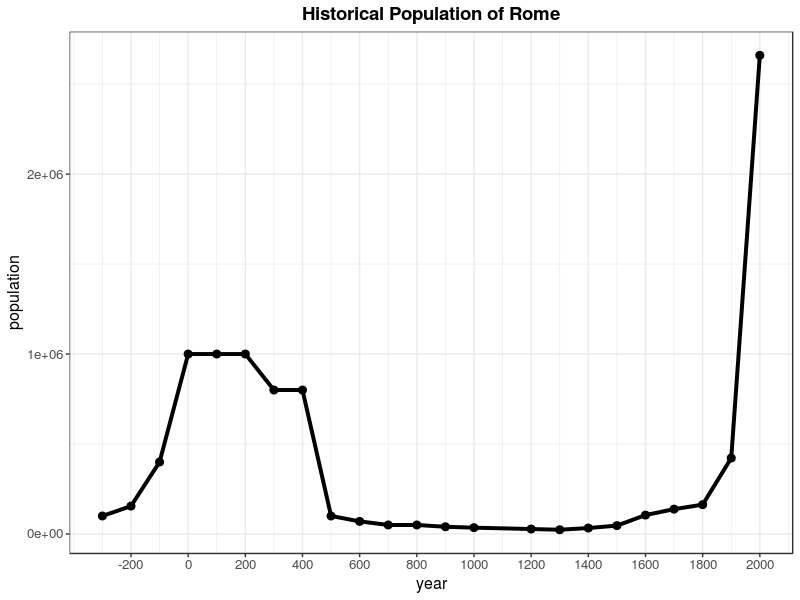
Western civilization has collapsed before.
But a few scholars preserved the ideas that once made Rome great. They made a backup, and it did eventually come all the way back.
It just took one thousand years.
Nunca algo tan random fue tan random. 100% creado a lo loco con @claudeai + @freepik seedance 2 cero creatividad humana (bueno 1% ).
“Sonido Callejón” no es un videoclip.
Es un glitch mental.
Todo fake pero con flow.
Todo roto pero funcionando.
Hay que verlo hasta el final.
⚠️ Cuidado: no apto para sensibles
⚠️ Ni para mentes ordenadas
Bienvenido al error.
#SonidoCallejón #IA #MusicVideo #GlitchArt
1996 Gary Kasparov gana a la IA Deep Blue de IBM en un campeonato de ajedrez. Un año después la IA se tomó la revancha.
2016 Lee Sedol compite contra AlphaGo de DeepMind y solamente logra una victoria en las 5 partidas realizadas en el compaonato.
2026 Un operario humano llamado Aime procesa 12,924 paquetes (2.79 segundos/paquete) frente a los 12,732 paquetes (2.83 segundos/paquete) del robot Figure.
La historia no se repite, pero rima. Y con la robótica humanoide estamos llegando a un punto de no retorno.
Durante los últimos días la empresa de robótica Figure ha estado haciendo una demostración de fuerza sobre las capacidades de sus robots.
Lo que comenzó con una demostración de 8 horas trabajando en una planta de procesamiento de paquetes del servicio postal en Estados Unidos se ha convertido en un streaming de más de 100 horas de duración.
Algo me dice que estamos ante un momento similar al ocurrido en 2022 cuando pudimos empezar a probar los primeros modelos de IA Generativa.
En este caso la adopción será algo más lenta porque estamos hablando de algo físico y no digital, pero por otro lado me atrevo a decir que el impacto será mucho mayor.









![AndrewYNg's tweet photo. Over the last two weeks, both the U.S. Government and Anthropic took significant actions that demonstrated their power to control access to AI by restricting what others can do with frontier models. This has been one of those moments that, once seen, will be hard to unsee, and it is significantly accelerating many businesses’ and nation states’ efforts to ensure reliable access to AI that no one else can terminate.
Anthropic first released Claude Fable 5, a version of its Mythos model with additional guardrails, including some restrictions that seem well justified on safety grounds (such as limitations on applying it to hacking, bioweapons, and so forth). However, it also restricted developers’ ability to use it to build competing LLM technology. This move was concerning, given that the whole AI community, including Anthropic, has benefitted tremendously from open research — indeed, the AI revolution was kicked off by my former team (Google Brain) freely publishing the Transformers paper!
Imagine if Microsoft’s terms of use barred anyone from using their tools to build competitive software, or if Google barred using it to search for information to work on competing search engines. Anthropic’s argument that it was unsafe for others to be able to make advances in AI also rang hollow. Initially, Anthropic silently degraded Fable 5’s performance for users detected to be working on LLM research through invisible interventions that weakened the model’s outputs without notifying the user. After significant backlash, it walked back this decision and decided to be transparent when it did this, but it still refuses to use its latest capabilities to help AI researchers.
This move represents a raw demonstration of power by Anthropic. It has used “safety” arguments to hinder potential competitors. Platforms succeed when they are viewed as stable, reliable partners that one can build on. The sudden rule changes by Anthropic (including a mandatory 30 day data retention policy for Fable usage) have made developers wonder about the stability of building on any one proprietary LLM provider, not just Anthropic.
The U.S. Government then shortly followed with an even greater demonstration of power. It used the Commerce Department’s authority to regulate technologies that may be national security threats to restrict exports of Mythos and Fable, requiring a license for use by any foreign national, whether inside or outside of the U.S., including employees of Anthropic. This led Anthropic to disable access to Fable to all users worldwide.
Sam Altman pointed out, referring to Anthropic, “It is clearly incredible marketing to say, ‘We have built a bomb, we are about to drop it on your head. We will sell you a bomb shelter for $100 million.’” But when one engages in this type of fear-based marketing, it increases the odds that the U.S. Government will agree with you and slap export controls on the bomb you say you have built.
To be clear, I don't think Anthropic has built anything like a bomb, and I don't think export controls on Fable are appropriate.
However, following the U.S. Government making this move, many nations, including U.S. allies, saw how the U.S. can suddenly yank their access to AI models. In many capitals around the world, this has spurred discussions on AI sovereignty and how others can ensure uninterrupted access to this critical technology.
For decades, many nations were comfortable having many parts of their supply chain rely on the U.S., China, and other major producers. Once a nation issues a threat, or takes action, to limit other nations’ access, other nations will rationally try to secure alternatives. For decades, semiconductor manufacturing in China made slow progress; once the U.S. moved to limit China’s access, China’s efforts kicked into high gear. Similarly, once China threatened U.S. access to rare earth minerals, U.S. efforts to secure alternatives accelerated. Now that it has become crystal clear that private U.S. companies and the U.S. government can limit, in short order, other nations’ access to frontier AI models, the incentive of others to invest more in alternatives like open source grows significantly. Of course, training frontier models is not easy, so it remains to be seen how successful they are, but we have crossed the rubicon.
Satya Nadella wrote an essay about the importance of building a healthy ecosystem on top of frontier AI technology. I heartily agree with him, and hope this week’s events will ultimately prove to be constructive steps toward this.
I hope we can build a more free, more open world, where research is freely shared, and laws and societal norms shape a level playing field that allows everyone to make progress. A silver lining of the events of these past two weeks is now that everyone better realizes key points of instability of the current system, we can all work to create a more stable foundation.
[Original text: The Batch newsletter]](https://pbs.twimg.com/media/HLMm79dbgAApRoV.jpg)