What is life?
• Dostoevsky: It’s hell.
• Socrates: It’s a test.
• Aristotle: It’s the mind.
• Nietzsche: It’s power.
• Freud: It’s death.
• Marx: It’s the idea.
• Picasso: It’s art.
• Gandhi: It’s love.
• Schopenhauer: It’s suffering.
• Bertrand Russell: It’s competition.
• Steve Jobs: It’s faith.
• Einstein: It’s knowledge.
• Stephen Hawking: It’s hope.
• Kafka: It’s just the beginning.
Each one must therefore give life a meaning according to how you one perceive.
Lot of men have high cortisol levels from constant irritation and anger. They sour their own blood and destroy their hearts. Avoid rage baiting social media. Ignore news and politics. Avoid playing too much video games. Lower stress by going on walks and reading books. Books have been proven to have the same benefits as meditation. If something disturbs sleep, cut it out. Drink water. Take care of health.
Top male canon events
- grandma dying
- 18yr old summer
- fumbling a 8/10 who really loved you
- teenage love
- getting into a fist fight
- solo trip
- getting fired from your 9-5
- buying your first car
Men admire in women masculine virtues (self-accountability, logic, composure, self-command) expressed through feminine embodiment - not as an imitation of man, but as a refinement of character.
Women admire in men feminine virtues (empathy, tenderness, intuition, receptivity) expressed through masculine embodiment - not as softness without toughness, but as completeness.
So each sex seeks the best of its own principle integrated in the opposite, their natural polarity preserved but elevated.
Men and women are thus seeking the best of themselves in their opposite in stable contrast - a marriage within so there can be a marriage between - recursive union - what beauty!
Allah says:
Stop overthinking, Stop complaining
Stop stressing yourself too much.
Instead, you should trust me, where is your trust in me?
I love you more than you can imagine, i won't let you down
That's all you need to know
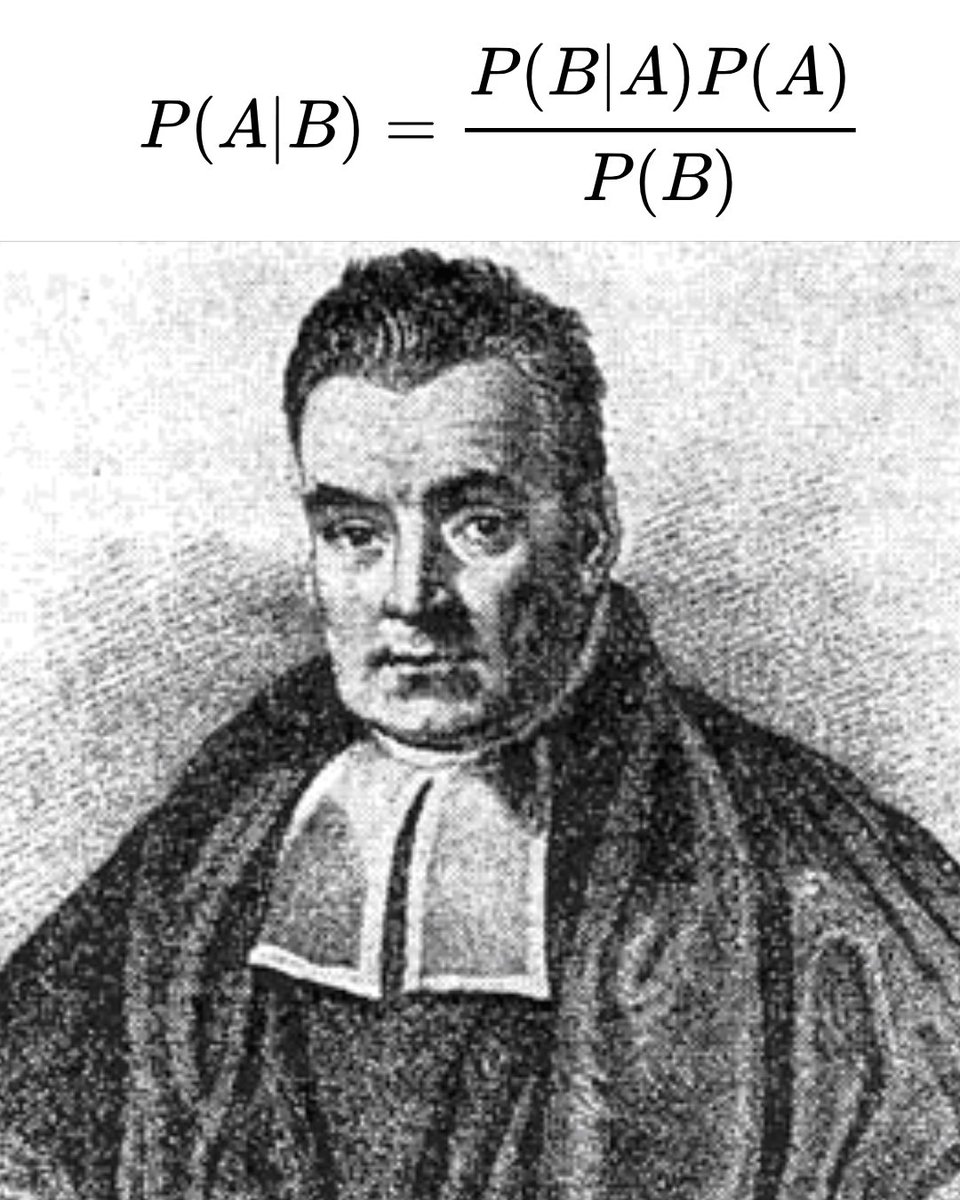
Bayes’ theorem is probably the single most important thing any rational person can learn.
So many of our debates and disagreements that we shout about are because we don’t understand Bayes’ theorem or how human rationality often works.
Bayes’ theorem is named after the 18th-century Thomas Bayes, and essentially it’s a formula that asks: when you are presented with all of the evidence for something, how much should you believe it?
Bayes’ theorem teaches us that our beliefs are not fixed; they are probabilities. Our beliefs change as we weigh new evidence against our assumptions, or our priors. In other words, we all carry certain ideas about how the world works, and new evidence can challenge them.
For example, somebody might believe that smoking is safe, that stress causes mouth ulcers, or that human activity is unrelated to climate change. These are their priors, their starting points. They can be formed by our culture, our biases, or even incomplete information.
Now imagine a new study comes along that challenges one of your priors. A single study might not carry enough weight to overturn your existing beliefs. But as studies accumulate, eventually the scales may tip. At some point, your prior will become less and less plausible.
Bayes’ theorem argues that being rational is not about black and white. It’s not even about true or false. It’s about what is most reasonable based on the best available evidence. But for this to work, we need to be presented with as much high-quality data as possible. Without evidence—without belief-forming data—we are left only with our priors and biases. And those aren’t all that rational.