University of Utah: 'What Is POTS?'
'Understanding POTS: From dizziness and fatigue to fainting episodes, a University of Utah expert explains a condition that affects the autonomic nervous system.'
https://t.co/Df8kdxpd9X
No child deaths have been definitively linked to Covid vaccines, according to a report from the FDA that was quietly made public. https://t.co/N99uOgFTQ9
A new multi-omics #LongCOVID paper adds to growing evidence of persistent mitochondrial and immune dysfunction across muscle, immune cells, and brain function.
The opportunity now is building patient-focused studies that move hypotheses like these forward. Bench to bedside. Translation. @CODA_research
https://t.co/4W97i9QCEo
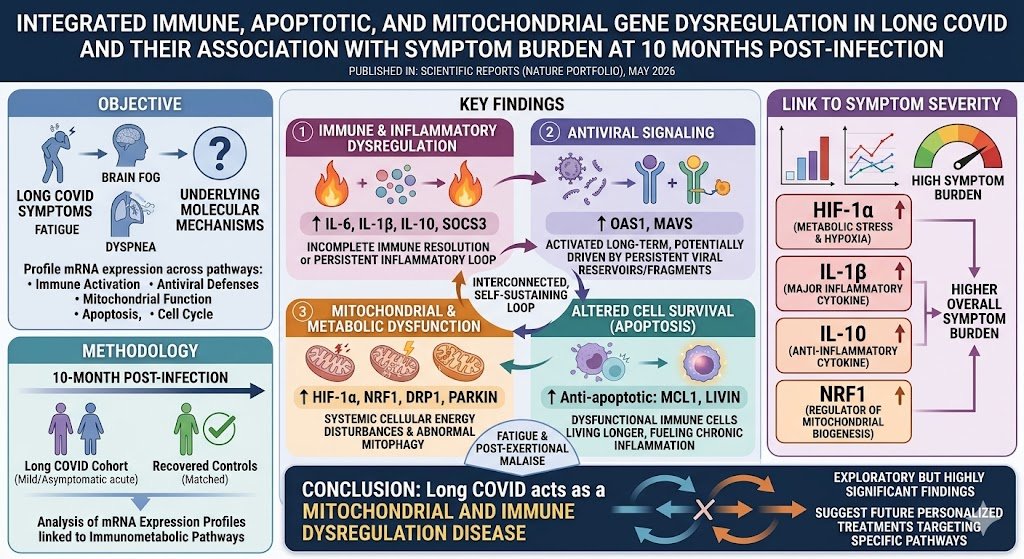
Long COVID shows persistent immune, antiviral, and mitochondrial gene dysregulation 10 months post‑infection, linking IL‑1β, IL‑10, HIF‑1α, and NRF1 to symptom severity. It behaves as a chronic immunometabolic disorder.🧵
1/2: ME/CFS is a multi-systemic illness, meaning it can affect many parts of the body — including the immune, nervous, endocrine, and metabolic systems.
This graphic highlights some of the symptoms and changes people with ME/CFS experience every day.
#MECFS#pwME#MyalgicE #MyalgicEncephalomyelitis
A new long COVID study found that standard autoimmune blood tests often looked normal. But when researchers tested patients blood directly against heart and blood vessel tissue, they found persistent immune reactivity - especially involving vascular tissue.🧵
Endothelial senescence may be one of the most overlooked drivers of Long COVID and ME/CFS.
Could it kickstart a domino effect that leads to the symptoms observed by a subset of patients with:
- Long COVID
- ME/CFS
The same research group that first discovered microclots in Long COVID argues that the answer is yes.
In this article, we explore how endothelial senescence and its harmful secretions (known as the senescence-associated secretory phenotype, or SASP) can drive the wide-ranging, tissue-specific symptoms affecting millions of people with these conditions.
https://t.co/AjWwX0KD3y
'Study finds long COVID leaves a distinct immune signature in the blood'
'A total of 182 inflammatory and neurology-related proteins were measured using multiplexed affinity proteomics through the Proximity Extension Assay platform.'
https://t.co/hddQVXfj9B
Beyond the mechanisms, the review emphasizes critical points for the future: The Brain-Immune Interplay
Peripheral immune events (such as infections) strongly influence the central nervous system via the
- vagus nerve,
- the gut-brain axis
- the insular cortex
This underscores the deep interconnection among these systems.
@dysclinic 5. Mitochondrial Dysfunction
Impaired cellular energy production underlies the severe, debilitating fatigue (both physical and cognitive).
This fundamentally disrupts cellular homeostasis and daily function.
The authors (@dysclinic) outline several major overlapping pathophysiological mechanisms shared by POTS, ME/CFS, and Long COVID.
1. Autonomic Dysfunction (Dysautonomia)
All three conditions show major autonomic nervous system problems.
Dysautonomia is a key mechanism in nearly 70% of cases of Long COVID.
The vagus nerve plays a central role, linking the autonomic system directly to immune regulation and inflammation control.
Read more here: https://t.co/AKLTur3lqq
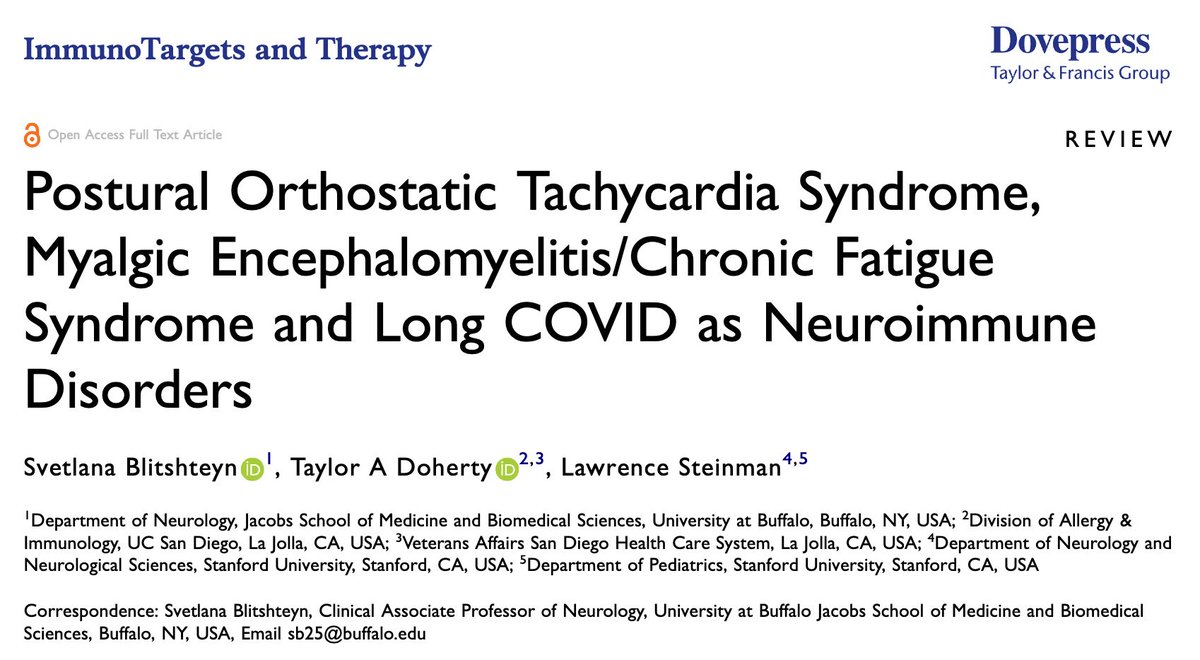
A recent review proposes integrating POTS, ME/CFS, and Long COVID into the subspecialty of neuroimmunology.
This could mean better care, better research, and finally ditching the harmful myth that these are "psychological" conditions.
Here is why...🧵
Severe Long COVID is not “delayed recovery.”
Based on 13,511 patients with longitudinal data, baseline severity strongly predicts trajectory:
• mild → stays mild
• moderate → may improve
• severe → remains severe
🔗 https://t.co/pBZWJvqjkN
The pandemic might be over, but new research indicates long Covid is likely to reverberate across OECD economies, costing up to $135 billion a year over the next decade. https://t.co/LT9ZvK5Vx9