@elonmusk Have you considered buying a large enough island to declare it a sovereign state and get a seat at the United Nations? Space-based comms and AI are all regulated by a completely independent nation-state.
Ian Banks wrote about the idea in The Business. I've always liked the idea.
@kellabyte In 2010 a site I was working on, with many others smarter than me, was doing around that serving html rendered on the server. One big DB of hotel rates and abusing memcache. Didn’t even need that much kit from what I remember.
@svpino We avoid this by only delivering fixed price projects on a specific date. If something runs over it’s costs us not the client, so there’s no driver to track hours spent. Internally we make sure we do short projects and that everyone knows the delivery date.
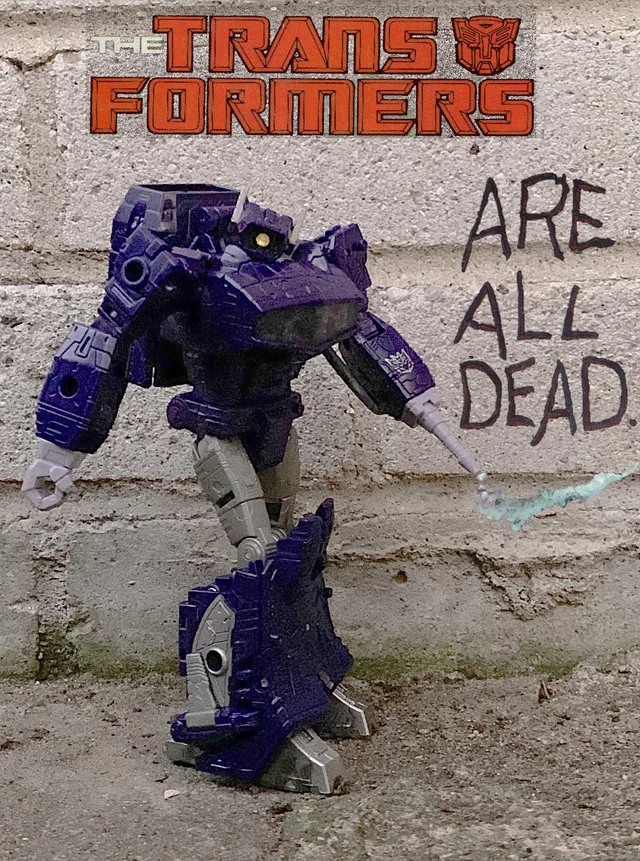
What if Transformers are literally doomed?
1) Interpretability on transformers might not be feasible: We don't have evidence yet that it's even imaginable to have interpretability tools for this architecture to the degree that would allow us to rule out that a powerful system is deceptive.
2) Corrigibility needs proofs: There's no plausible plan to demonstrate that a transformer won't have goal misgeneralizations/incorrigibility under distribution shift (which is the default). I don't even know what kind of non-theoretical evidence could give that assurance on LLMs & we don't have any theory.
3) Labs are too focused on racing to change course: Current labs are so stretched to keep up with the SOTA of LLMs that very few resources are spent into exploring new architectures optimized for safety requirements, which is IMO what we need to have a high chance of a safe transition.
4) Safety teams are focused on minimizing the damage: Even safety teams, that are trying their best, are pretty small and hence rationally focus most of their efforts to try to make the current SOTA slightly safer.
Right now, safety is a nice to have for companies. It makes us bound to try to mitigate the chances we die by a few percentage points rather than trying to develop this technology in an actually safe way.
The dangerous OpenAI alignment meta-plan, where if a few hypotheses are wrong, we're done, is a symptom of that.
We need regulation to move us to a world where safety is the first thing you need to figure out before even trying to scale an architecture up to get wild capabilities.
Let's try to really not go extinct, even in the face of major unexpected problems.
@sheilaswheels playing "nobody does it better" when someone's been on hold for nearly three hours seems slightly inappropriate.
Does your recovery department actually exist?
@ChrisJBakke We built a tool to detect bots extremely effectively https://t.co/Yl7puEKO95 it seems to be the most accurate out there at the moment. Really interested to see if anyone can get some generated content past it.
@ChrisJBakke We built a tool to detect bots extremely effectively https://t.co/Yl7puEKO95 it seems to be the most accurate out there at the moment. Really interested to see if anyone can get some generated content past it.
@datoon83 @martinrue I use the brain surgeon analogy, are you going to go with the cheapest or the best you can afford. Follow on question, how would you work out the best? As an industry we aren’t great at that second bit.
I'd have preferred not to have an island, but instead have a dynamic notch. The "dynamic black hole" encroaches on the screen more.
If you're a dev that hardcoded your safe space, oops. #iPhone14Pro