The Department of Forestry, Fisheries and the Environment (DFFE) is concerned about increasing incidents of harassment by the public of Cape fur seals along the coast.
Incidents of brutality toward seals appear to be on the rise since the rabies virus was detected in the Cape fur seal population.
These incidents include, allowing dogs to approach and/ or attack resting seals; throwing stones at seals; enticing seals to chase people for social media footage, teasing seals for photo opportunities; hitting seals; feeding seals for financial gain to allow for photo opportunities with seals.
Source:
https://t.co/ZwqnRHezxG
Bison are back in the Chihuahuan Desert, roughly 160 years after they were wiped out there.
44 were released into a reserve near Cuatro Ciénegas, Coahuila in late 2025. It's the third bison reintroduction in Mexico since 2009, and most of the animals trace back to the first one: 23 bison trucked down from Wind Cave National Park in South Dakota and released into the Janos Biosphere Reserve in Chihuahua.
Bison used to range across Sonora, Chihuahua, Coahuila, Nuevo León and Durango. Decades of hunting and habitat destruction ended that. They're listed as endangered in Mexico now.
They get called ecosystem engineers. They graze in a way that keeps grassland from turning into shrub. They churn soil with their hooves so rain soaks in instead of running off. They wallow, and the depressions hold water. They shed enormous quantities of fur that birds line their nests with. And when one dies, it feeds a chain of scavengers that had nothing that size to eat for a century and a half.
The stated aim is soil regeneration, rainwater retention, and completing a food chain that lets pumas and black bears function in that landscape again.
You don't restore a grassland just by planting grass. You restore it by putting back the animal that made the grassland possible.
A cow lifts her tail in a field and drops a couple of kilos of dung on the grass.
Most people see mess. What has actually landed there is a delivery, and the crew is already on its way.
They smell it from several hundred metres and they do not dawdle. First beetles down within minutes. By nightfall there can be thousands of them in one pat, which is a level of enthusiasm for the job that no human industry has ever managed.
They come in three trades. The tunnellers go straight down underneath and drag it below ground in the dark. The rollers cut out a ball and take it away, walking backwards, pushing with the back legs, occasionally fighting each other over it like men outside a pub. The dwellers move in, raise a family in the thing, and eat their way out through the roof.
So the pat goes into the soil instead of sitting on the grass and smothering it for a month. The nutrients end up where roots can reach them rather than in the ditch after the next downpour. The tunnels stay behind as open channels, so the rain goes into the ground instead of across it.
Flies laid in that dung get eaten or crowded out, so the cattle standing over it are bothered less. Worm eggs go underground and away from the grass.
Then the beetles get eaten themselves, by the birds working the pasture behind the herd and the bats out over it at dusk.
One animal, standing outdoors doing nothing whatsoever, is running soil building, nutrient cycling, drainage, fly control and half a food chain at once, for nothing, on a system that has been going here since before anybody was writing things down.
That is a keystone species. Pull it out and the structure it was quietly holding up comes down, and no scheme, no tank, no subsidy and no committee has ever replaced one.
Then we started worming whole herds off a calendar rather than off evidence, with products that pass through the animal and see off the crew waiting at the other end. Where that happens the pats sit for months, hard and grey, like bins nobody came for.
The dung beetle asks for two things. An animal outdoors, and a farmer who does not poison the output.
Clear the cattle off the hill for the good of nature, and nature is the first thing to go.
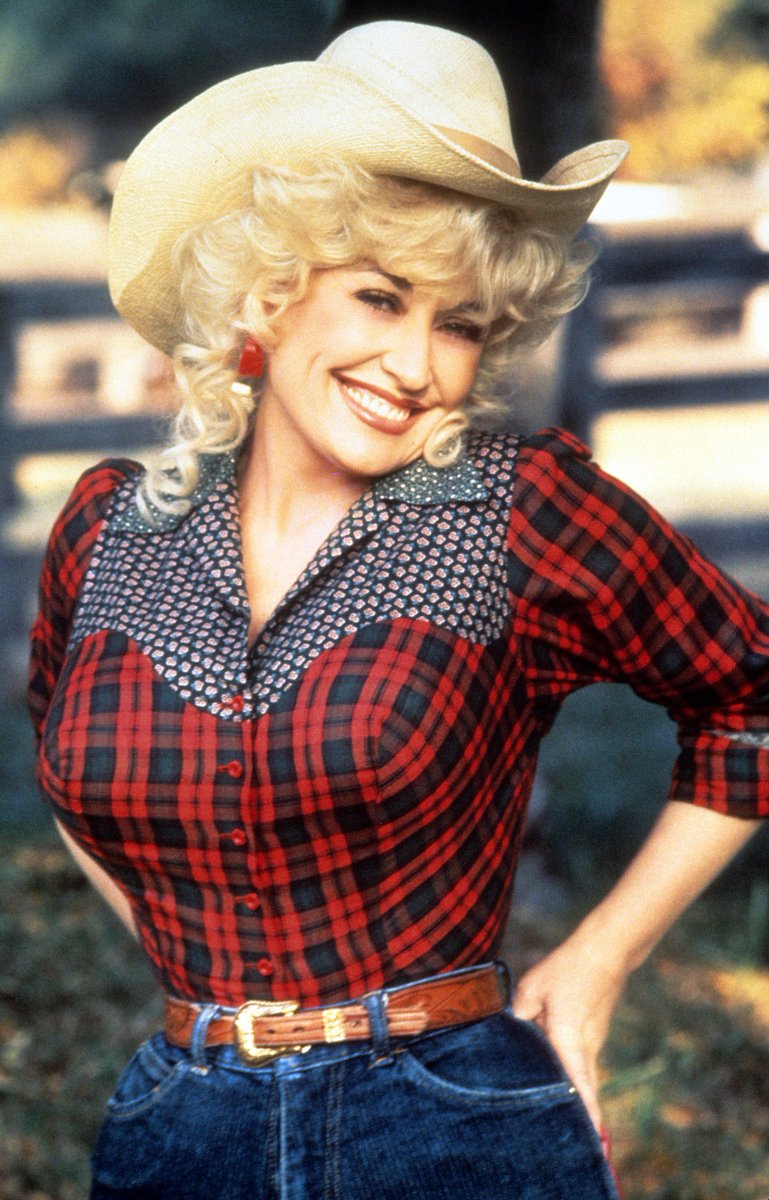
Remembering the late, great Dolly, who brought joy, comfort and inspiration to so many - including the millions of children given free books through her Imagination Library. We will always ❤️ you.
I use this cross walk several times a week. And I’d say 10% of the time I have to avoid getting hit by a reckless driver turning.
Darryl and I lived a block apart and he always gave so much back to his community. I was so happy to have him come out to our KidSport Richmond gala last year as an athlete ambassador.
You are going to be so missed by so many.
I yearn for the day that manslaughter is called manslaughter even when it’s done by a driver to a vulnerable road user. Fuck this passive voice nonsense.
In 1988 Dolly Parton pulled every 7th and 8th grader in Sevier County into a room and told them to pick a buddy.
She made them sign a contract.. if BOTH graduate, she hands you both $500. One fails, nobody gets paid.
The county dropout rate went from 35% to 6%.
She handed out the checks herself.
In 1989 she offered $500 to every kid in the county who wanted to go to the local college.
When Gatlinburg burned in 2016, she sent 900 families $1,000 a month for six months.
You've probably heard that part.
Here's the part you haven't:
The fund raised more than expected, so she showed up in May and handed every one of those families another $5,000 on top.
Then she quietly put $3 million into the recovery group that handles the years after the news trucks leave.
She built her county an entire hospital.
She played a benefit concert in 2007, Dollywood and the Stampede matched it, and LeConte Medical Center opened in 2010 with a birthing unit and a women's center in it.
In 2022 she started covering 100% of tuition, books, and fees for Dollywood employees.
Full-time, part-time, AND seasonal.
In 1991 she paid for a bald eagle sanctuary because the birds couldn't be released back into the wild, no press release.
And when Hurricane Helene came through here in Western North Carolina, she wrote a personal check for $1 million and her companies matched it.
She didn't owe North Carolina anything, but she helped us anyway.
She started the Imagination Library because her daddy couldn't read or write. Before he passed, he told her it was the most important thing she ever did.
Rest in Peace, Dolly 🇺🇸
The donkey is the animal the language keeps for when it wants to call a person stupid.
In the spring of 1915, on the worst ground of the century, one of them walked into the guns for three and a half weeks and never once refused.
Gallipoli. Anzac Cove, a strip of stony beach under cliffs the Turks held. The wounded came down a gully so worked over by rifle and shell that the men named it Shrapnel Gully and meant it as a plain description.
Up at the head of the valley the fighting fed a constant traffic of broken men who had to be got down to the dressing station on the sand. There were never enough stretchers or bearers, and the track down lay open to the guns the whole length of it.
Onto that beach on the first morning came a stretcher-bearer, a lad from South Shields who had gone out to Australia and enlisted there under half his name, John Simpson.
On the second day, a wounded man on his back, he found one of the donkeys that had been landed to haul water and then left behind. From that morning until the morning he died, the two of them worked the gully.
Simpson is the half of the story that could weigh the odds and decide to go anyway.
The donkey could do no such thing. It could not read the ground or count the guns. It could only be led to the foot of a track every soldier on the peninsula knew was a killing floor, have a man who could not walk loaded onto its back, and be asked to climb.
And it climbed. In daylight, which no sane man did. At night.
Through fire so heavy that John Monash, commanding at the head of the valley, singled the pair out in writing: Simpson and his little beast, he said, had earned the admiration of everyone up there.
Simpson went in front, singing and whistling as though the bullets were weather. The donkey plodded. At the bottom it was unloaded onto the sand, and then it turned itself round and went back up into the fire for the next one.
It made that climb over and over, day after day, up into the guns and down again with a man on its back, on a track where grown soldiers moved bent double and prayed.
The names change in the telling, Duffy and Abdul and Murphy, and the men at the top knew the little procession on sight. How many wounded came down on that back nobody can honestly say, and the round numbers fixed to the story later, three hundred and the rest, are mostly legend.
What is not legend is that it went on, without a day off, under fire, until the nineteenth of May, when Simpson was shot carrying two wounded men and was buried that evening in the sand at a place called Hell Spit. He was twenty-two.
The donkey lived.
Another bearer took it on, and the work carried on without the man who started it.
When the whole ruined campaign was finally given up and the survivors were taken off that beach, they did not leave it behind for the enemy. They got it onto a boat and away to safety.
Somewhere in the moving of it a soldier buckled a collar round its neck. The collar read: Murphy VC. Please look after him.
That is men who had seen everything a war can do to a body, stopping to ask a stranger to be kind to a donkey.
Eighty-two years later, to the very day, on the nineteenth of May 1997, the RSPCA awarded its Purple Cross, the highest honour there is for an animal, to Murphy, and, as the certificate reads, to all the donkeys used by John Simpson Kirkpatrick.
When the country went looking for one image to carry the memory of that whole catastrophe, out of a campaign full of generals it chose a stretcher-bearer and a donkey. It cast the pair in bronze outside the national memorial, and stood them again in his home town on the Tyne.
We keep the beast as our word for stubborn and stupid.
It was handed the dying on the worst ground of the century, and it carried them down out of the fire, and it turned round, and it went back up for more.
"Cows are causing global warming" is this century's "witches are making the crops fail".
Same evidence base, too. Bad weather, a strong feeling about it, and a defendant who cannot take the stand.
So follow one atom of carbon and find me the crime.
It starts in the air over a Welsh hillside, drifting about as carbon dioxide, minding its own business. A blade of grass grabs it out of the sky using sunshine, for free, on ground so steep and so thin you could not grow a potato on it at gunpoint.
Along comes a beast and eats the blade of grass, which is a thing you physically cannot do, because you have one stomach and no idea what to do with cellulose.
Some of that carbon becomes meat. Some becomes milk. Some goes up as methane, and about twelve years later the atmosphere has quietly broken it back down into carbon dioxide, and it is drifting over the same hillside, and another blade of grass grabs it.
Same carbon. Round and round. Doing this since before anyone had the vocabulary to be upset about it.
Which means a herd standing still adds precisely nothing, and the only way to make that loop into a problem is to keep making the herd bigger.
So let us check the herd.
Britain had 15.2 million cattle in 1974. It has 9.29 million now. Four in every ten, gone.
America peaked at 132 million head in 1975 and stands at 86.2 million this January, the smallest herd since 1951.
Fifty years of shrinking the accused, and the climate has not so much as sent a card.
Now take the animal out of the field altogether and watch what your carbon does with its freedom.
The grass grows. The grass dies. It lies down in the wet, rots, and the microbes hand that carbon straight back to the sky, because rotting is just burning with the lights off. In a hot country it does not even wait for the microbes. It dries out, catches, and the whole hillside goes up one afternoon in August.
That carbon was going back into the air either way. The version with cattle in it is the one where you get a Sunday roast out of the deal.
And while all this is going on, the pasture underneath is stuffing carbon down into the soil through its roots, year after year, which is why permanent grassland is one of the largest carbon stores on the planet.
Plough it up to grow the replacement protein and you release the lot in a single afternoon with a tractor.
So the charge is that an animal returning borrowed carbon on a twelve year loop, on land that stores carbon precisely because the animal is standing on it, in a herd that has shrunk by 40 per cent, is heating the planet.
Nobody ever wrote to Bamberg to apologise either.
Gulls are so hated that people have killed them with bare hands. Normalising violence to animals is wrong. Gulls are just trying to survive, like us, beautiful birds who get far too much hate.
The largest wildfire in Spanish history was not put out. It ran west of Madrid through July, burned across the dish complex Spain uses to talk to spacecraft, emptied sixty thousand houses, and then the wind changed and it stopped. By the middle of this month the year's total stood near three hundred thousand hectares, about triple the average.
Water bombers flew all summer. Nothing they did decided anything. What decides it is what is standing on the hill before the match.
And what is standing on the hill is sixty years of nobody.
The young went to the cities and the villages let go one field at a time. The terraces stopped being cut. The flocks came off. Scrub came up through all of it, joined itself together, and grew into a single unbroken carpet from the roadside to the ridge, with a eucalyptus plantation across the northwest for good measure, an Australian tree with oily leaves, which is the forestry equivalent of insulating your loft with fireworks.
There had been something eating that carpet since before Rome. It left for Madrid in about 1965.
In 2007 somebody in Andalusia did the arithmetic and reached for the oldest tool in the shed. The scheme is called RAPCA, which sounds like a nightclub and is in fact a public register of firebreaks maintained by goats. A technician walks the ground and marks the strips that matter. A shepherd signs a contract. Then he takes his flock up there and they eat it, all summer, for forty-two to ninety euros a hectare. No machinery. No water. No helicopter.
Two hundred and twenty shepherds are now on that register.
It spread the way things spread when they work, into Extremadura, into Murcia this year, over the border to the Serra da Estrela, and out to Gran Canaria, where a certified flock can earn its keeper twelve thousand a year for the specific service of keeping a mountain from going up.
The goat is not doing anybody a favour. It would rather have the brush. Put one in a decent meadow and it will walk straight past the grass to get at the scrub on the bank, because browse is what a goat is for, and the scrub on the bank is the ladder the fire climbs. It holds slopes no vehicle will hold. It works at forty degrees without a rota. Its fee is the grazing and somebody to sell the cheese.
In Girona, Judite Nadal keeps sheep and goats for exactly this work. Her complaint is not that it is hard. It is that hardly anybody books it. People are not conscious of the risk, she says, until the fire is inside the house.
Brussels has meanwhile ended up holding two documents about the same animal.
In one it is an emissions line.
In the other it is infrastructure.
Both are current. Neither department appears to have rung the other.
Catalonia went one further and put it on a label, so meat and cheese off the fire flocks is sold as such in the village shops, and a family buying chops on a Friday is buying a firebreak. First honest food label anyone has printed this decade.
The oldest job in the Mediterranean is being advertised as an innovation. Young Spaniards are taking it up for the first time in three generations, mostly because it now comes with a contract.
The goats know none of this. They were doing it before Rome, they were doing it while the impact assessment was being drafted, and they will be doing it in September when the smoke clears and somebody publishes a review.
Nobody has yet worked out how to invoice them.
The Netherlands has become the first country in the world without stray dogs, thanks to decades of animal welfare policies. The government banned abandonment, imposed fines of up to 16,000 euros and prison sentences for abuse, and promoted spay/neuter campaigns and mandatory pet registration. In addition, collection and adoption programs reduced the ownerless population to practically zero.
Iceland has a breed of sheep that nobody breeds for meat, because for a thousand years it has been bred for one quality only. Judgement.
They are called forystufe. Leader sheep. Taller, longer in the leg, narrower through the body, oddly marked, and always at the front, with their heads up while the rest of the flock has its head down. When they move, the flock moves. Nobody votes.
A proven leader sold for two or three times the price of a good sheep. Bloodlines became famous. When a great one died, the farm kept the head.
And the claim attached to them sounds like folklore until you read the records. They know the weather is coming, sometimes a full day out. If the leader will not leave the barn on a morning that looks perfectly fine, you do not move the flock. Farmers arranged their winters around the opinion of a sheep, and wrote it down as fact.
Autumn round-up, 1884. A large flock is being driven across the interior when a blizzard comes down on open sand and rock. Every landmark goes. You cannot pitch a tent on that ground and turning back is worse than going on.
At the front is a ram called Surtur, from Svinavatn, already known as a superior leader. The fjallkongur, the man running the round-up, makes a decision. He hands the whole thing to the sheep and tells his men to stay together.
A third of the way across, Surtur stops, turns, and walks back down through the flock to find the men. His face is packed solid with ice and he cannot see. They clear it. He returns to the front and walks back into the weather.
He comes back for the same service several more times that night. Nobody has to fetch him.
Then he stops and will not move at all. The men feel about and find grass under their boots, which tells them they are off the desert and nothing else whatsoever.
At dawn the storm eases and they work out where they are.
They are standing on the exact spot the round-up stops every year after crossing the sands. Surtur had halted there since he was a lamb. Afterwards the fjallkongur told his owner that without the ram, men would have died out there as well as sheep.
There are fewer than 1,500 leader sheep left, all of them descended from one district in the north east. Iceland recognised them as a breed of their own in 2017. There is a small museum out there, run by a local teacher, with the heads of the great ones on the wall and a coffee blend named after the animals. The saying on the wall is that if you wear clothes made from their wool, you will always find your way home.
Genetic work has since confirmed they really are distinct from every other Icelandic sheep. The folklore was right. Folklore usually is, out where the weather kills people.
No laboratory. No pedigree software. No genome. Just farmer after farmer, century after century, watching which animal was at the front when the light went, and breeding from that one.
A thousand years of selecting a sheep for its judgement, and at the end of it they built it a museum.
And here we are, in the country that calls them stupid.
A vineyard near Sacramento, CA had been dealing with a heavy pocket gopher and vole infestation. A researcher installed 25 barn owl nest boxes to see what would happen.
By the following year, 18 breeding pairs had moved in and fledged 66 young. At peak, 102 barn owls were hunting the property and surrounding area simultaneously.
Gopher activity declined measurably in the vineyard with owl boxes compared to a nearby control vineyard without them. Over three breeding seasons, those owls consumed an estimated 30,000 rodents.
Then the researchers ran the cost comparison. Trapping averaged $8.11 per rodent removed. The owl nest box program, accounting for materials, installation, and maintenance, came out to $0.34 per rodent.
That's a 24-to-1 cost ratio in favor of the owls.
A single barn owl family can remove between 1,000 and 4,000 rodents per year depending on family size and hunting territory. Unlike rodenticide, they don't accumulate in the food chain.
A 2012 WildCare study found anticoagulant rodenticides in 79 percent of raptors tested in California. The owls taking rodents killed by poison become the next casualty in a chain that runs from the rat in the vineyard to the hawk, the fox, and the coyote above it. The nest box program doesn't do that.
The study, published in the Journal of Pest Management, was the first to accurately measure the number of rodent deliveries to growing barn owl chicks and establish the economic value of a nest box program to farmers.
A barn owl box costs between $30 and $80. A family of owls willing to occupy it costs nothing. The rodent control starts within a season and is self-sustaining as long as the box stays up.
Studies:
Browning, M., Cleckler, J., Knott, K., & Johnson, M. (2016). Prey consumption by a large aggregation of barn owls in an agricultural setting. Proceedings of the Vertebrate Pest Conference, 27, 337-344.
Johnson et al. (2020), Cal Poly Humboldt
Every balloon released into the sky eventually returns to Earth. What begins as a celebratory gesture becomes a deadly threat to wildlife. Stop the practice.
Floating tributes are often intended to mark personal milestones, such as a wedding or graduation, or to announce something notable, such as a gender reveal. In time the balloons deflate or burst. They scatter hazardous fragments across forests, rivers, and oceans.
Marine and land animals frequently mistake this colorful debris for food, with devastating results. A landmark study of 1,733 seabirds found that balloons are the single most lethal type of debris they swallow. Because the soft, rubbery material easily contorts and blocks the gut, balloon fragments are 32 times more likely to kill a seabird than hard plastic debris such as straws or toy pieces.
Beyond ingestion, the ribbons and strings attached to balloons create immediate danger. They wrap around wings, beaks, and legs, trapping animals and causing them to starve. Even balloons marketed as biodegradable latex can remain intact for months in freshwater and saltwater. Metallic foil balloons last indefinitely and can cause utility blackouts and fires if they contact power lines.
Fortunately, celebrating and honoring loved ones does not require leaving a toxic trail. Safer, sustainable alternatives exist. Planting native wildflower gardens, blowing bubbles, or lighting reusable candles allow communities to mark meaningful moments while protecting local ecosystems.
[source: Roman, L., Hardesty, B. D., Hindell, M. A., & Wilcox, C. (2019). A quantitative analysis of mortality in seabirds ingesting marine debris. Scientific Reports, 9(1), 3209]




![Rainmaker1973's tweet photo. Every balloon released into the sky eventually returns to Earth. What begins as a celebratory gesture becomes a deadly threat to wildlife. Stop the practice.
Floating tributes are often intended to mark personal milestones, such as a wedding or graduation, or to announce something notable, such as a gender reveal. In time the balloons deflate or burst. They scatter hazardous fragments across forests, rivers, and oceans.
Marine and land animals frequently mistake this colorful debris for food, with devastating results. A landmark study of 1,733 seabirds found that balloons are the single most lethal type of debris they swallow. Because the soft, rubbery material easily contorts and blocks the gut, balloon fragments are 32 times more likely to kill a seabird than hard plastic debris such as straws or toy pieces.
Beyond ingestion, the ribbons and strings attached to balloons create immediate danger. They wrap around wings, beaks, and legs, trapping animals and causing them to starve. Even balloons marketed as biodegradable latex can remain intact for months in freshwater and saltwater. Metallic foil balloons last indefinitely and can cause utility blackouts and fires if they contact power lines.
Fortunately, celebrating and honoring loved ones does not require leaving a toxic trail. Safer, sustainable alternatives exist. Planting native wildflower gardens, blowing bubbles, or lighting reusable candles allow communities to mark meaningful moments while protecting local ecosystems.
[source: Roman, L., Hardesty, B. D., Hindell, M. A., & Wilcox, C. (2019). A quantitative analysis of mortality in seabirds ingesting marine debris. Scientific Reports, 9(1), 3209]](https://pbs.twimg.com/media/HO5HtlVWMAAiPNG.jpg)


