The Lugave Clan.
According to Buganda history, Mukiibi Ssebuko Ssalongo played a crucial role in the formation of the Buganda Kingdom. As the head of the Lugave Clan, he stood against the tyranny of Bemba, a ruthless invader from Kiziba who had conquered Buganda. When Mukiibi rebelled, Bemba seized his land and forced him into exile on the Ssese Islands with his followers.
While in exile, Mukiibi learned of Kintu’s plan to overthrow Bemba and reclaim Buganda. Seeing an opportunity to restore his people’s honor, he joined Kintu’s forces, bringing skilled warriors like Kigave and Nfudu. Their combined strength led to a victorious battle, where Bemba was captured and beheaded, securing Kintu’s place as the first Kabaka (king) of Buganda.
As a token of gratitude, Kintu granted Mukiibi and his descendants the privilege to choose prime land anywhere in Buganda, marking their settlements with fig trees (Mituba) as a sign of ownership. This explains why Lugave Clan members are found across the kingdom today. Mukiibi’s sons were also honored, with one becoming the first Katikkiro (prime minister), the highest non-royal position in Buganda.
In his later years, Mukiibi found solace in hunting and eventually settled in Ssekiwunga near Katende, Mawokota. Enchanted by the land, he declared, “Wano we ndigwa”—“This is where I will finally rest.” His title evolved into Ndugwa, now the official title of the Lugave Clan head, with the clan’s main shrine still located at Katende.
#tribe56
Following the reign of Kabaka Kato Kintu Kakulukuku, the story of Buganda’s kingship continued with his son, Kabaka Ccwa I.
According to Buganda’s traditional royal history, Ccwa I succeeded his father, becoming the second Kabaka of Buganda and carrying forward the royal lineage established by Kintu.
#tribe56cultures
According to Buganda’s oral traditions, before Kabaka Kato Kintu Kakulukuku ascended to the throne, the land was under the rule of Bbemba Musota.
Kintu’s rise to power involved a struggle against Bbemba, whose rule was remembered as oppressive. With the support of allies, including Mukiibi, Kintu set out to challenge his authority.
Oral traditions recount the involvement of Nfudu and Kigave, two men who assisted Kintu in his mission. Nfudu is remembered for his cleverness and the use of a specially made mask to outwit Bbemba’s guards.
The struggle eventually ended with Bbemba’s defeat, paving the way for Kintu to become the leader.
Following his victory, Kintu brought the clans together and laid the foundations of the Kingdom of Buganda, becoming its first Kabaka.
His story remains an important part of Buganda’s oral history and cultural heritage.
#Tribe56Cultures
According to Buganda’s traditional royal chronology, Sekabaka Kato Kintu Kakulukuku, remembered as the first Kabaka of the Buganda Kingdom, is believed to have ascended to the throne around 1200 AD and reigned until approximately 1230 AD.
His reign marks a significant chapter in Buganda’s traditional history, laying the foundation for the royal institution and the kingdom’s historical legacy.
#tribe56cultures
On 21 November 1969, Sekabaka Edward Muteesa II,passed away in exile in London at the age of 45.
His body was temporarily laid to rest at Kensal Rise Cemetery in London before being returned to Uganda in March 1971.
On 4 April 1971, he was accorded a royal burial at the Kasubi Royal Tombs, finally resting in the land he once ruled.
Though he died in exile, his legacy remains deeply rooted in Buganda’s history.
#tribe56cultures
Sekabaka Edward Muteesa II, carried the title “Sir” because he was honoured with a British knighthood by Queen Elizabeth II.
In 1962, he received the Knight Commander of the Order of the British Empire (KBE), one of Britain’s prestigious honours, entitling him to use the title “Sir”.
The title was a British honour bestowed upon him, separate from his traditional position as Kabaka of Buganda.
A remarkable historical figure who held the crown of Buganda and served as Uganda’s first President.
#tribe56cultures
On 17 October 1955, Sekabaka Sir Edward Muteesa II, the 35th Kabaka of Buganda, returned home to his beloved kingdom after nearly two years in exile in Britain.
His return was met with immense joy and celebration as thousands of Baganda gathered to welcome their beloved Kabaka. After months of protests, resistance and negotiations, their king was finally coming home.
The 1955 Namirembe Agreement paved the way for his restoration to the throne, marking a historic victory for Buganda and its people.
It was more than the return of a king; it was a moment of renewed hope, pride and unity for the Buganda Kingdom.
#tribe56cultures
On 30 November 1953, Sekabaka Edward Muteesa II, the 35th Kabaka of Buganda, was deposed and exiled to Britain by the British colonial government under Governor Sir Andrew Cohen.
His exile followed growing tensions over Buganda’s political future, particularly the kingdom’s demand for separate independence and opposition to closer political integration within Uganda. The proposed East African Federation further heightened these concerns, as Buganda feared losing its autonomy.
His removal sparked widespread protests and resistance among the Baganda, who demanded the restoration of their king.
After nearly two years in exile, Sekabaka Muteesa II returned to Buganda on 17 October 1955, following negotiations that resulted in the 1955 Buganda Agreement, commonly known as the Namirembe Agreement.
His exile remains a defining chapter in Buganda’s history and its struggle to preserve its autonomy and political identity.
#tribe56cultures
Princess Katrina Ssangalyambogo, Nalinya Sarah Kagere, the Kabaka's sister, and members of the Muteesa II Sports Complex board met to discuss upgrading Wankulukuku Stadium to standard level. Congratulations to Buganda Kingdom!
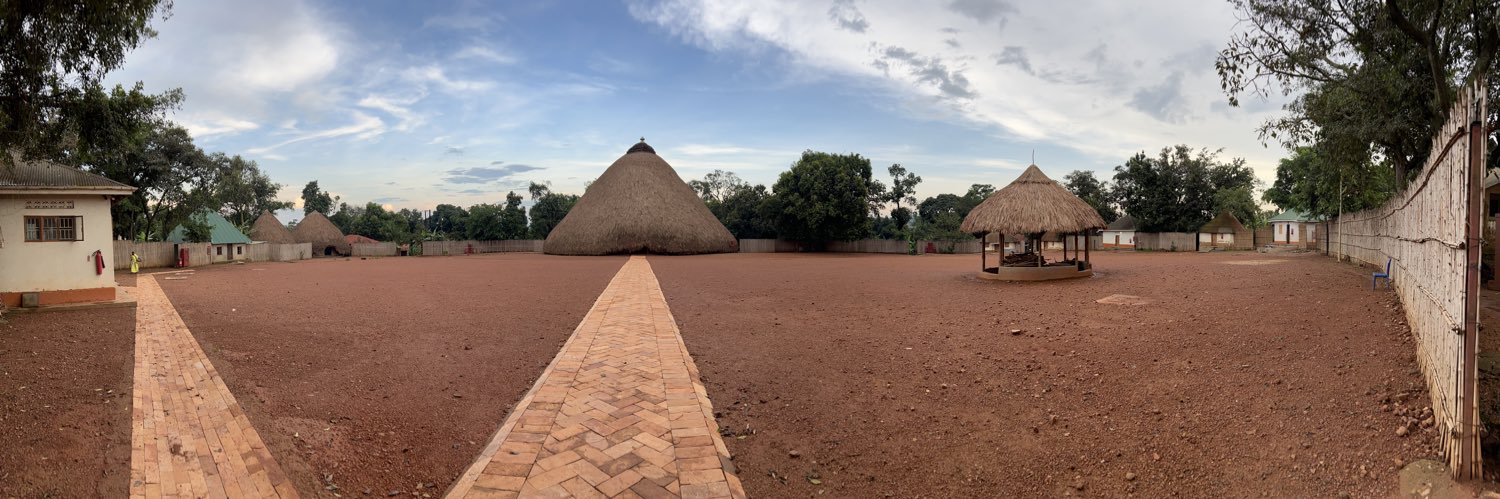
Royals Celebrating November 19 in Commemoration of Sir Edward Fredrick Walugembe Muteesa II at our Ancestral Home at Kasubi Royal Tombs - A UNESCO gazetted World Heritage Site.
Muteesa was born on November 19, His Coronation was November 19, His Wedding was November 19
In 1953, Sekabaka Mutesa II sought Buganda’s secession to safeguard the kingdom’s autonomy against a proposed British colonial federation in East Africa.
This led to his deposition and exile by the British Governor, Sir Andrew Cohen. Following widespread public protests during the Kabaka Crisis, he was eventually permitted to return to Buganda in 1955 under the terms of the Buganda Agreement of 1955.
#tribe56cultures
Ssekabaka Edward Muteesa II owned this vintage Rolls-Royce, a vehicle that carries an important part of Buganda’s royal history.
As the 35th Kabaka of Buganda and Uganda’s first President, Muteesa II left behind a remarkable legacy.
Following the 1966 attack on Lubiri Palace, the vehicle was among the Kingdom’s property that was confiscated. It was later returned to Buganda and restored.
Today, it stands at Lubiri Palace as a reminder of Buganda’s royal heritage and the legacy of Ssekabaka Edward Muteesa II.
#tribe56cultures
Sekabaka Edward Muteesa II, the 35th Kabaka of Buganda, is estimated to have fathered 21 children, comprising 12 sons and 9 daughters.
Among his notable children are Kabaka Ronald Muwenda Mutebi II, the current Kabaka of Buganda; Prince David Kintu Wasajja; Prince Henry Kalemeera; Princess Stella Ndagire; and Princess Catherine Nabaloga.
His children remain part of Buganda’s royal history and heritage.
#tribe56cultures
Sekabaka Mutesa II was born into the royal family of Buganda as the fifth son of Sekabaka Daudi Cwa II. His mother was Lady Irene Drusilla Namaganda of the Nte clan.
#tribe56cultures
KAGULU ROCK TOURISM UPDATE
Today, we welcomed 172 tourists from Simba Radio who are exploring Busoga’s tourism destinations, with Kagulu Rock proudly among their stops.
Kagulu Rock – Discover the Beauty of Busoga!
@RebeccaKadagaUG