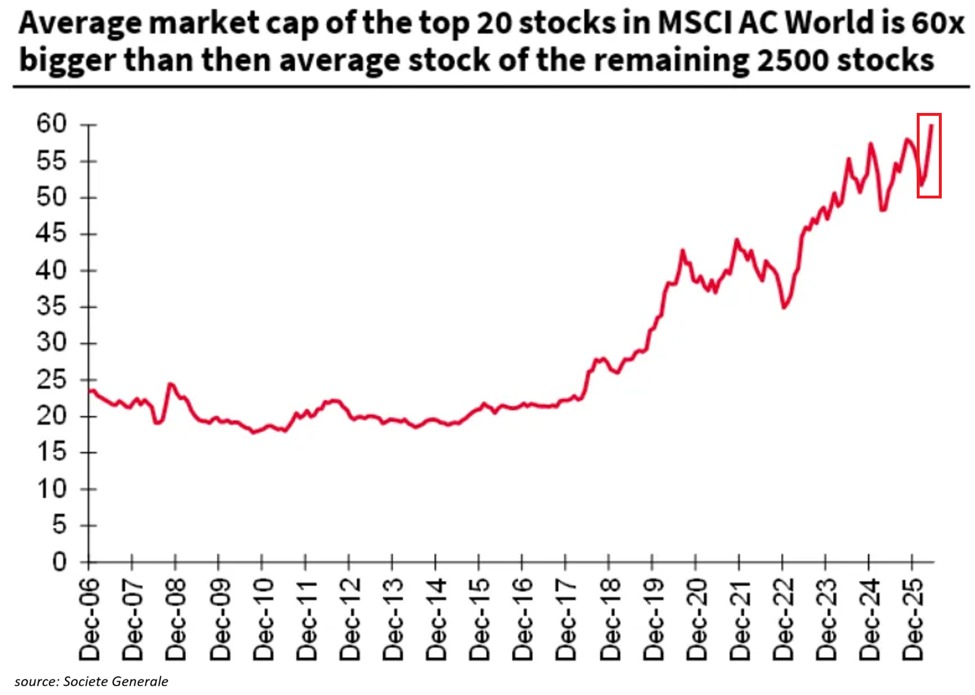
Global equity markets have never been this concentrated:
The average market cap of the top 20 stocks in the MSCI All-Country World Index (ACWI) is now 60 times larger than the average stock among the remaining ~2,500 constituents.
This ratio has DOUBLED over the last 7 years, driven by US mega-cap technology stocks.
By comparison, this ratio did not exceed 25x between 2006 and 2017.
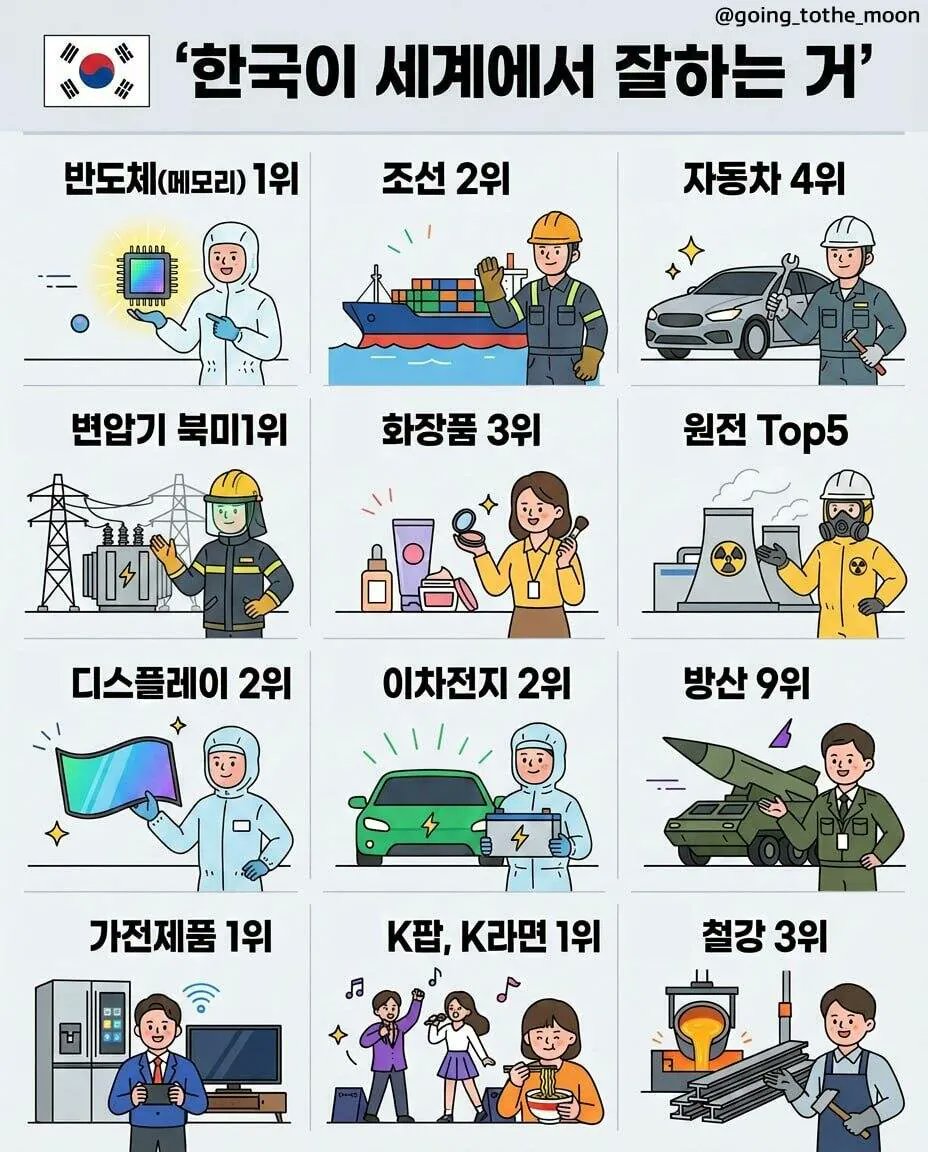
Meanwhile, semiconductor-heavy Taiwan and South Korea together account for ~49% of the MSCI Emerging Markets Index, more than double China’s 21%.
This comes despite their combined GDP of ~$3.0 trillion representing just 14% of China’s $21 trillion economy.
Tech companies are driving global equity markets more than ever.
❗️Let's Talk About Something Serious
"What concerns me most is that many of the datasets now being used to call a bottom are largely the same datasets that were previously used to predict last year's market top."
The market continues to move in the direction I have been concerned about.
Bitcoin is barely holding the $60,000 level, but personally, I do not believe this area will hold for very long.
Since last week, I have repeatedly stated that conditions are becoming increasingly serious, and my view has not changed.
Today, I want to discuss two major concerns I have about the current market, as well as some thoughts on how market data should be interpreted in the post-ETF era.
✅Concern #1: Liquidity Conditions Are Extremely Weak
liquidity flows that became especially important after the approval of the Bitcoin ETF continue to deteriorate and are now at some of their weakest levels.
So what about the liquidity indicators that were important before ETF?
Unfortunately, they are not telling a different story.
If market conditions were deteriorating while major players were quietly accumulating positions in the background, the situation would be different.
In that case, one could argue that the classic idea of "buying when others are fearful" was actually being put into practice.
That would be a constructive signal.
However, the data is not showing that behavior.
Objectively speaking, conditions continue to worsen.
✅Concern #2: Investor Psychology Remains Surprisingly Optimistic
The bigger issue is that many retail investors do not seem to view the situation this way.
While liquidity conditions and market data continue to deteriorate, the narrative being repeated across the market remains:
"Bitcoin has already fallen enough."
"Everyone is panicking, so this must be the bottom."
"Every crisis eventually becomes an opportunity."
"This is a buying zone."
I believe this is extremely important.
There is a significant disconnect between actual buying liquidity and what investors expect to happen.
In my experience, during periods of genuine fear, people do not openly talk about buying opportunities.
Instead, confidence disappears.
People become afraid even to discuss the possibility of a bottom.
Yet today, many participants continue to interpret the market through the lens of past experiences.
In other words, many still believe that the market remains within a predictable framework based on previous cycles.
To me, that is precisely what makes the situation more dangerous.
❗️Rethinking Data Interpretation After ETF Approval
✅1. Market Structure Has Changed Since ETF Approval
approval of Bitcoin ETF fundamentally changed trading behavior and market structure.
Those changes have also had a meaningful impact on on-chain data.
I recognized this shift last year and have been developing new datasets and analytical frameworks based on this new environment.
For more details, I recommend reading the ForeDex "Insight Report" referenced above.
The key point is simple:
Many datasets that historically carried a high level of reliability no longer behave the way they did in previous cycles.
Technical cycle indicators, on-chain cycle indicators, and market cycle indicators all produced results that differed significantly from historical expectations.
We saw this very clearly around last year's market top.
✅2. Think Back to Last Year's Market Top
At the time, the market was filled with discussions about the "Banana Zone."
Many investors built detailed plans around various cycle indicators:
"I'll sell when price reaches this level."
"Then I'll rotate into altcoins."
"Then I'll rebalance my portfolio."
These were not vague ideas.
People had specific roadmaps.
But did the market actually follow those expectations?
Not at all.
When I raised concerns about this at the time, the response was mostly criticism and dismissal.
Yet in the end, the market did not behave the way most participants expected.
✅3. If the Framework for Identifying Tops Has Changed
If ETF approval changed the way market tops should be identified, then our approach to interpreting data must also change.
If existing frameworks no longer work, new frameworks are needed.
If existing datasets no longer provide reliable answers, new datasets must be developed.
This is where the real problem begins.
✅4. We Are No Longer Looking for the Top — We Are Looking for the Bottom
Today, market participants are no longer trying to identify a top.
They are trying to identify a bottom.
And numerous arguments are now being presented to support bottom-calling narratives.
But here is the contradiction.
Many of the datasets currently being used to argue that a bottom is forming are largely the same datasets that were previously used to predict last year's market top.
This is what concerns me most.
If those datasets failed when identifying the top, then we must at least consider the possibility that they could also fail when identifying the bottom.
Yet the market largely ignores this possibility.
The assumption seems to be:
"They failed at the top, but they'll work at the bottom."
I believe that assumption is dangerous.
✅Conclusion
Taken together, market conditions continue to deteriorate.
Yet many investors continue building plans around datasets and frameworks that previously provided clear signals but ultimately failed when it mattered most.
That concerns me deeply.
Markets do not move according to our plans.
The same frameworks that failed to identify the top are now being reused to identify the bottom.
As retail investors become smarter, the dominant market participants become even more sophisticated, more strategic, and more capable of exploiting expectations.
The implication is straightforward.
Even if a major price shock occurs, the market is unlikely to unfold the way most participants currently expect.
In fact, when everyone is using similar frameworks and reaching similar conclusions, the probability of a larger shock may actually increase.
And even if the market eventually moves in the expected direction, there will likely be extreme volatility designed to shake investors out of their positions and cloud their judgment along the way.
We do not need to look very far back for evidence.
Even during the April–May period, the market repeatedly created one deception on top of another, constantly manipulating investor psychology.
And it worked.
If investors can be misled so effectively within a structure lasting only a few months, can we really be confident that a multi-year cycle will unfold exactly as the majority expects?
I am not convinced that it will.
Bitcoin ETF outflows are accelerating:
US Bitcoin ETFs have posted -$2.1 billion in outflows so far in June, on pace to exceed -$2.4 billion in outflows recorded in May.
This has been driven by the largest spot Bitcoin ETF, $IBIT, which saw -$401.4 million in outflows this week, the 5th consecutive weekly outflow and the longest streak since October 2025.
During this outflow stretch, $IBIT has recorded -$4.2 billion in cumulative withdrawals.
Year-to-date, $IBIT has recorded -$412.4 million in net outflows, a reversal from 2 consecutive years of massive inflows.
In 2024 and 2025, this fund attracted +$36.8 billion and +$24.8 billion, respectively.
Crypto investor sentiment remains under pressure.
BREAKING: May PPI Inflation surges to 6.5%, above expectations of 6.4% and the highest level since November 2022.
Core PPI Inflation came in at 4.9%, in-line with April's revised levels.
PPI inflation is now at pandemic stimulus levels.
Odds of rate HIKES continue to rise.
BREAKING: May CPI inflation rises to 4.2%, the highest level since April 2023.
Core CPI inflation also rises to 2.9%, the highest since September 2025.
Inflation in the US is officially back above 4% and more than double the Fed's target.
Odds of Fed rate hikes are rising.
@Samsung Group Entities Invest in @Official_Upbit Operator Dunamu to Accelerate Digital Asset Financial Services
Samsung affiliates have officially acquired a 4% stake in Dunamu, the operator of South Korea's largest crypto exchange Upbit, in a strategic transaction worth approximately 612.8 billion KRW. Samsung Securities, @samsungsds, and Samsung Card will take 2%, 1%, and 1% stakes respectively, purchasing the shares from Kakao affiliates. This massive investment aims to solidify Samsung's footprint in the digital asset sector, paving the way for joint ventures in STO, next-generation blockchain infrastructure, and potential KRW-pegged stablecoin payments integrated into Samsung's financial app, Monimo. Both tech and financial giants plan to combine their AI, cloud, and blockchain expertise to pioneer the future of Web3 financial services.
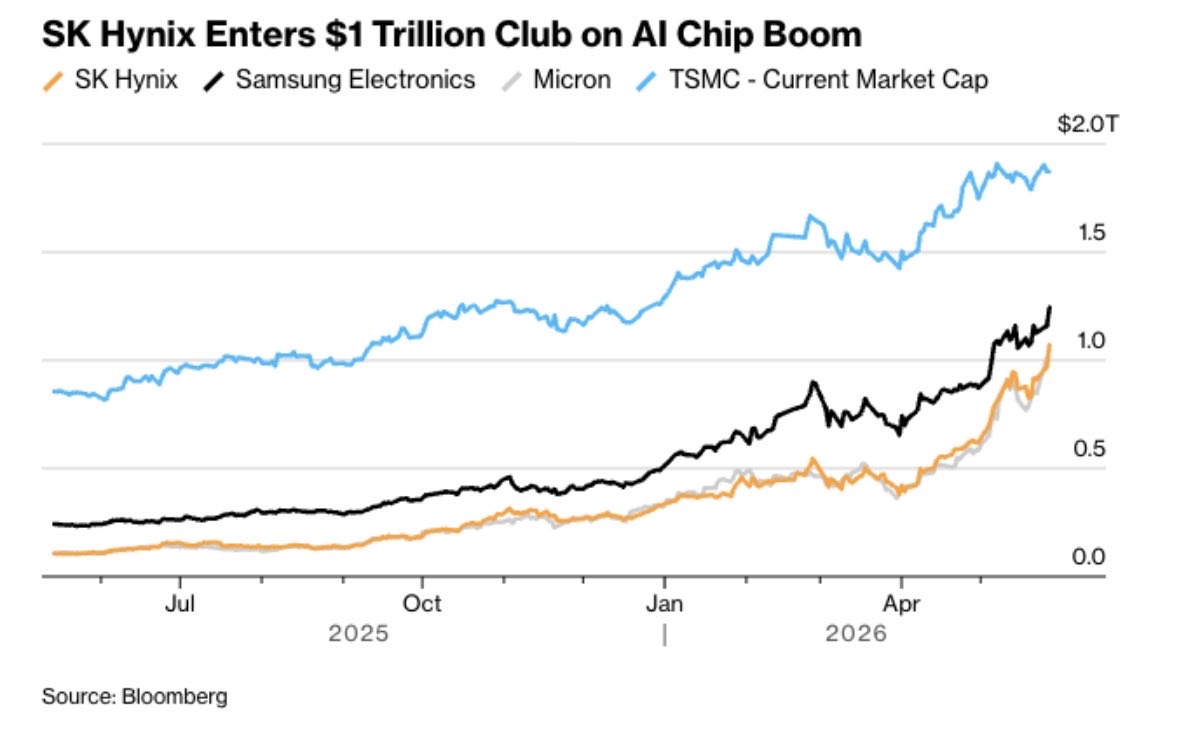
🇰🇷 Korea is now the only country after the United States to have 2 companies that are worth over a trillion dollars each as Samsung and SK Hynix join rally 7%, 12% today alone
This country and its people is truly one of the world largest wonder-what an incredible story & country
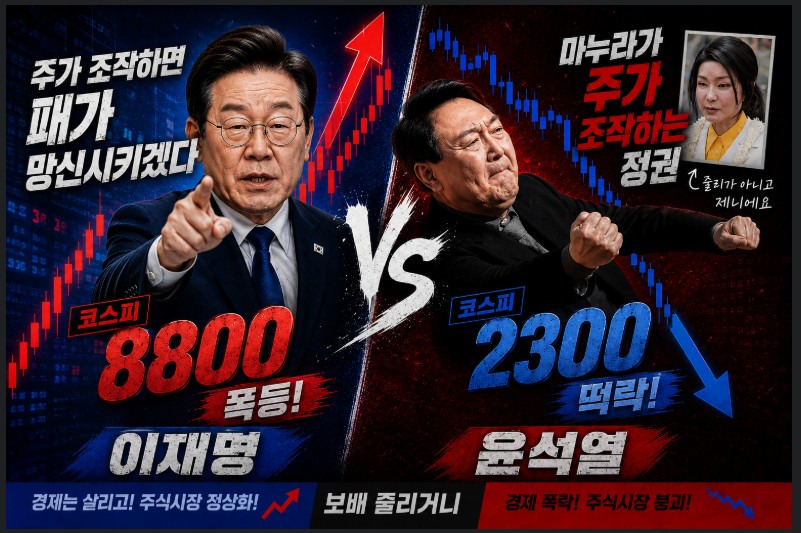
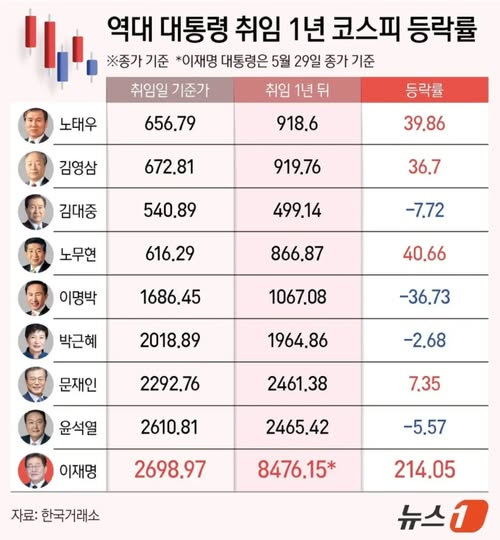
BREAKING:South Korea’s KOSPI added ₩305,000,000,000,000 ($220 BILLION) market value and hit ALL-TIME HIGH.
KOSPI surged +4% to 8380, mainly driven by SAMSUNG +6.5% and SkHynix +9.5%, which controls 42% of the entire Index.
KOSPI exploded 25% and added $900 BILLION market value in just May.
The AI Revolution is transforming South Korea's economy:
South Korea's exports surged +52.6% YoY in the first 20 days of May, the strongest reading on record.
This marks an acceleration from the already massive +49.4% gain seen in the first 20 days of April.
This is also the 4th consecutive month with growth of at least +40.0%.
The surge was driven by semiconductor exports that soared +202.1% YoY, fueled by AI and data center investment demand.
Furthermore, shipments of computer-related products surged +305.5%, underpinned by continued investment in AI infrastructure.
On an unadjusted basis, exports rose +64.8% YoY, with imports up +29.3%, leaving a trade surplus of $11 billion.
South Korea's economy has never been hotter.
BREAKING: April PPI Inflation surges to 6.0%, well above expectations of 4.9% and the highest level since January 2023.
Core PPI Inflation rose to 5.2%, above expectations of 4.3%.
Both CPI and PPI Inflation are now officially at 3+ year highs.
Odds of rate HIKES are rising.
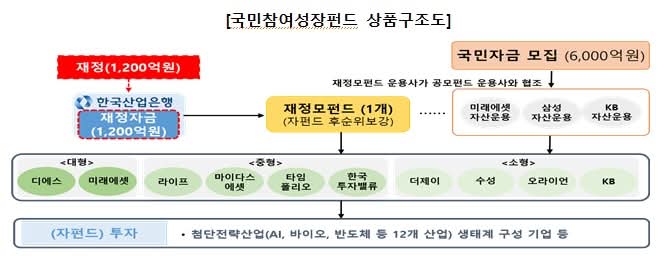
< 많이 기다리셨습니다.「국민참여형 국민성장펀드」가 5월 22일 출시됩니다. 3주간 총 6천억 규모로 은행, 증권사 25 곳에서 판매 >
① 정부가 20%까지 손실 우선 부담으로 안정성 UP
② 소득공제 최대 1,800만원, 배당소득 9% 분리과세 혜택
③ 전체 판매액 중 20%는 서민 전용으로 우선 배정
우리 경제의 미래를 좌우할 첨단전략산업을 육성하고 그 결실을 국민과 함께 나누기 위한 ‘국민참여형 국민성장펀드’가 드디어 출시됩니다. 오늘 펀드의 투자운용을 담당할 자펀드 운용사를 선정하였습니다.
5.22(금) ~ 6.11(목) 3주 간 은행과 증권사 25곳에서 가입하실 수 있습니다.
국민들께서 대한민국의 미래 성장동력 육성에 동참해 주시는 만큼, 정부가 20%까지 손실을 먼저 부담하여 안정성을 높였습니다. 투자금의 최대 40% 소득공제와 배당소득 9% 분리과세 혜택도 더했습니다.
보다 많은 분들이 투자하실 수 있도록 전체 판매물량의 20%는 서민 전용으로 배정하였습니다.
대한민국 경제의 대전환과 국민 여러분의 든든한 자산 형성, 금융위원회가 최선을 다해 뒷받침하겠습니다. 많은 관심 부탁드립니다.
#금융위원회 #이억원금융위원장 #국민성장펀드 #국민참여형국민성장펀드 #첨단전략산업 #손실부담 #소득공제 #분리과세
코인베이스 CEO 브라이언 암스트롱이 직원들에개 보낸 메일을 X에 공개함
$COIN @brian_armstrong
팀 여러분,
오늘 저는 어려운 결정을 내렸습니다. Coinbase 인력을 약 14% 감축하기로 했습니다. 왜 지금 이 결정을 내렸는지, 영향받는 분들께 무엇을 의미하는지, 그리고 이것이 우리의 미래에 어떤 의미인지 설명드리겠습니다.
왜 지금인가
두 가지 변화가 동시에 일어나고 있습니다. 우리는 이에 선제적으로 대응해야 합니다.
첫째, 시장입니다. Coinbase는 자본이 충분하고 수익 구조도 다각화되어 있으며 어떤 상황도 견딜 수 있는 위치에 있습니다. 암호화폐 시장 역시 스테이블코인, 예측시장, 토큰화 등을 중심으로 다음 성장 국면에 진입하려 하고 있습니다. 그러나 우리의 사업은 여전히 분기별 변동성이 큽니다. 지금은 하락 국면에 있으며, 다음 성장 단계에 대비해 비용 구조를 지금 조정해야 합니다. 이를 통해 더 슬림하고 빠르며 효율적인 조직으로 나아가려 합니다.
둘째, AI입니다. 지난 1년간 엔지니어들이 몇 주 걸리던 일을 며칠 만에 끝내는 것을 보았습니다. 비개발자들도 실제 코드를 배포하고 있으며, 많은 업무가 자동화되고 있습니다. 소규모 팀으로 가능한 성과의 범위가 크게 바뀌었고, 그 속도는 계속 빨라지고 있습니다.
이러한 변화는 Coinbase뿐 아니라 모든 기업에 중요한 전환점입니다. 지금 가장 큰 위험은 아무 행동도 하지 않는 것입니다. 우리는 의도적으로, 그리고 선제적으로 조직을 재구성해 더 빠르고 슬림하며 AI 중심의 회사로 나아가고자 합니다. 창업 초기의 속도와 집중력을 되찾고, 그 중심에 AI를 두려 합니다.
무엇이 달라지는가
단순히 인력을 줄이고 비용을 절감하는 것이 아니라, 운영 방식 자체를 바꿉니다. Coinbase를 하나의 지능 시스템처럼 재구성하고, 사람은 그 주변에서 이를 정렬하는 구조로 바꾸려 합니다.
조직 구조를 단순화합니다. CEO와 COO 아래 최대 5단계로 제한해 의사결정을 빠르게 합니다. 조직 계층은 속도를 늦추고 협업 비용을 증가시킵니다. 앞으로는 작은 규모의 팀이 빠르게 움직이는 구조를 지향합니다. 리더는 더 많은 책임을 맡고, 경우에 따라 15명 이상의 직접 보고를 받게 됩니다. 이는 모든 시장 환경에서 성과를 낼 수 있는 비용 구조로 이어집니다.
관리만 하는 역할은 사라집니다. 모든 리더는 강력한 실무 역량을 갖춘 개인 기여자여야 합니다. 리더는 팀과 함께 직접 일을 수행하는 역할을 해야 합니다.
AI 중심 팀으로 재편합니다. AI 에이전트를 활용해 큰 성과를 만들어낼 수 있는 인재에 집중합니다. 팀 규모를 줄이는 실험도 진행하며, 엔지니어, 디자이너, 제품 역할을 한 사람이 수행하는 형태도 시도할 것입니다.
요약하면, AI는 기업 운영 방식에 근본적인 변화를 가져오고 있으며 우리는 이에 맞춰 Coinbase를 재구성하고 있습니다. 모든 업무 영역에서 AI를 적극적으로 활용해야 합니다.
영향을 받는 분들께
이번 결정 뒤에는 헌신해온 동료들이 있습니다. 회사를 위해 기여해주신 모든 분들께 진심으로 감사드립니다.
영향을 받는 분들께는 1시간 이내 개인 이메일로 안내가 전달되며, HR과 해당 조직 리더와의 미팅이 제공됩니다. 고객 정보 보호를 위해 시스템 접근은 즉시 종료되었습니다. 갑작스럽게 느껴질 수 있으나, 이는 책임 있는 선택입니다.
보상 패키지도 제공됩니다. 미국 직원의 경우 최소 16주 기본 급여와 근속 연수당 2주 추가, 다음 주식 베스팅, 6개월 의료보험이 포함됩니다. 비자 직원에게는 추가 지원이 제공됩니다. 해외 직원은 지역 기준에 따라 유사한 지원이 제공됩니다.
앞으로
남아 있는 팀에게도 쉽지 않은 날입니다. 함께 일해온 동료들과 작별해야 합니다. 그러나 지난 13년 동안 우리는 네 번의 시장 침체를 극복했고, 상장에 성공했으며, 업계에서 가장 신뢰받는 플랫폼을 구축했습니다. 우리는 어려운 결정을 통해 여기까지 왔고, 이번에도 다르지 않을 것입니다.
회사의 장기 전망이나 산업의 방향성은 변하지 않았습니다. 우리의 미션은 여전히 중요합니다. 경제적 자유를 확대하기 위해서는 새로운 금융 시스템이 필요하며, 우리는 그것을 만들고 있습니다.
이번 변화를 거친 Coinbase는 더 강한 회사가 될 것입니다.
두 달간의 공론화가 끝났습니다.
촉법소년 연령, 현행 만 14세 유지로 가닥이 잡혔습니다.
피투성이로 무릎 꿇었던 부산 여중생 사건.
9년간 쌓인 피해자들의 목소리.
26만 명이 넘은 소년법 폐지 청원.
결론은 "그냥 유지."
시민참여단 숙의 토론회에서는
연령 하향 목소리가 나왔습니다.
그러자 법학자와 전문가들이 강하게 반발했습니다.
그리고 결론은 현행 유지입니다.
촉법소년 제도를 악용하는 사례가 나오지 않도록
제도 개선 노력을 이어가자는 제언이 담겼다고 합니다.
"노력을 이어가자." 9년째 듣던 말입니다.
만 13세가 "어차피 살인미수인데 더 때리자"고 말하며
사람을 집단폭행해도 법은 여전히 그 아이를 보호합니다.
피해자가 아니라.
5월 중순 국무회의에서 최종 결정이 납니다.
결과가 뒤집히기는 쉽지 않다고 합니다.
피해자들은 오늘도 그 기억을 안고 삽니다.
가해자들은 여전히 기록도 없이 살아갑니다.
촉법이라는 이름 아래 이 악마 같은 놈들을 어떻게
못 하는 걸까요?
이게 최선입니까?




![admi_alts's tweet photo. [8월 출시가 기대된다는 MANGOS ETF]
앤트로픽 메타 앤비디아 구글 OPENAI SPACEX 구성.
이 7개 종목보다도
여기도 ' 플러스' 로 들어가능 종목이 있어요.
마이크론, 샌디스크, 마벨, 인텔, 델, AMD, 브로드컴
얘네를 신경쓰는게 좋아보입니다.](https://pbs.twimg.com/media/HLOL_eOaIAAliHr.png)