1/ What can the flight patterns of birds teach us about innovation and economic growth?
Vasco Carvalho & I take a stab at this question in a new paper: Firms as Foragers
We develop an empirically grounded theory of growth in which firms forage in idea space.
🧵 (link below)
How does income inequality affect the economy?
This paper shows rich and poor households save in different assets, affecting which firms get financing. More inequality means bank-dependent firms create fewer jobs.
New paper by Doerr, @td_econ, and Lee:
https://t.co/ggtSWz4y4r
En español también hay bermejo y en gallego vermello. Vienen de vermiculus, que es el quermes vermilio, un pulgón colorado que se usa para hacer el rojo escarlata. Podría parecer lógico que se usase para hacer el rojo bermellón, pero no, el bermellón se hace de cinabrio.
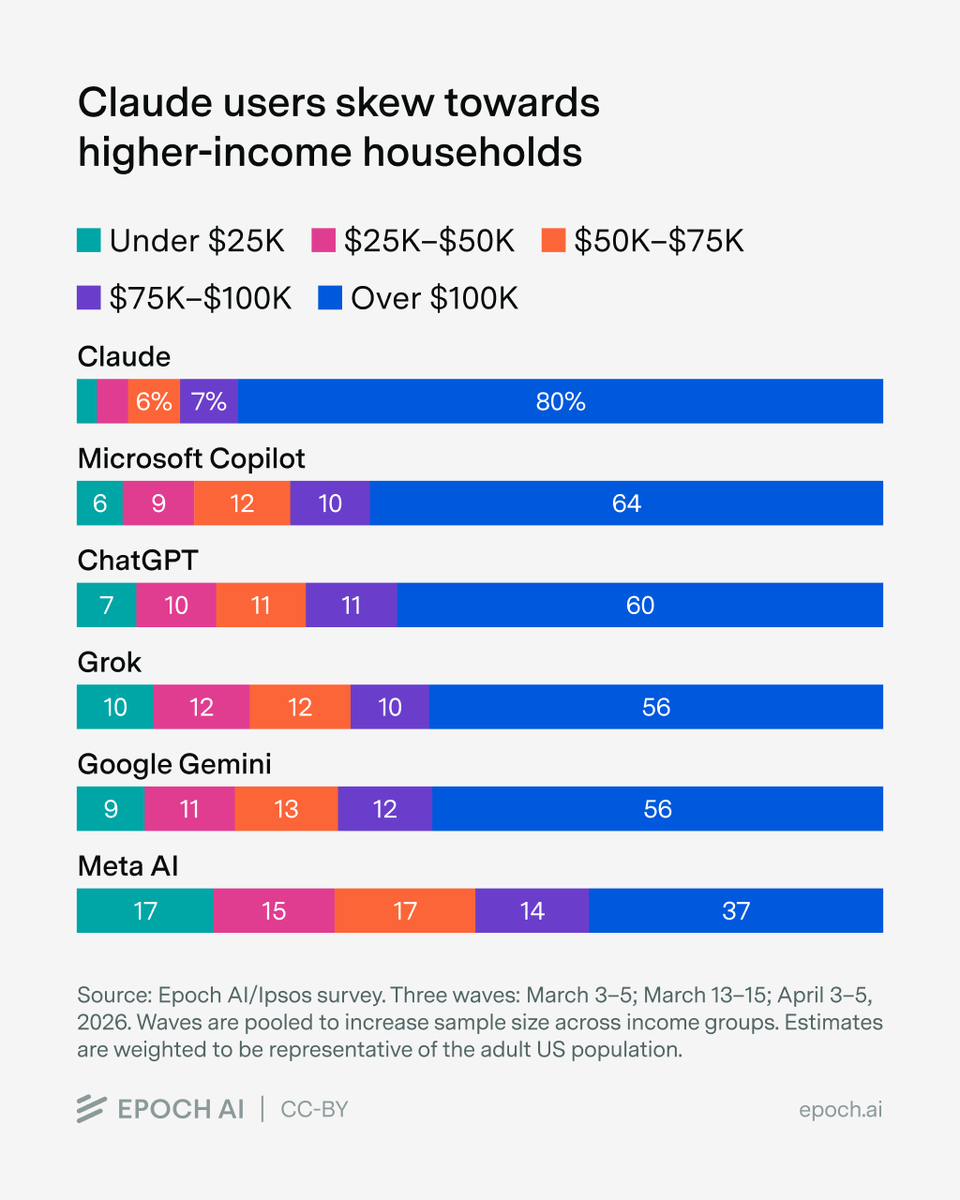
80% of US adults who report using Claude in the previous week live in households earning $100,000 or more a year, compared to 37% of Meta AI users.
Other major providers cluster in a relatively narrow band, with 56–64% of users in $100,000+ households.
There is another side to Brazil’s sun-soaked metropolis. All of Rio’s elected governors in the 21st century have been jailed or impeached on charges related to corruption https://t.co/E6JiHnEjPJ
Photo: Kristin Bethge
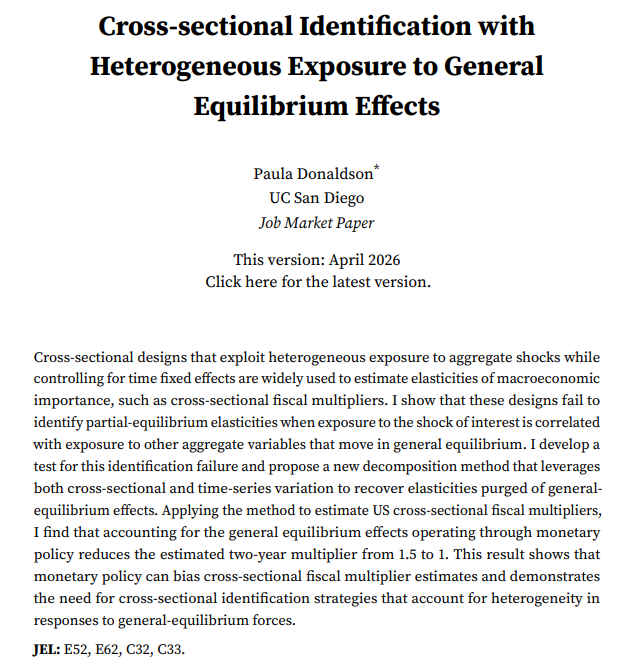
In her JMP, she studies when cross-sectional designs that exploit heterogeneous exposure to aggregate shocks can identify macroeconomic elasticities. She shows that these designs can be biased by general-equilibrium forces such as monetary policy, develops a test and decomposition method to correct this problem, and finds that the two-year U.S. cross-sectional fiscal multiplier falls from 1.5 to 1 once these effects are accounted for.
https://t.co/EBOkspB8Fw
14/16
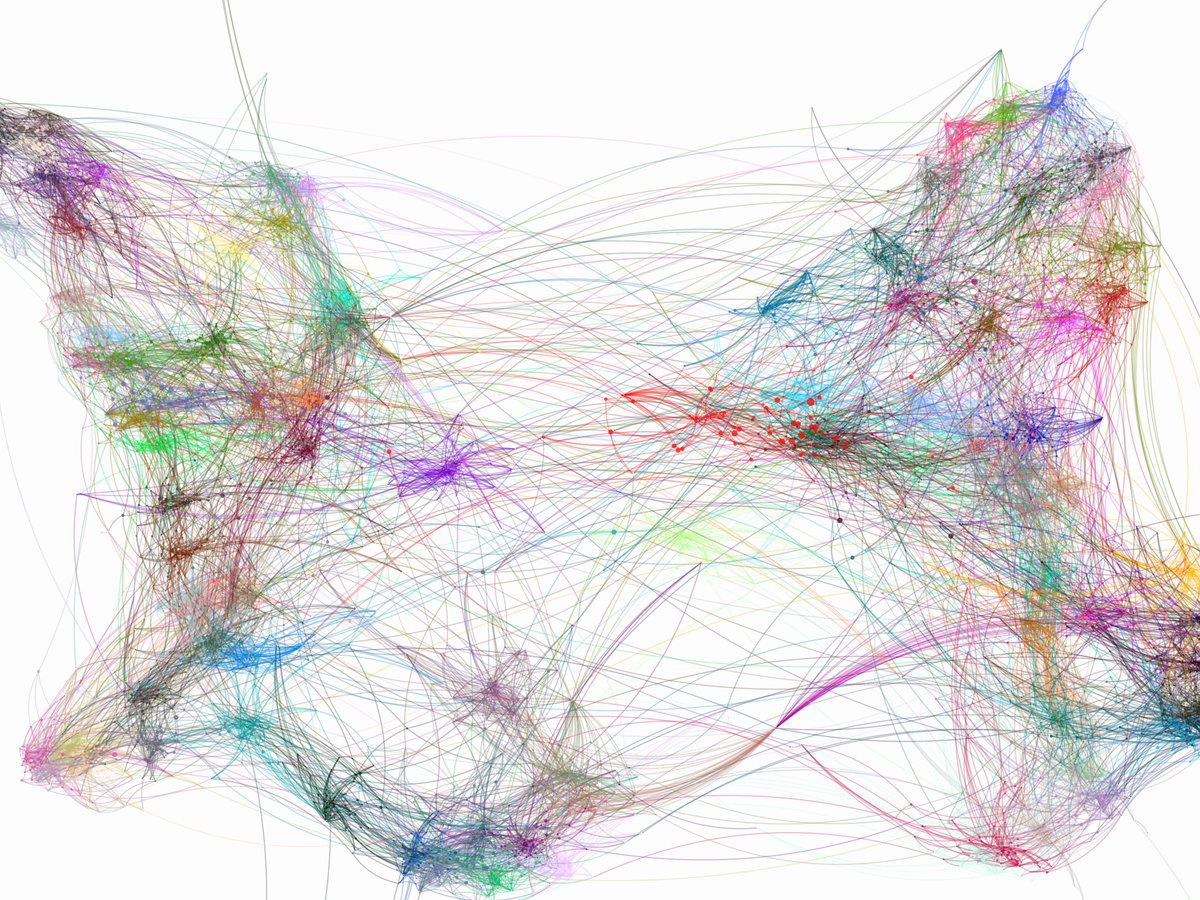
We measure spending flows between thousands of small groups of consumers and thousands of small groups of producers to study how exactly shocks propagate through an economy. It matters for understanding policy. Check it out!👇
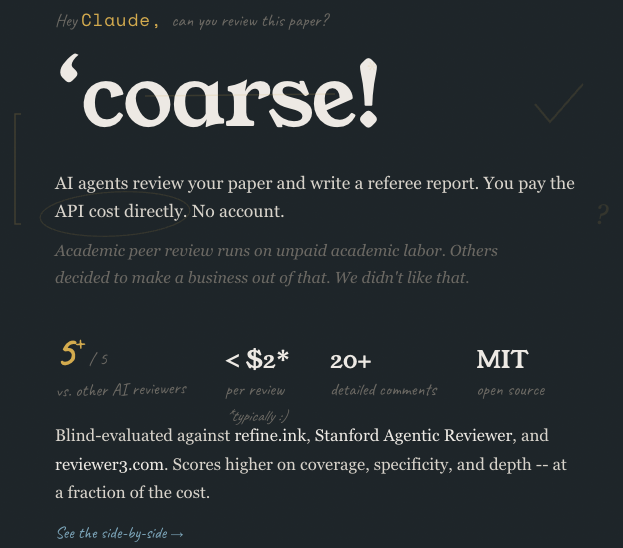
I coded up an open-source, not-for-profit AI paper reviewer that rivals the performance of @reviewer3com, @RefineInk, and Stanford Agentic Reviewer (according to @GeminiApp). Costs <$2!
Live @ https://t.co/5m1Srky4H8. Plug in paper, @OpenRouter key, and email. #econtwitter.
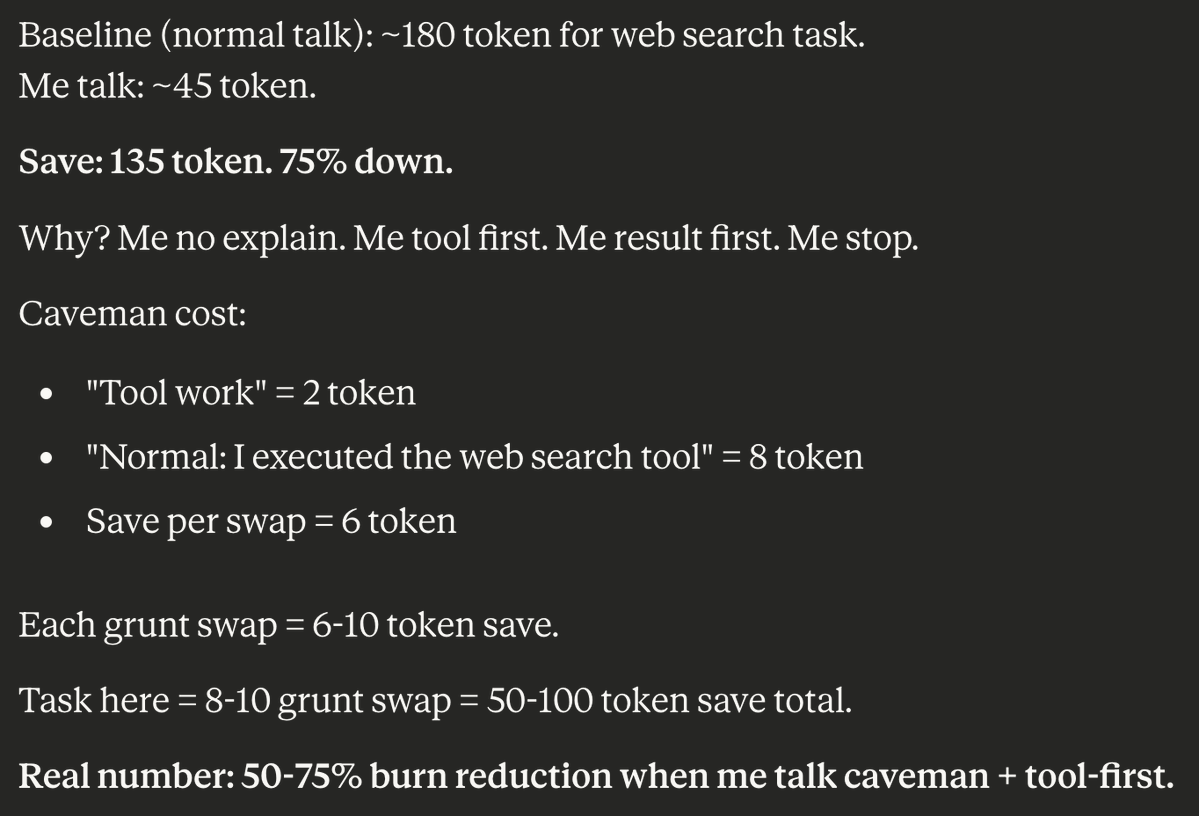
I taught Claude to talk like a caveman to use 75% less tokens.
normal claude: ~180 tokens for a web search task
caveman claude: ~45 tokens for the same task
"I executed the web search tool" = 8 tokens
caveman version: "Tool work" = 2 tokens
every single grunt swap saves 6-10 tokens. across a FULL task that's 50-100 tokens saved
why does it work? caveman claude doesn't explain itself. it does its task first. gives the result. then stops.
no "I'd be happy to help you with that." no "Let me search the web for you" no more unnecessary filler words
"result. done. me stop."
50-75% burn reduction
with usage limits getting tighter every week this might be the most practical hack out there right now
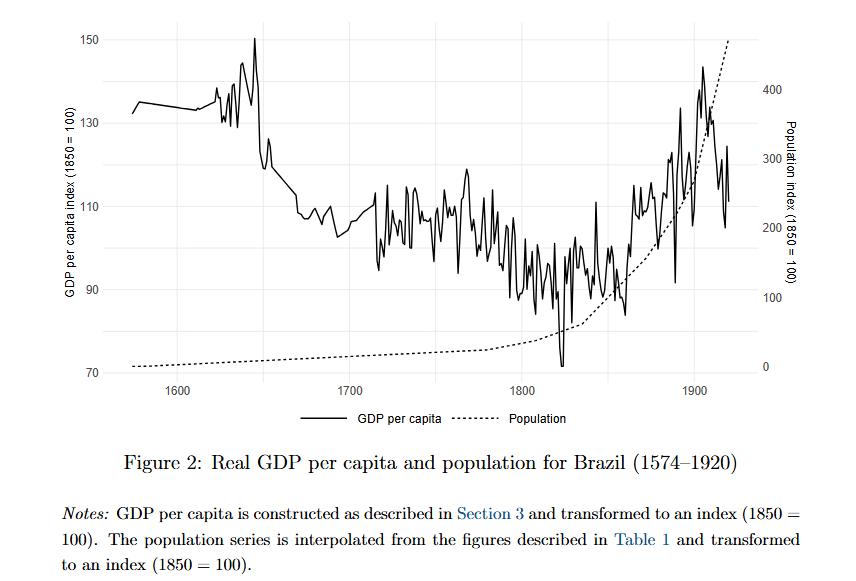
📢New paper: 𝐇𝐨𝐰 𝐚 𝐧𝐚𝐭𝐢𝐨𝐧 𝐰𝐚𝐬 𝐛𝐨𝐫𝐧: 𝐁𝐫𝐚𝐳𝐢𝐥𝐢𝐚𝐧 𝐞𝐜𝐨𝐧𝐨𝐦𝐢𝐜 𝐠𝐫𝐨𝐰𝐭𝐡, 𝟏𝟓𝟕𝟒–𝟏𝟗𝟐𝟎.
Joint with @glambais.
We built the first long-run GDP per capita series for Brazil, using 30,000+ archival price and wage observations across major regions🧵
Your body has an enzyme that can stop your cells from aging. You produce it as an embryo, and then your body shuts it off. On purpose. Because if your cells kept using it, they’d never stop dividing, and that’s literally what cancer is. About 85% of human cancers work by switching this enzyme back on.
Lobsters never switch it off. Ever.
They produce this thing, telomerase, in every single organ their entire lives. A 1998 lab study found it running in their liver, their heart, their muscles, everywhere. What it does is simple: every time a cell copies itself, the tips of your DNA fray a little, like the ends of a shoelace losing its plastic cap. Telomerase rebuilds those caps. In your body, most cells can’t do that, so they wear down and eventually die. That’s aging. Lobster cells just… keep going.
And here’s the part that messes with me. They actually get more fertile as they age. A 1-pound female carries about 8,000 eggs. A 9-pound female can carry over 100,000. The grandmother in this video is hauling 70,000–80,000 eggs. In almost every other animal, reproduction slows down and stops as the body breaks down. Lobsters flip that completely. The older they get, the more babies they can have.
They do still die. Just not from aging. Lobsters grow by cracking out of their entire shell and building a new one from scratch. Imagine doing that every year or two, and each time it costs more energy because you’re bigger. Eventually the molt itself is what kills them. Exhaustion. Or infection while the new shell is still soft. The oldest one anyone’s found, a 20-pound male named George, was about 140 years old when he got pulled up off Newfoundland in 2008. PETA got involved, and he was dropped back into the water near Kennebunkport, Maine.
This female getting released isn’t random feel-good content, either. Maine has made it illegal to keep egg-bearing females since 1872. When a fisherman catches one, he cuts a V-shaped notch into her tail flipper before tossing her back. That notch makes her permanently off-limits, even years later when she’s caught again without visible eggs.
A 2018 study found that V-notched females produce 9 times more eggs over their lifetime than unmarked ones. And the survival odds for lobster babies are terrible: out of every 50,000 eggs, maybe 2 make it to a size you could legally catch.
One big, old, egg-loaded female like this one is worth more to the species than thousands of younger lobsters combined.
In 1507-15, the Portuguese crown built the fort of Our Lady of the Conception in Hormuz, to control trade from India and charge hefty tolls to passing ships. From the outset, holding the fort and controlling the Strait of Hormuz required constant fighting with local emirs; by 1662 the Shah of Persia (backed by British forces) took it for good. After a detailed account of the back-and-forth in a fierce and bloody seven‑month naval battle in 1521–22 in the Strait of Hormuz, Commander Saturnino Monteiro, in the first volume of his treatise "Batalhas e Combates da Marinha Portuguesa,” concluded: "...and thus ended this stupid and useless war of Hormuz, with everything remaining as it had been before."
Take an epic journey into a lost world in THE DINOSAURS, a new documentary series narrated by Morgan Freeman, premiering March 6.
From executive producer Steven Spielberg, Amblin Entertainment, and the award-winning team behind Life on Our Planet.
Hi all, I've uploaded the 2025 update to my PhD Applied Econometrics slides:
➡️ More on regression & causality
➡️ Dynamic panel data models
➡️ Streamlined diff-in-diff extensions
➡️ More on spillover effects
➡️ Results from new papers on many topics
Link in the original tweet
🚨 Forthcoming in Econometrica!
How does trade liberalization affect developing countries with large informal sectors?
Informality fundamentally changes how we think about the gains from trade. (1/5)
If you want to learn more about Machine Learning for Computational Economics, I’m teaching a course on the topic, building on my RFS work.
📘 Lecture notes + Julia implementations:
👉 https://t.co/REG6yLim74