Anesthesia is just like dreamless sleep, right? RIGHT?
Cover story @_Anesthesiology - we developed an operating room protocol to promote dreaming during emergence from anesthesia... under the best conditions we found that **93%** of patients had experiences
A computer holds data perfectly for hours. A person asked to remember a long number fails in seconds. Why?
The answer is tangled up with something both brains and neural nets do: they code in low dimensions. 🧵
Under propofol anesthesia, the hippocampus of four patients encoded the meaning of a podcast's words, even one that had not yet been played.
We tend to assume that recognizing patterns and following the meaning of a sentence requires conscious access. Katlowitz and colleagues (Article, Nature) tested this in the least likely place, a region far from the sensory cortices (the areas that first receive and process sound).
They recorded with Neuropixels in the hippocampus of seven epilepsy-surgery patients. Three heard tones with an occasional intruder (a sequence of identical sounds where one suddenly breaks the pattern, triggering an automatic alert in the brain before any conscious intent); four heard a podcast. From single neurons and the local field, they decoded tone identity and, with a weaker signal, the intruder; in the podcast, they decoded each word's semantic category, its part of speech, and the word that followed.
They read this as complex semantic processing persisting without consciousness, with consolidation compromised and encoding preserved. The "plasticity" stretch (the intruder growing more decodable across ten minutes) rests on two patients and 43 neurons. The "awake-like" comparison comes from a separate cohort, with different electrodes; in fact, the semantic correlation was higher asleep than awake. And they cite work warning that decoding the next word may be stimulus contextualization rather than active prediction.
If encoding holds and consolidation doesn't, the meaning was processed without ever being laid down. What happens to that, the study doesn't chase.
https://t.co/fzCz4YSotd
🥳 New work from my lab (@MLabofAI) just dropped on @arxiv! Measuring the shape of an animal can be highly useful for biomedical applications and for avatars 😎
We introduce *PRIMA*:🔥SOTA 2D➡️3D animal shape by @xiaoyu912huang, @TiwangCS & I!
📝 https://t.co/s7sA0Lup2S
Excited to announce a powerful new one-two punch for voltage imaging from our lab and collaborators! In two new preprints, we introduce ASAP6c for high-throughput population spike-recording, and ASAP7yfor deep, subthreshold 2P imaging.
🧵 1/14
A global team of engineers and scientists has combined optical stimulation with a highly sensitive recording probe into one tool: Neuropixels Opto. Shared in @NatureMethods, it allows researchers to measure, record, and manipulate brain cells.
🔗: https://t.co/KENi5n9kDG
So I built a small tool that merges Allen CCFv3 with the traditional bregma-relative coordinate system (calibrated with Paxinos & Franklin's Atlas). Click any coronal or sagittal section, and get coordinates instantly.
https://t.co/k2BYgLyKCx
Hope it saves someone a headache 🐭
'A dimmer switch for reward: the vagus sets the gain'
TINS 'Spotlight' by Hongyun Wang, Shuhan Liu & Ling Bai
https://t.co/GT2t3Gm0VZ
discussing Onimus et al. 2026, Science Advances; Giuseppe Gangarossa group
https://t.co/aqL7qTqKse
Oh, I couldn’t find @jxqjim yesterday when I posted this, but he was the first person I knew working on this project and was so persistent over the years to see it through fruition!
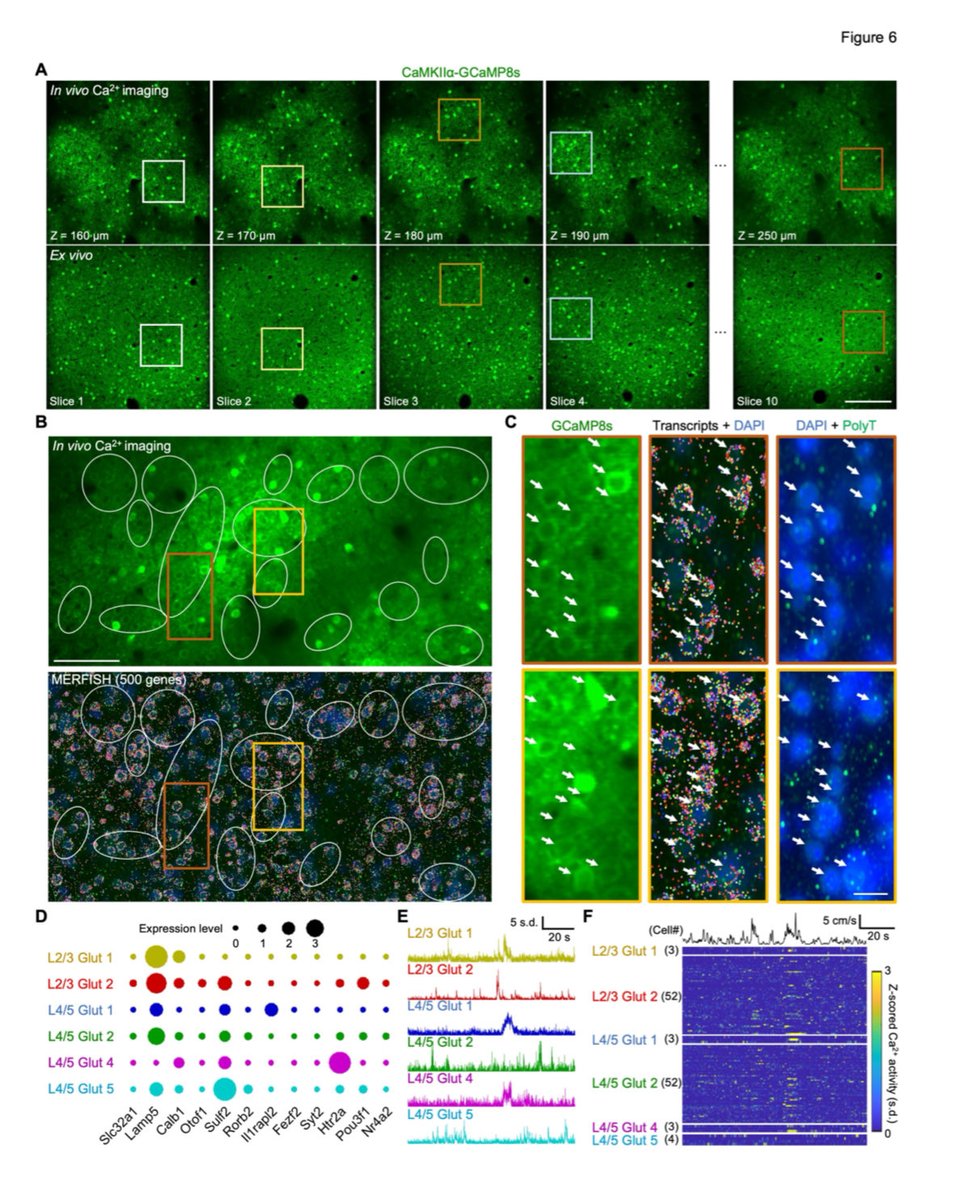
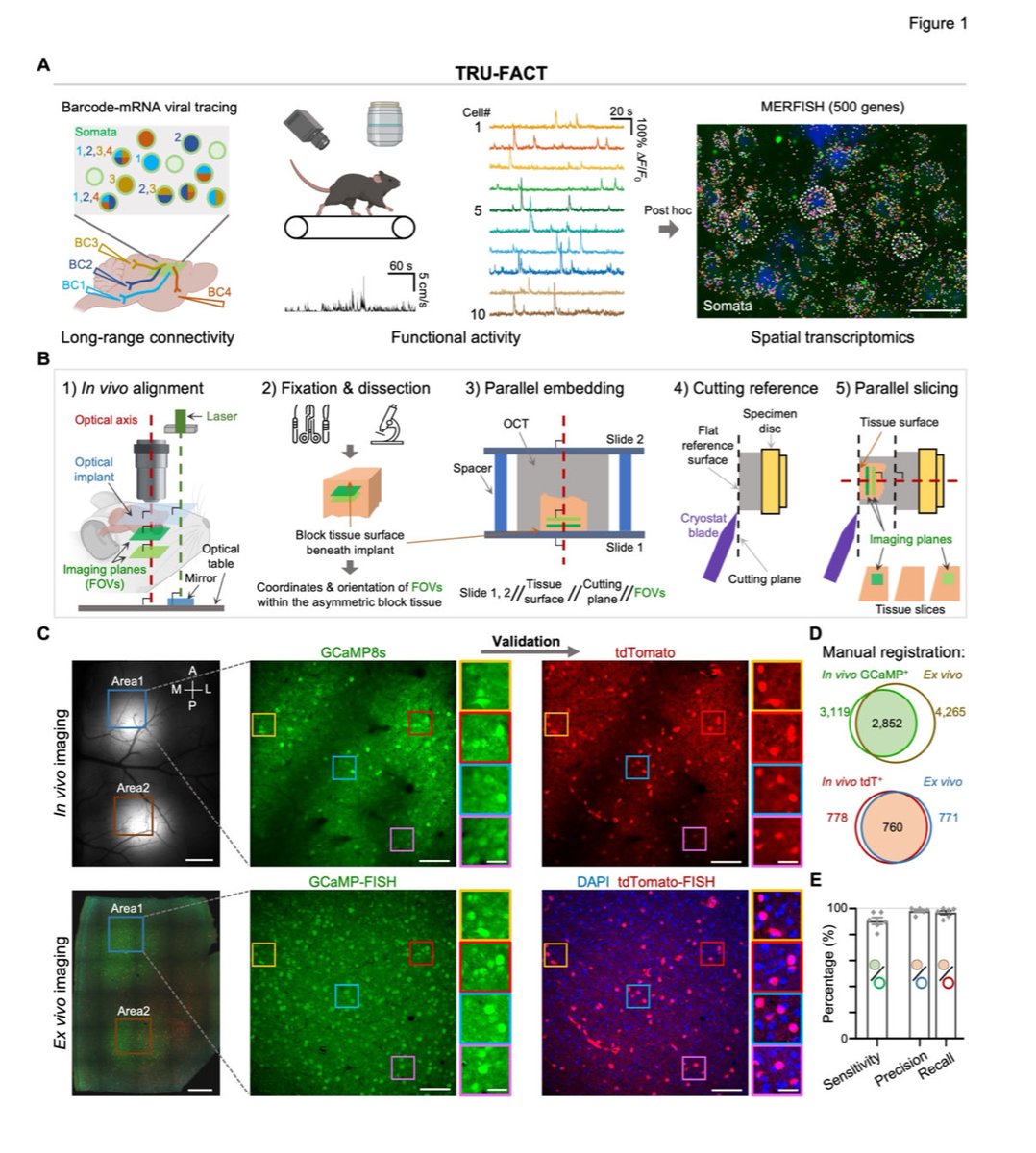
Such an amazing technique developed by my friends @LunWangm, @Xiaochen_Sun_ , @GChattree, and others from the Schnitzer lab! I watched the struggle to optimize this over the years and am genuinely so impressed with the results.
Check our TRU-FACT videos!
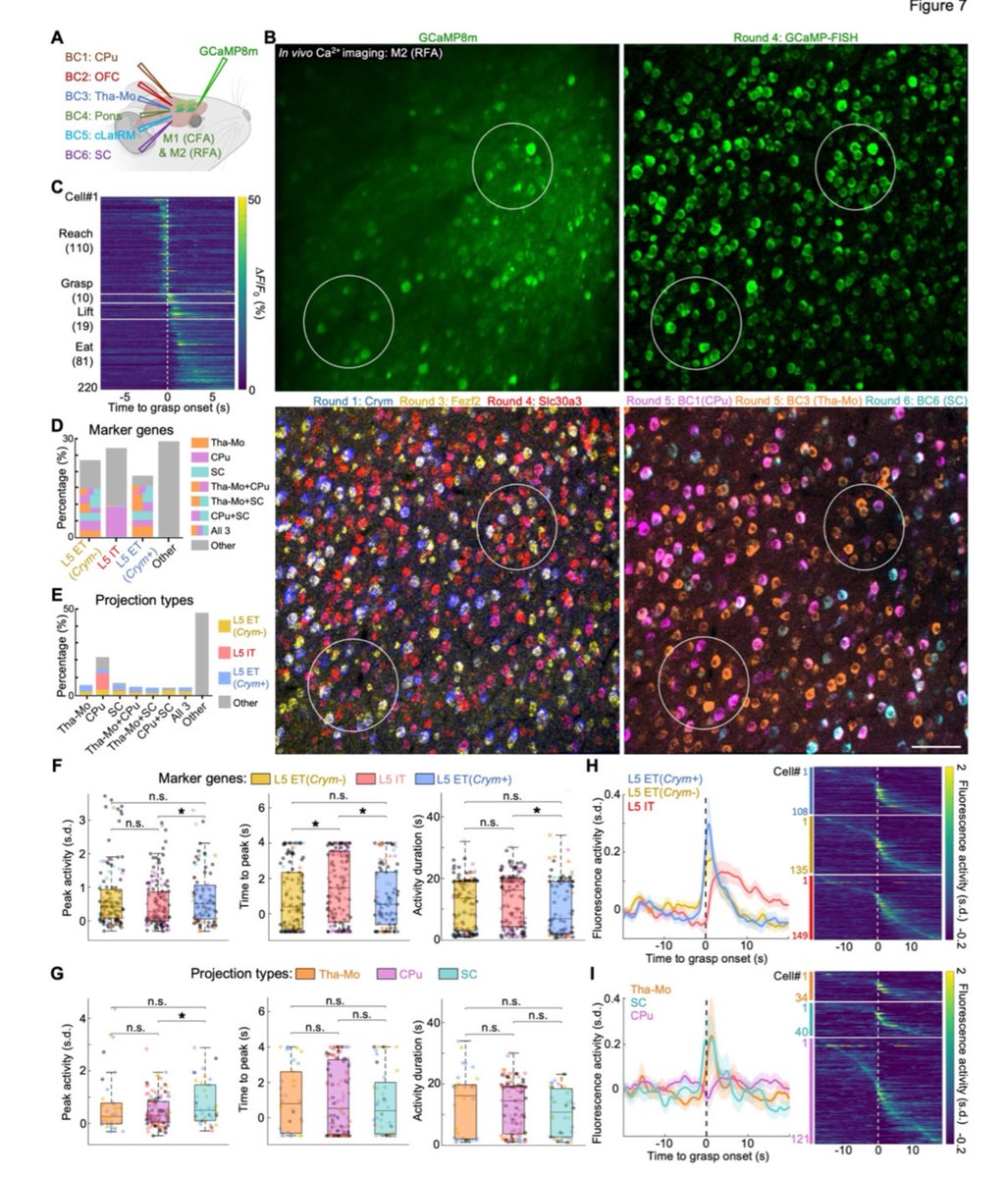
Now you can reliably match hundreds to thousands of neurons from in vivo to ex vivo, and perform spatial transcriptomics on the exact same cells throughout its journey!
BioRxiv: https://t.co/XcnebwUHkb
For decades, two revolutions in neuroscience ran in parallel:
- 🧠 In vivo imaging — watch neurons fire in living animals
- 🧬 Spatial transcriptomics — read cell's molecular identity
Meet TRU-FACT - a graph-based method that matches cells between these datasets at scale 🧵
Excited to share my co-first-authored work on registering in vivo Ca2+ imaging data to ex vivo transcriptomic and projection datasets, enabling the mapping of each cell’s functional coding to its genetic cell type: https://t.co/OfV3HCWOza.
Using #Neuropixels or want to upskill? Check out our free and open Neuropixels resources including:
⚙️ Design files for our modular insertion system
🎯 Methods for MRI-guided targeting
☁️ Cloud-based spike sorting
🖥️ Open ephys GUI
https://t.co/nlAxwh606L