For 40 years, Durgaprasad Ji has stood beside a flame hotter than 1100°C, turning molten glass into beads by hand.
Not in a factory.
Not by a machine.
By skill passed down through generations.
🧵👇
Collectors don't buy objects.
They buy significance.
The object is simply the vessel.
The story is the asset.
That's why two identical objects can have completely different value.
One has history.
One doesn't.
🏛️
@7Traderculture Exactly. A craft disappears twice.
First when the hands stop making it.
Then when the stories stop being told.
Preservation isn't only about saving objects. It's about saving context, memory and meaning.
Some traditions don't disappear because they are bad.
They disappear because nobody documents them before they are gone.
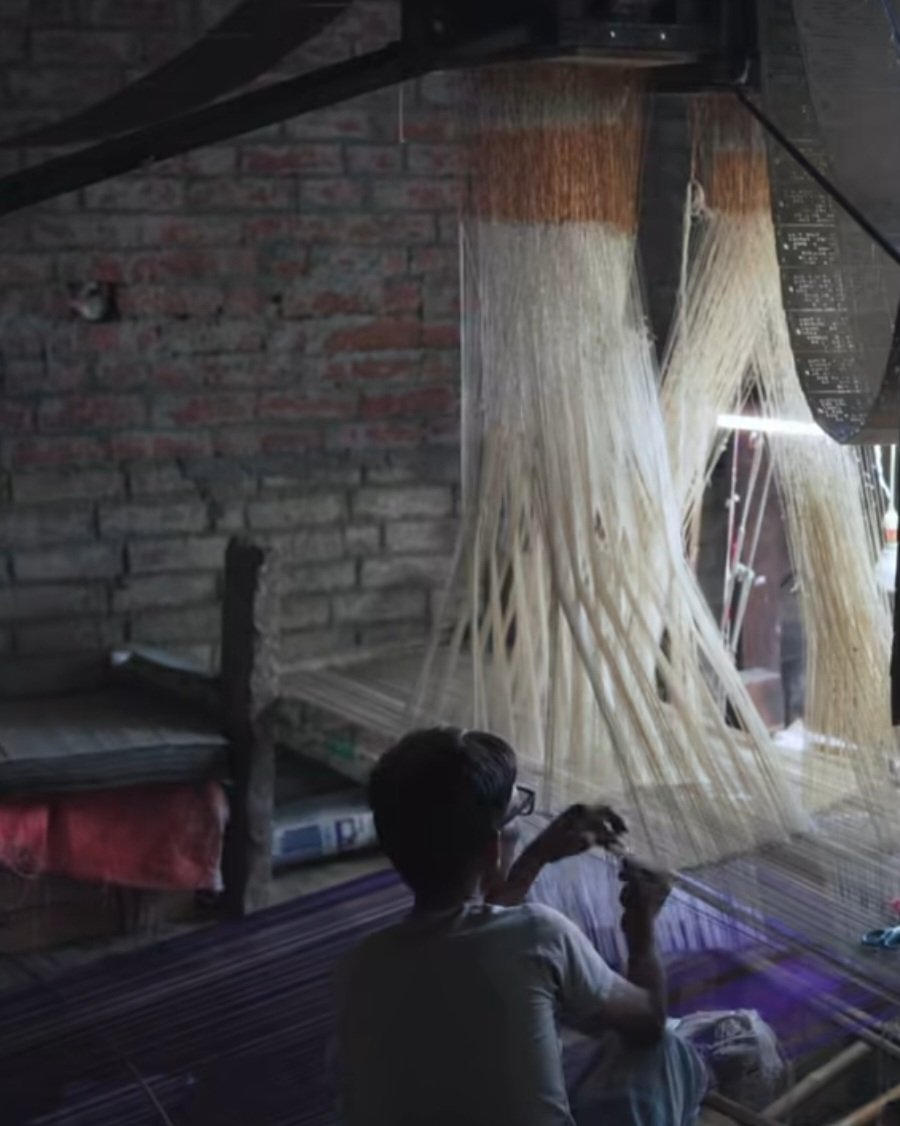
Ramadhar Ji's bamboo weaving craft in Kashi is one such story.
For 40 years, Ramadhar Ji has woven bamboo in Kashi.
His grandfather did the same before him.
Today, he worries the craft may not survive the next generation.
🧵👇
Some archives are written on paper.
Some are made of stone.
And some are made of milk, sugar, and memory.
For more than 80 years, Varanasi's Tiranga Barfi has carried a story of resistance, identity, and freedom.
🇮🇳👇
In 1942, the British banned the public display of India's flag.
A sweet shop in Varanasi responded by creating a mithai in saffron, white, and green.
It became known as Tiranga Barfi.
🧵👇
Before music is played, it has to be built.
In Kashi, Radhe Shyam Sharma continues a nearly 200-year-old family tradition of making sitars entirely by hand.
Each one takes about a month.
No machines. No shortcuts.
🧵👇
@7Traderculture These story will get forgotten. But this has added value to their culture and remain in silent.
7 Trader culture vision is to preserve this story so future can learn from this not only from fancy MBA.
Most people remember the musician.
Few remember the person who made the instrument.
Yet every note carries the work of an unseen craftsman.
In Kashi, Radhe Shyam Sharma is keeping a 200-year-old sitar-making tradition alive.
🎵👇