Today, Russia announced the ban of sulphuric acid exports.
Russia also banned the export of elemental sulphur late last year to protect its agricultural industry, as its domestic production has been declining. Like the sulphur export ban, the sulphuric acid ban is said to be in place until the end of the year.
Russia is the 12th largest exporter of sulphuric acid and almost all of it goes to Kazakhstan… the world’s tenth largest copper producer.
While we suspect that the ban on the ‘King of Chemicals’ (sulphuric acid) won’t make a big impact on the production of the ‘King of Metals’ (copper)… we are unlikely to see the record-high prices for sulphur and sulphuric acid prices come down any time soon.
In the DRC, we are already seeing high-strength sulphuric acid prices traded at over $1,000 per tonne… up well over 100% in the past 3 months alone.
While it’s not surprising to see countries prioritise food security and domestic supply chains over global free trade… any balkanizing of supply chains is nothing but inflationary.
https://t.co/yOy9JjwMzM
As the world's need for water keeps growing and important infrastructure becomes more vulnerable, water could become one of the biggest challenges in the years ahead.
The ongoing conflict involving Iran and the U.S. has caused major damage to water desalination plants in parts of West Asia. These plants provide around 85-90% of the drinking water for many Gulf countries. If they stop working, millions of people could face serious water crisis
At the same time, AI is also increasing the demand for water. Large AI data centers use huge amounts of water to keep their systems cool. These are some of the early signs of a future water crisis.
Our demands are simple ,we want a strong, modern, fair and developed India. 🇮🇳
• Free & world class public education for every child
• Free, accessible & high-quality healthcare for all
• AQI below 25 in every major city
• Clean air, clean rivers & safe drinking water
• 5%+ GDP investment in R&D, science & innovation
• Indian universities in the global Top 100
• Strong public schools, libraries & research institutions
• End brain drain ,create opportunities at home
• Migration by choice, not compulsion
• A balanced mixed economy , strong private sector with strong public welfare
• Industrial Revolution 2.0, 3.0 & 4.0 revival in India
• Manufacturing led growth & high-skilled employment
• MSME empowerment with easy credit & lower compliance burden
• Energy security through renewables, nuclear & domestic production
• Global level infrastructure in transport, logistics & digital connectivity
• Smart villages & smart cities growing together
• Modern railways, ports, highways & public transport
• Affordable housing & planned urban development
• Zero hunger & zero extreme poverty
• Better wages, dignity & social security for workers
• Farmers with stable income, modern technology & market access
• Food processing & rural industrialization revolution
• Women’s safety, workforce participation & equal opportunity
• Skill development linked directly to industry needs
• AI, semiconductor, biotech & deep-tech leadership from India
• Data privacy, cybersecurity & digital rights protection
• Merit-based systems with innovative affirmative action
• Transparent & accountable governance at every level
• Faster, fairer & free judicial access for citizens
• Police, judicial & administrative reforms
• Strict action against corruption & misuse of taxpayers’ money
• Zero freebie politics,investment over appeasement
• Taxpayer money spent on productivity, education & healthcare
• Decentralization with empowered local governments
• National security with economic strength
• Strong diplomacy with strategic independence
• Sustainable growth without environmental destruction
• Sports, arts & culture investment at global standards
• Equal opportunities regardless of caste, religion, gender or region
• Dignity, opportunity & constitutional rights for every citizen
• Free judicial remedies and equal access to justice for every citizen
• Free and world-class education for all
• Free, accessible and high-quality healthcare for every Indian
• Beyond education, healthcare and justice, nothing else should be permanently free
• Welfare should empower citizens, not create dependency
• Taxpayers’ money must be invested in productivity, infrastructure, research and human development
• Subsidies should be targeted, transparent and temporary
• A nation grows through opportunity, innovation and merit , not freebie politics
A developed India is not a dream.
It is a national decision, a collective responsibility, and a generational mission. 🇮🇳
After being an agri based economy still importing oil seeds...next will be oil seeds after food grains because we didn't have enough grains during 1950s... same will happen with oil seeds...
Gold & Silver both are in consolidation zone & meaningful breakout only after breaching these which doesn't seem too far looking at how the EMAs are catching up. Can add at current price & bottom of the range.
Fundamental reason: US election in November
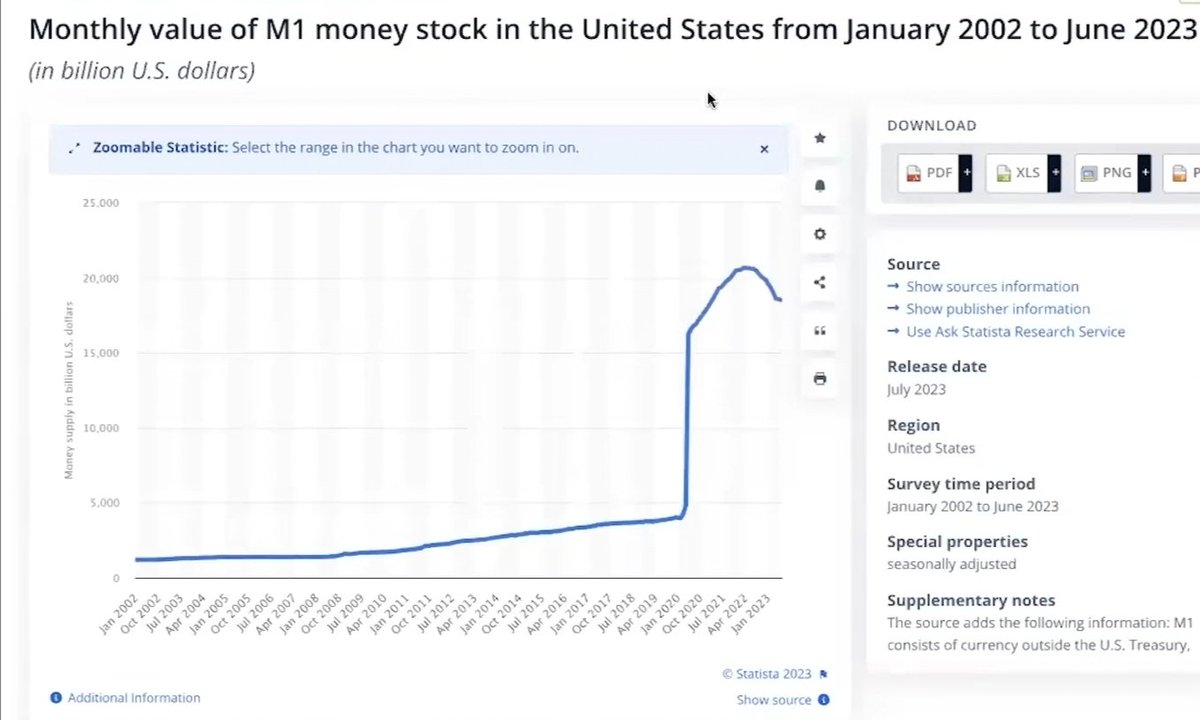
From last few year there was excessive money printing in the economy and now slowly it is curving down which means slowly the money is being withdrawn from economy.
@bhaumik_chheda
As there will be elections in upcoming year we can see global interest rate cut. Wherein there is high probability of nifty having a bull run. Due to interest rate cut we can see public sector banks performing good.
@bhaumik_chheda#Elections2024#InterestRates
Core sector is useful as a turnaround indictor. Normally, economic activity picks up when the core sector number picks up. Normally, sectors like cement, steel and electricity are strong lead indicators for a revival in economic growth. Positive for economic growth
The core sector comprises the 8 key sectors that are at the core of the Indian economy. These 8 sectors include Coal, Crude Oil, Natural Gas, Refinery Products, Fertilizers, Steel, Cement and Electricity.
The core sector is also known as Infrastructure output as they represent the basic industries that form the base of the economy.
The core sector constitutes more than 40% of the IIP and hence is an important determinant of growth.
When dollar's strength increases and inflation decreases the interest rates cloud be expected to fall at the same time as gold price.
Inflation is decreasing cash like Investment don't need to offer such high rate and fewer people are rushing to gold as stable store value.
Gold started 2022 at $1751.85 an ounce peaked mid year at $2,017.15 an slowly settled every since before landing at $1660.80 in early.
Interest rate are tied to inflation so, they have historically been closely related to gold price how?