from what you said, i got a few thoughts.
i feel like most crypto adoption right now are coming from more insecure groups of people, or at least from people who rarely do anything without following the herd or betting under a lot of uncertainty.
1) group I: young people are hypergambling.
2) group II: tradfi is introducing its own wrapped financial instruments and adopting crypto ones.
so we are getting a lot of people who follow (but not lead?). even if that counts as adoption, do we actually need that kind of adoption?
crypto and cypherpunk culture were built by some of the most bold people imaginable, and i think we are missing infra that supports them, especially funding.
i am not saying there is no cool stuff being built. there absolutely is. even on prominent lending venues (Aave), you can now borrow eur against crypto at rates below inflation, while projects like @punkfun and a lot of privacy apps are experimenting with cool stuff.
but the adoption funnel seems optimized for speculation and financial wrapping (for now).
why are so many people in crypto obsessed with adoption? is the end goal really to reach some arbitrary % of the global population?
that seems naive and somewhat contrary to the nature of complexity. a lot of the adoption discourse assumes that crypto needs to become simple enough for everyone to understand. but some complexity is irreducible. you cannot compress the Ethereum, Solana, Monero or Zcash roadmap into 3 sentences and expect an average person to understand the system in any substantive way.
it would sound strange if software developers said software needs 100% global adoption. even with AI making software dev far more accessible, most people still do not care about software, building systems or understanding how they work. they either lack the agency to engage with it or simply have no interest.
crypto is similar. you can reduce friction, improve UX and make participation easier, but you cannot manufacture curiosity.
btw alchemists have tried to turn metal into gold for 2,000 years
(Isaac Newton literally spent decades and wrote a million words about it)
this SF startup finally cracked it, and beat CERN's record by 10x
here's the dummies version of how it works:
> they build a mini sun (a fusion reactor)
> the mini sun shoots out tiny particles
> mercury atoms have 80 protons and gold atoms have 79
> when a particle hits a mercury atom, it throws the atom off balance, and a few days later the atom settles down by losing a proton
> 80 becomes 79, and that's gold
and it's real gold (the exact same atom you'd dig out of a mine)
the catch is it comes out radioactive. their CTO says it has to sit for 14 to 18 years before it's safe to wear
so the gold they make this year becomes jewelry sometime in the 2040s lol
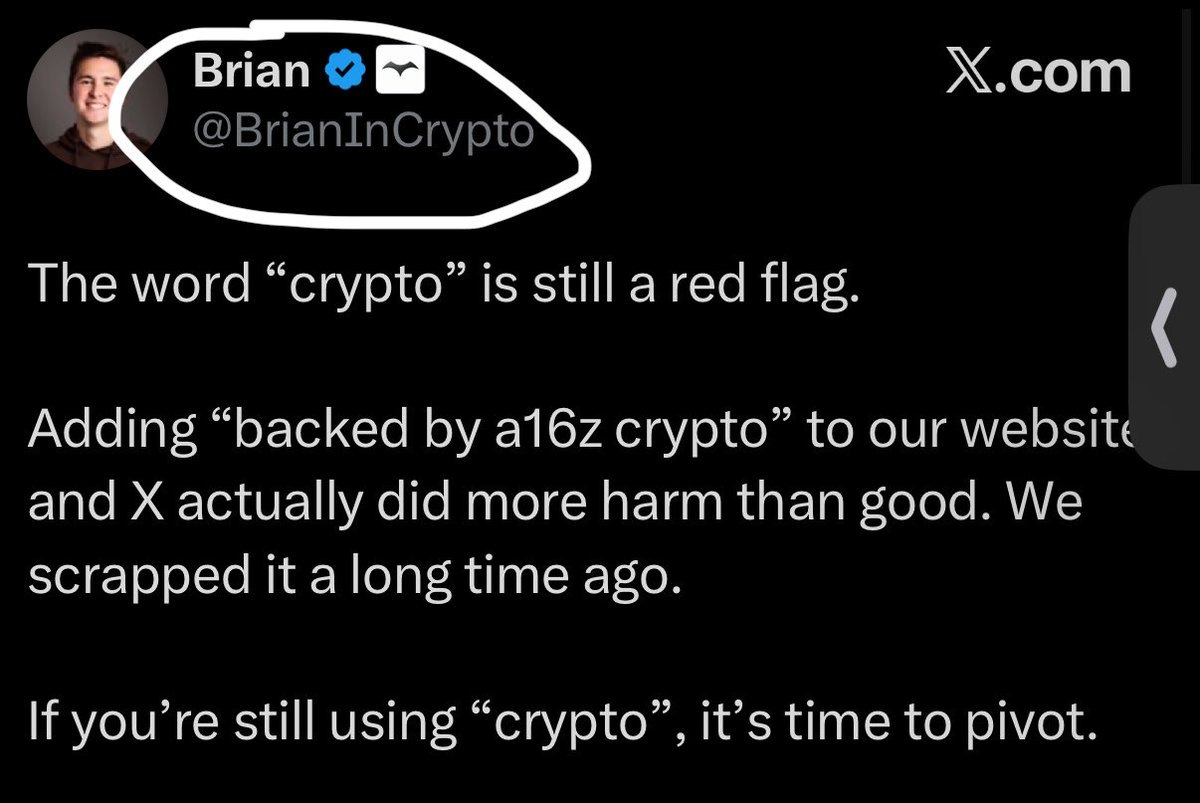
The word “crypto” is still a red flag.
Adding “backed by a16z crypto” to our website and X actually did more harm than good. We scrapped it a long time ago.
If you’re still using “crypto”, it’s time to pivot.
EIP-8390 is a great proposal for @ethereum issuance.
Ethereum currently pays ~33,800 ETH annually to a 512-validator sync committee (whose signatures arent even slashable). btw, thats around 3% of consensus issuance.
with ZK proofs the full validator set's finality can be proven offchain and verified cheaply by light clients, removing the need to continuously subsidize a sync committee.
in nutshell:
less ETH issuance, stronger light-client security, and lower recurring protocol expenditure.
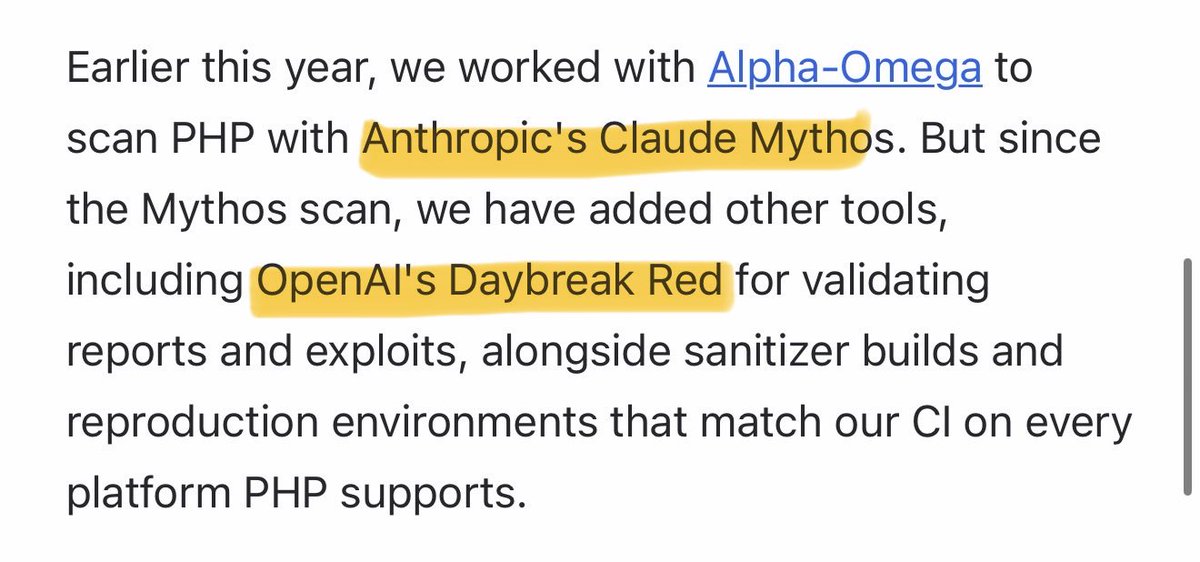
wait, PHP was actually scanned by Anthropic’s Claude Mythos earlier this year. they also had access to OpenAI’s Daybreak Red for validating exploits.
the PHP Foundation revealed this JUST yesterday.
keeping frontier cyber models in the hands of a selected few doesn’t seem to be working well for the internet.
https://t.co/rangh8iW6M
What's your private key? 1?
>...what? No?
2?
>It's 384 bits you dumbass. That's 35 orders of magnitude larger than the estimated number of atoms in the known universe.
...3?
>[visibly sweating] Th-this is ridiculous...
Crypto’s irony is that it usually is attacked first and mocked for its operational failures
Yet the competition ends up looted more aggressively later by the same actors (🇰🇵) and reluctantly adopts the security solutions that wouldn’t exist without crypto being attacked first
Crypto is so insecure. It keeps getting hacked. Yup. Now imagine how secure your average SME website or platform is. Or those boomer financial apps. God have mercy on us all.
Most DAO voting happens in public - you can look up a wallet and see exactly how it voted, which allows for bribery and voter pressure. In real-world elections, the secret ballot is an internationally recognised standard that exists to prevent exactly that.
@theInterfold CRISP tries to solve this for onchain voting by keeping individual votes private while making the final results public.
We've added it to the L2BEAT Privacy dashboard. Here's how it works and who you need to trust 👇