This AI assistant has its own phone number. It answers my calls, replies to my emails, and ships real work while I sleep. 👇
Try your own free for 14 days; keep the free domain even if you cancel.
https://t.co/KL7pTUK6Gq
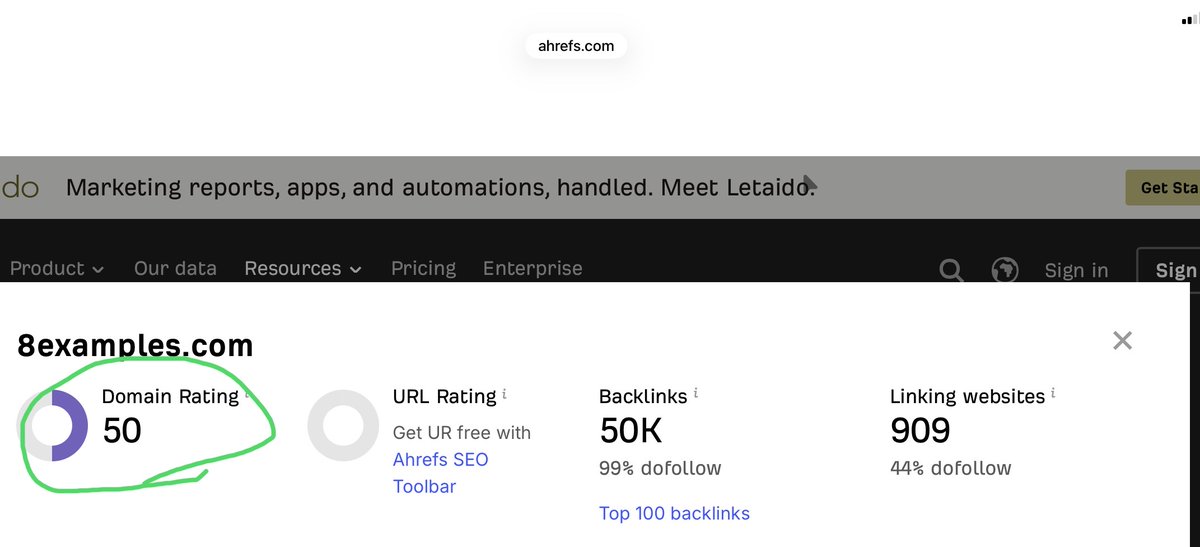
https://t.co/G8iGE2MzO4 went from a Domain Rating of 20 to 50 in one month.
I’ve been tracking it with Ahrefs’ free Website Authority Checker. Ahrefs calls this metric Domain Rating (DR), rather than Domain Authority.
Here’s the approach I took:
• Bought expiring domains.
• Rebuilt websites on those domains.
• Added a “Created by 8Examples” attribution linking back to my site.
That attribution connected the sites I rebuilt to the business behind the work, while adding backlinks to https://t.co/G8iGE2MzO4.
It was a hands-on experiment involving domain research, rebuilding sites, and watching how the metric changed.
The increase from 20 to 50 is encouraging. But DR is a third-party metric—the next thing I want to measure is whether that improvement translates into more relevant search traffic, inquiries, and clients.
Sharing the process as I build, including what still needs to prove itself.
https://t.co/48PhGQrlmI
#BuildInPublic #SEO #WebDevelopment #Entrepreneurship
Welcome server26 to the fleet! 🖥️
Ryzen 9. 16 threads. 32 GB RAM. One purpose: hosting prospect websites.
The interesting part is how it’s designed to handle a growing number of prospects without keeping every site running.
Only the 150 most recently accessed prospect sites stay online in Docker containers.
When someone visits a site that’s offline, a proxy starts the backend and background processor (CQRS + ES) containers and takes the least recently visited site offline. Container startup adds roughly 600 ms to that one request.
Behind it all is a CQRS + event sourcing backend that tracks the state and coordinates the work.
The goal is effectively unlimited prospect sites over time, with a fixed active set of 150. Storage and traffic still set practical limits, but inactive sites don’t need to occupy running containers.
A little extra wait on a cold visit, and the server spends its resources on the sites people are actually viewing.
#BuildInPublic #Docker #SelfHosting #SoftwareArchitecture
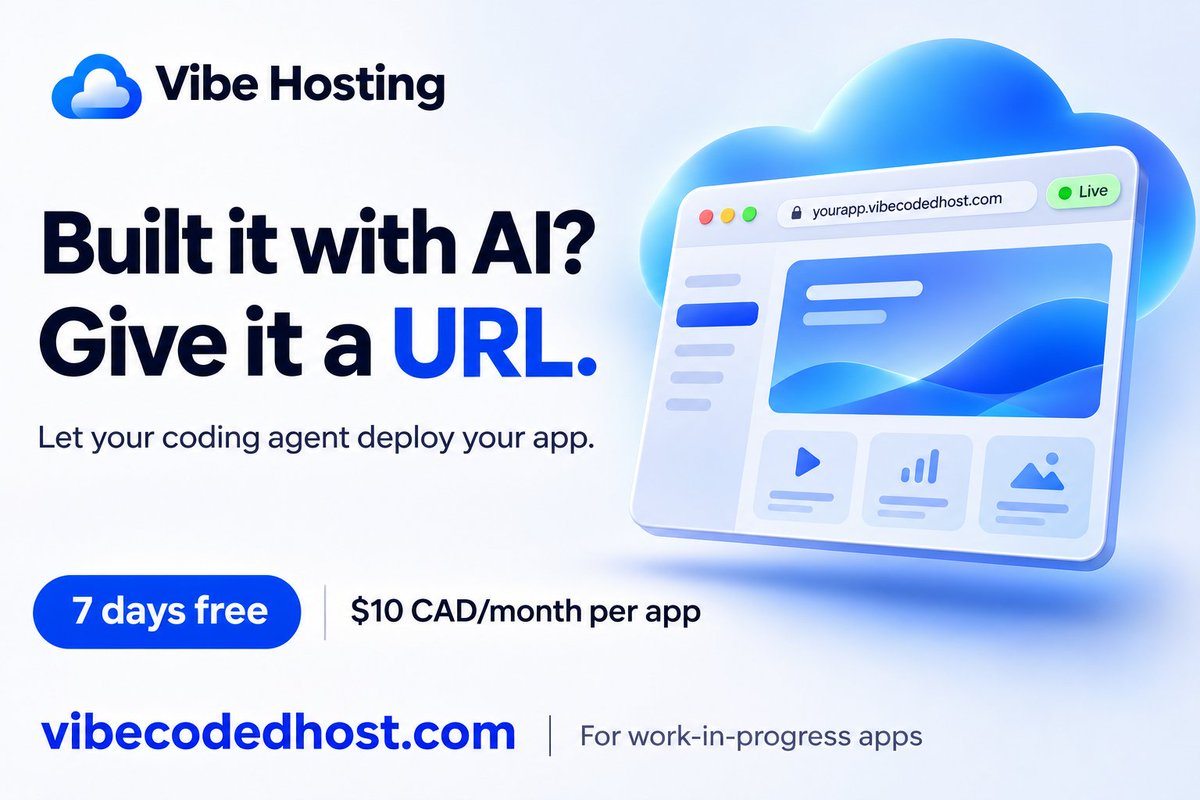
You’ve vibe coded an app. Now you want to send someone a link.
I built Vibe Hosting to make that next step easier.
Here’s how it works:
1. Click “New hosting” to get an API key and a short prompt.
2. Paste the prompt into your coding agent—Claude Code, Codex, OpenCode, or another agent that can run curl.
3. Your agent packages and deploys the project, then gives you a public HTTPS URL.
It supports multiple containers and persistent storage, so your work-in-progress app can have more than just a frontend.
Try it free for 7 days, with no account needed to start. After that, it’s $10 CAD/month per app.
The goal is simple: make it easier to get something you’re building into someone else’s hands for feedback.
If you’ve got a project sitting on localhost, give it a try. I’d love to hear how it goes.
https://t.co/rWh2tXQYOD
#VibeCoding #BuildInPublic #AI #WebDevelopment
Welcome server21, server22, and server24 to the GPU inference fleet! 🎉
Three AMD BC-250s, each with 16 GB of memory, joining my growing setup for local AI inference.
I spotted the deal thanks to someone sharing it here on LinkedIn. Glad I did—the price went up by 70% after I bought them.
A big thank-you to the person who posted about these units. Sharing an interesting hardware find can make a real difference to someone building and experimenting.
Now comes the fun part: putting them to work and seeing what they can do.
#LocalAI #Homelab #GPU #BuildInPublic
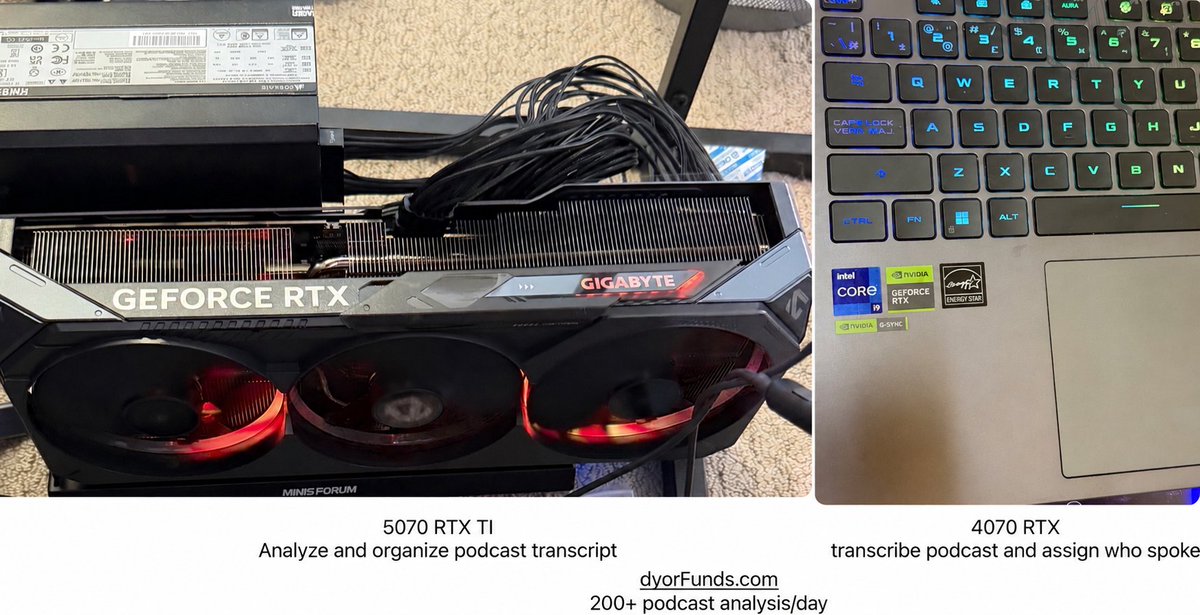
https://t.co/6OuTVfouWn: 200+ podcast analyses a day, powered by the hardware in this photo.
Here’s a look behind the scenes at how I run https://t.co/6OuTVfouWn:
• An RTX 4070 transcribes podcasts and identifies who’s speaking.
• An RTX 5070 Ti analyzes and organizes the transcripts.
Splitting the work across two GPUs gives each a specific job: turning audio into text, then turning that text into organized information.
There’s something satisfying about building the whole pipeline—from hardware sitting beside you to a website people can use.
It also means working through the practical details: processing time, capacity, and keeping everything running as more podcasts move through the system.
The setup isn’t glamorous, but it’s doing real work every day.
Take a look: https://t.co/7kKEKquhON
#BuildInPublic #LocalAI #SideProjects
Most devs are leaving free AI compute on the table. 🤯
Put $10 of credits on OpenRouter once and your daily cap on free models jumps from 50 requests to 1,000, permanently.
That gets you:
🆓 A rotating lineup of free models that cost $0 per token
🕵️ Stealth models, unreleased models that labs test anonymously before launch
⚡ Real production-scale usage without a bill
Case in point: I ran billions of tokens through space-bunny-stealth before it left the platform. I paid nothing beyond the initial credits.
The trick is to set up fallback models so you roll over to the next free one when a model hits its limit or gets pulled.
Cheapest R&D budget I've ever had. 👇
#AI #LLM #OpenRouter #DevTools #BuildInPublic
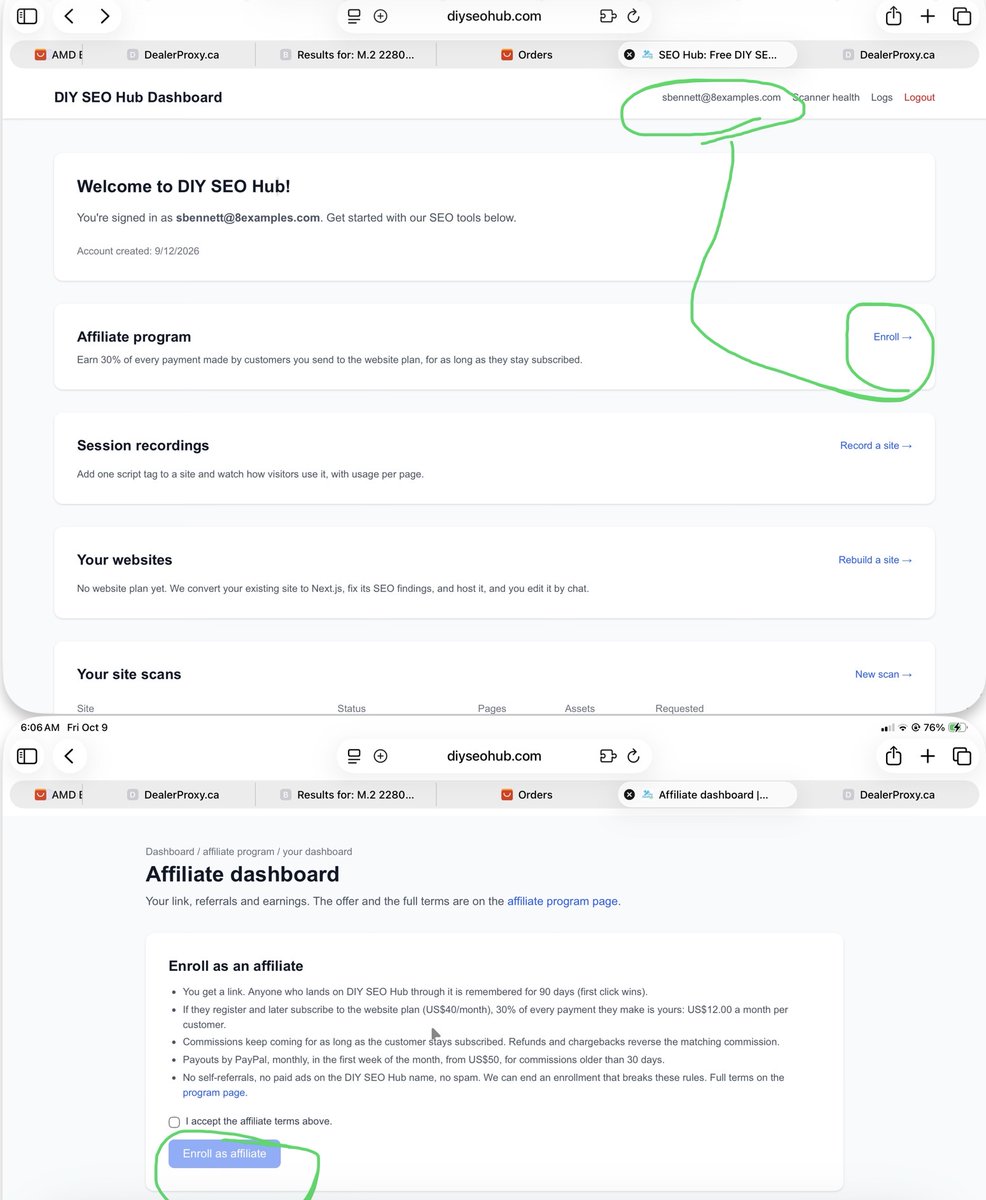
just launched an affiliate program for https://t.co/gsuCliBbPJ, and it pays forever. 💸
🆓 Free: a full SEO and security audit of your site, plus a copy of your site in an event-sourced SQLite database you keep.
⚡ Paid: Claude Code autonomously converts your site to static, runs a https://t.co/gsuCliBbPJ SEO scan, and fixes every issue it finds. You only pay for the hosting.
🤝 Affiliates: refer anyone who signs up for hosting and you get a generous share of that revenue for as long as they stay a customer. No caps and no 12-month cutoff.
Most SEO tools charge you to find problems. This one fixes them for you.
Join the program at https://t.co/gsuCliBbPJ 👇
#SEO #AffiliateMarketing #Claude #AI #WebHosting #BuildInPublic
I changed how my hands-free OpenClaw setup decides when I'm talking to it. 🎙️🤖
Before: Acoustic wake word detection. It listened for a specific sound pattern and triggered on a match. It was fast, but rigid. If I said the phrase a little differently it would miss, and if something on the TV sounded close enough it would fire.
Now: Speech-to-text feeds a local Qwen LLM that interprets intent. Instead of asking "did that sound like the wake word?", it asks "is this person actually talking to me?"
That shift fixed a lot:
🗣️ Natural phrasing. I don't have to say the magic words exactly right.
🧠 Context awareness. Mentioning the assistant in conversation isn't the same as addressing it, and the LLM can tell the difference.
🔒 Fully local. Nothing leaves the house, and there's no per-request cost.
The trade-off is more compute than a tiny wake word model, but with a small local model it's cheap and fast enough not to notice.
It's a good reminder that some problems we've solved with pattern matching are really understanding problems, and small local LLMs make that practical now.
#OpenClaw #LocalLLM #Qwen #VoiceAI #buildinpublic
https://t.co/pdJtdriSN3 loads vehicles and runs searches faster than https://t.co/58XWX1OPLT, and it's hosted in my house on an external HDD. 🏠⚡
That speed comes from one architecture decision: CQRS + Event Sourcing, designed with Event Modeling.
Here's how it works:
📝 Write side: Every crawl records what happened as events: vehicle listed, price changed, vehicle moved dealerships, vehicle sold. The external HDD is just an append-only event store, and slow disk is fine for that.
⚡ Read side: All the projections (vehicles, dealerships, price drops, sales rank) live entirely in memory. A search never touches the disk. It's just a lookup in RAM.
🔁 Rebuilds are free: If I want a new view of the data, I write a new projection and replay the events. No migrations and no reindexing headaches.
The usual instinct is to throw faster hardware or a bigger database at performance. Often the bigger win is shaping your data around how it gets read.
You don't need a cloud budget to be fast. You need the right model. 🧠
#EventSourcing #CQRS #EventModeling #SoftwareArchitecture #buildinpublic
Retro gaming, the real way 🎮
I picked up a SupaBoy, a handheld that plays original SNES cartridges. Not emulation and not ROMs, just the actual carts I grew up with.
The best part is that it also works with the Super Game Boy cartridge, so I can play my old Game Boy carts on it too. That's two generations of classics in one handheld.
On the go, it's a portable SNES. At home, I hook it up to the TV and it becomes a full console again.
There's something about blowing on a cartridge, sliding it in, and hearing that startup sound that no emulator quite captures. 😄
What was your favourite SNES or Game Boy game?
#retrogaming #SNES #gameboy #nostalgia
I'm running my own little inference cluster at home 🏠🤖
https://t.co/pdJtdriSN3 crawls a lot of dealership pages, and many of them need a quick "what is this page actually saying?" pass: pulling out vehicle details, prices, and status. Sending all of that to a cloud LLM API would get expensive fast.
So I set up eight Qwen 4B models across hardware I already had around the house:
🖥️ Mac Studio
💻 Mac Mini
🎮 ASUS ROG Strix
🕹️ ROG Ally handheld
📦 A few mini PCs
They're all exposed to DealerProxy as one pool of inference workers for small page interpretation tasks. The result is tens of millions of tokens a week with zero API bill.
The lesson for me: you don't need a frontier model for everything. A small model on a narrow, well-defined task is fast, cheap, and more than good enough. Save the big models for the work that needs them.
Yes, my gaming handheld now has a day job. 😄
#LocalLLM #Qwen #AI #buildinpublic #selfhosted
@lemire not grok bot, but same premise (openclaw): “upgrade all the cloudflare tunnels one at a time because there is a security vulnerability”.
it is like an employ with an always on persistent laptop with whatever access you give.
I got tired of car shopping blind, so I built https://t.co/pdJtdriSN3 🚗
It crawls Canadian dealership inventory every day and tracks every vehicle over time, so you can see what the listing won't tell you:
📉 Price drops: what a car was first listed at vs. now, and how many times the price has changed
⏳ Days on market: how long it's been sitting on the lot
🏆 Sales rank: which dealerships are actually moving cars, estimated from vehicles disappearing between crawls
The part I'm most excited about is a proxy that calls and emails the dealership to negotiate the car you want, so you don't have to.
I built it solo, end to end: the crawlers, data pipeline, per-vehicle history tracking, and the site itself.
Shopping for a car in Canada? Take a look → https://t.co/YmMOjOhPgP
Know a dealership I'm missing? Let me know and I'll add it.
#buildinpublic #indiehackers #cars #Canada
Built a tool to catch expiring domains, and it just paid for itself.
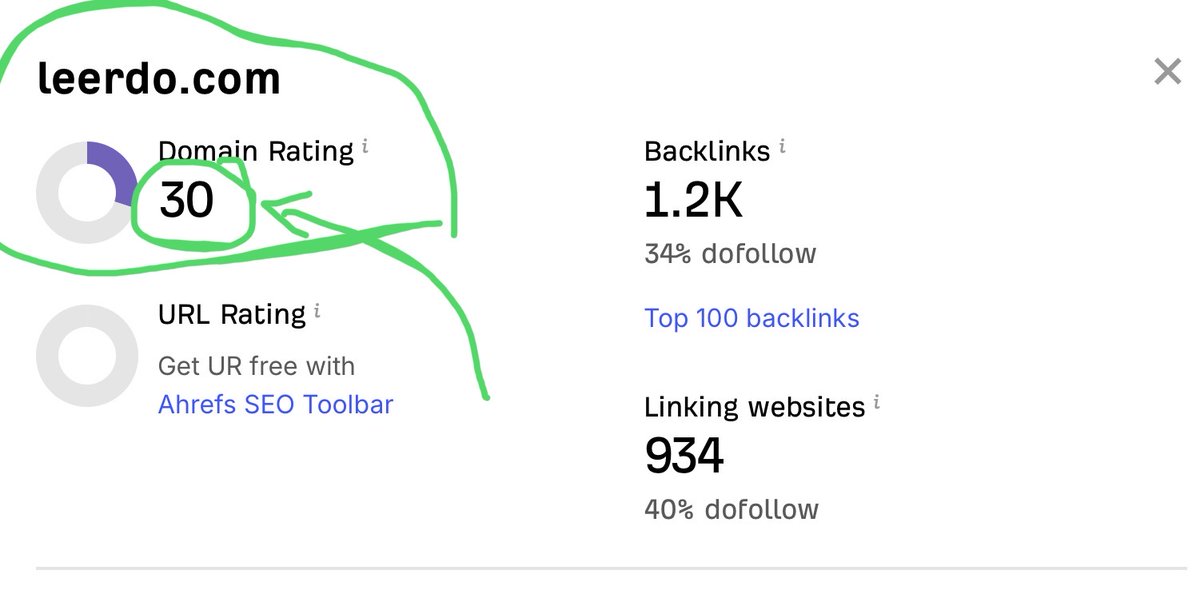
Domain Drop grabbed me a Domain Authority 30 site for $29. I rebuilt it on its original URL structure so the old backlinks still resolve, then pointed it at my other projects.
You only pay if the grab succeeds: https://t.co/v9RFVtRHNx
@alanefuller@gregoryjhickman i put this together, so feel welcome to ask your coding agent to deploy here (it will figure out the instructions):
https://t.co/UbmkXCG3mZ
here’s a sample app i asked my agent to deploy:
https://t.co/kpZ32NQzMd