The Beastie Boys' "White Shadow" is a hardcore track performed during their first television appearance on the Scott & Gary Show, early 80's. Rare footage captures the original four-member lineup.
Bonus points if you can name the drummer and their band that came after.
I'm not gonna lie... When I first saw this, I thought this was a joke.🤯
Then I found out it's actually Nina Hagen.
If you've never heard of her, imagine punk rock, opera, heavy metal, performance art, and then somehow put all of that into one person.
The crazy part is that this wasn't some internet character trying to go viral. Nina Hagen was doing this decades before social media even existed.
Love it or hate it, you definitely won't forget it.
Have you ever seen Nina Hagen before?
❁ Fundada em 2014 na cidade de Copenhague, Dinamarca, a banda de música folk experimental Heilung baseia suas composições em textos e inscrições rúnicas de povos germânicos da Idade do Ferro e da Era Viking.
O grupo ainda aborda divindades germânicas, as valquírias e os jötnar.
If you want a real rabbit hole to go down.....there's a whole series of knights fighting giant snails that no one can explain.
And yes, there are indeed giant shell fossils to match that I think has something to do with it.
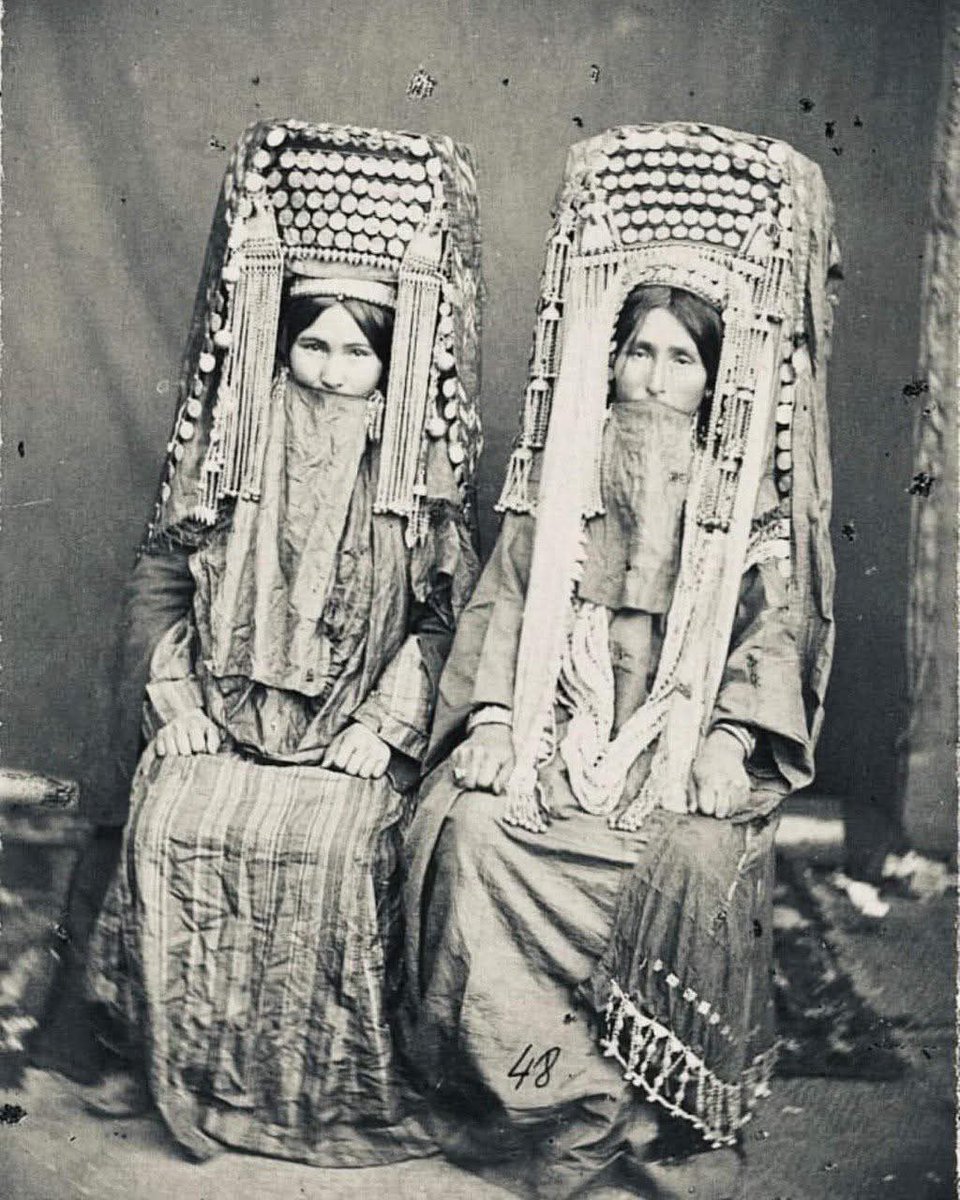
The women in this photograph belong to the Yomut (Yomud) Turkmen—one of the major tribal groups of the Turkmen people—photographed in 1883 near Krasnovodsk, during the final decades of Russian imperial expansion into Central Asia. This was a moment of immense upheaval, when nomadic and semi-nomadic cultures were being documented, regulated, and slowly forced into colonial frameworks that did not reflect their social realities.
Yomut women lived within a pastoral, clan-based society where women’s roles were far more economically and socially significant than many outsiders assumed. They managed households that were also production centers—spinning, weaving, embroidery, felt-making, and textile production were not “domestic hobbies,” but essential economic labor. Yomut carpets, bags, and textiles were traded across vast regions, and women controlled much of this craft knowledge. Their work carried tribal identity, history, and status woven directly into pattern and color.
The clothing in this image is not ornamental excess—it is biography. The towering headdresses (often called gupba or regional variants) and heavy silver adornments signaled marital status, tribal affiliation, family wealth, and protection. Silver was believed to guard against illness and evil spirits, especially for women, whose bodies were seen as powerful and vulnerable thresholds. Coins sewn into garments were both adornment and portable wealth—women literally wore their economic security.
Marriage among the Yomut was negotiated within tribal systems that valued alliances, bridewealth, and fertility, but women were not invisible within these arrangements. Older women, especially mothers-in-law and elder matriarchs, held significant authority inside extended families. Oral tradition, genealogy, and cultural memory were passed primarily through women, making them the custodians of identity in a society without written archives.
This photograph also reflects the colonial gaze. Russian ethnographers often framed Turkmen women as “exotic,” static, or oppressed, freezing them in images meant for imperial catalogs. What the photograph cannot show is movement—women riding horses, managing camps, surviving droughts, war, and forced resettlement. Nor does it show how these women would soon face imposed borders, sedentarization, and the erosion of tribal autonomy under Russian and later Soviet rule.
#drthehistories