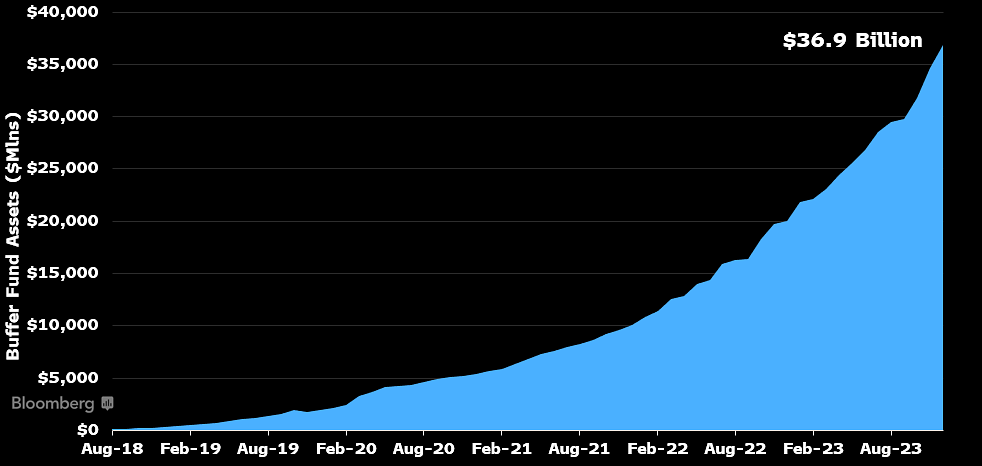
Here's a chart of the asset growth for the most successful new ETF category of recent years (in my opinion). Buffer ETF AUM (aka Defined Outcome ETF assets). For those thinking the #Bitcoin ETF launches were a flop.
R-E-L-A-X
Give it time. Healthy ETF growth looks like this:
Yes, for 2024 I am going to have to turn on the printer and juice the economy to get Biden re-elected, but you all understood that was coming.
I am going to print so much ph*cking money in 2024 that Biden is going to be floating on it to a landslide victory.
Relax about inflation. I have this covered. I promised you a soft landing and so far I have delivered.
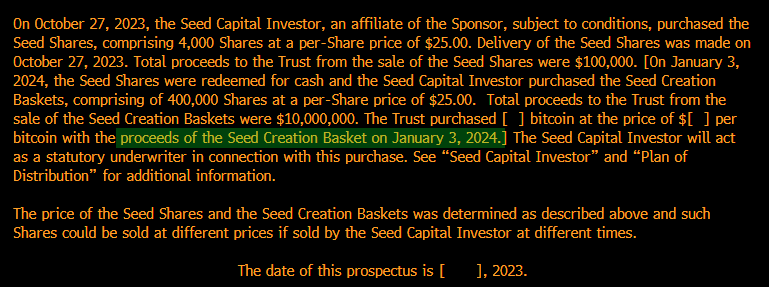
BREAKING‼️ BlackRock is seeding their Bitcoin ETF with $10m in cash on January the 3rd, 2024/
Just days before SEC expected to give approval.
h/t: @JSeyff
The White House has begun making plans for a November meeting in San Francisco between President Biden and Chinese leader Xi Jinping — an attempt to stabilize the relationship between the world’s two most powerful countries, according to officials. https://t.co/oRWbEHDTXI
🚨The Collateral Markets Are Starting to Freeze🚨
Thread 🧵👇
Euro$ Collateral System is flashing red alarms, and it's time to pay attention.
Japanese govt bills are the epicenter, but this issue runs deeper. Brace yourself, because the global collateral system, which is vital for the financial world, is sputtering. Collateral isn't just about USTs;; it's about a complex web of interconnected components.
1/ 🌐 Global Collateral System
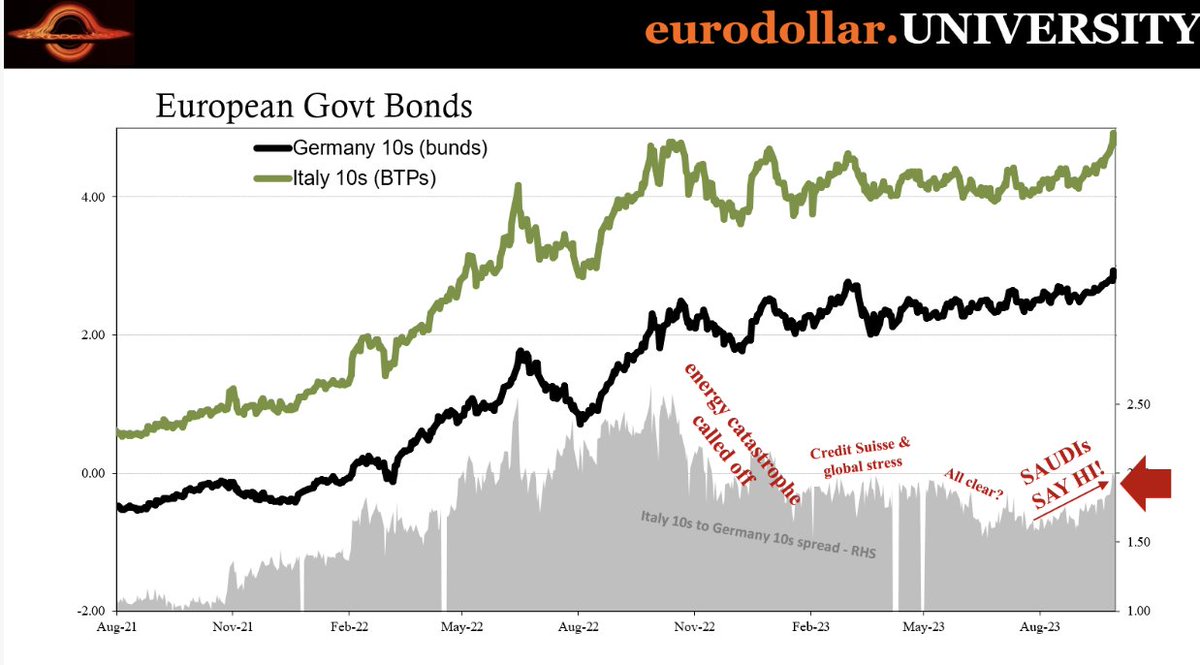
When we think global collateral, thing beyond USTs; it's Japanese bills or Italian BTPs.. All these pieces are woven together in the Euro$ fabric, intermediated by US dealers. Collateral flows matter, and sometimes the trouble begins where least expect.
2/ 🇮🇹 Italian Government Bonds
Italian bonds aren't just any bonds; they are a linchpin of European collateral, making them essential for European Banks. When Italian bonds are no longer seen as 'core' collateral, trouble brews. And guess what? That's what's happening now.
3/ Why Italian Bonds Matter
Italian bonds aren't just 'Italian.' They can be swapped into USTs and used for US$ funding. Plus, European US$ providers, crucial players, are sensitive to euro-denominated collateral. So, Italian bond trouble ripples through the entire global system.
4/ 🇯🇵 Japanese Government Bills
But that's not all. Japanese government bills are just as crucial,, too. Their yields have plummeted over recent weeks, strongly indicating rising collateral stress. When Japanese bills and Italian bonds are on shaky ground, it's time to pay attention.
5/ 💲 US Dollar Swap Spreads
Watch the US$ swap spreads. They've been compressing, a sign that those US dealers are getting nervous about collateral quality. This affects the whole system, from Europe to Japan and beyond.
6/ 🛢️ Wounds Spread
Dollar providers become cautious, collateral gets scrutinized, and it's a recipe for a global dollar shortage. What happens in one part of the Euro$ system doesn't stay there; it too often spreads around the world.
7/ 🌐 Collateral Insufficiency
This isn't just a single issue; it's a chain reaction. Collateral insufficiency, dealers cutting back, and a global dollar shortage loom. Even places like the U.S., with an ample supply of treasury bills, aren't immune.
8/ 🚨 Conclusion
The warning signs are all there: Japanese government bills, Italian bonds, US dollar swap spreads – they're not isolated incidents. It's a systemic problem in the Euro$ Collateral System. Brace for impact, because another storm is brewing.
Want to learn more? Come to our free webinar on October 20th. You can find it here: https://t.co/BElXJJ5vM5
I also did a full video on this subject here: https://t.co/uY32mVdjJJ
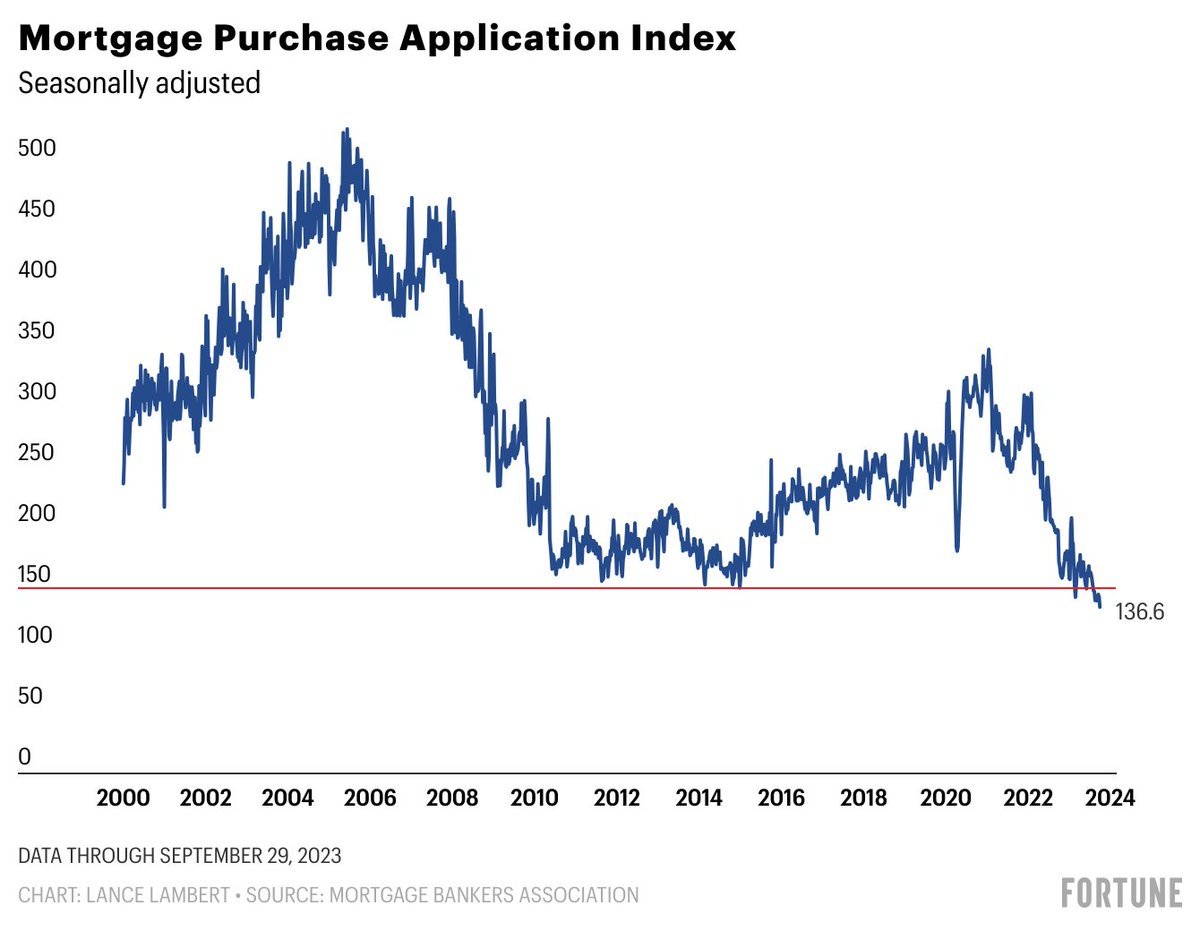
Mortgage demand is now at its lowest since 1995 as rates continues to skyrocket.
The average interest rate on 30-year mortgage just hit its highest since August 2000, at 7.88%.
Mortgage demand is even below the average levels seen in the 2008 crisis, as shown in red below.
Demand in the housing market is coming to a complete halt.
The craziest part?
It doesn't matter because there's no supply.