I feel like a crazy person when I see people say that EU is trying to de-escalate with Russia.
Putin is ramping up his provocations to get a response. He keeps going up up up.
EU is saying we will not respond to provocations until they cross a certain line. But what line? What response does that line call for?
You aren't communicating where the line is, or how close Putin is to the line, or what the response will be.
The further you move the line, the more extreme the response has to be. Is the line killing civilians? If so, how many? 5? 10? 1000? Without a clear threshold, deterrance fails. Instead, you merely make the ultimate response more extreme.
The response for killing 2 people is going to be a lot less than for killing 20,000. Where is the line?
This is not de-escalation. It is escalation. You are ramping up the response curve. Instead of having small responses to small events and medium responses to medium events, you're setting up a situation where you have no response until something huge happens and then you have a single enormous response.
This isn't how you avoid war, this is how you make war inevitable. You are banking on Putin himself deciding not to cross the line you aren't communicating to him, knowing full well it is in his nature to push until he hits resistance. Strategic ambiguity only works if the adversary believes crossing an unknown line carries immediate peril. But here, ambiguity is being used to cover for inaction, which Putin instinctively feels compelled to probe.
A new ECFR study by @KadriLiik and @j_kobzova offers a rare glimpse into how Russians see their country and the war, whom they consider friends and enemies, and how they perceive Europe, the United States or China.
https://t.co/eMC5aNGOrx
These incursions are sharply escalating in frequency, quantity and type of aerial threat. Russia will continue to prod Europe because they feel they can get away with it, especially as Moldova is not a NATO member.
This is a real problem.
Putin claimed Russian frontline gains in September 2026 so far from reality as to resemble hallucinations. Putin claimed that Russian forces seized 1,301 square kilometers of territory in Ukraine in September 2026 alone — 2.5 times more than the claimed Russian gains in previous months. ISW has observed evidence to assess that Russian forces suffered a net loss of 80.81 square kilometers in September 2026. Russian forces suffered a net loss of 175.18 square kilometers in September 2026 even when accounting for Russian infiltrations into areas over which Russian forces have not gained control. Putin’s absurd claims continue to present a fictional battlefield reality that supports the Kremlin’s cognitive warfare effort to falsely portray Russian advances as sweeping across the battlefield.
ISW cannot assess whether Putin knows that the figures he is presenting are false or if he is accepting fictional frontline data presented to him as the result of the culture of lying that is deeply ingrained in the Russian military command structure.
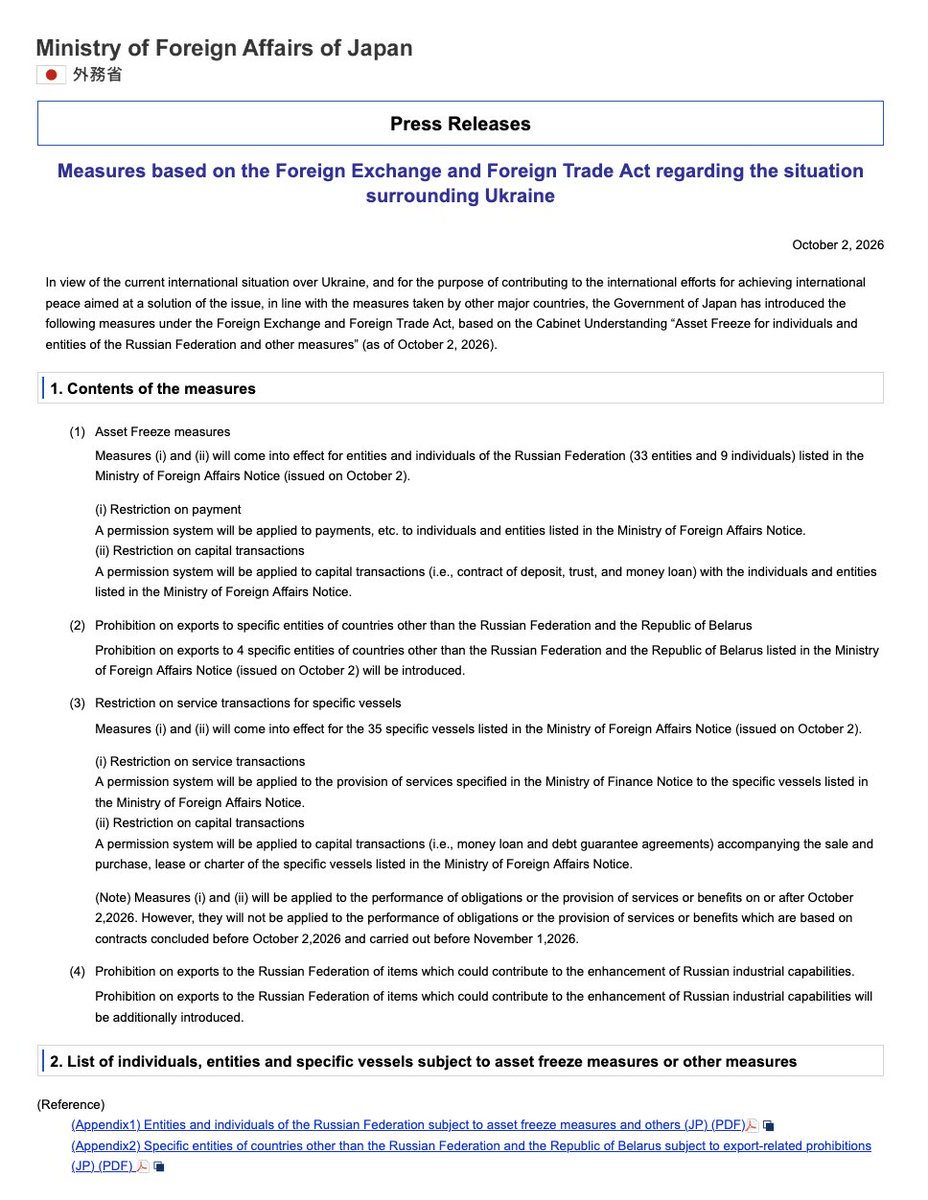
NEW!! Japan is rolling out new Russia sanctions targeting its military-industrial base, sanctions evasion and the 'shadow fleet.'
The package freezes assets of 33 Russian entities and 9 individuals, restricts services for 35 vessels and adds export curbs.
👇
I haven’t seen the plan described in this article (although I want to) but I feel confident about its content and what’s next. Russian strategy has discussed for 10+ years what we are seeing now as strikes. A 🧵 on the calculated cruelty in the strategy:
https://t.co/5Qn5v1AXTp
The cruelty is the point. The fear and suffering of civilians is a desired operational outcome — the “secondary factor”, cloaked in the frigid language of Russian military strategy as “military economic potential or “critical infrastructure” target planning for 10+ years. /end
Wir lassen uns nicht von Russlands hybriden Angriffen beeindrucken. Russland will uns verunsichern, unsere Gesellschaft spalten und unser Land schwächen. Wir sind vorbereitet. Als NATO antworten wir schnell und klar. Wir lassen in der Unterstützung der Ukraine nicht nach.
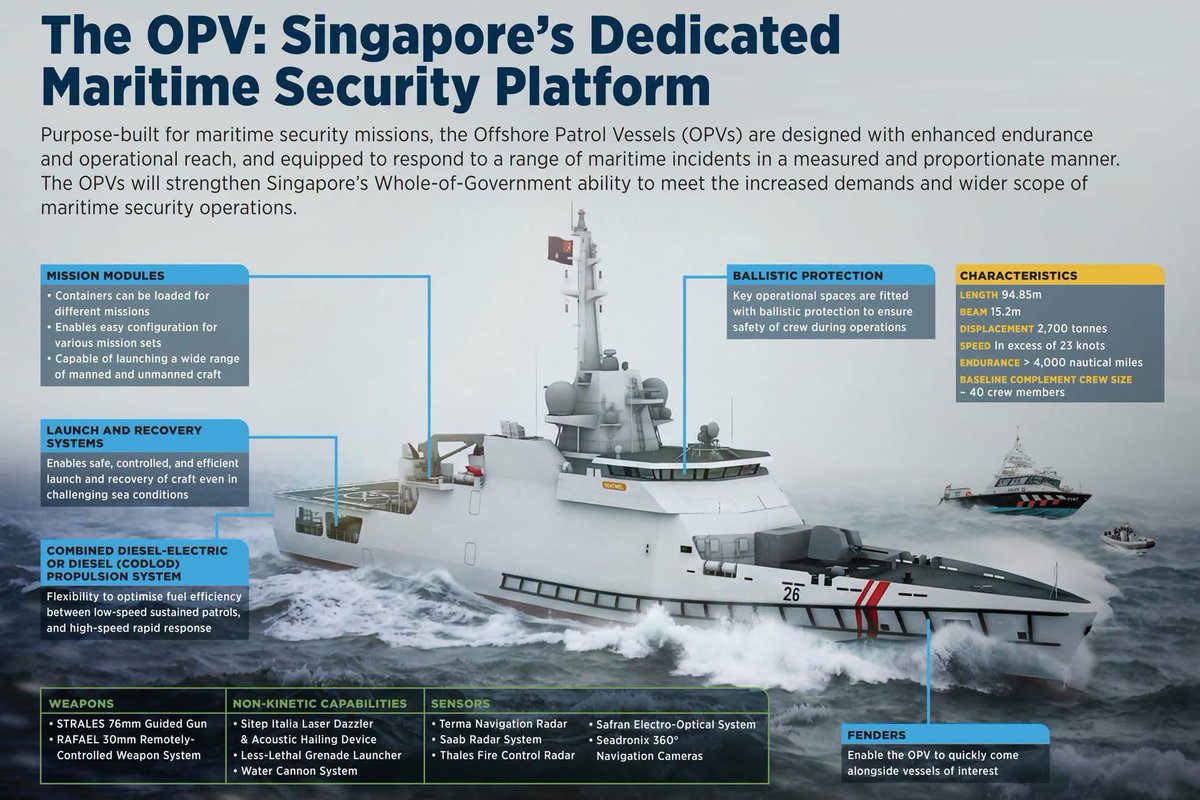
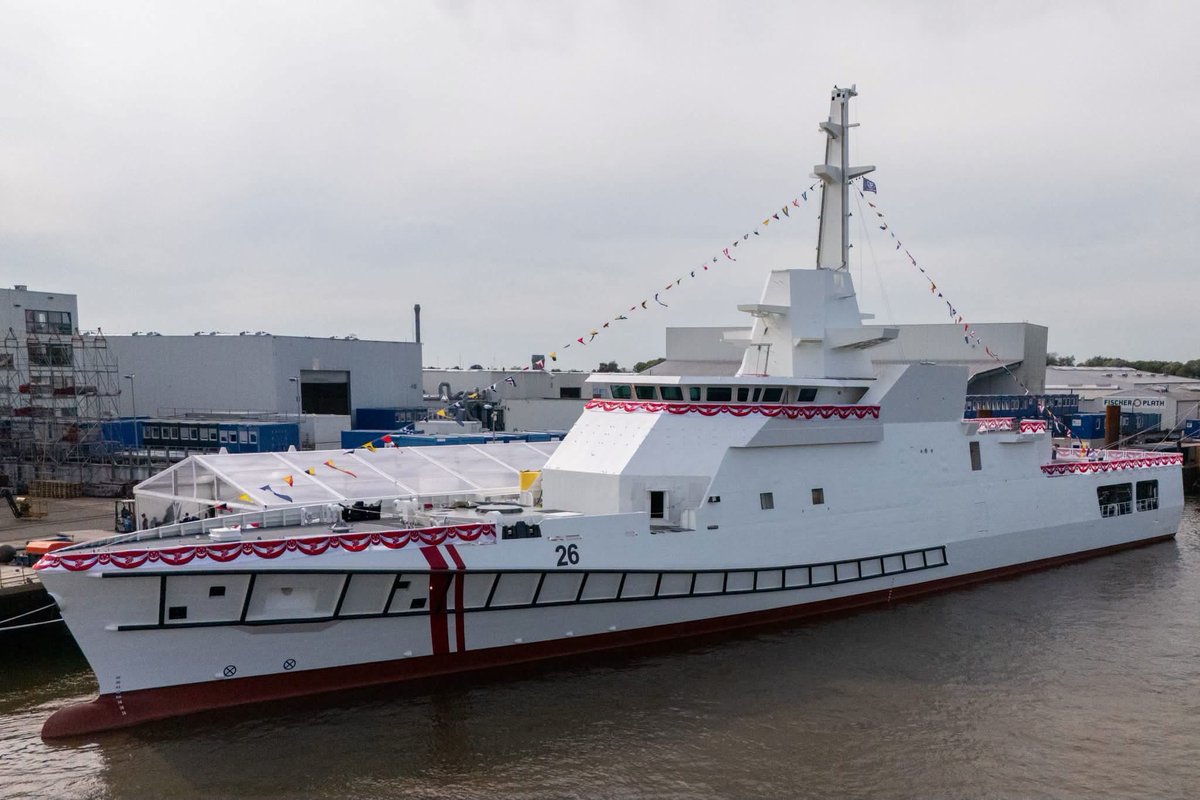
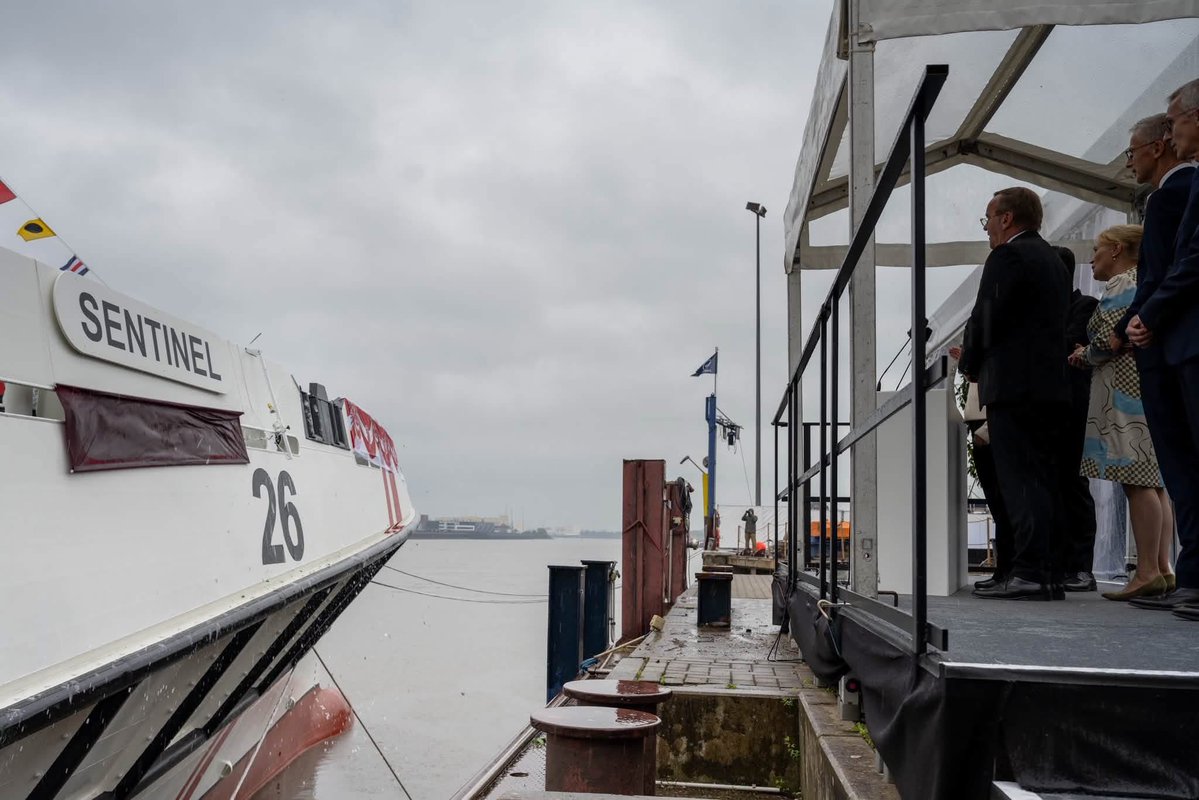
Fassmer, not Fassler (it's the name of a food company). And btw, even a warship armed with basic iron-sight machine guns can counter unmanned threats so the title is, well... Straits Times seriously needs up brush up on editorial finesse. https://t.co/Z2OcF4dm1P
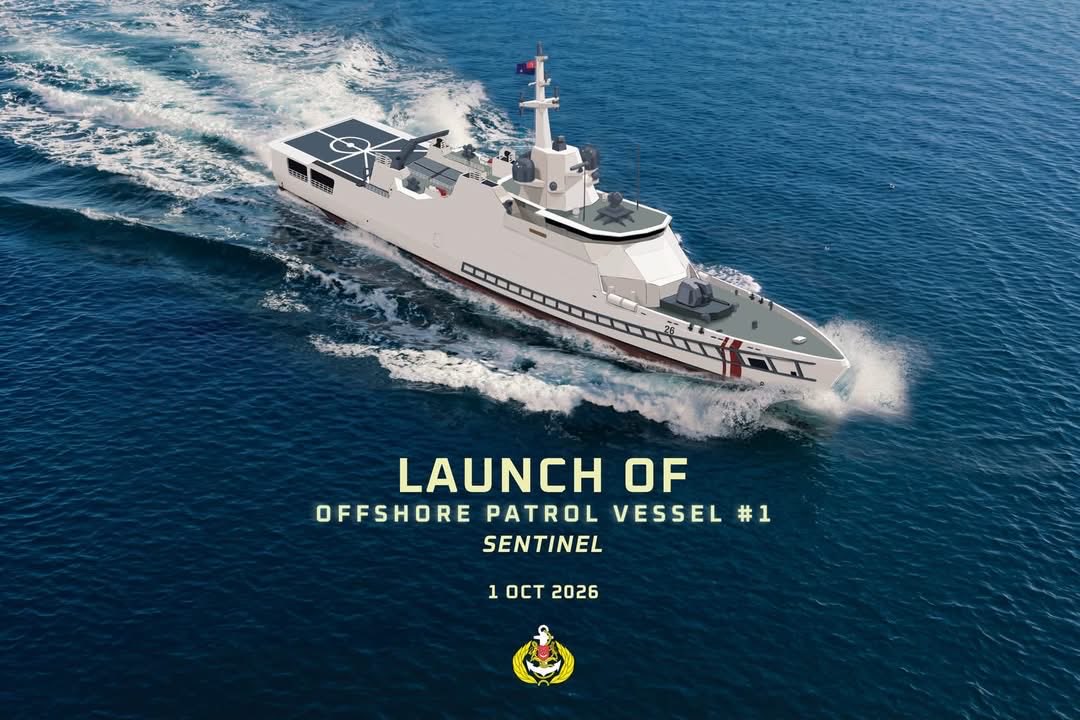
Republic of Singapore Navy launches the first of latest Sentinel-class offshore patrol vessels, based on Germany’s Potsdam-class that serves the Bundespolizei. The OPV is uniquely white instead of grey hull, bears no RSS prefix. https://t.co/Qe6F28szV2
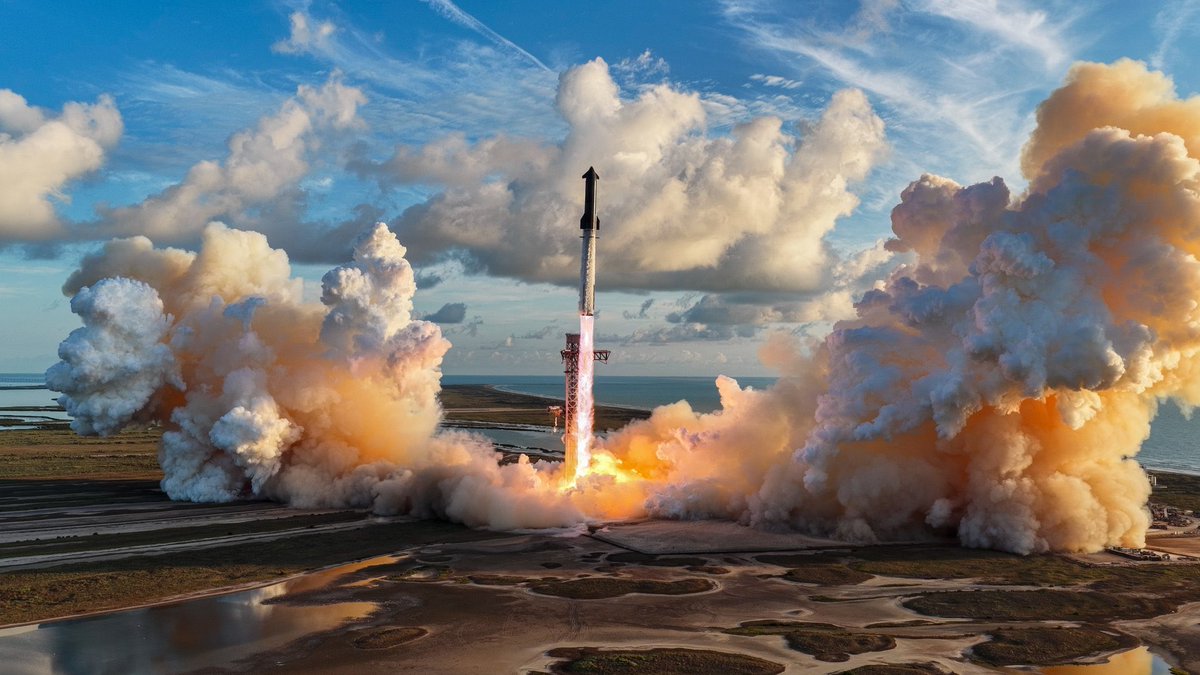
I find it funny that some people got hung up on Starship not having gone orbital before Flight 14 when in the grand scheme of things it was completely arbitrary in terms of performance. The 19ish second burn only added about 91 m/s of velocity (a 1.2% increase in velocity)
This capability has been physically capable since Flight 6 which demonstrated a single Raptor relight in space. Heck, Flight 13’s burn was about 14 seconds, but intentionally oriented to primarily do a plane change instead of a prograde insertion burn for continued safety.
Any of the relights COULD have done the orbital insertion burn, the duration was not of any special technical capability. The reason Starship didn’t go orbital until Flight 14 is probably what we should applaud them for the most… SAFETY.
Their methodical approach to getting good data and going one step at a time while hucking the single most massive object ever put into space proves they weren’t just doing things haphazardly, despite the occasional narrative from the outside.
While it’s easy to compare Starship to vehicles like SLS or Vulcan or New Glenn, the reality is the focus hasn’t been on orbit, it’s been all on the “downhill” side of that. Safe and targeted de-orbit, clean reentry, targeted and soft splashdown. That’s the part that has (almost) never been done before.
And here I do have to add a little Space Shuttle admiration for figuring out a lot of these things on its first flight in 1981 (although it came a bit close to not being successful). Pretty amazing there was a vehicle of similar scale capable of such precise deorbit and reentry that it landed on a runway with no go-around capabilities. Crazy.
But Starship is well on a path to absolutely leap-frog the Space Shuttle in terms of performance (already over double and someday 6 fold) and hopefully in terms of full and rapid reuse. I hope we see the latter part speed up even more now that orbit has been demonstrated.
Exciting times ahead!!! Keep going @spacex@elonmusk
Appreciate the heads up! Turns out some of our Starbase footage was licensed years ago by our agent under a working title. I had no involvement in that deal and no knowledge it was being used this way until today.
I’m proud of those moments at Starbase. Those conversations and tours captured some of the best of Elon, his work, and the SpaceX team. Seeing that footage used to spin a negative narrative is frustrating and disappointing.
We license footage to documentaries and news outlets and don’t get veto power over their editorial spin. I don’t like seeing it used this way, and I would not have agreed to it if I’d known the project or its intent.
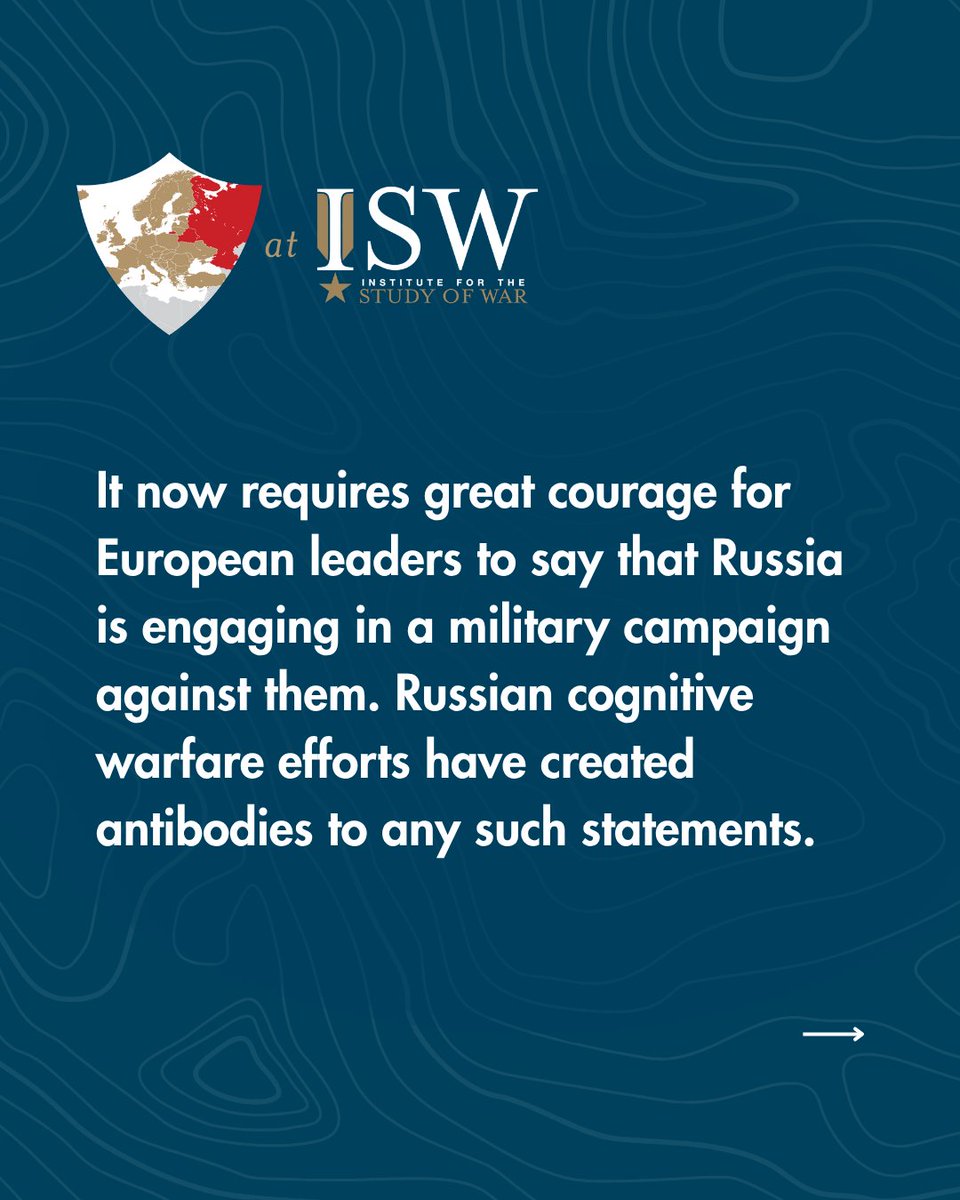
MORE: The Kremlin seeks to provide Russia-amenable European officials and political parties with opportunities and arguments with which to criticize and impede NATO efforts to defend against Russia.
The difficulty European governments face in acknowledging that Russia is operating within a war framework and pursuing actual military lines of effort against and within European states is proof of the success of Russian cognitive warfare efforts.
European leaders who call Russian actions what they are are called warmongers, accused of scaremongering to distract from domestic failures, blamed for “provoking” Russia, or charged with trying to go to war with Russia.
European political parties and populations must understand the degree to which they have been conditioned by extensive Russian efforts to avoid calling Russian actions what they are — parts of a military campaign intended to achieve discrete effects.
The "Russia is not my enemy" was a great campaign in terms of research. By scraping all these posts, analyzing their followers, and turning it into a visualization, we now have a very good and clear image of the pro-Kremlin network operating on this platform.
It has been confirmed that the arson attack on an Estonian defence company was ordered by russia.
russia’s acts of sabotage across Europe are intended to undermine support for Ukraine and fuel fears of escalation. They demonstrate russia's desperation.
Our response is precisely the opposite of what russia seeks to achieve: more pressure on russia, stronger support for Ukraine.
russia will not intimidate us or alter our policy.
Putin does not need to announce a new mobilisation - Russia is already sustaining one quietly, through financial incentives and pressure on its poorest regions. The question is how long this can continue before its human cost becomes politically unavoidable. The latest #RUSICommentary by Zoe Neiman argues Russia's manpower problem 'is as political as it is demographic,' and warns the political consequences 'may become increasingly difficult to contain'.
https://t.co/DiGgwUTJaK
America’s Hormuz Success Has Yet to Become a Strategic Victory
The fact that Iran is losing some of its ability to control and disrupt the Strait of Hormuz does not mean that the United States has established full control over the waterway.
Ultimately, oil is a physical commodity: either enough of it reaches the global market or it does not. The fact that oil prices remain so high suggests that Washington’s significant operational achievements in the Strait have not yet translated into the strategic and economic outcome it needs.
There are simply too many additional variables. Insurance premiums remain extremely high, tanker availability is constrained, commercial shipping continues to face substantial risks, and maintaining the American military presence required to keep significant volumes of oil moving through the Strait comes at an enormous financial and operational cost.
This raises an equally important question of sustainability. The United States may be able to maintain this level of military protection today, but for how long, and at what cost? That question becomes even more important as Tehran once again intensifies its efforts to disrupt traffic through the Strait.
So there should be no minimizing the American operational achievement. Iran’s strategy in Hormuz has been significantly weakened, and Tehran’s ability to use the Strait as leverage has clearly been challenged. But operational success should not be confused with strategic victory.
The real test is whether Washington can turn its military advantage into a durable situation in which oil flows normally, insurance and transportation costs decline, the extraordinary U.S. military deployment can be reduced, and Iran effectively loses Hormuz as a tool of strategic coercion. We are not there yet.
For now, neither side has full control of the Strait. Iran’s leverage has been substantially weakened, but Washington has not eliminated it. And a strategy that depends indefinitely on an extraordinarily expensive American military presence in the Gulf is not, by itself, a sustainable long-term solution.
#iran