I am SO excited to announce that I have finally opened a microbiology jewellery shop! If you've ever seen me at conferences and liked my earrings, please check it out! ☺️🧬
https://t.co/8MLcLEkyXo
Amazing new deep-sea squid footage from the central Pacific. Deep-sea hooked squid Taningia danae with the huge bioluminescent photophores. 1000m deep, grabs lander during 58 m/min free fall
@HeatherMarGeo@deepseauwa#inkfishexplore
Now we have @QUADRATdtp PGR
@AC110598 who presents his project titled - Functional ‘omics for assessing resilience to environmental stress in the intertidal beadlet anemone Actinia equina #SBSResearchDay2023
Time for another @QUADRATdtp PGR, @roaming_sparrow presents on 'Harnessing next generation diagnostic technologies for environmental DNA-based bio surveillance, wildlife forensics & conservation biology' #SBSResearchDay2023
Here’s a recently published workflow for high-quality @nanopore metagenomic sequencing using Bento Lab and other portable equipment, for use outside the laboratory, taking less than three hrs for DNA extraction and library preparation.
The authors (Bloemen et al., 2023) developed the method to detect antimicrobial-resistant genes using chicken fecal samples as a test case, but they believe it could be applicable to other complex sample types.
Their final optimal portable on-site method involved:
⭐Cell lysis using the battery-powered Omnilyser X beat-beater
⭐Zymo Quick-DNA HMW magbead DNA purification
⭐AMPure XP bead purification with 0.4 bead/sample ratio
⭐Nanopore sequencing library preparation using Oxford Nanopore VolTRAX
⭐Bento Lab Pro for all heating and centrifugation steps
⭐Oxford Nanopore sequencing
Their method returned comparable amounts of high-purity DNA compared to their laboratory-based method involving enzymatic lysis and Quick-DNA HMW magbead extraction, albeit with shorter fragment sizes (27 kbp vs 58 kbp).
The authors also used a defined mock bacterial community to spike some of their samples. This allowed them to determine the effectiveness of different extraction steps (for example enzymatic vs beat-beating), and to identify the strengths and weaknesses of the different DNA extraction treatments.
Overall, the final optimal portable method above gave the best balance of extraction effectiveness, taxonomic representation, antimicrobial resistance gene detection, and extraction speed, compared to the other methods tried — including a current optimal laboratory-based DNA extraction and purification method!
One interesting tweak was reducing the Omnilyser X bead-beater battery voltage from 6 V to 1.5 V. This resulted in a much gentler beat-beating action that effectively doubled the fragment length of extracted DNA, but at the cost of a near-50% drop in DNA yield.
So if you’re looking for a portable, rapid, metagenomic sequencing workflow for pathogen surveillance or antimicrobial resistance gene detection, this method could be worth a read.
You can find the article here:
Bloemen et al. (2023). Development of a portable on-site applicable metagenomic data generation workflow for enhanced pathogen and antimicrobial resistance surveillance. Scientific Reports, 13(1), 19656.
https://t.co/7WitWIoEAj
And you can also find a lovely illustration of Bento Lab Pro in the article workflow overview! 😀
https://t.co/vgwEYKNqyy
Here's an impressive advance in eDNA surveillance of terrestrial animals: using paw prints in snow to identify, sex, and characterise polar bear individuals!
Previous eDNA studies of prints in snow have looked at mitochondrial DNA, which is abundant in cells and generally allows identification to species level.
This study, by Von Duyke et al. (2023), took the method a step further to try to also isolate nuclear DNA. This would allow them to genotype individuals using microsatellite loci, and to determine the sex of individuals using an amelogenin gene sex ID assay.
After sampling 15 snow paw prints, followed by DNA extraction and three different PCR assays (species, genotyping, and sex), they were able to identify one female and five different male polar bears.
This is quite a remarkable result considering the scarcity of DNA from a snow paw print and the novelty of these methods in this particular application!
The authors say that this method of detecting eDNA has the potential to greatly inform polar bear conservation and management if prints in snow could be sampled in sufficient numbers.
It would be particularly useful to provide information on male bears and younger bears, since neither are suitable for collar tracking.
And it could also be applied to other species occupying the same or similar snow-covered habitats.
Its importance for conservation is likely to increase in the near future with the ongoing decline of sea ice.
Here's the article:
Von Duyke et al. (2023). Determination of polar bear (Ursus maritimus) individual genotype and sex based on DNA extracted from paw-prints in snow. Frontiers in Conservation Science, 4, 1166279.
https://t.co/nDImSV3y1P
Here's a very useful diagram of recommended DNA barcoding processes, featured in a recent study of the problems in invertebrate DNA barcoding.
Has anyone seen a better one? If you have, please let us know!
The blue lines indicate a basic DNA barcoding process, while the orange lines indicate quality/ID check processes.
I think the BLAST step could be improved by changing it to "BLAST + phylogenetic analysis", and the Specimen Collection should emphasise the importance of a clear specimen code system, but those are tiny quibbles.
The diagram, and detailed discussions about problems faced in insect DNA barcoding, can be found in:
Cheng et al. (2023). The devil is in the details: Problems in DNA barcoding practices indicated by systematic evaluation of insect barcodes. Frontiers in Ecology and Evolution, 11, 1149839.
https://t.co/YSJDGIkpTs
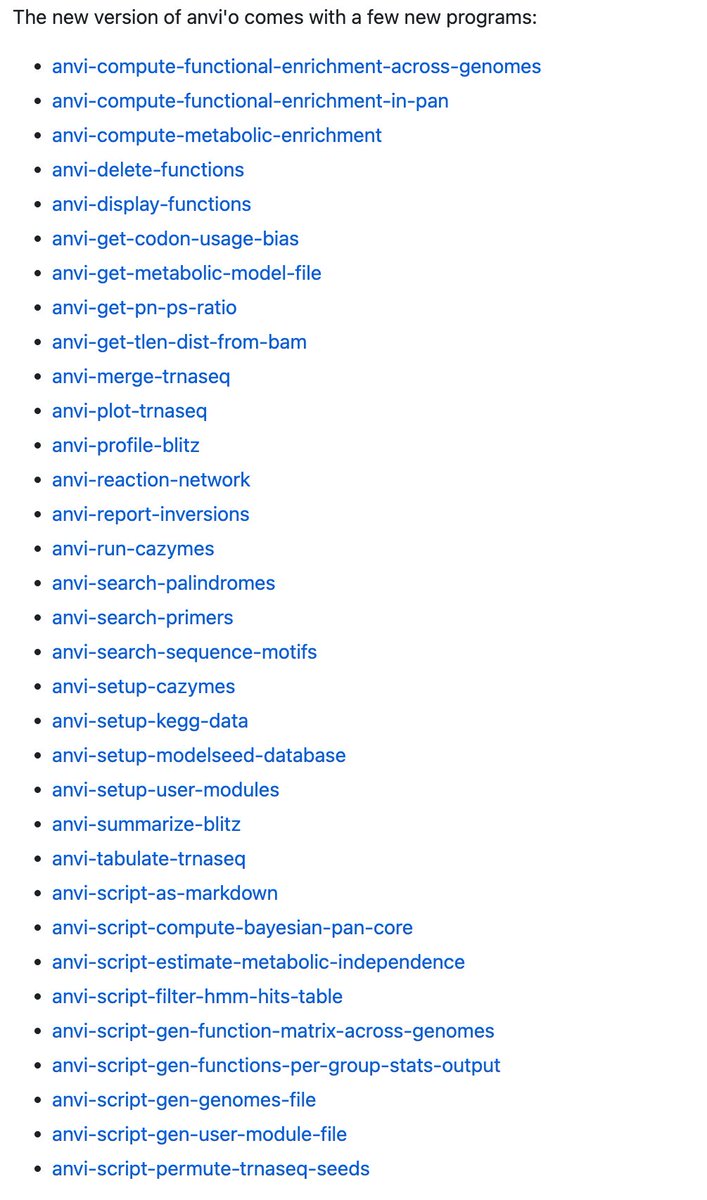
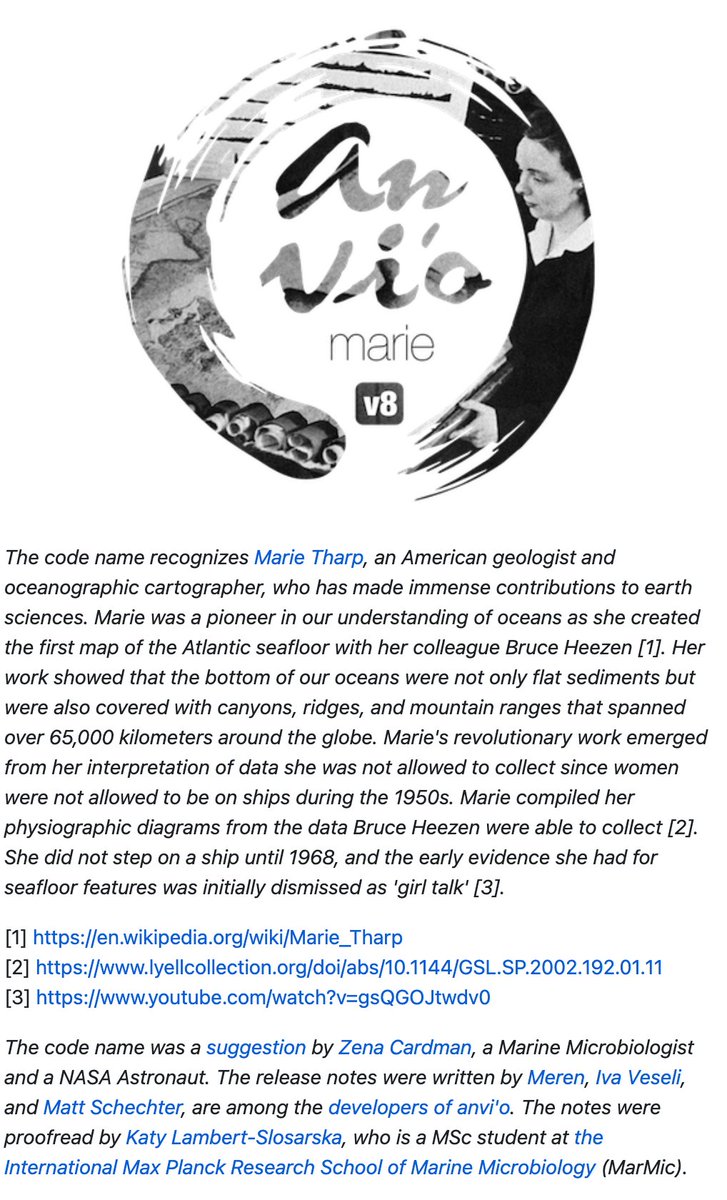
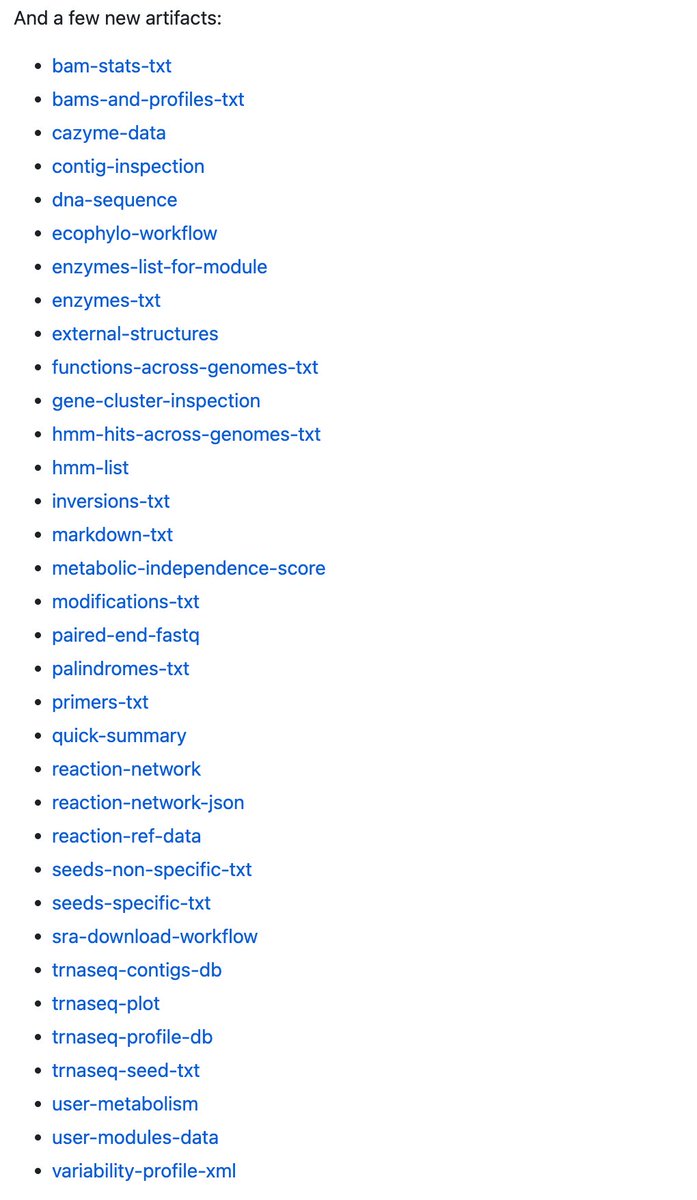
🚨 #anvio v8 (marie) is out 🚨
This version includes new toys for integrated studies of microbial metabolism, genomic inversions, & phylogeography of proteins among many fixes and improvements.
Release notes:
https://t.co/gp1uha3gc9
Installation page:
https://t.co/qPjGh4LVrd
For anyone interested in field DNA sequencing with Bento Lab and Oxford @nanopore MinION, this excellent and extremely detailed review of in-situ sequencing with portable equipment is a very good place to start:
Pomerantz et al. (2022). Rapid in situ identification of biological specimens via DNA amplicon sequencing using miniaturized laboratory equipment. Nature Protocols, 17(6), 1415-1443.
https://t.co/YQlLXm4wqA
And if you want even more insights into the possibilities and practicalities of Bento Lab and MinION field sequencing workflows, check out our Stories pages to find out what leading researchers have been doing with portable field labs around the world:
https://t.co/4P1YBlFf7k
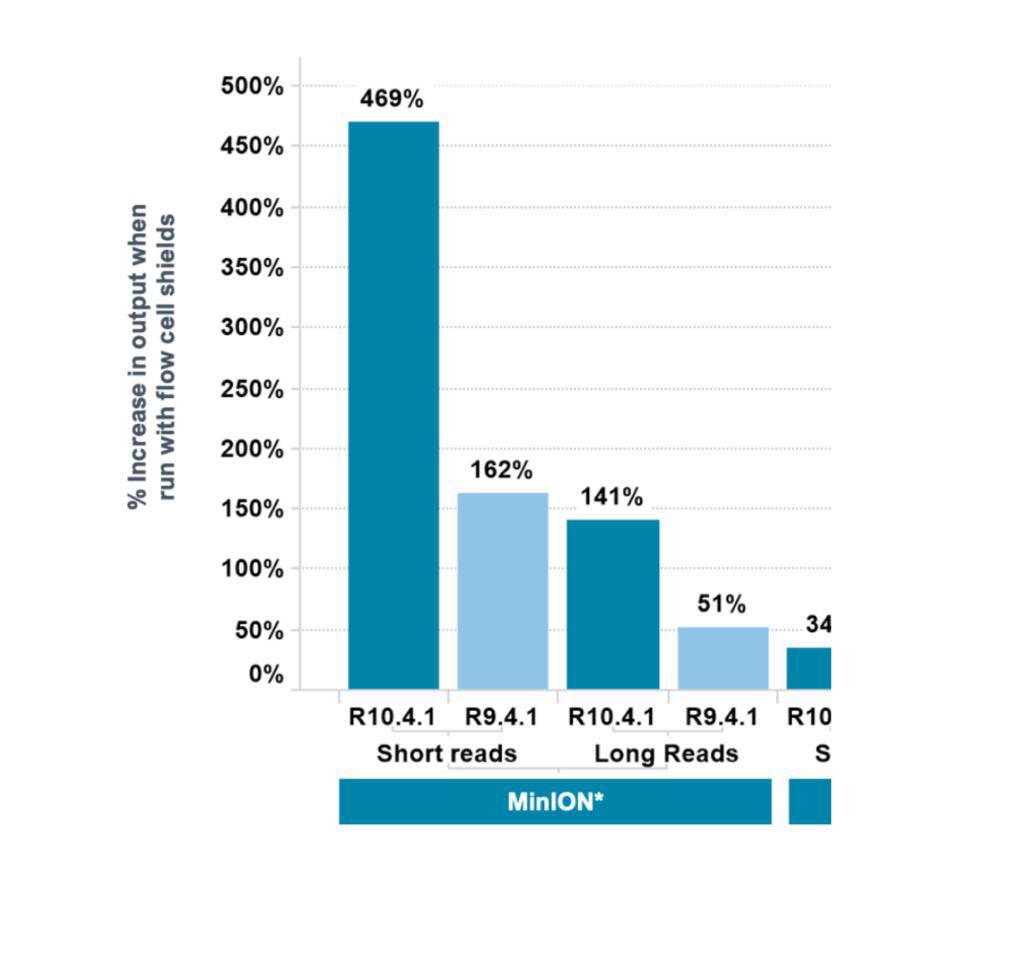
So @nanopore discovered something a few days ago - and it has to do with light. And they posted this image (sorry, too good not to share off the community). Yes, that’s 469% increased output. So, we decided to give it a shot and …
So @nanopore discovered something a few days ago - and it has to do with light. And they posted this image (sorry, too good not to share off the community). Yes, that’s 469% increased output. So, we decided to give it a shot and …