Keep wildlife moving when roads are upgraded.
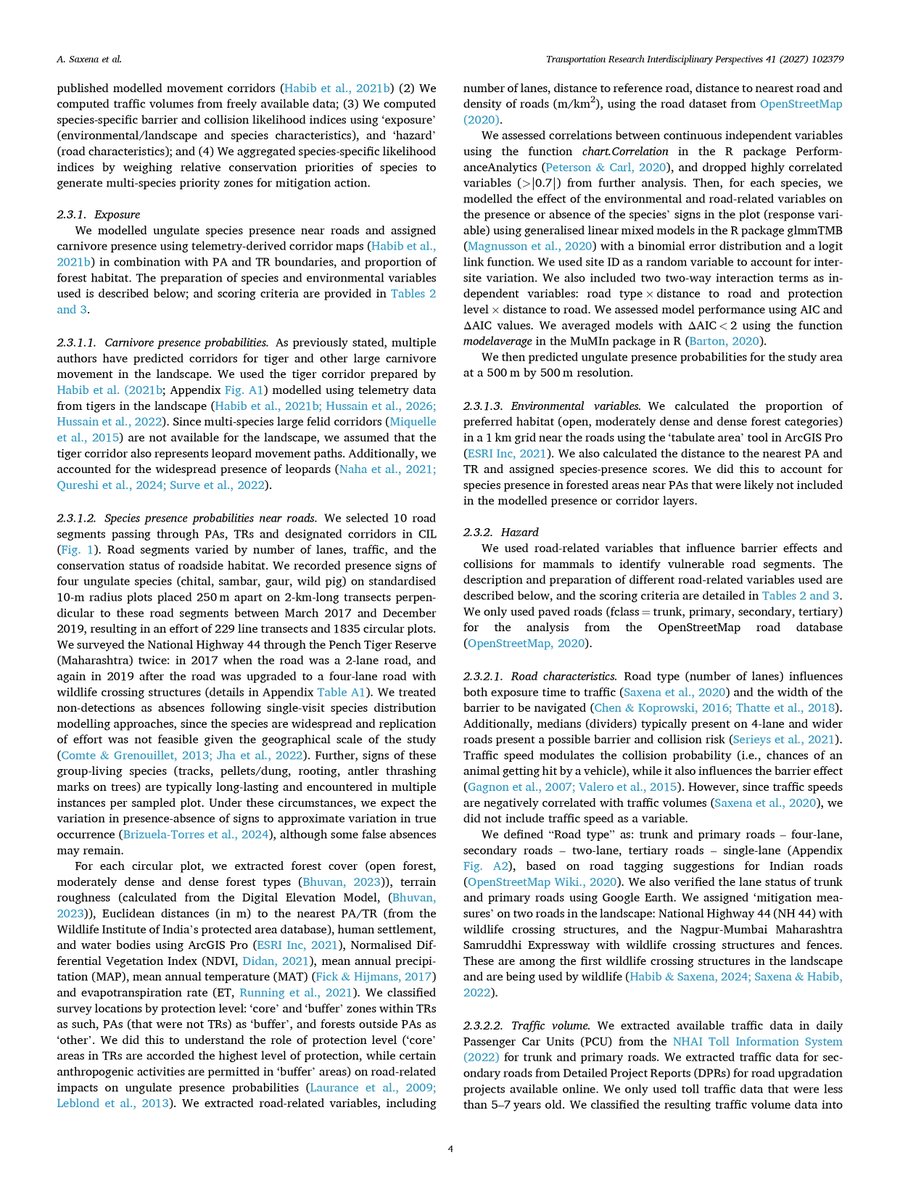
Our study assessed risks to six mammals across a road network in central India. Moderate to high collision risk affected 30.1% of the network, while 29.6% posed a moderate to high risk of restricting wildlife movement.
Using habitat and road characteristics, our framework pinpoints where single- and two-lane road upgrades should prioritise mitigation, even where movement and roadkill data are scarce.
@moefcc@ntca_india@IBCA_official@NHAI_Official@GobindsagarBha1@rameshpandeyifs@akadarj@wildwithwolves@bhlab_india https://t.co/5xEftHkuwn
Where should road upgrades prioritise wildlife mitigation? Our new study presents a rule-based framework that combines habitat and road characteristics to identify priority stretches, even where wildlife movement and roadkill data are limited. Across the central Indian road network assessed for six mammals, 30.1% showed moderate to high collision risk and 29.6% showed moderate to high risk of impeding wildlife movement. The findings highlight the need to include wildlife mitigation when upgrading single- and two-lane roads.
@moefcc@ntca_india@IBCA_official@NHAI_Official@GobindsagarBha1@rameshpandeyifs@akadarj@wildwithwolves@bhlab_india
Lamba et al. Identified 9 species whose protection could safeguard carbon and biodiversity in India. Our analysis in Conservation Letters asks who’s left out: 51 of 304 threatened terrestrial vertebrates fall below the 10% habitat-overlap threshold. https://t.co/1vUEzl6qlN
Can nine species guide conservation for India’s wildlife—and who might be missed?
Our correspondence, “Making climate-aligned anchor species more representative,” is now published in Conservation Letters. We found that many threatened species, especially birds and reptiles, may miss out on the benefits of the proposed plan.
Protecting a few species can help many. A strong national strategy must also account for the species those efforts may overlook.
#Conservation #Biodiversity #India #Wildlife #ClimateAction @moefcc@ntca_india@IBCA_official@rameshpandeyifs@GobindsagarBha1@SPYadavIFS@vrtiwari1@ConLetters@MongabayIndia@bhlab_india@wildwithwolves
A thousands of Amur falcons have started on their incredible 6 days migration across India and over the Arabian Sea to reach Somalia. Two of the our satellite tagged falcons; Apapang and Alang are now undertaking their migratory journey to Africa from Manipur. They have been flying nonstop for over 50 hours and have covered close to 3000 km. They will continue to fly nonstop covering 2500 km over the Arabian Sea.
Via: @sureshwii
KOMG 3, a two-and-a-half-year-old female cheetah from Botswana, gave birth to four healthy cubs in the wild today.
Notably, she is the first female cheetah from Botswana to give birth. This is a landmark moment for Project Cheetah and a proud milestone in India’s journey towards restoring a viable cheetah population.
Having spent more than four months in the wild, KOMG 3 has now given birth under natural conditions. This is the second recorded birth in the wild since the reintroduction programme began in 2022.
With these four new arrivals, India's cheetah population has risen to 62, including 43 Indian-born individuals.
Every such birth strengthens our hope, deepens our commitment and reminds us that conservation is a journey of patience, perseverance and collective effort.
Behind this milestone lie countless hours of dedication, commitment and hard work by the managers, veterinarians, frontline forest staff and everyone working tirelessly for the success of Project Cheetah.
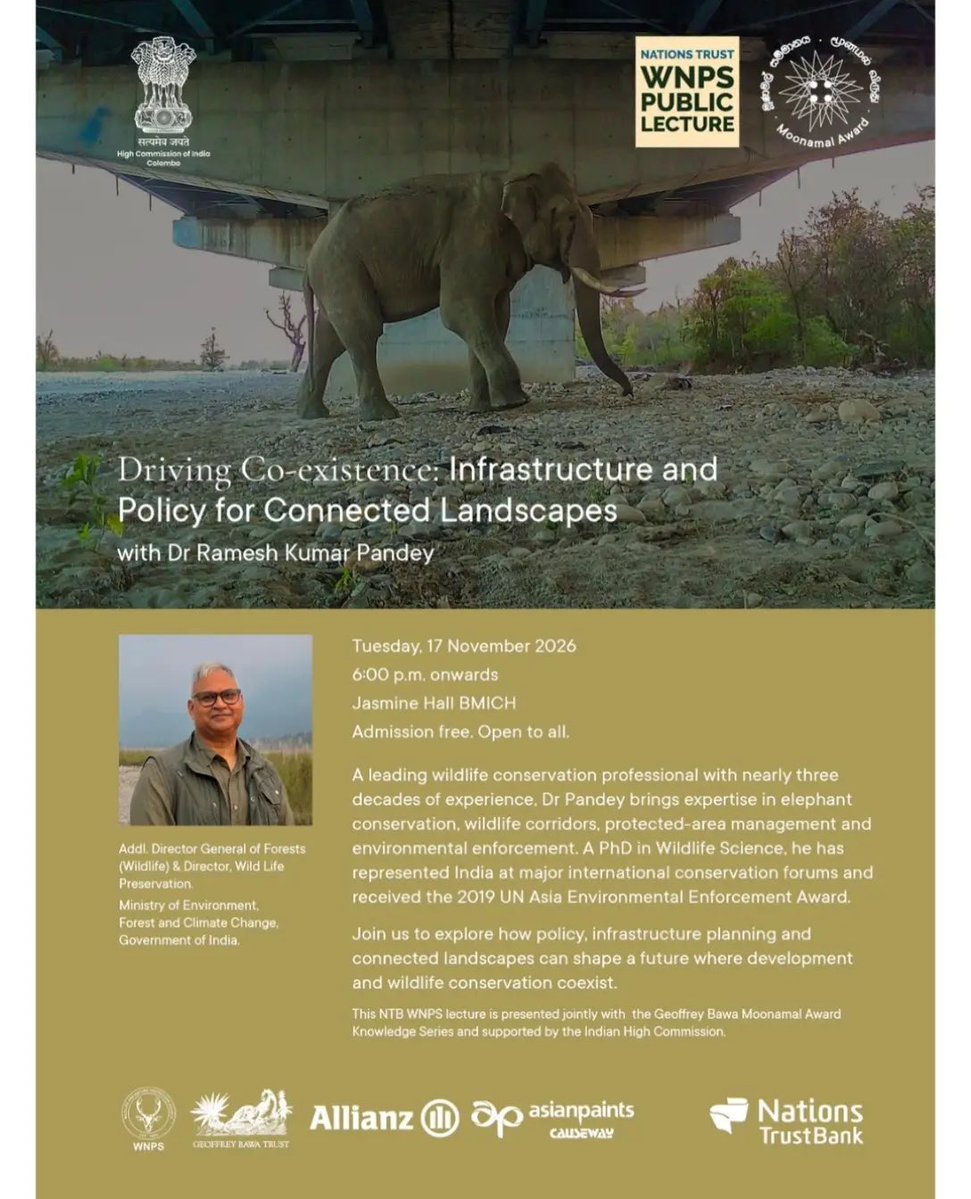
Geoffrey Bawa Trust-Moonmal Award, WNPS and High Commission of India at Colombo organised a talk on ‘Driving Co-existence’ to highlight the success of mitigation measures taken in India while constructing linear infrastructures in last more than a decade and to underline the need of nature friendly designs and practices for sustainable development.
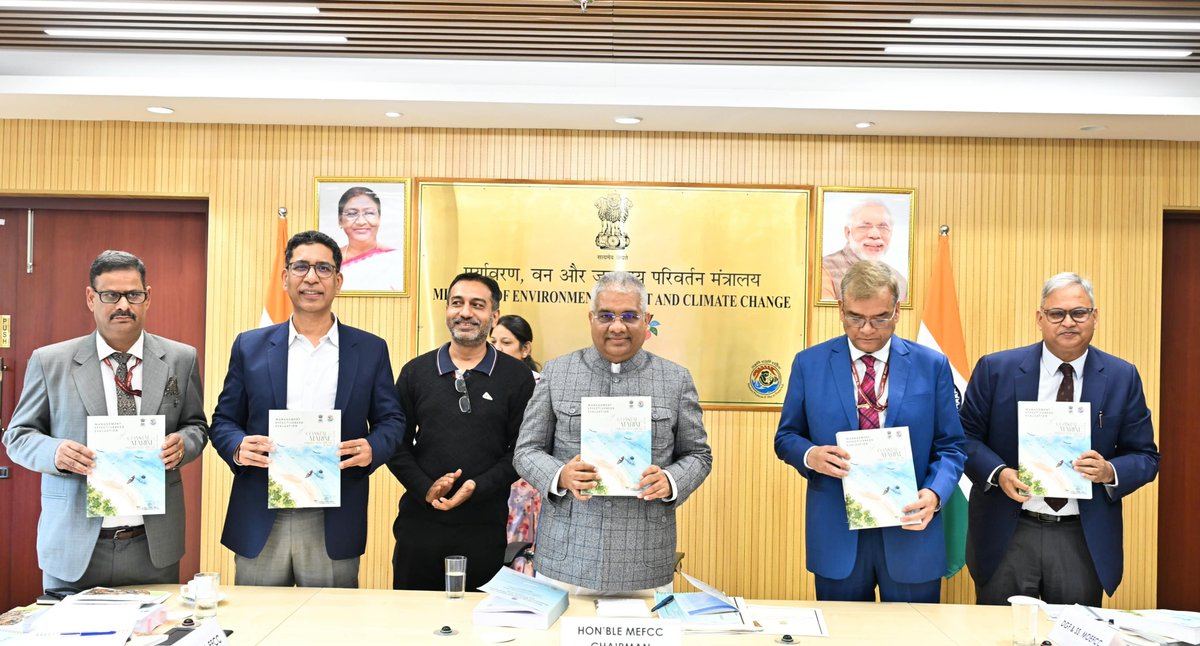
The Wildlife Institute of India hosted a Stakeholder Planning Meeting under the GoI–UNDP–GEF-7 project on small wild cats and leopard conservation on 6 November 2026 at WII, Dehradun, bringing together representatives from MoEFCC, UNDP, GTF, and State Forest Departments.
#StakeholderMeeting #UNDP #GTF #WII
@moefcc@wii_india@GobindsagarBha1@badola_ruchi@UNDP@UNDP_India@wildwithwolves
The meeting reviewed project progress and State Annual Work Plans, with discussions on species monitoring, habitat restoration, capacity building and human–wildlife conflict mitigation. The deliberations helped identify key priorities and activities for the next phase of implementation.
#StakeholderMeeting #UNDP #GTF #WII
@moefcc@wii_india@GobindsagarBha1@badola_ruchi@UNDP@UNDP_India@wildwithwolves
Two Technical Working Documents were released at WII, Dehradun, under the GoI–UNDP–GEF-7 project, focusing on habitat assessment, conservation, restoration and management priorities for fishing cats in Dudhwa and clouded leopards in the Pakke–Eaglenest landscape.
#StakeholderMeeting #UNDP #GTF #WII
@moefcc@wii_india@GobindsagarBha1@badola_ruchi@UNDP@UNDP_India@wildwithwolves
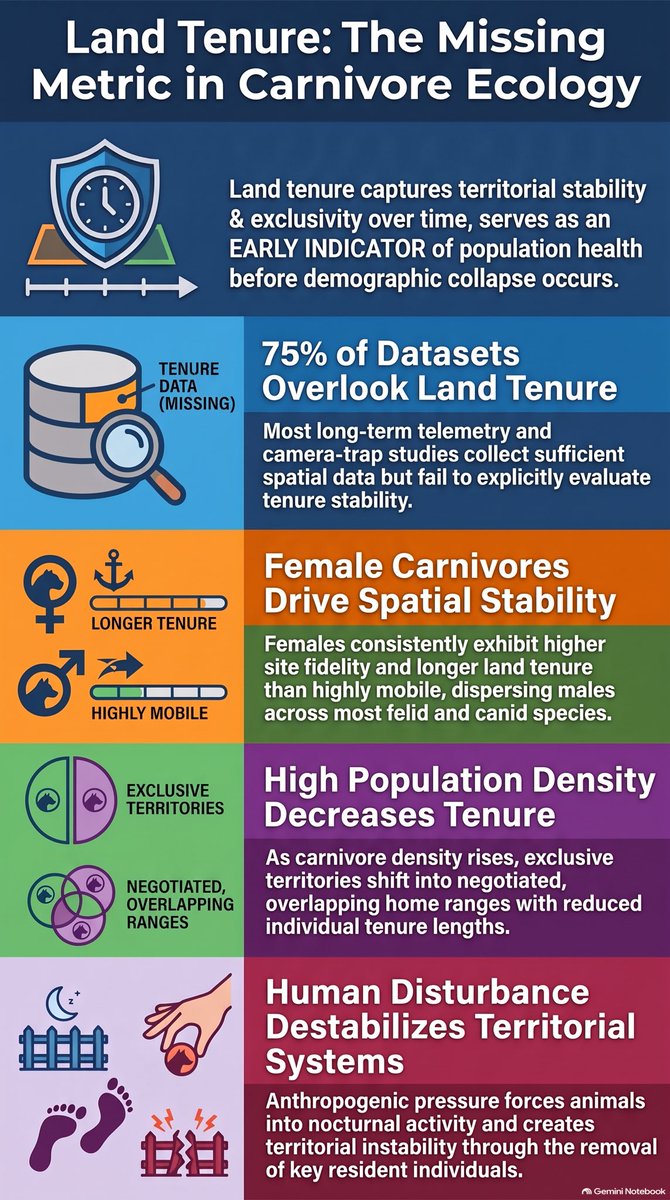
Check out this new concept👇️
The missing metric in ecological studies: Land tenure system of territorial carnivores🐅 🏔️ 🐺
📖 Find out more: https://t.co/wlrPIvwZcl
AI should support scholarship, not replace critical thinking. PhDs with AI-generated abstracts were less likely to enter academia. A PhD must build independent thinkers. @bhlab_india@jwls_in@academia@rameshpandeyifs
https://t.co/cc3R3WsI6D
Mr. Bhaskar Bhandari, a PhD Scholar at WII-AcSIR and Senior Project Associate in the Gaur Reintroduction Project, received the Best Talk Award at the 17th Student Conference on Conservation Science, New York (SCCS-NY), for his presentation titled “Social Cohesion in Reintroduced Indian Gaur in Sanjay Tiger Reserve, Madhya Pradesh.”
His ongoing research examines the influence of pre-existing familiarity and spatial proximity on social associations and herd formation among reintroduced gaur. The findings highlight the importance of social relationships in re-establishing
functional social structures and promoting social cohesion in reintroduced populations.
@minforestmp@subhoranjansen@moefcc@GobindsagarBha1@BandhavgarhTig1@paragnigam09@itsgorati
@arungorati
@wild_bhaskar
@eventoed@wii_india@iucn_wildcattle@wildwithwolves@Sanjay_TigerR@BandhavgarhTig2
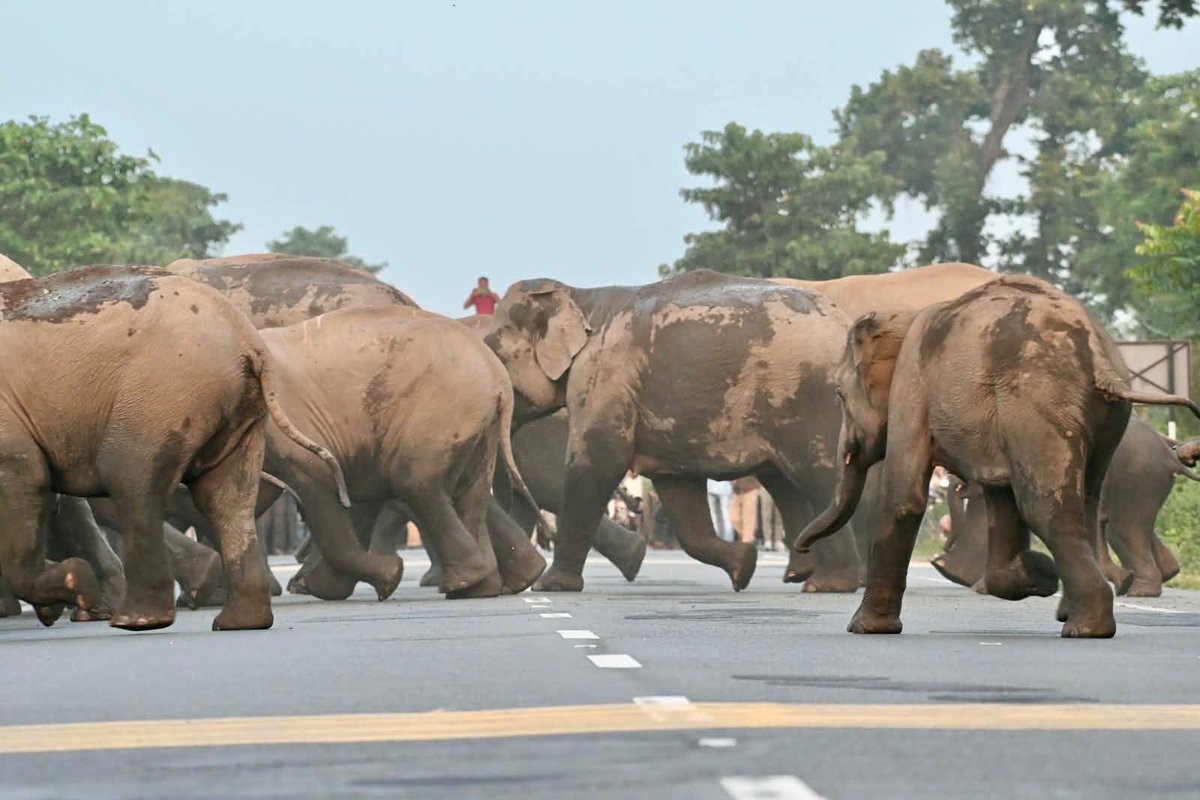
Coexistence on display 🐘
Foot soldiers of the forest stop traffic to allow a safe passage to elephants in Bagdogra, West Bengal.
That’s how we protect people and wildlife together.
Stopping traffic, holding people back and giving elephants room to cross safely in North Bengal. This is what our conservation foot soldiers do every dayprotecting people and wildlife, keeping a shared landscape connected. @rameshpandeyifs@SPYadavIFS@GobindsagarBha1@vrtiwari1