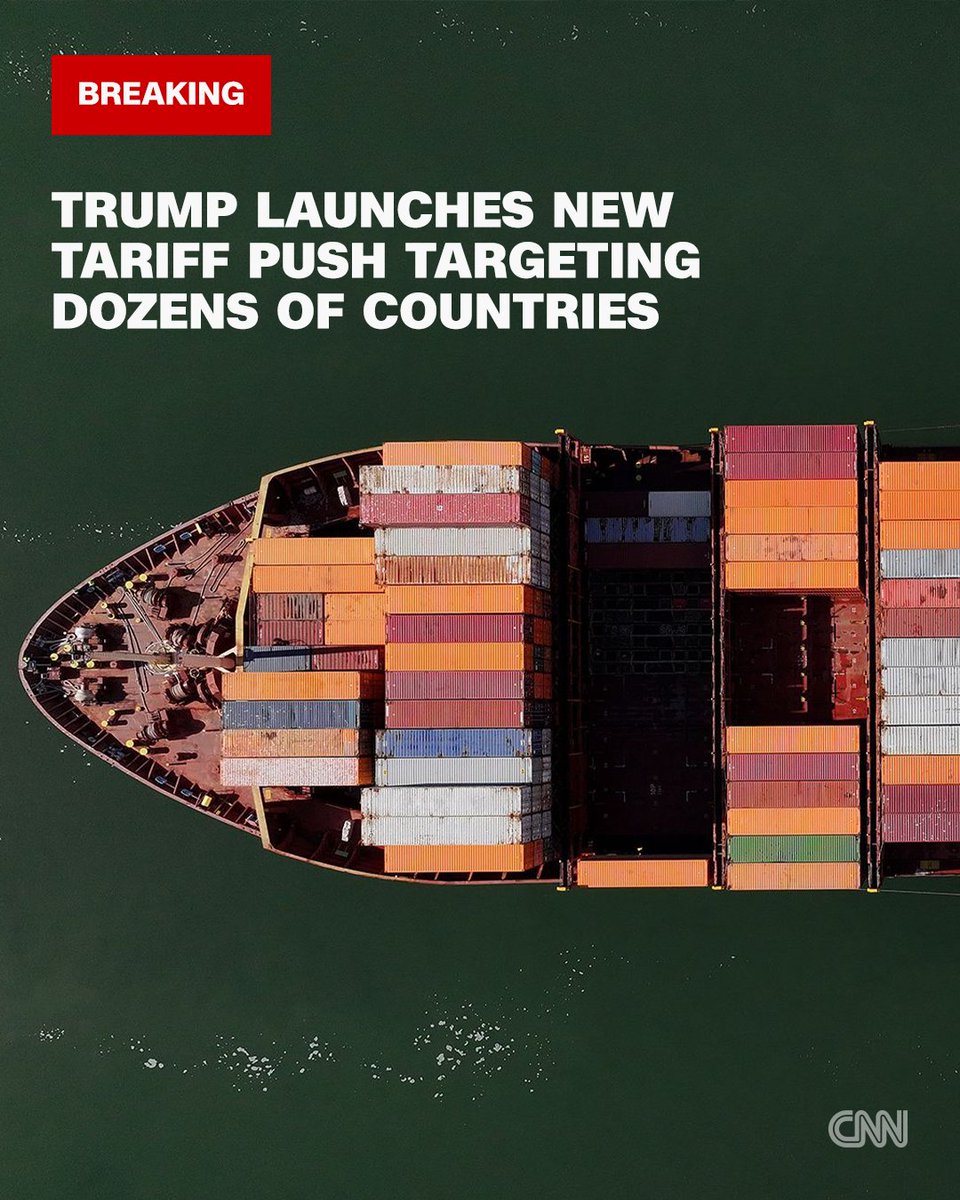
The Trump administration has announced that dozens of America's trading partners will face new tariffs of 10% to 12.5% on goods shipped to the US. https://t.co/dkO4bb1iur
Calling all K–12 educators! Join fellow teachers, school leaders, curriculum specialists, and cybersecurity professionals for a day of collaboration, classroom-ready resources, and innovative strategies at the 2026 NCF Convening to Act: Education Summit. https://t.co/GInhpbfEoC
I've seen many models over past 25+ years that promised to fundamentally improve K-12 outcomes. None has proven both durable and scalable. Hence my interest yet healthy skepticism about Alpha School, which has made bold claims while offering little transparency or independent validation.
I strongly second this call from @rpondiscio. If Alpha works as well as claimed, open up and let ed researchers study it and policymakers learn from it. If it works even half as well as claimed, the model can revolutionize education and lead to enormous societal benefit.
I hope the team at Alpha has achieved the K-12 breakthrough we've been searching for for decades. I salute MacKenzie Price and Joe Liemandt for dedicating their time and resources to creating the model. We need more experimentation in education. There is great promise in the intersection of tech and broad-scale learning. But extraordinary claims also need external validation.
The bank has emerged as Wall Street’s chief architect of the financing structures underpinning the AI boom, putting together the biggest and most inventive dealmaking models funnelling tens of billions of dollars into the build-out of data centres. https://t.co/kfrEb5OtVM
As part of President Trump’s continued push to discredit the results of the 2020 election, his administration has considered using AI technology to scrutinize tens of thousands of ballots seized in Fulton County, Georgia, ProPublica has learned.
https://t.co/UCt2zmyaek
McKinsey's 2025 State of AI survey found that fewer than 10% of organizations have scaled AI agents in any individual business function.
Most are not using agents at all.
A small group of companies has reached production scale with agents. The rest of the market is still experimenting, planning, or not deploying.
My team at Social Capital researched created 6 case studies to show what early adopters are doing today.
#1: Solo Company Formation
#2: Agentic Commerce
#3: Enterprise Adoption
#4: Investment Due Diligence
#5: Market Intelligence via Tokens
#6: Workflow Modernization
Character limits do not allow the rest to be shared.
Go to Substack to read them: https://t.co/bT9gltjk53
70 builders. 15 + countries. 54 hours. One winning idea born from a very local frustration: figuring out what a haircut or a car repair should actually cost.
That's what came out of the first Techstars Startup Weekend Valencia in over a decade, held entirely in English for the first time.
🔗 Read more about Startup Weekend Valencia: https://t.co/6MZ7nl5Fpl
Today, we launched GPU compute forward curves derived from our prediction market prices. Forward curves are now available on Nvidia B200. H200, and A100 chips.
Forward curves track implied future prices. They are how mature commodity markets form expectations, allocate capital, and manage risk. Energy, interest rates/SOFR, FX, metals, and agricultural markets all rely on market-implied forward prices.
Despite becoming one of the key inputs in the global economy, compute has lacked that market-derived infrastructure. Compute right now is where oil was before NYMEX — traded only via OTC deals, just like oil used to trade OTC between producers and refiners. As compute becomes as fundamental to the economy as energy, the industry will need a similar derivative market to promote efficient price discovery.
Prediction markets are uniquely suited to this problem. Compute is not one uniform commodity and spans many chips, grades, tenors, locations, and contract structures. A live prediction market can aggregate those dispersed views into transparent prices that reflect market expectations for different maturities.
The opportunity is big. Hyperscalers are spending over $700B on compute this year and the market is expected to grow to $7-10T by 2030. If this market behaves like traditional commodity markets, a liquid derivative market could be 10-20x bigger than the underlying spot market.
Compute is still not uniform enough, but this is a step towards standardization as forward curves will help us see the rise and fall of different model prices and how they correlate.
The forward curve is a first step. Up next: futures and perps.