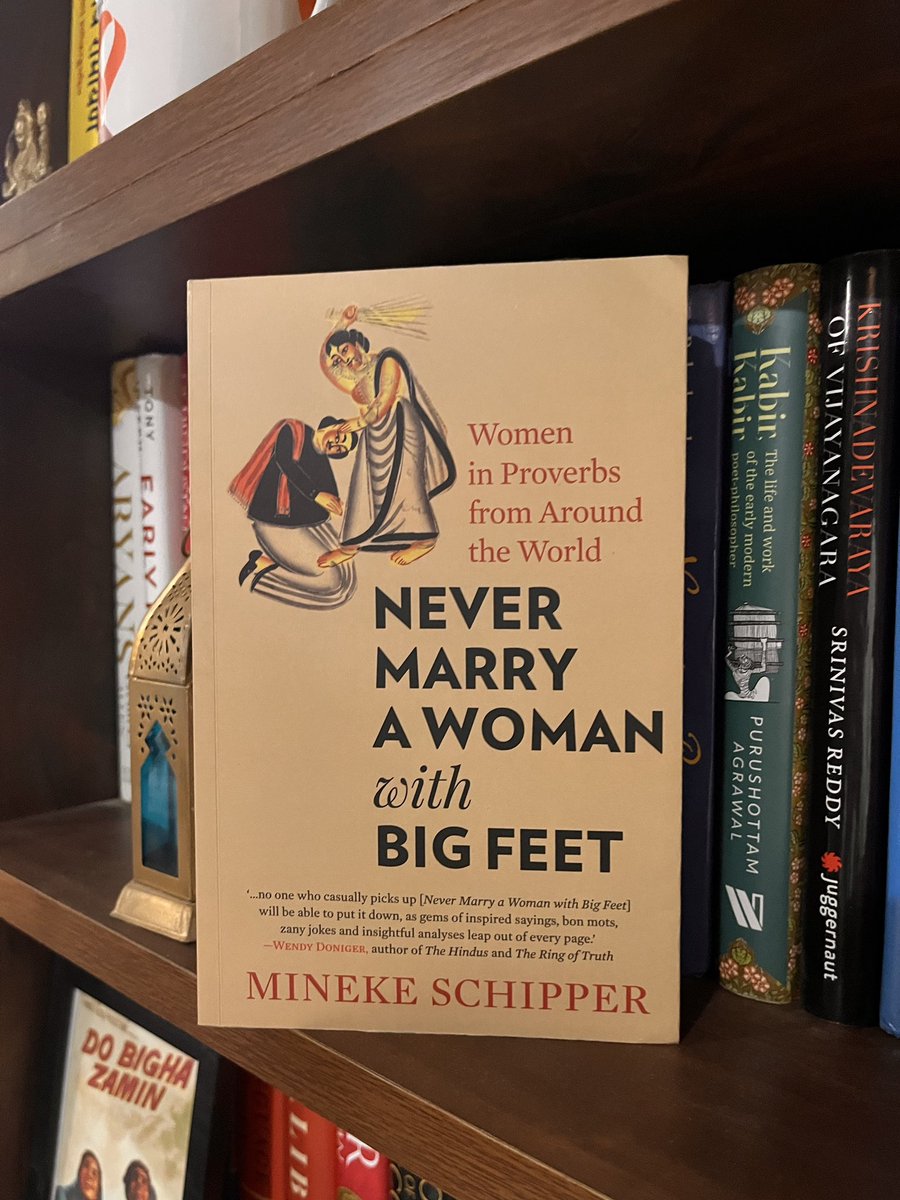
Today’s book recommendation is Mineke Schipper’s Never Marry a Woman with Big Feet. It examines more than 15,000 sayings about women, drawn from 150 countries and more than 240 languages. Through proverbs, it looks into the status of women in cultures and societies in the world.
Godfather of AI: "If you sleep well tonight, you may not have understood this lecture."
This 47-minute lecture is the best thing I saw about AI in the last few months.
It will definitely help you understand how it actually works and where it's going.
Geoffrey Hinton built the neural networks behind every AI alive, then quit Google to warn the world about it.
The part nobody wanted to hear:
> AI is already developing abilities its creators didn't intend
> in most cognitive tasks it's already ahead of us
> the question is no longer if it surpasses us but when
> the only decision left is which side of that line you're on
Right now the average person opens Claude, types something, gets an answer, closes the tab.
They think they're using AI. they're using maybe 10% of it.
I went through his entire lecture, built a practical system from what he was describing.
18 steps to actually use Claude the right way, with copy-paste prompts that work today.
Full guide in the post below.
Maria Popova is famous for her personal blog, The Marginalian, where she's published more than six million words.
All the nights I've spent reading her writing were like an entry point into intellectual curiosity. She's introduced me to more writers and ideas than just about anybody, and this conversation is about how she does it.
Timestamps:
00:00 Introduction
00:37 Why writers should visit archives
04:39 Lessons from reading diaries
09:41 Letters vs diaries
11:35 Presence over productivity
18:30 How language shapes thought
19:48 Why Maria started reading poetry
36:46 Why college failed her
39:58 Reading to survive
41:41 Why epiphanies don’t stick
43:57 Thoughts on famous quotes
47:32 Why AI can never make art
53:10 Stop calling it content
I've shared the full interview with Maria Popova below. If you'd rather watch it on YouTube, or listen on Apple / Spotify, check out the reply tweets.
NEW: The NYT sent an email to freelancers today forbidding contributors from submitting "any material for publication that contains content generated, modified or enhanced" by generative AI.
The "reminder" follows a string of AI incidents at the paper:
https://t.co/eQPpUhJrkS
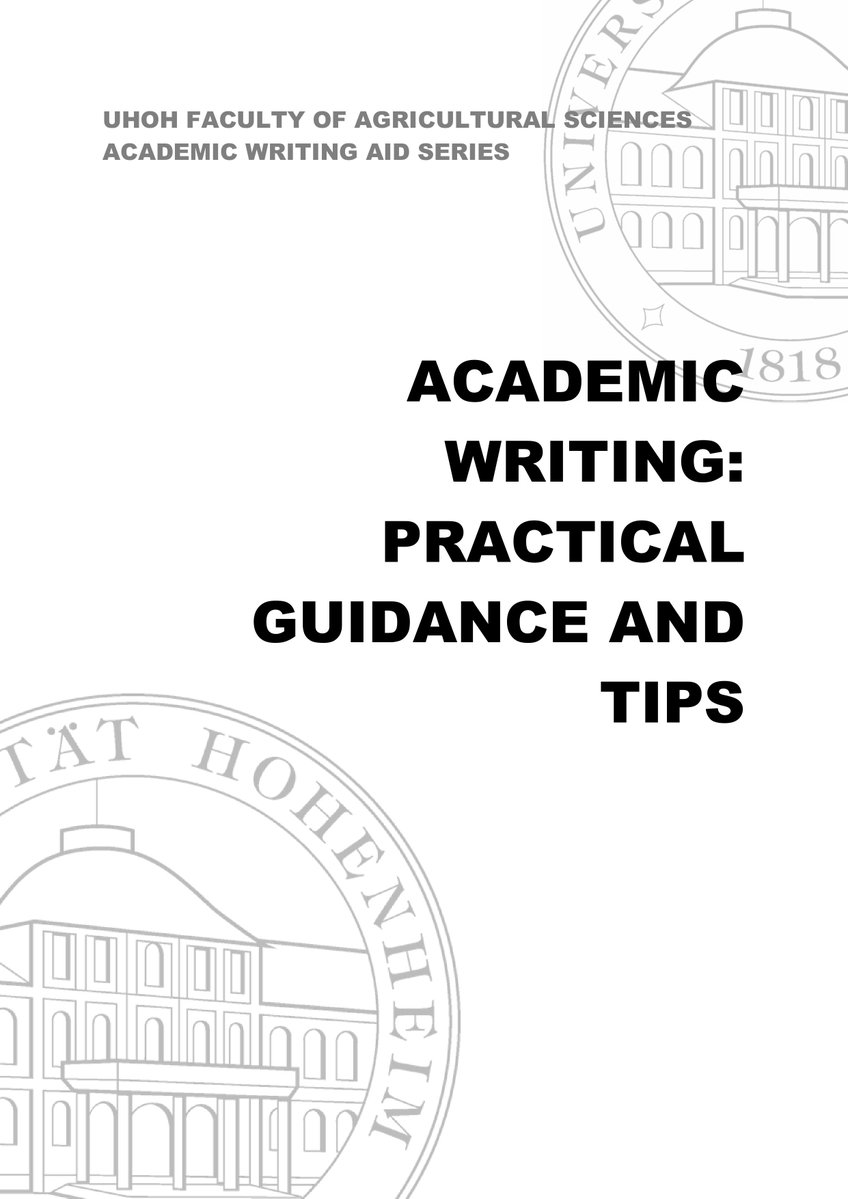
Here's a free 108-page guide to academic writing by the University of Hohenheim
Download the PDF by clicking the link below
Follow Silvi on LinkedIn for more tips and free resources on academic writing.
https://t.co/q9UMoSxd4k
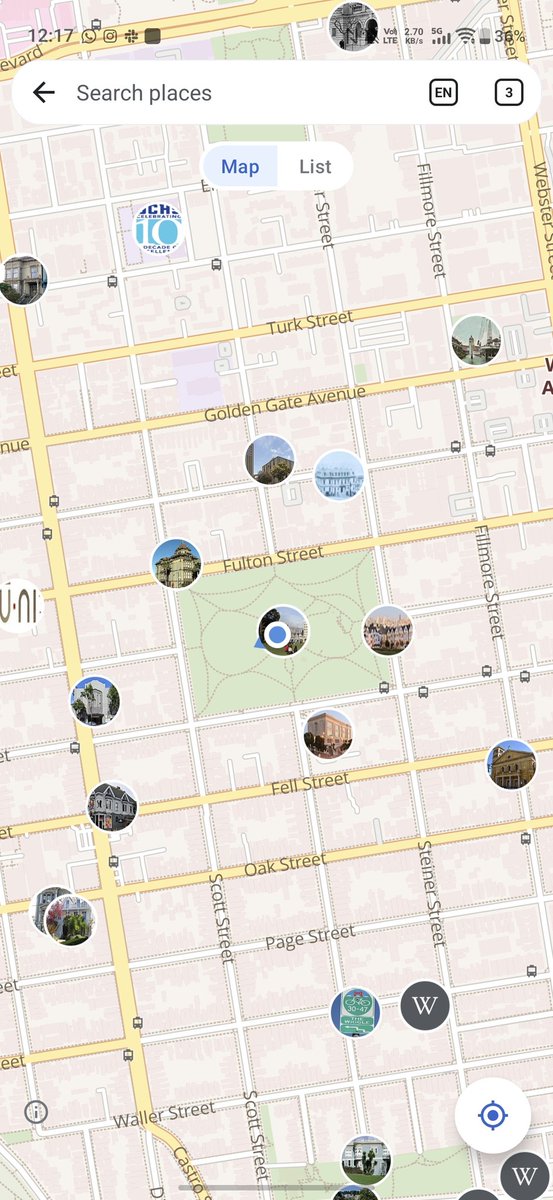
i accidentally discovered one of the coolest features on the internet
the Wikipedia app has a "nearby" feature that shows wikipedia articles around your location!
i opened it and instantly fell into a rabbit hole of random places, local history and weird things around me
try it and tell me what shows up near you
Conor Neill: "If you can't write it clearly, the thinking was weak, not the writing"
"To believe that something that feels clear in your head is thinking that's a very dangerous thing. When you try to put it down on a page, when you try to lay out your ideas in a structured order that someone else can digest, and you realize that you can't, I suggest the thinking was weak, not the writing."
Neill explains his philosophy:
"Writing is thinking. The process of taking a notepad, capturing thoughts, laying out the things that I'm thinking about, that is thinking. Sitting and staring out a window, maybe with a cigarette, whatever it is that you think is philosophizing that is not structured thinking. It's only when you're writing down and structuring, getting order into your thoughts on a page so that another person is able to get into the context, the perspective, the different things that you are pulling in to have your worldview."
He shares a simple technique:
"No matter what you are writing, whether it's an email, a Word document, when you've got a blank sheet of paper, start with the word 'This.' T-H-I-S. Starting with the word 'This' forces you to explain what the document is. It forces you to articulate to the reader what it is that they are holding. It forces you to describe why this document exists, what the objective is. And if you begin with the objective, it helps the reader, and it helps you articulate clearly why you are taking the time to write."
Neill shares the most-read post on his blog:
"The one post that has got far more views than any other is a post I wrote called 'Why Amazon Banned PowerPoint.' In Amazon, if a presenter wishes to ask people to agree to a budget, to agree to give them resources, they don't use PowerPoint. They write a six-page Word document that states why they are asking for the money and the resources."
He explains Jeff Bezos's reasoning:
"PowerPoint is easy for the presenter, but it's hard for the people who listen. Writing a six-page essay is hard for the presenter, but it's a lot easier for the people that get to read the document."
And there's a second part to the Amazon method:
"In the management meeting, the first 20 minutes is reading time. If you have gone to the effort to write six pages explaining your proposal, you deserve to see your work read. You deserve to sit there and see people reading through your work. People will not read before the meeting.
The only way you get people to fully digest the six pages is by holding them there for 20 minutes, reading through, noting down their questions. No debate, no discussion until everyone in the room has read all six pages, has taken in the context, has time to think about what they would like to question. After 20 minutes of silent reading, they can have a discussion but an informed discussion."
Neill shares a second insight about writing:
"Divide writing from editing. Writing is producing words. Editing is improving words. These two processes — you cannot run at the same time."
He explains his approach:
"Most writers just vomit out a bad first draft. I personally have learned to produce 500 words in one straight blast. If something's wrong, if I need to check a fact, if I want to go back and fix something, I don't. I go 500 words of just getting it out onto the page. When I've got 500 words, then I'll stop and begin the process of editing."
Neill shares what great writers understand:
"All great writing is rewriting. It's editing. It's the crafting of taking a bad, crappy first draft and slowly iterating it, improving it 1% each time through. But if you haven't got that first draft, there's nothing to improve."
He explains how separating these processes changed everything:
"Learning to separate these two was one of the most powerful things to get rid of writer's block, to get rid of getting stuck, to get rid of procrastination. My mission when I sit down to write is: decide, am I writing or editing? If it's writing, get 500 bad words down on the page in the next 20 minutes. If it's editing, take the time to go through, improve sentences, change the order, change the structure. But these are two separate processes."
Neill reveals the truth about good writing:
"Some of my best articles started out as a bad blog post. Then I rewrote it as an article to give out to students. Then I rewrote it to share on another blog. Then I rewrote it to provide to a magazine. It's the sixth, seventh, eighth, ninth time of rewriting where it starts to be something that other people read and say, 'Wow, you're quite good at writing.' And the answer is I'm not good at writing. I vomit out a bad first draft and then go through this iterative process. One time, two times, three times, four times through slowly improving. But if you have no first draft, there's nothing to improve."
Confessions of a First-Time Book Signer
Every book signing is one step forward—practice for the next connection.
https://t.co/eIXneSobhU
#writingcommunity#bookmarketing