Welcome to the African Democratic Congress (ADC) Diaspora and Nigeria Alliance!
This group unites ADC supporters, members, and well-wishers across the Diaspora
OPEN LETTER ADDRESSING A CRITICAL OVERSIGHT: THE LACK OF ADEQUATE DIASPORA REPRESENTATION ON THE ADC’S POLICY & MANIFESTO COMMITTEE – A RESPONSE TO SENATOR DAVID MARK’S INAUGURATION SPEECH
By Prof. Isa Odidi
ATTENTION: Senator David A. B. Mark, GCON, National Chairman, African Democratic Congress (ADC).
Your Excellency,
We read with great interest and overall agreement the profound and heartfelt speech you delivered at the inauguration of the ADC Policy and Manifesto Committee on February 2nd, 2026. The speech correctly diagnoses the profound suffering and policy failures plaguing Nigeria and eloquently frames the ADC’s mission as one of compassionate, practical, and people-centered solutions. Your emphasis on moving beyond academic exercises to policies that tangibly reduce suffering is not only welcome but desperately needed.
However, while the substance of your address is commendable, a critical structural omission threatens to undermine the very principles you so powerfully articulated. This concerns the glaring absence of adequate representation from the ADC Diaspora and Nigeria Alliance members on the newly inaugurated 50-person Policy and Manifesto Committee.
Your speech repeatedly called for policies that are connected to reality, that listen to those whose lives are shaped by decisions, and that think outside the box. You charged the committee to "listen, not only to experts, but to farmers, traders, workers, parents, Millennials, Gen-Z, and Gen-Alpha." Yet, by largely excluding vital demographic and intellectual pillars of our party, the committee’s composition risks becoming an insular exercise, contrary to this noble charge.
1. The ADC Diaspora: The Nigerian diaspora represents a massive reservoir of skills, expertise, experience, global perspective, and financial capital crucial for a modern, policy-driven campaign. For a party advocating for "new ideas and competent leadership," bypassing this resource is counter-intuitive. ADC Diaspora members are professionals, academics, scientists, innovators, and entrepreneurs who witness firsthand how other nations tackle the very issues—energy, transport, healthcare, governance—that you outlined. They also contribute billions in remittances that currently act as the de facto social safety net you rightly said is missing. To develop a manifesto for a "rescue mission" without their formal, structured input is to ignore a key strategic asset. They are not detached observers; they are stakeholders with deep familial and economic ties to Nigeria, desperate for a workable alternative. Excluding them from this high-level strategic committee sends a message that their role is peripheral, rather than integral.
2. The ADC Diaspora & Nigeria Alliance Members: The formation of the ADC Diaspora and Nigeria Alliance was a significant political development, signaling a coalition of forces united by a common desire to rescue Nigeria. Its members bring distinct local and international constituencies, grassroots networks, and political perspectives crucial for building a broad-based, winning coalition. Their exclusion from a committee tasked with drafting the very policy document that will present the ADC to the Nigerian and international public is a perplexing oversight. It risks creating a manifesto that feels imposed rather than collaboratively built, potentially weakening the alliance’s cohesion and collective ownership of the ADC’s direction. The Alliance is not just a support group; it is a think tank and an ambassador corps that should have a seat at the table where strategy is formulated.
You stated, "Policy is not about sounding intelligent. It is not about volume or complexity." Similarly, inclusivity is not about mere tokenism. It is about harnessing all available talent and perspectives to solve complex problems. A 50-person committee that lacks meaningful representation from these groups inadvertently sends a message that their voices are secondary, despite their proven commitment to the party and the nation.
Therefore, while we applaud the vision set forth in your speech, we urge the National Working Committee to take immediate and corrective action. We propose that you invoke the provision in point 23 of your speech, where you stated, "The committee should feel free to co-opt experts and professionals that can add value..." This should be done proactively and structurally to ensure significant, formal representation from the Diaspora and Nigeria Alliance blocs within the committee’s sub-groups.
To do otherwise would be to create a paradox: a manifesto designed to connect with the realities of all Nigerians yet drafted without some of its most impacted and resourceful constituents at the table. The ADC must not just speak about doing things differently; it must demonstrate it in its very operations.
Once again we urge the National Working Committee, under your leadership, to rectify this oversight. Consider expanding the committee or creating specific, empowered sub-committees with guaranteed representation for these key constituencies. The ADC's credibility as the "third force" will be judged not only by its rhetoric but by its actions in embracing all segments of its proposed coalition.
The strength of the alternative we seek lies in our ability to unite voices from home and abroad, from the ADC core and its allied partners. Let us ensure our structures reflect that unity from the very beginning.
We remain committed to the rescue mission and are confident that you will address this gap with the same clarity and courage you demanded of the policy committee.
Respectfully,
Prof. Isa Odidi
for:
ADC Diaspora and Nigeria Alliance
and
Concerned ADC Stakeholders & Allies
Breakdown of ADC Vote Count: February 2026, FCT Area Council Elections.
By Prof. Isa Odidi
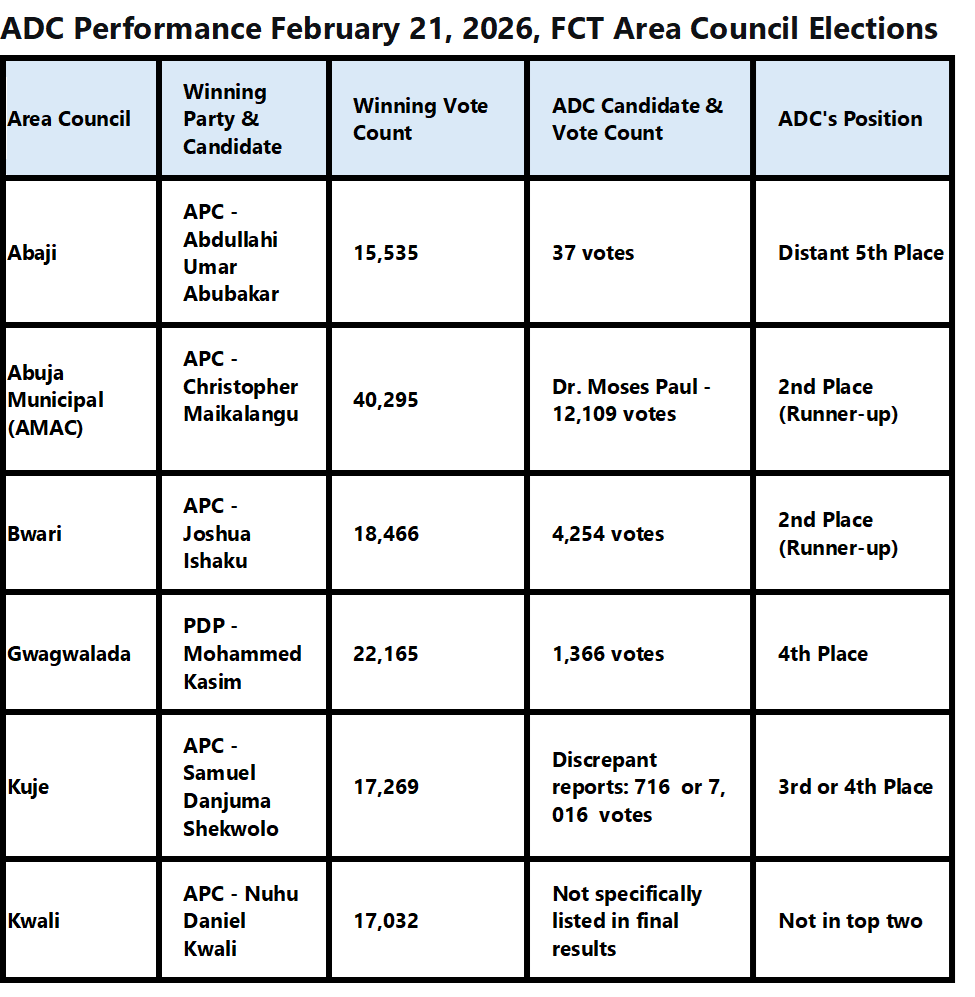
Based on the detailed results from the February 21, 2026, FCT Area Council elections, here is a breakdown of the specific performances of the African Democratic Congress (ADC) across all six councils. The results confirm the ADC's poor overall performance, failing to win a single chairmanship seat and, in most cases, trailing significantly behind the All-Progressives Congress (APC) and sometimes the Peoples Democratic Party (PDP).
Analysis of the Numbers
Strongest Showings (Urban Centers):
The ADC's best performances were in the more urban and cosmopolitan councils of AMAC and Bwari. In AMAC, the party's candidate, Dr. Moses Paul, secured 12,109 votes to finish as the runner-up, far ahead of the PDP. Similarly, in Bwari, the ADC came second with 4,254 votes. This aligns with reports of the ADC having an early lead in some Bwari polling units and winning a unit in Wuse, AMAC .
Poor Performances (Rural Councils):
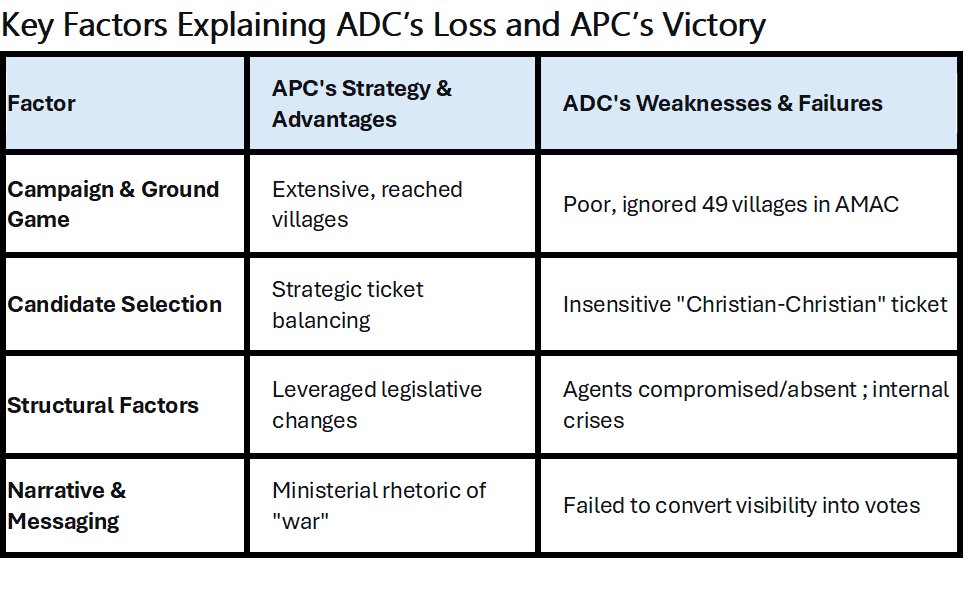
The ADC's performance collapsed in the more rural councils. The results from Abaji (37 votes) and Gwagwalada (1,366 votes) are particularly stark. This starkly illustrates the analysis from experts like Sumner Sambo, who noted that the ADC failed to campaign in the many villages within these councils, limiting their appeal to urban centers.
The Kuje Discrepancy:
The official result from INEC via Daily Trust reports the ADC candidate scoring 7,016 votes. However, The Guardian and other sources initially reported the party securing only 716 votes. The Daily Trust figure, which places the ADC in 3rd place behind APGA, is likely the more accurate final result given its source is the INEC returning officer. This significant discrepancy highlights the reporting challenges that can occur on election night.
In summary, while the ADC managed to secure a respectable second-place finish in the major urban councils of AMAC and Bwari, it failed to build a coalition broad enough to win. Its extremely poor showing in councils like Abaji and Gwagwalada confirms the analysis that it lacked the grassroots machinery necessary to compete outside of city centers .
@ADCallianz
THE OFFICE OF THE
NATIONAL COORDINATOR
DIASPORA is inviting you to a scheduled Zoom meeting.
Topic: Global Engagement Meeting with ADC Support Groups in the Diaspora.
Time: Jan 31, 2026 04:00 AM Rome
Join Zoom Meeting
https://t.co/SSESIdqKCh
Meeting ID: 831 3080 9194
Passcode: 134241
---
One tap mobile
+13462487799,,83130809194#,,,,*134241# US (Houston)
+13602095623,,83130809194#,,,,*134241# US
---
Join by SIP
• [email protected]
Join instructions
https://t.co/jxfqIE5huU
This afternoon, I hosted a delegation of Bauchi State’s critical stakeholders in our party, the African Democratic Congress (ADC), led by Alhaji Aminu Ahmed Yapeco, Sarkin Yakin Katagum.
Our conversation focused on how to strengthen the party’s structures in the state. We have examined the gaps, and I am committed to working with the party’s leaders at all levels until we achieve a virile opposition that will best serve the interests of the people of Bauchi. -AA
NEW YEAR MESSAGE
My family and I extend our heartfelt wishes of peace and prosperity to every household across our beloved nation.
The past year has indeed tested our resilience as a nation, with many families struggling under the unbearable weight of economic hardship, the unfortunate rising cost of living, and widespread insecurity.
As we welcome the New Year, let us all commit to making a turning point in our national aspiration for peace, unity, improved security of lives and property, economic stability and prosperity, and the overall well-being of our people, by holding the government accountable. We must collectively demand leadership that is responsible, responsive, transparent, people-oriented, and accountable.
We must call for and demand economic reforms that would result in job creation, poverty reduction, affordable healthcare, affordable housing, affordable food, and quality education for all. We must insist on political and electoral reforms that provide a free, fair, and transparent electoral process. We deserve a Nigeria where justice, fairness, and the rule of law are respected.
For me, I will continue to stand firm with Nigerians, to speak truth to power, to challenge policies that deepen suffering, and to offer constructive direction that can restore dignity, honour, economic prosperity, improve security, and provide impactful purposeful political leadership to our nation.
Nigeria’s greatness does not lie in the hands of a few elites or any ruling class, but in the determination of the millions of ordinary citizens. Together, we can build a country where opportunity and prosperity are not reserved for the privileged few, but shared by all.
May this new year bring healing to our land, courage to our people, and a brighter future for generations to come.
Happy New Year!
RT HON. CHIBUIKE ROTIMI AMAECHI
DEMOCRACY WITHOUT DIVIDENDS: THE NIGERIAN TRAGEDY SINCE 1999 - by: Hon Abubakar MG - 23rd January 2026 - Part 1
I am increasingly tempted to ask a question that many Nigerians whisper in private but rarely confront openly, "what real value has Nigerian politics delivered to the ordinary Nigerian since the return to civilian rule in 1999?" After more than two decades of party politics, countless elections, manifestos, and slogans, I struggle to see tangible improvements in the lived realities of the people.
I make this observation not from the comfort of theory or foreign comparisons alone, but from lived experience. I live in Nigeria. I travel across Nigeria. I see the roads, I visit the hospitals, I speak with unemployed graduates, artisans, traders, and civil servants struggling to survive. What I see daily contradicts the self congratulatory narratives often pushed by those in power.
The roads across Nigeria remain largely dilapidated, dangerous, and in many cases, outright death traps. Major highways linking economic hubs are still scenes of frequent accidents, kidnappings, and armed robbery. If governance were measured by infrastructure alone, the evidence would already be damning. But the failures go far deeper.
Graduate unemployment has reached an alarming and embarrassing level. Young people leave universities with degrees, hope, and ambition, only to be met by a labour market that has little use for their skills. Many are forced into menial jobs unrelated to their training, while others remain idle, frustrated, and vulnerable. I ask myself often, what kind of democracy produces educated youths who feel abandoned by their own country?
The ordinary Nigerian today lives largely from hand to mouth. Inflation continues to erode incomes, while wages remain stagnant. Food prices rise relentlessly, transport costs soar, and basic necessities become luxuries. There is little in the current political order that meaningfully improves life expectancy or quality of life for the average citizen. Poverty is no longer an exception, it has become the norm.
What is most disturbing to me is the widening gap between the political class and the people. Nigerian politicians, across party lines, often appear more concerned with their personal comfort, their families, and their inner circles than with the public they swore to serve. Wealth acquired through bad governance is openly displayed in obscene contrast to the suffering around them. This display is not accidental, it is a message. A message that power in Nigeria is not about service, but about access.
In functional democracies, opposition parties play a critical role. They interrogate policies, expose excesses, and offer credible alternatives. But in Nigeria, the opposition has often been weakened not by ideology but by complicity. Too frequently, those who should challenge power are either co-opted, intimidated, or absorbed into the same corrupt system they once condemned. Political struggle becomes less about policies and programmes, and more about capturing power for its own sake.
What makes this hypocrisy particularly painful is that many individuals currently in government were once vocal critics while in opposition. They spoke passionately about insecurity, corruption, bad roads, and failing hospitals. Today, with power firmly in their hands, those same problems persist, in some cases even worse. This raises a fundamental question, was the problem ever ignorance, or was it always
Today, my family and I stand in quiet reflection with Nigerians across the country to remember the courage and sacrifice of our Armed Forces.
We salute our fallen heroes who gave their lives in service to our nation, and we deeply appreciate the men and women who continue to wear the uniform with honour, discipline, and steadfast resolve. Their bravery and sense of duty are the pillars upon which our peace, security, and unity rest.
Nigeria owes you a debt that words can never fully repay. We remain grateful for your loyalty, your sacrifice, and your unwavering commitment to our nation. -AWT
#ArmedForcesRemembranceDay
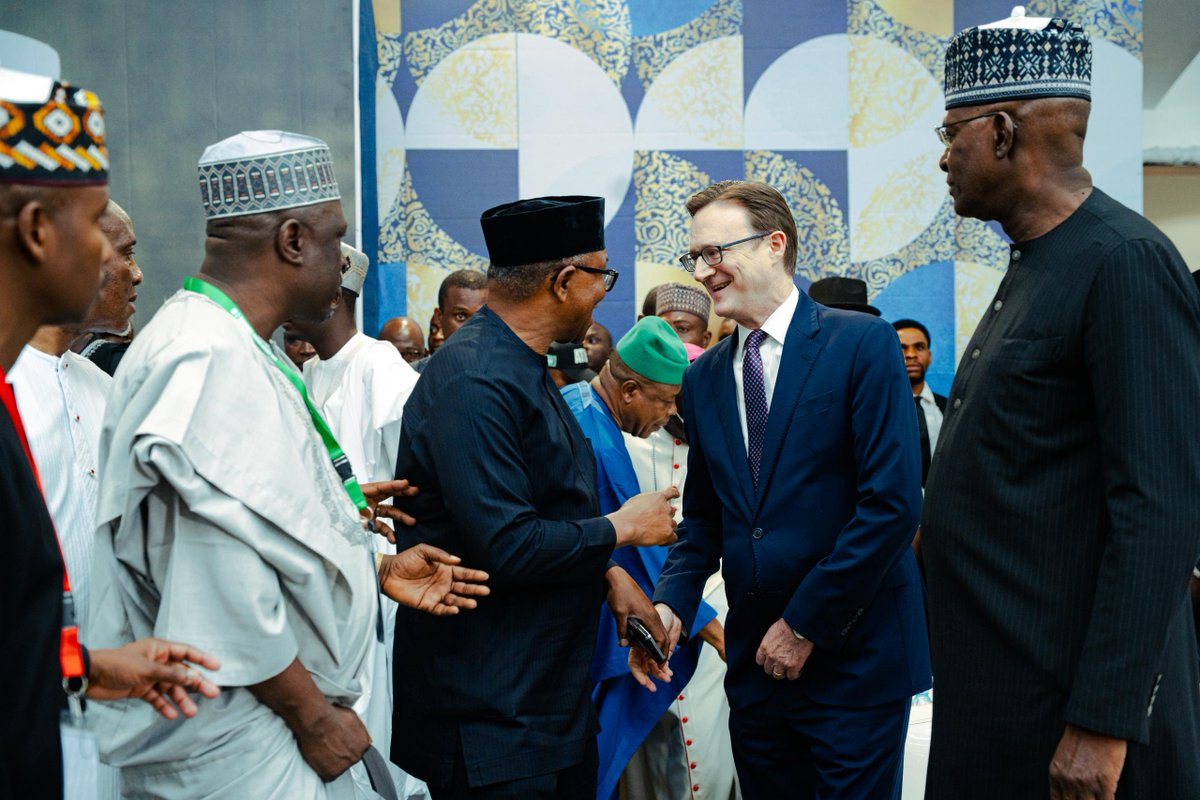
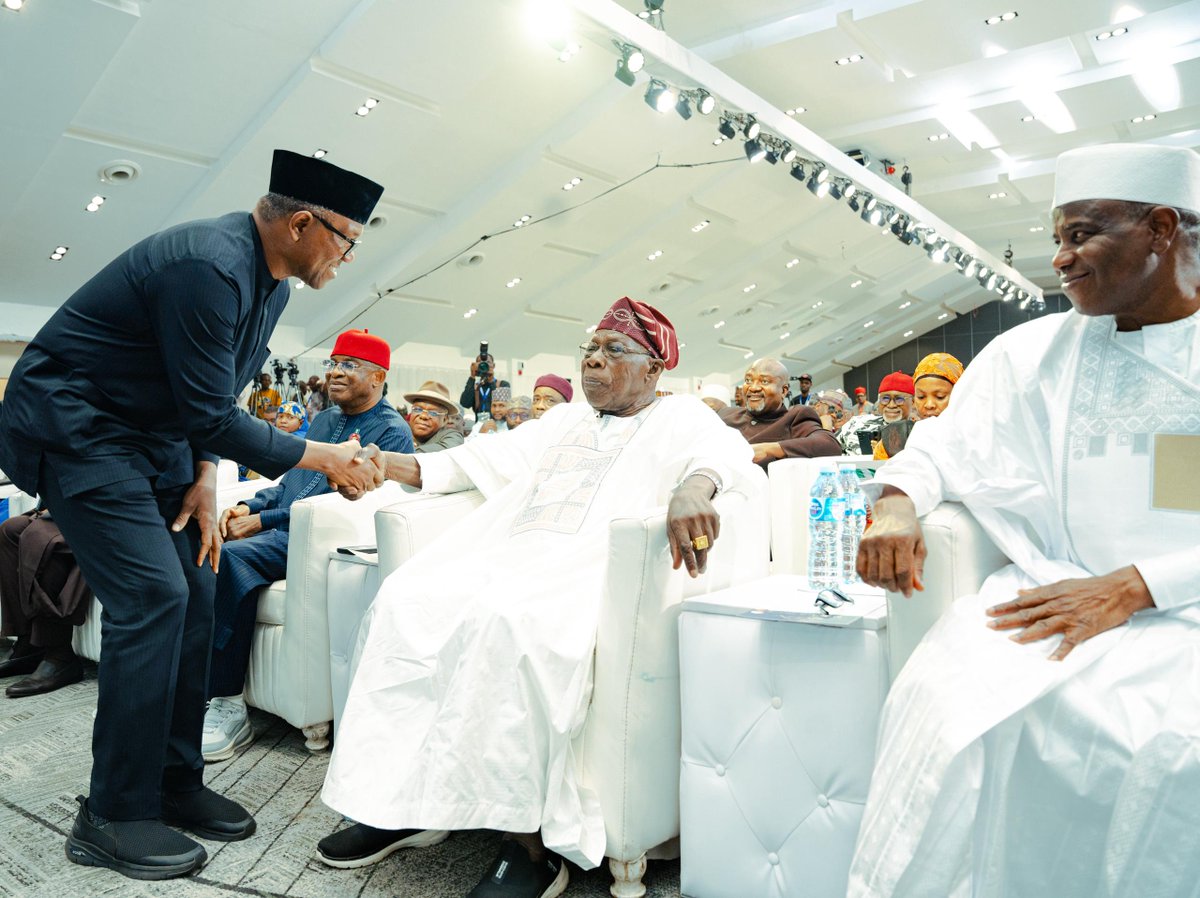
Today, I had the privilege of attending the 60th Birthday Symposium of my esteemed brother, H.E. Senator Aminu Tambuwal. The event brought together a remarkable assembly of distinguished Nigerians, including former President Olusegun Obasanjo, H.E. Atiku Abubakar, ADC National Chairman Senator David Mark, and former Speakers Masari, Patricia Ette, and Yakubu Dogara, along with notable Governors and numerous respected leaders and stakeholders dedicated to our country's unity and progress.
This celebration was not just a milestone but a clarion call for unity and service to our beloved nation. During the symposium, I delivered a brief but impactful goodwill message, emphasising the urgent need for national unity. The future of Nigeria depends on our collective strength. Now is the time to unite and forge a consensus to address the troubling challenges facing our nation.
At 60, Senator Tambuwal exemplifies true leadership—not measured by years in office but by unwavering dedication to what is right. He has been a bulwark for a united Nigeria. I also extended my gratitude to him for his steadfast commitment to advancing vital sectors: education, healthcare, and agriculture. His unwavering focus on these areas underscores the reality that effective leadership lies in investing in a united and productive populace.
As I travel through Nigeria, I see immense potential being undermined by disunity and ineffective leadership. With unity and competent governance, we can transition our nation from consumption to production, bolster agriculture and manufacturing, and eradicate poverty, corruption, and insecurity—ultimately fostering an inclusive and prosperous nation.
It is absolutely fitting that we celebrate Senator Tambuwal today—a champion of unity, dialogue, and national cohesion. His relentless service serves as a powerful reminder that Nigeria’s future will not be crafted by those who sow division, but by those who foster connection and collaboration.
On behalf of all who strive for a renewed Nigeria, I wish Senator Aminu Tambuwal a very happy 60th birthday. May this new chapter of his life be rich with good health, renewed strength, and even greater service to our nation.
A new Nigeria is POssible. -PO
A major setback to the 2023 elections is the loopholes in the Electoral Act 2022 that paved the way for the brazen rigging of that election, and the near-impossibility of petitioners to advance their cases in the courts.
It is imperative that if the mistakes of the 2023 election are to be corrected, the legal instrument for the conduct of the 2027 and subsequent future elections needs to be reviewed.
But as things stand, it has become obvious that the Senate is determined to frustrate the passage of amendments to the 2022 Electoral Act.
The recent report by FIJ serves as both an indictment of the Senate and a timely call for legislative responsibility.
The credibility of the 2027 general elections hinges on the urgency with which the Senate treats this crucial bill.
It is, therefore, imperative that the Senate finalises the amendments and ensures the updated law governs the conduct of the 2027 elections. Anything short of this is a deliberate attempt to rig the election long before the ballots are cast. -AA
https://t.co/6i5i0Fi43V
Former Imo Governor Emeka Ihedioha Joins ADC
Emeka Ihedioha, former Governor of Imo State, has officially joined the African Democratic Congress (ADC). He completed his registration on Monday, January 12, 2026, at Mbutu Ward, Aboh-Mbaise LGA, receiving membership card No. 001.
The registration was conducted by Ward Secretary Prince Obinna Opara and presented by Ward Chairman Chief Alex Ahamuefula. The event was attended by party leaders, stakeholders, and community figures, including Evangelist Dr. Obi Nwaigwe, Mayor of Mbutu, and Hon. Jonathan Egbule, Aboh-Mbaise LGA Chairman.
Ihedioha said his decision was deliberate, reflecting his belief in the ADC’s principles of accountability, clear values, and service to the people. “Our people want leadership that listens, serves, and puts the common good above personal interest. I am convinced the ADC provides a credible platform to achieve this,” he said, noting that registering at the ward level shows his commitment to grassroots politics.
National ADC officials present included National Vice Chairman (South East) Sir Bon Unachukwu, Deputy Diaspora Coordinator Maigari Bello Kasimu, and Uko Nkole, Coordinator of the Nigerian Former Legislators Forum.
Sir Bon described Ihedioha’s entry as a boost for the party in the South East and nationally. Prof. James Okoroma, Imo State ADC Chairman, led the State Executive Committee in welcoming the former governor, saying his decision strengthens the party’s presence and reaffirms its commitment to internal democracy and grassroots mobilization.
Why an Atiku Abubakar–Peter Obi Ticket on the African Democratic Congress Party Could Be Nigeria’s Smartest Strategic Opposition Move for 2027
By Prof. Isa Odidi
As Nigeria edges toward another pivotal electoral cycle, the opposition faces a familiar dilemma: repeat old habits/patterns or adopt a genuinely new strategy. Coalition talks, party defections, and zoning calculations are already dominating political discourse, but one idea keeps resurfacing with unusual persistence—a joint ticket featuring Atiku Abubakar (former Vice President and Peoples Democratic Party [PDP] stalwart) and Peter Obi (former Anambra State Governor and Labour Party [LP] presidential candidate in 2023) on the African Democratic Congress (ADC). This article analyzes why this could be a winning strategy.
When examined objectively, a joint ticket featuring Atiku Abubakar and Peter Obi under the ADC presents a compelling case for opposition consolidation, national reach, and electoral competitiveness in 2027.
This is a bold and strategic option – a potential political masterstroke that could secure an ADC victory in 2027 based on political trends, political logic, voter coalitions, voter behavior, institutional realities, demographic trends and historical data. This argument is about strategy: whether the opposition can finally align experience with momentum, structure with enthusiasm, and national reach with demographic strength.
Having Atiku Abubakar and Peter Obi on the ADC presidential ticket in 2027 could reshape opposition politics through unity, voter expansion, and national balance. On those grounds alone, the Atiku-Obi idea deserves serious consideration.
Strategic Advantages of an Atiku-Obi Ticket
Atiku Abubakar’s Political Weight
Despite growing energy around political change, Nigeria remains a system where experience, organization, networks, national reach and institutional memory still carry significant weight. Atiku Abubakar exemplifies this.
He remains one of the most experienced political figures in Nigeria’s Fourth Republic. His decades-long involvement in national politics has allowed him to build extensive political networks across all six geopolitical zones.
Few politicians have built and rebuilt national coalitions as often as Atiku. His years in public life have made him deeply familiar with:
· Federal governance and economic policymaking
· The mechanics of nationwide campaigns
· Grassroots political structures not just in northern Nigeria but nationwide.
· Long-standing relationships with technocrats, political elites, business networks, the diaspora and party organizers
· Behind-the-scenes elite negotiations that shape political outcomes
In a political environment where elections are won as much through logistics, coordination, and coalition building\management as through ideas, Atiku’s experience is not just helpful—it is foundational and indispensable to the ADC. And remains a critical asset for the ADC.
Peter Obi’s Political Weight
Peter Obi represents a different but equally powerful political force. His political rise has been driven by:
· Youth political engagement
· Urban middle-class activism
· Strong support in the South-East, South-South, and among urban voters nationwide
· A reform-driven message centered on accountability and prudent governance
His appeal is especially strong among:
· First-time voters
· Professionals and technocrats
· Nigerians in the diaspora
This demographic energy is no longer fringe—it is essential. In an era where voter enthusiasm can redefine election outcomes, Obi’s base is a key asset.
Why the ADC Changes the Political Equation in Nigeria
In Nigeria, party platforms are often seen as secondary, but they matter more than many realize. The ADC offers something both the PDP and LP increasingly lack: relative neutrality.
With the PDP and LP divided by internal conflict, the ADC presents a fresh, low-conflict vehicle. It is free from entrenched factions and legacy disputes. This lack of political baggage makes it a flexible, pragmatic platform—ideal for two major figures like Atiku and Obi with distinct bases of support.
The ADC:
· Has minimal historical baggage
· Allows room for reform
· Presents fewer power blocs that could derail unity
A neutral party like the ADC reduces ego clashes and avoids the toxic power struggles that have historically wrecked opposition alliances before they even begin.
An Atiku-Obi Ticket is about Complementarity, Not Competition
The true strength of an Atiku-Obi ticket lies in how their abilities complement each other.
· Atiku brings elite negotiation skills, institutional and economic reform experience, and broad northern grassroots reach. He is viewed as an experienced administrator, and an advocate for economic reform, the private sector and good corporate governance advocate .
· Obi contributes credibility on reform, youth mobilization, and strong appeal in the urban south. He is seen as frugal, pragmatic, and committed to good governance.
Their combined image represents experience + integrity + economic competence.
Rather than competing for the same voters, this ticket expands the opposition’s reach across demographics, regions, and socio-economic lines—creating a broad, unprecedented coalition.
An Atiku-Obi Ticket Accentuates the Power of Balance in a Divided Polity
Nigeria’s electoral history is clear on one point: geopolitical balance still matters and remains non-negotiable in Nigeria. Tickets that appear exclusionary i.e., regionally, religiously, or culturally, struggle to gain trust beyond their core bases. Thus, a North-South, Muslim-Christian presidential ticket featuring two of the country’s most recognized political figures directly addresses the instinct for national accommodation. It symbolically lowers regional resistance and builds a perception of unity that is critical for nationwide legitimacy.
An Atiku–Obi ticket represents:
· A North–South partnership and balance
· Broad religious and ethnic inclusion
· National accommodation and unity
While this may not guarantee acceptance everywhere, it reduces instinctive resistance in regions where opposition candidates are often dismissed before their ideas are heard.
Electoral Math and the Case for Unity
The most compelling argument may be simple arithmetic. The cold, hard math of 2023 tells the story: opposition votes were fatally split.
In 2023, Atiku (PDP) received about 29% of the vote, and Obi (LP) received around 25%. Combined, their votes could have outpaced the APC’s ~37%. Opposition fragmentation has repeatedly handed advantage to incumbents. Votes scattered across multiple candidates may signal enthusiasm, but they rarely translate into power.
Fragmentation of the opposition helped APC win in 2023. A united Atiku-Obi ticket could:
· Consolidate reformist voters
· Absorb protest votes
· Minimize destructive internal competition
Even beyond the vote, such a coalition would wield more bargaining power in political negotiations, including runoffs or coalition governments.
Atiku-Obi Ticket Projects Policy Signals That Matter
Atiku and Obi also bring serious policy credentials. Together, they offer two economic visions that complement each other:
· Atiku supports private-sector-led growth, deregulation, and corporate and economic reform
· Obi focuses on fiscal responsibility, debt reduction, and governance efficiency
Their partnership project policy seriousness and would send a strong message to voters, investors, civil society and international partners that Nigeria’s opposition the ADC is serious about reform.
Challenges the ADC Must Navigate
Despite the promise of Atiku-Obi ticket, obstacles remain. A joint ticket would need to:
· Manage loyalists with personal ambitions
· Create unified messaging across diverse regions
· Overcome internal resistance from entrenched interests
These challenges are real—but they are not insurmountable. Past failures often came from addressing these problems too late or from within inflexible party structures.
If ADC Purpose is to Win Elections It Must Emphasis Strategy Over Sentiment
Ultimately, this isn’t about fantasy. It’s about logic, it is about winning. The Atiku-Obi ticket represents:
· Experience paired with reform
· Structure paired with energy
· National reach paired with youth-driven momentum
Whether or not it happens, this coalition stands as one of the most strategic, thought-out opposition ideas in years. In a political space often driven by rivalry and emotion, it offers clarity, coherence, and a serious path forward.
If the ADC can overcome internal distrust and build a strong campaign machine, this North/South, Old/New political alliance could transform Nigeria’s 2027 election.
OFFICIAL STATEMENT FROM THE AFRICAN DEMOCRATIC CONGRESS (ADC) ON MEMBERSHIP REGISTRATION LINKS
The African Democratic Congress (ADC) wishes to inform the general public, party members, and supporters that a series of fraudulent online links, website and social media handles are currently being circulated, falsely claiming to be the official ADC membership registration platform.
There is no official ADC registration link or website open at the moment. All links currently circulating should be completely disregarded.
At this time:
● ADC has not launched any public online membership registration link.
● ADC is currently working on its official registration and verification platform, which will be formally announced through verified party channels in due course.
● ADC will never request payments or sensitive personal information via unofficial links, WhatsApp messages, direct messages, or third-party websites.
What the Public Should Do
● Do not click on suspicious or unverified links.
● Do not share unconfirmed registration messages.
● Do not submit personal information, including name, phone number, PVC details, BVN, or payment details, to any unverified platform.
● Report any suspicious links to ADC through official party communication channels.
Official Communication
All legitimate ADC announcements, including the launch of the official membership registration platform, will only be communicated through verified ADC platforms and formal statements from the party leadership.
The ADC is actively addressing this issue and will take all necessary steps to protect the public and preserve the integrity of the party.
Signed: Mallam Bolaji Abdullahi
National Publicity Secretary African Democratic Congress (ADC)
PRESS RELEASE
Nigeria’s Democracy Under Siege: Opposition Faces Existential Threat
For nearly three years, Nigerians have endured one of the harshest periods in recent history—an era defined by punishing economic policies and shrinking democratic space under President Bola Ahmed Tinubu.
True to form, this administration has not only inflicted widespread hardship but has pursued a calculated effort to eliminate political alternatives. The objective is clear: a creeping, de facto one-party state.
Perhaps the @officialABAT administration’s most disturbing “achievement” has been the systematic weakening of opposition parties, leaving the All Progressives Congress—despite its manifest failures—standing alone by default, not by merit.
Thankfully, patriotic leaders saw this danger early and chose resistance over silence by rallying around the African Democratic Congress (ADC) as the nucleus of a credible national alternative.
Predictably, agents aligned with the Presidency are now attempting to destabilize the ADC from the outside—issuing reckless prescriptions about its internal affairs, particularly the choice of a presidential candidate.
Let it be stated plainly: the ADC is on a national rescue mission. Former Vice President Atiku Abubakar, alongside other committed patriots, is central to this effort. Any call—overt or covert—for Atiku to “step aside” is a gift to authoritarian ambition and a betrayal of the Nigerian people.
The ADC has consistently affirmed its commitment to an open, transparent, and competitive process for selecting its flagbearer. APC proxies and external meddlers have no standing to intimidate, blackmail, or sabotage this democratic resolve.
At present, the ADC is focused on building strong ward, local government, and state structures nationwide. Disruptors and infiltrators must allow the party to do this essential work without interference.
The party remains open and welcoming to all genuine opposition figures. This inclusiveness—not coercion—is the soul of democracy.
When the time comes, all qualified aspirants will present themselves freely. No one is stepping down. If anyone should step aside, it is President Tinubu—whose leadership has become a national liability.
The recent public declaration of ADC membership by former Labour Party presidential candidate Peter Obi in Enugu, the political heartbeat of the Southeast, triggered open boasts by a serving minister and presidential aides about plans to undermine the party. Their fear is evident.
Let there be no ambiguity: the ADC is determined to end the misfortune imposed by the Tinubu-led APC. No amount of intimidation, intrigue, or sabotage will derail this rescue mission.
Nigeria will not surrender its democracy without a fight.
Signed:
Paul Ibe
Atiku Media Office
Abuja
January 06, 2026