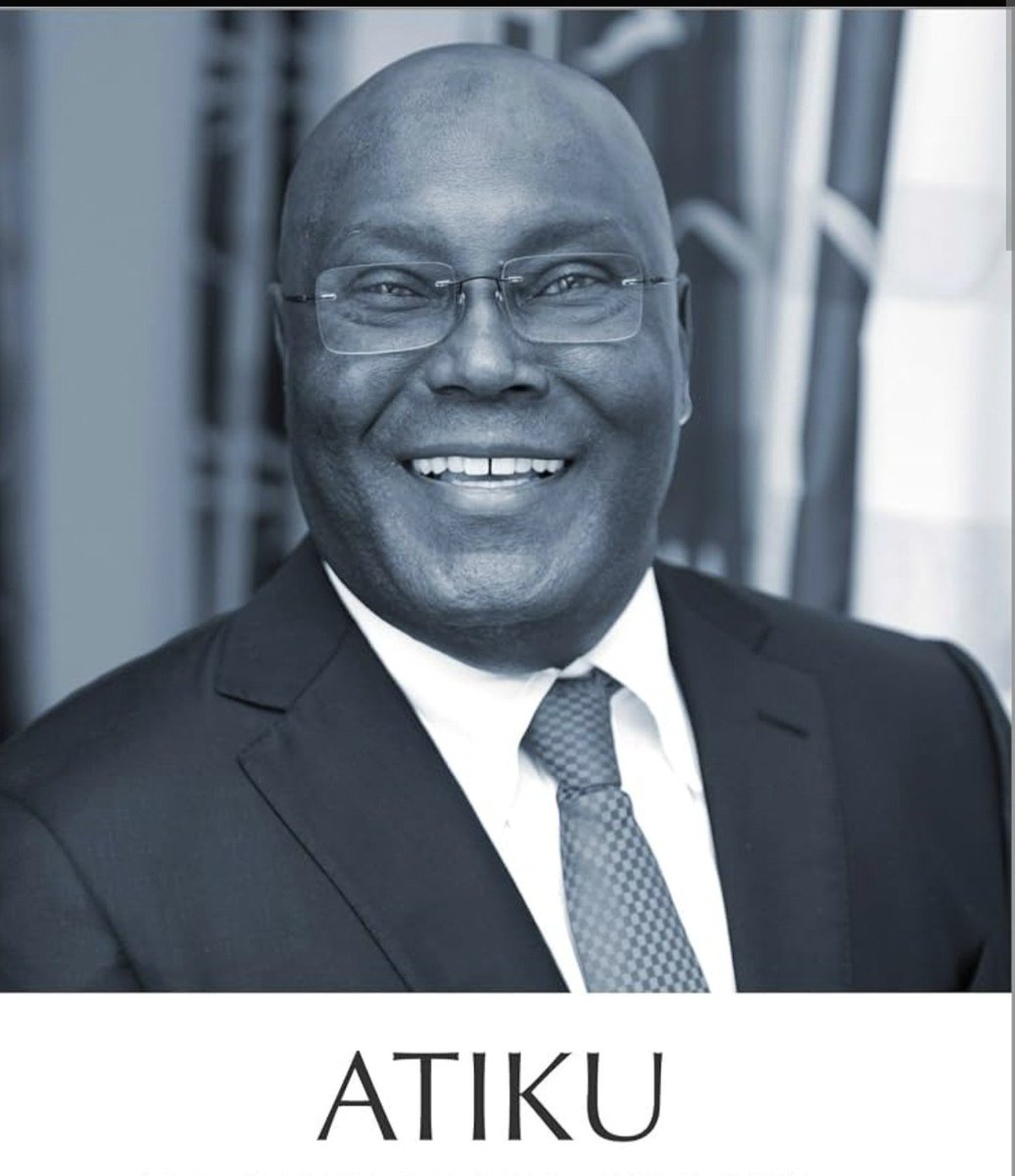
THE PETITION AGAINST ATIKU: WHY NOW? WHERE IS THE NEW EVIDENCE?
By Prof. Isa Odidi
Hon. Ehiozuwa J. Agbonayinma, through his lawyers, is asking the EFCC to prosecute H.E. Atiku Abubakar largely on the basis of matters dating back to 2006 and 2010.
Nearly two decades later, Nigerians deserve answers:
What new evidence has been discovered?
Why resurrect these allegations now?
Why demand Atiku's "immediate prosecution" in 2026?
An allegation is not a conviction.
An investigative report is not a judgment of guilt. Repetition does not turn an allegation into proof.
Atiku is one of Nigeria's foremost opposition leaders. The timing therefore inevitably raises questions about whether this is genuine anti-corruption advocacy or another attempt to use old allegations and political innuendo to damage a major opposition figure.
If Hon. Agbonayinma has new, credible evidence, let him produce it.
If he does not, Nigerians are entitled to ask who benefits politically from resurrecting this matter now.
And those publicly presenting allegations as established criminal guilt should take note: Atiku has a reputation to protect and should consider all lawful remedies, including defamation proceedings where the legal threshold is met.
The EFCC must follow evidence and the law, not political pressure or a petitioner's 14-day ultimatum.
If evidence emerges that this campaign is being sponsored, encouraged or coordinated by interests connected to the ruling APC, Nigerians should condemn any attempt to weaponize anti-corruption institutions against political opponents.
No trial by propaganda.
No conviction by innuendo.
No weaponization of institutions.
If there is evidence, produce it.
If there isn't, stop the political theatre.
Let the Nigerian people decide at the ballot box.
#Atiku #Nigeria #RuleOfLaw #Democracy
Atiku’s Fuel Subsidy Proposal: What It Really Means for Nigerians
By Prof. Isa Odidi
For most Nigerians, fuel subsidy is not an economic theory. It is the bus fare to work, the cost of taking children to school, the price of transporting food to the market, and the petrol or diesel needed to keep a small business running.
When fuel prices rise, almost everything becomes more expensive.
That is why Atiku Abubakar's proposal for a production-based fuel subsidy deserves to be properly understood.
Atiku is not proposing a simple return to the old system of subsidizing imported petrol. The idea is different:
Instead of subsidizing fuel importation, support fuel production in Nigeria and make sure Nigerians get the benefit.
Here is how it would work.
Nigeria produces crude oil. Under Atiku's proposal, qualifying Nigerian refineries, public or private, could receive crude at a preferential price.
Suppose, purely as an example, a barrel is worth ₦100 and an eligible refinery receives it for ₦90.
That ₦10 difference is the support Nigeria is providing.
But the refinery cannot simply pocket the benefit.
It must refine the crude in Nigeria, account for what it produces, supply the agreed petroleum products to the Nigerian market, and pass the benefit of the cheaper crude to Nigerian consumers.
In plain language:
If Nigeria gives you cheaper crude, Nigerians must get cheaper fuel.
That is the heart of the proposal.
“The subsidy will follow the barrel”
This may be the most interesting part of Atiku's plan.
If a refinery receives one million barrels of discounted Nigerian crude, we should be able to follow those barrels.
How much crude was delivered?
How much was actually refined?
How much petrol, diesel and other products were produced?
How much was supplied to Nigerians?
At what price?
The chain should be clear:
Crude allocated → crude refined → products produced → products supplied in Nigeria → benefit to consumers.
That is what “track every barrel” means.
And it matters because Nigerians have seen what can happen when subsidy systems become complicated, opaque and difficult to verify.
The country cannot afford another system built around mysterious claims and numbers that ordinary citizens cannot independently understand.
No cheap crude for private profit
There is an obvious question.
What happens if government gives a refinery cheaper crude and the refinery still sells its fuel at the same price it would have charged without the discount?
Then Nigerians have subsidized the refinery owner's profit.
That would defeat the entire purpose.
This is why one of the strongest principles in Atiku's proposal is:
No cheap crude without cheaper products.
If you receive a public benefit, you must deliver a measurable public benefit.
That is fair.
There must also be a spending limit
Another important difference is that the proposed subsidy would have an annual ceiling.
Government should decide in advance what Nigeria can afford and put that amount in the budget.
In other words:
Budget first. Subsidize second.
Not subsidize first and discover the bill later.
Nigerians should be able to know how much support was provided, which refineries received it, how many barrels were involved, what was produced, and what consumers received in return.
For every naira of public support, we should be able to ask:
What did Nigerians get for it?
Why support refining in Nigeria?
There is a bigger economic issue here.
For years, Nigeria has lived with the strange situation of producing crude oil, exporting it, and then importing products made from crude oil.
Think about it.
It is like growing cocoa, exporting the beans, and then using scarce foreign exchange to import chocolate.
A country becomes wealthier not simply by owning natural resources, but by adding value to them.
The more crude we refine at home, the more economic activity we can potentially keep at home.
More opportunities for Nigerian engineers and technicians.
More business for contractors, transporters and suppliers.
More investment in storage, distribution and petrochemicals.
Less dependence on imported petroleum products.
And potentially greater energy security.
Why should Nigerian crude create jobs abroad that can increasingly be created here?
This matters even if you don't own a car
A Nigerian who has never owned a car still pays for expensive fuel.
The tomatoes in the market had to be transported.
The rice in the shop arrived by truck.
Farmers need transportation.
Manufacturers need energy.
Traders need goods delivered.
Small businesses run generators.
So when petrol and diesel become expensive, the cost eventually appears in food, transportation and everyday goods.
That is why the real objective should be bigger than simply reducing the price at the petrol station.
It should be about lower transportation costs, lower production costs, stronger businesses, more jobs and greater purchasing power for Nigerian families.
But let's be clear: it isn't free
Supporting this proposal does not mean pretending it has no cost.
If Nigeria could sell crude for ₦100 but gives it to a refinery for ₦90, the country has sacrificed ₦10 of potential revenue.
That is real money.
So the important question is not whether the policy costs something. It does.
The question is whether Nigeria gets more value than it gives up.
If that ₦10 helps generate lower fuel prices, Nigerian jobs, investment, more refining capacity, reduced import dependence and wider economic activity, there is a reasonable economic argument for doing it.
If the ₦10 simply increases somebody's private profit, then the policy has failed.
That is why transparency and independent verification are essential.
And the subsidy should not last forever
I also like an important feature of the proposal: it is supposed to reduce as domestic refining becomes stronger.
As more refineries operate, production increases and competition improves, government support per barrel should fall.
The journey should be:
Support production → expand refining → increase competition → reduce costs → reduce subsidy → eventually end the subsidy.
Nigeria should not replace permanent subsidy for importers with permanent subsidy for refinery owners.
The purpose should be to help build an industry strong enough eventually not to need government support.
The real test will be implementation
As someone who supports Atiku, I believe supporters should be willing to say this openly: a good idea can still be ruined by bad implementation.
Nigeria has experienced that often enough.
So if this policy is implemented, the rules must apply to everybody.
Who gets discounted crude should be transparent.
How much they receive should be transparent.
What they produce should be independently verified.
What they supply to Nigerians should be verifiable.
And the benefit to consumers should be measurable.
If a refinery diverts subsidized crude, falsifies production figures or fails to pass the agreed benefit to Nigerians, withdraw the support, recover the money and apply the law.
No sacred cows.
That is how public confidence is built.
Why I believe the idea deserves support
What appeals to me about Atiku's proposal is not simply the word “subsidy.”
It is the attempt to change what Nigeria subsidizes and what Nigeria gets in return.
Move support from importation towards production.
Move from unverifiable claims towards verifiable barrels.
Put a ceiling on what government can spend.
Tie public support to measurable public benefit.
Use Nigerian crude to strengthen Nigerian refining.
And reduce the intervention as the industry becomes stronger.
That is a more productive conversation than simply arguing endlessly about whether subsidy is “good” or “bad.”
The better question is:
If Nigeria is going to spend public resources, what are we building with them?
We should be building Nigerian productive capacity.
We should be creating Nigerian jobs.
We should be reducing our dependence on imports.
And ordinary Nigerians should be able to see the benefit.
Atiku sums up the approach well: target it, cap it, budget it, track it and audit it.
I would add one more requirement:
Make Nigerians feel it.
Because ultimately, no economic policy succeeds simply because economists say it works. It succeeds when the farmer, trader, driver, worker, manufacturer and family trying to make ends meet can actually feel the difference.
For me, Atiku's proposal comes down to one very simple bargain:
If Nigeria gives you cheaper crude, Nigerians must get cheaper fuel.
And behind that is an even bigger principle:
Nigeria's resources should work for Nigerians.
I wouldn’t be where I am today without the love and support that @MichelleObama has poured into me over the years. Her story — from her South Side roots to the White House and beyond — is a central part of the Obama Presidential Center.
FOR IMMEDIATE RELEASE
Ref: DRO/28/2026 9th March 2026
PRESS RELEASE
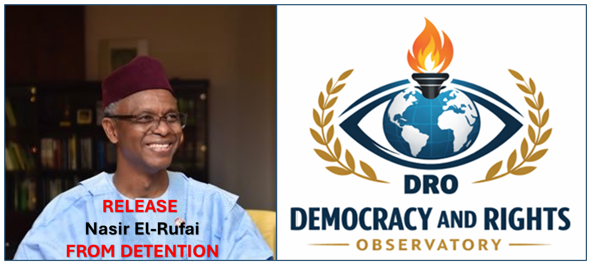
Democracy and Rights Observatory Calls for Immediate Release and International Scrutiny of Nasir El-Rufai Detention in Nigeria
The Democracy and Rights Observatory (DRO) is calling for urgent international attention to the continued detention of former Kaduna State Governor Nasir Ahmad El-Rufai, warning that recent developments raise serious concerns about adherence to due process, judicial authority, and the rule of law in Nigeria.
According to publicly available reports, Mr. El-Rufai was first detained by the Economic and Financial Crimes Commission (EFCC) on 16 February 2026 after honoring an invitation regarding corruption allegations. After being granted bail, he was subsequently taken into custody by other federal agencies, including the Independent Corrupt Practices and Other Related Offences Commission (ICPC), where he remains under investigation.
In a further development, the Federal High Court in Abuja adjourned his arraignment to April 23 after the Department of State Services (DSS) failed to produce him before the court. Prosecutors informed the court that he remained in ICPC custody in connection with separate allegations of financial misappropriation.
Mr. El-Rufai is also facing charges under the Cybercrimes Act and the Nigerian Communications Act related to statements allegedly made during a February 13 interview on Arise News, in which he claimed knowledge of intercepted communications involving the National Security Adviser.
DRO notes that the apparent pattern of successive detentions by multiple agencies and the failure to produce a detained individual for scheduled court proceedings raises serious concerns about institutional coordination, respect for judicial processes, and protection against arbitrary detention.
DRO is concerned about potential actions aimed at restricting access to personal assets or public service entitlements connected to the investigation.
The organization notes that both Nigeria’s Constitution and international legal standards require that any limitations on property rights be imposed only through lawful judicial processes and due legal procedure. Any suggestion that economic or asset-related measures are being applied outside judicial authorization risks undermining confidence in legitimate anti-corruption efforts.
Asset control or economic restrictions must remain subject to judicial supervision and court orders, in line with established legal safeguards.
While accountability and anti-corruption investigations are essential in any democracy, such investigations must be conducted strictly within constitutional safeguards and internationally recognized standards of due process.
DRO therefore urges the Government of Nigeria to:
• Ensure that Mallam Nasir Ahmad El-Rufai is promptly presented before the court
• Guarantee that all investigations and prosecutions comply with constitutional and judicial procedures
• Either formally charge him before a competent court of law or release him in accordance with constitutional protections against arbitrary detention
Nigeria is one of Africa’s most influential democracies. Respect for the rule of law, judicial independence, and the protection of civil liberties remains essential for maintaining both domestic public confidence and international credibility.
The Democracy and Rights Observatory calls on the United Nations, the African Union, the European Union, diplomatic missions, and global human rights organizations including Amnesty International and Human Rights Watch to closely monitor developments in this case and encourage strict adherence to constitutional and international legal standards.
Ensuring transparency and due process in high-profile cases is essential to demonstrating that Nigeria’s democratic institutions remain strong, impartial, and committed to the rule of law.
Signed
Democracy and Rights Observatory (DRO)
1. Prof. Isa Odidi
2. Timothy A. Sule
3. Hajiya Hadiza Mohammed
About Democracy and Rights Observatory
Democracy and Rights Observatory is an independent, non-profit, non-political, non-ethnic, and non-governmental human rights organization dedicated to promoting universal human dignity, equality, justice, and accountability.
The organization operates through: Independent research; Advocacy and policy engagement; Legal awareness initiatives; Community support programs, and Humanitarian response.
The organization is headquartered in the Diaspora (Saint Paul, USA) and works with civil society actors, international bodies, and local communities to advance fundamental rights and freedoms.
FOR IMMEDIATE RELEASE
Ref: DRO/28/2026 9th March 2026
PRESS RELEASE
Democracy and Rights Observatory Calls for Immediate Release and International Scrutiny of Nasir El-Rufai Detention in Nigeria
The Democracy and Rights Observatory (DRO) is calling for urgent international attention to the continued detention of former Kaduna State Governor Nasir Ahmad El-Rufai, warning that recent developments raise serious concerns about adherence to due process, judicial authority, and the rule of law in Nigeria.
According to publicly available reports, Mr. El-Rufai was first detained by the Economic and Financial Crimes Commission (EFCC) on 16 February 2026 after honoring an invitation regarding corruption allegations. After being granted bail, he was subsequently taken into custody by other federal agencies, including the Independent Corrupt Practices and Other Related Offences Commission (ICPC), where he remains under investigation.
In a further development, the Federal High Court in Abuja adjourned his arraignment to April 23 after the Department of State Services (DSS) failed to produce him before the court. Prosecutors informed the court that he remained in ICPC custody in connection with separate allegations of financial misappropriation.
Mr. El-Rufai is also facing charges under the Cybercrimes Act and the Nigerian Communications Act related to statements allegedly made during a February 13 interview on Arise News, in which he claimed knowledge of intercepted communications involving the National Security Adviser.
DRO notes that the apparent pattern of successive detentions by multiple agencies and the failure to produce a detained individual for scheduled court proceedings raises serious concerns about institutional coordination, respect for judicial processes, and protection against arbitrary detention.
DRO is concerned about potential actions aimed at restricting access to personal assets or public service entitlements connected to the investigation.
The organization notes that both Nigeria’s Constitution and international legal standards require that any limitations on property rights be imposed only through lawful judicial processes and due legal procedure. Any suggestion that economic or asset-related measures are being applied outside judicial authorization risks undermining confidence in legitimate anti-corruption efforts.
Asset control or economic restrictions must remain subject to judicial supervision and court orders, in line with established legal safeguards.
While accountability and anti-corruption investigations are essential in any democracy, such investigations must be conducted strictly within constitutional safeguards and internationally recognized standards of due process.
DRO therefore urges the Government of Nigeria to:
• Ensure that Mallam Nasir Ahmad El-Rufai is promptly presented before the court
• Guarantee that all investigations and prosecutions comply with constitutional and judicial procedures
• Either formally charge him before a competent court of law or release him in accordance with constitutional protections against arbitrary detention
Nigeria is one of Africa’s most influential democracies. Respect for the rule of law, judicial independence, and the protection of civil liberties remains essential for maintaining both domestic public confidence and international credibility.
The Democracy and Rights Observatory calls on the United Nations, the African Union, the European Union, diplomatic missions, and global human rights organizations including Amnesty International and Human Rights Watch to closely monitor developments in this case and encourage strict adherence to constitutional and international legal standards.
Ensuring transparency and due process in high-profile cases is essential to demonstrating that Nigeria’s democratic institutions remain strong, impartial, and committed to the rule of law.
Signed
Democracy and Rights Observatory (DRO)
1. Prof. Isa Odidi
2. Timothy A. Sule
3. Hajiya Hadiza Mohammed
About Democracy and Rights Observatory
Democracy and Rights Observatory is an independent, non-profit, non-political, non-ethnic, and non-governmental human rights organization dedicated to promoting universal human dignity, equality, justice, and accountability.
The organization operates through: Independent research; Advocacy and policy engagement; Legal awareness initiatives; Community support programs, and Humanitarian response.
The organization is headquartered in the Diaspora (Saint Paul, USA) and works with civil society actors, international bodies, and local communities to advance fundamental rights and freedoms.
This treatment of Malam Nasir El-Rufai is troubling and smacks of political harassment. A former governor who served his term and contributed to national development deserves better than having his passport snatched at the airport without a formal invitation or charge. Due process must be respected for all citizens, regardless of political standing. If there are legitimate concerns, follow proper legal procedures. Otherwise, this looks like intimidation against a vocal figure. El-Rufai has consistently advocated for good governance, and Nigerians should be concerned when any citizen is treated this way by security agencies.
Thank you for sharing this thoughtful and focused contribution to the discussion on Nigeria's democratic future.
The success of any national political strategy will indeed hinge on such complex regional calculations and the ability of the electorate to translate grievance into coordinated action. Your perspective underscores that 2027 will be a test of political consciousness across all regions, with the North's choice poised to be especially consequential. I agree with your analysis and conclusion.
@ADCallianz
THE OFFICE OF THE
NATIONAL COORDINATOR
DIASPORA is inviting you to a scheduled Zoom meeting.
Topic: Global Engagement Meeting with ADC Support Groups in the Diaspora.
Time: Jan 31, 2026 04:00 AM Rome
Join Zoom Meeting
https://t.co/SSESIdqKCh
Meeting ID: 831 3080 9194
Passcode: 134241
---
One tap mobile
+13462487799,,83130809194#,,,,*134241# US (Houston)
+13602095623,,83130809194#,,,,*134241# US
---
Join by SIP
• [email protected]
Join instructions
https://t.co/jxfqIE5huU
@Teeniiola You can't fault her! She followed a structured approach: 1) understand the problem, 2) devise a plan 3) execute steps 4) verify the solution. And voila 10+1 is eleven.
@ADCallianz
H.E. Solomon Dalung, National Coordinator, Diaspora, ADC
Meeting with ADC Support Groups in the Diaspora
To join click the xspace link below:
https://t.co/gMVuRUNkKZ
I (@isaodidi) on behalf of ADC Diaspora and Nigeria Alliance, stand with His Excellency Atiku Abubakar in welcoming @PeterObi to the African Democratic Congress (ADC).
This is indeed a pivotal moment for political collaboration in Nigeria. A strong, united opposition is essential for democracy, and together, we can build a movement focused on peace, prosperity, and progress for all Nigerians.
The coalition train is moving — may it inspire more patriots to join this vital cause.
@atiku Warmest birthday felicitations to Your Excellency, on the auspicious occasion of your birthday.
Yesterday, we celebrated not just the passing of another year, but a life truly remarkable in its dedication and service to our nation. Your journey has been a tapestry of immense contributions to commerce, education, and the political landscape of Nigeria. You have inspired me and a generation of Nigerians with your resilience, your unwavering commitment to unity, and your profound belief in the promise of a greater Nigeria. I honor your legacy as a statesman, a philanthropist, and a patriarch. Your life's work continues to be a beacon of hope and a testament to the power of vision and perseverance.
On this special occasion, I pray that Allah bless you with abundant health, renewed strength, and profound joy. May the year ahead be filled with peace, fulfillment, and the satisfaction of seeing your efforts continue to bear fruit for our beloved country.
Happy Birthday, Sir. May your years be long and prosperous.
With the highest esteem.
Prof. Isa Odidi
As a world renowned Nigerian scientist and entrepreneur with over 100 Patents and 600+Patent Citations, based in Canada with extensive international experience in pharmaceutical innovation and scientific research, I wish to express my strong endorsement of the position articulated by His Excellency Atiku Abubakar regarding the recent certificate scandal involving Minister Uche Nnaji. This matter strikes at the heart of Nigeria's credibility and represents a critical juncture for our nation's moral and governance standards.
For a country striving to build a knowledge-driven economy, the collapse of moral standards within its leadership class is not only tragic but dangerous. Innovation and science cannot thrive in an environment where dishonesty is normalized and accountability is selectively applied. Integrity is the first principle of progress — without it, every other aspiration, no matter how visionary, collapses under the weight of hypocrisy.
Throughout my career, I have witnessed how proper credential verification forms the foundation of integrity in both scientific research and public service. The allegations that Uche Nnaji submitted forged academic certificates from the University of Nigeria, Nsukka, and NYSC documents represent more than an individual failing—they signify a systemic breakdown in our institutions. In scientific practice, falsification of data results in immediate dismissal and professional disqualification. We should expect no less rigor in verifying the qualifications of those entrusted with leading our nation's ministries and managing public resources.
The failure of the Department of State Services (DSS) to detect these alleged forgeries during ministerial screening is particularly alarming. Transparency and Integrity Index report revealed that 511 out of 517 federal Ministries, Departments, and Agencies failed to meet basic accountability benchmarks. When critical institutions themselves operate without transparency, it creates an environment where deception can flourish unchecked.
His Excellency Atiku Abubakar is correct in identifying this scandal as part of a disturbing pattern rather than an isolated incident. When leadership demonstrates disregard for verification processes and factual accuracy, it establishes a cultural precedent that permeates throughout governance structures. It creates international embarrassment for Nigeria, undermining our credibility on the global stage that we so desperately need to attract investment and professional collaboration.
From my perspective in the international scientific community, I can attest that Nigeria's reputation suffers tremendously from such controversies. Potential collaborators question whether Nigerian institutions maintain the rigor and integrity required for meaningful partnership. This has tangible economic consequences beyond the obvious moral implications.
I join His Excellency in calling for:
1. An independent, transparent investigation into the academic and professional credentials of all Federal Executive Council members
2. Comprehensive reform of the screening processes for public appointments
3. Legal accountability for those found to have submitted forged documents
4. International observation of Nigeria's credential verification systems
To my fellow Nigerians at home and abroad: we must collectively insist on higher standards for those who represent us. Our nation possesses extraordinary human capital and potential, but we cannot thrive when deception is tolerated at the highest levels of leadership.
The scientific community understands better than most that truth forms the foundation of progress. We cannot build a prosperous Nigeria on a foundation of forged certificates and falsified records. I stand with His Excellency Atiku Abubakar and all Nigerians who demand accountability, transparency, and a restoration of integrity to our public life.
Dr. Isa Odidi
Can AI Be Your Next Doctor or Clinical Pharmacist? – The Rise of AI Co-pilots in Healthcare
Artificial Intelligence (AI) is not only assisting—it's co-diagnosing, triaging, and even documenting clinical notes and drug information in medical practice and clinical pharmacy, respectively. In hospitals and clinics worldwide, AI models trained on vast amounts of medical data are being introduced as clinical decision support tools or systems, especially in:
-Radiology (detecting subtle anomalies even veteran professionals may miss)
-Pathology (examining slides faster and more precisely)
-Primary Care (triage chatbots, symptom checkers)
-Mental Health (AI therapists & emotion-aware platforms)
-Pharmacy Practice (AI-powered voice assistants, medication therapy management, Sepsis Prediction AI, AI engine for genetics, drug interactions, and cumulative risk analysis),
And now, AI is even helping to design new drugs in weeks instead of years.
But here's the big question:
If AI gets smarter, what happens to the human touch in healthcare?
Should AI be a tool… or a teammate?
Please comment: Would you trust an AI with your diagnosis, treatment, or medication/drug information management?
hashtag#AIinHealthcare hashtag#DigitalHealth hashtag#HealthTech hashtag#FutureOfMedicine hashtag#LinkedInHealth hashtag#EthicsInAI hashtag#HealthInnovation hashtag#GlobalHealth hashtag#HealthcareInnovation hashtag#ABUAlumni hashtag#LinkedInHealth hashtag#PublicHealth hashtag#MedicalBreakthroughs hashtag#MedTwitter hashtag#Medicine hashtag#Healthcare hashtag#DoctorsOfInstagram hashtag#MedStudent hashtag#Pharmacy hashtag#Pharmacist hashtag#PharmD hashtag#PharmaceuticalScience
Honoring a Legacy of Excellence: Celebrating Professor Gabriel Osuide's 90th Birthday
[Toronto, 2025-03-16] – Yesterday, pharmaceutical scientists world wide joined in celebrating the extraordinary life and achievements of Professor Gabriel Ediale Osuide, a trailblazer in pharmaceutical sciences and public health, as he marked his 90th birthday. The event, filled with heartfelt tributes and fond memories, paid homage to the profound impact he has made on healthcare, education, and society at large.
Throughout his career, Professor Osuide has exemplified excellence and dedication. As Nigeria's first Director-General of the National Agency for Food and Drug Administration and Control (NAFDAC), he set the gold standard for drug regulation and safety, saving countless lives and inspiring similar frameworks across Africa. His visionary leadership continues to guide the agency's efforts today.
In the academic world, Professor Osuide's influence is equally profound. His role in shaping pharmacy education and mentoring generations of professionals has left an indelible mark on the field. His students and colleagues remember him not only for his intellect but also for his unwavering commitment to integrity and service.
The celebration brought together family, friends, colleagues, and well-wishers, all eager to express their gratitude and admiration for Professor Osuide's monumental contributions. As he enters his 91st year, his legacy of innovation, leadership, and compassion will undoubtedly inspire future generations.
Happy belated 90th birthday, Professor Gabriel Osuide—a true pioneer and role model. May this new chapter be filled with continued joy, health, and fulfillment.
Prof. Isa Odidi