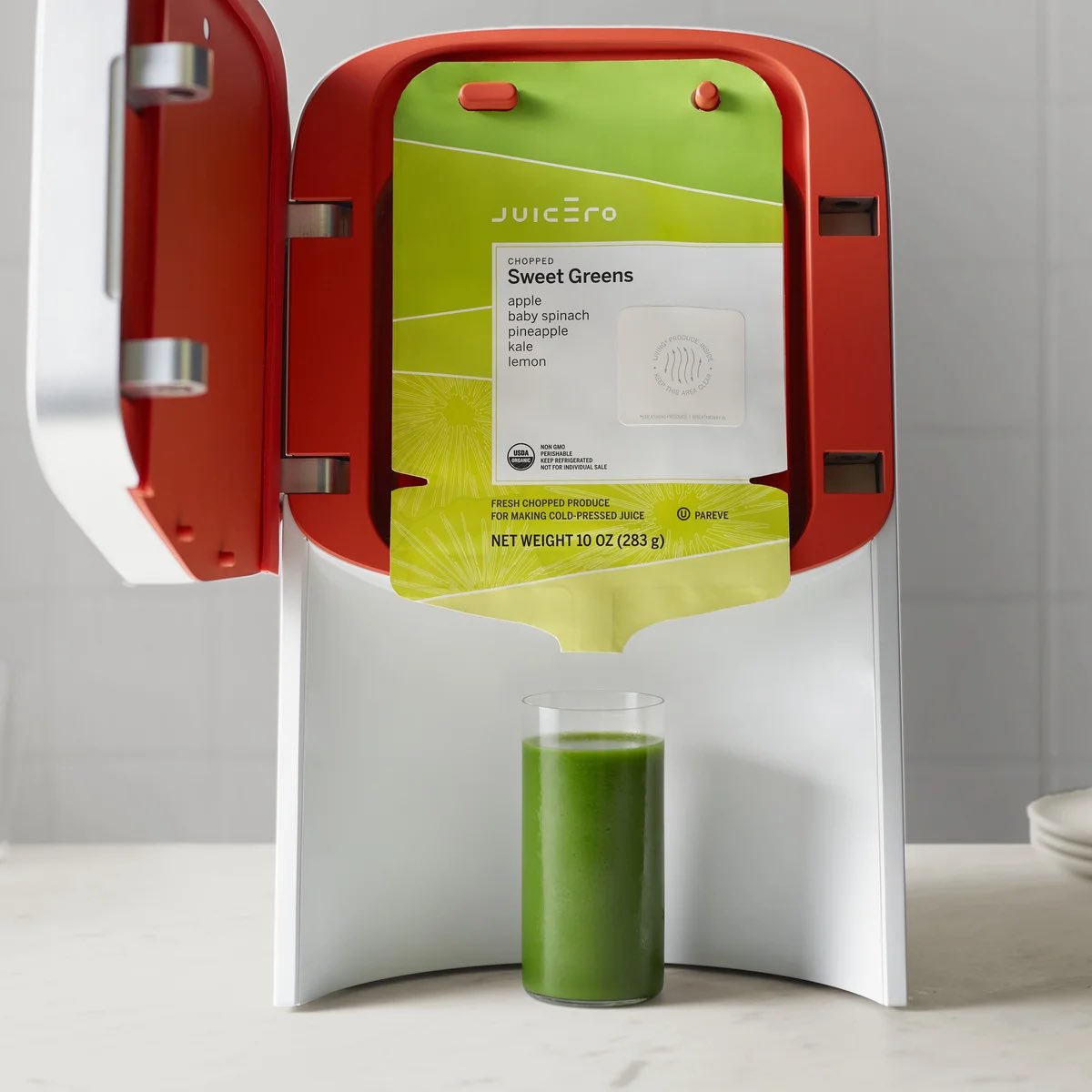
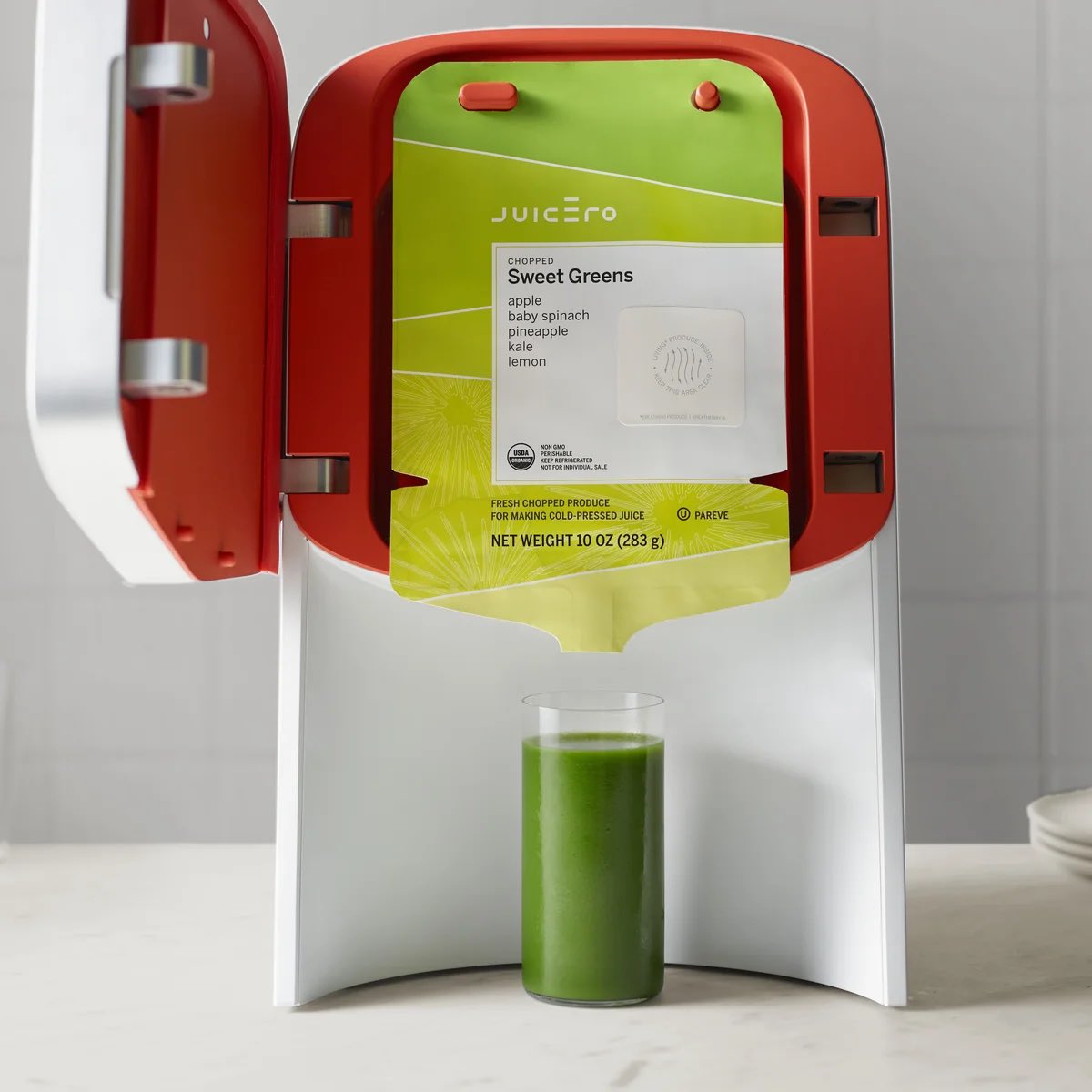
Look for the first users forging the desire path.
#ux
"When you look at innovations consistently, users are first. Users are the pioneers." -Eric von Hippel
https://t.co/0CY7A6ntQG
There’s a weird paradox in AI right now.
In SF and parts of NYC, you’re so close to AI that you lose touch with how normal people actually live.
Outside those bubbles, you’re so far from AI that you don’t realize how fast the world is changing.
Too close, you lose the plot. Too far, you miss it.
Today we announced the Claude-led discovery of a molecular machine that we suspect could represent a new gene editing mechanism. Its precise function, biotechnological utility (if any), or level of significance is not yet clear, but at minimum it is work I would have been proud to do as a PhD student. The work was done mostly, though not entirely, by Claude: our life sciences team suggested a broad area of research, Claude read through the literature and a bunch of genome data and discovered something interesting, then Claude proposed experiments to verify the discovery and our team carried them out.
It’s easy to dismiss this as a one-off or curiosity, but we’ve repeatedly seen a pattern where AI performance in new intellectual domains goes from weak to superhuman in a matter of a few years. In 2023 models struggled to do math at the level of an average high-school student. In 2024 they started to do well on math competitions for the best high-schoolers in the country, in 2025 they started to solve minor open problems, in early 2026 more significant open problems, and in late 2026 they are beginning to solve the top few open problems in all of mathematics. We believe AI for biology is on a similar exponential trend.
The main difference between biology and mathematics, of course, is that math can be done purely theoretically, while biology requires experimentation. Some have used this to draw the conclusion that AI’s utility in biology will be limited. We think this is wrong. As we’ve demonstrated today, humans can collaborate with AI to perform the experiments, validate key results in a few weeks and, if necessary, work with the AI to iterate on what they find. Eventually it may even be possible for Claude itself to safely perform the experiments by autonomously controlling lab equipment, with appropriate safeguards in place, but we aren’t doing that today (our lab is also a BSL1/BSL2 facility that doesn't handle materials dangerous to humans).
More broadly, biomedical advancement has many stages — from fundamental biology discoveries, to translational research, to drug discovery, clinical trials, and finally the actual delivery of medicines and health care to patients. We are also interested in these later stages, but even simply accelerating the first stage of fundamental biological discoveries has the potential to speed up and broaden the entire pipeline. Improving our understanding of biology and sharpening biologists’ tools can drive forward all of the later stages, for example by identifying new drug targets, finding new therapeutic modalities, allowing for more precise measurement, and speeding up the experimental loop which itself further accelerates our understanding of biology. This will not in itself speed up clinical trial times, but if it succeeds it could greatly increase the number of promising candidates that go into the pipeline — an increase in throughput even though latency remains.
In Machines of Loving Grace, I wrote about AI’s potential to “cure most diseases in 5-10 years” — a goal that sounds impossible, but one I believe is just barely possible if AI is applied to every stage of the pipeline. The first step is showing that AI can first help with, and then drive, biological discoveries.
Claude’s discovery is the latest in a line of related prior work that goes back decades, beginning with systems like CRISPR, and continuing with discoveries like the bridge recombinase and VIPR in the past few years. Recently, there has been heightened interest in systems based on reverse transcriptase (RT) enzymes, the enzyme underlying the system Claude identified. And most recently, a Stanford team working independently described a novel RT system with an associated non-coding array that is in some ways similar to the one Claude found, though they are distinct systems that evolved independently from each other. I believe that we’re at the very beginning of finding such systems and developing them into powerful tools for biotechnology.
I’m proud of the resources Anthropic has invested in accelerating the public benefits of AI through the life sciences, and we’re aiming both to grow our life sciences team and to work with other scientists to extend this approach to a broad range of problems. If you have a proposal for a research collaboration or are interested in joining our life sciences team, please reach out.
EXCLUSIVE: AI actress Tilly Norwood glitches and starts speaking CHINESE during her interview with Piers Morgan and real-life actor Tom Conti...
Watch the full interview at 7pm (BST)👇
📺 https://t.co/1nTb79BH8D
@piersmorgan | @TillyNorwoodX
Virginia is forty-four. She has not slept properly in five weeks.
She learned the AI tools last August. She remembers the joy of solving in ninety minutes what used to take a week. This is going to give me my life back, she thought.
What actually happened: she got faster, and because she got faster, more work came. Not as a punishment. As a compliment. Virginia is so good with these tools. Let’s get Virginia on it.
The work she does now would have taken three people in 2022. She knows because she used to be one of the three. The other two have been quietly reabsorbed.
Her hands shake. She works until eleven most nights. Her daughter asked her last Sunday why she was always on the laptop. Virginia said because mummy is helping people. Her daughter said but who is helping you.
She has not mentioned any of this because she is the success story. The case study the CEO mentions on calls.
She does not feel like she is winning.
She has no edges anymore. The fluency dissolved her. The excellence ate her shape.
The tools were supposed to give her her life back. Instead they took the rest of it.
She is forty-four. She has not slept in five weeks. Nobody has noticed.
This is the greatest video I’ve ever seen. No notes. The lifeless clanker carcass just laying there. No crowd reaction, anything. Just Billie Jean. Until its lifeless shell is shamefully dragged off. Purely amazing.
@mcuban Using AI as an excuse to fire people for the sake of automated optimization is an AI lie leaders are using to justify the cost of AI. There isn’t less work, now there’s more, at scale.
MCP updates in FigJam so you can visualize your systems (and not just read code)
→ generate_diagram to create architecture diagrams & ERDs
→ figma-use-figjam skill to add notes, code blocks, and annotations directly to your board
→ get_figjam tool to read your board & map out next steps
Today, we’re open-sourcing the draft specification for DESIGN.md, so it can be used across any tool or platform. We’re also adding new capabilities.
DESIGN.md lets you easily export and import your design rules from project to project. Instead of guessing intent, agents know exactly what a color is for and can even validate their choices against WCAG accessibility rules.
Watch David East break down this shared visual language in action👇. New capabilities and links in 🧵