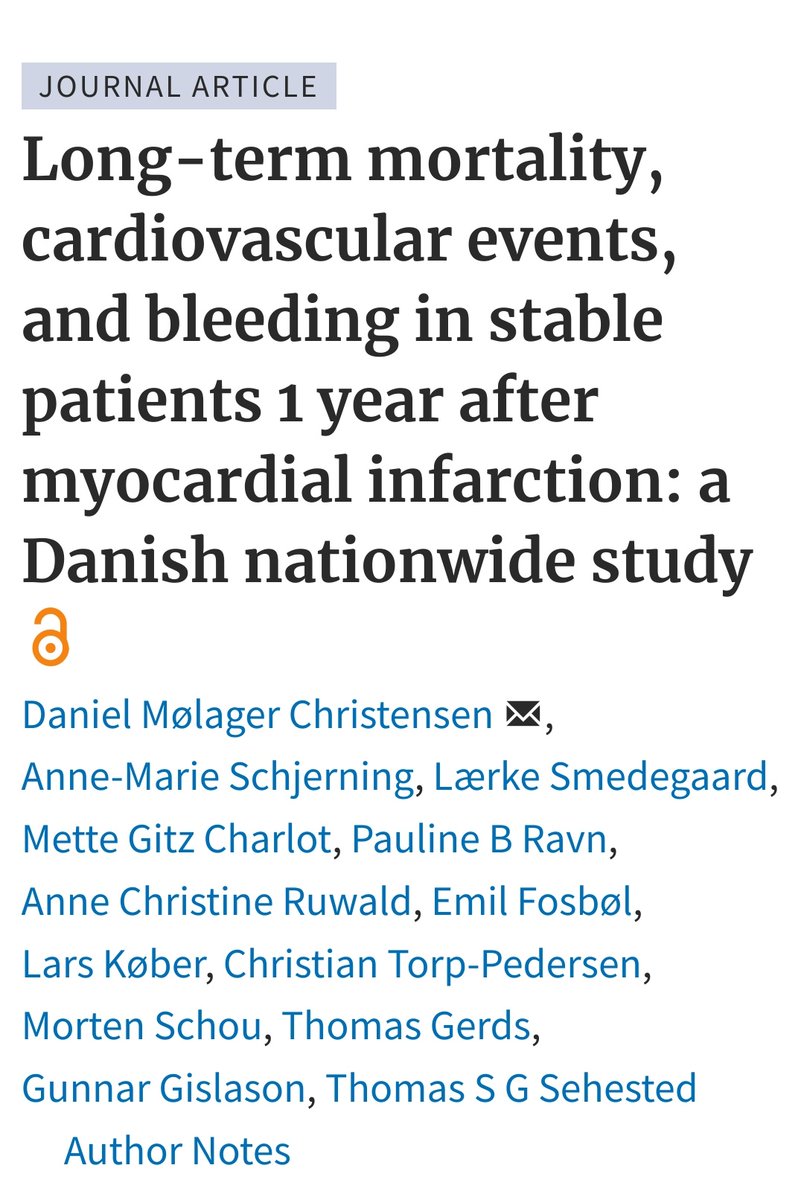
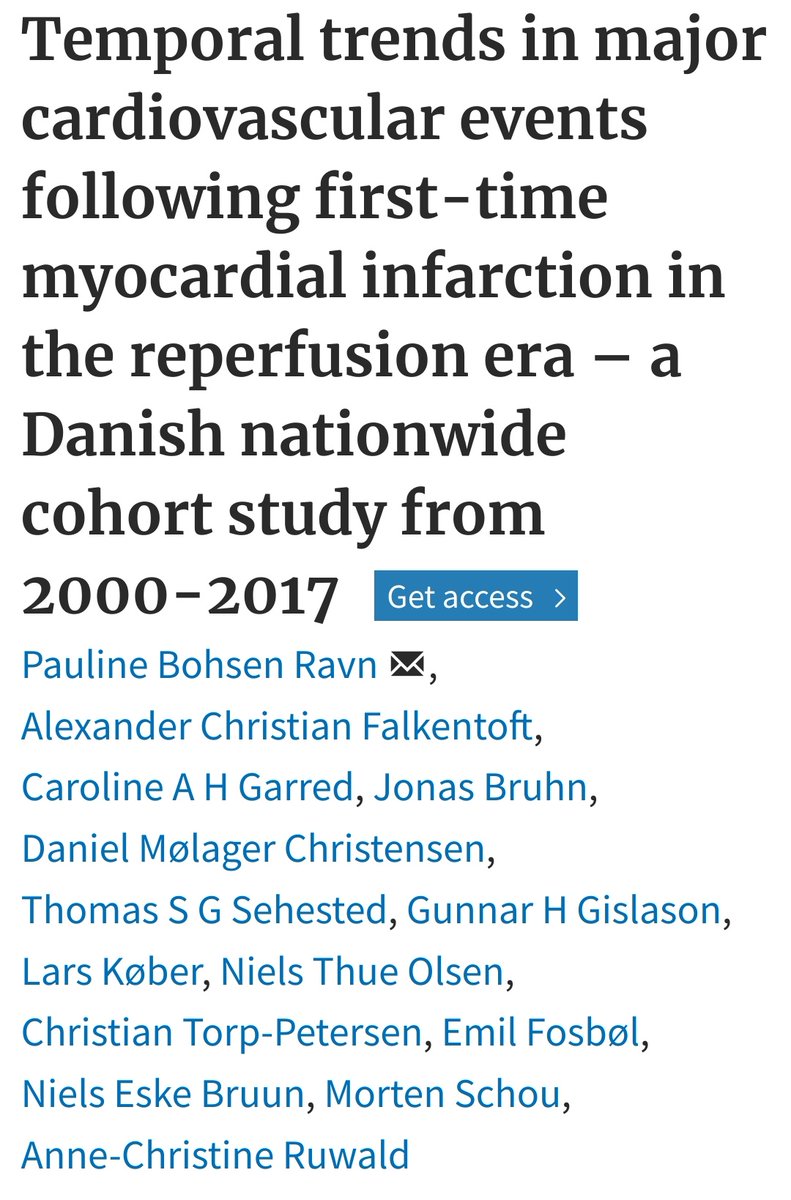
Ever wonder about all the non-cardiovascular diseases in #MI patients? Read this amazing paper on temporal trends on non-CV disease in MI patients through 17 years by @DanielMolager and @tsg_sehested in @JACCJournals.
#CardioTwitter#NonCardiotwitter
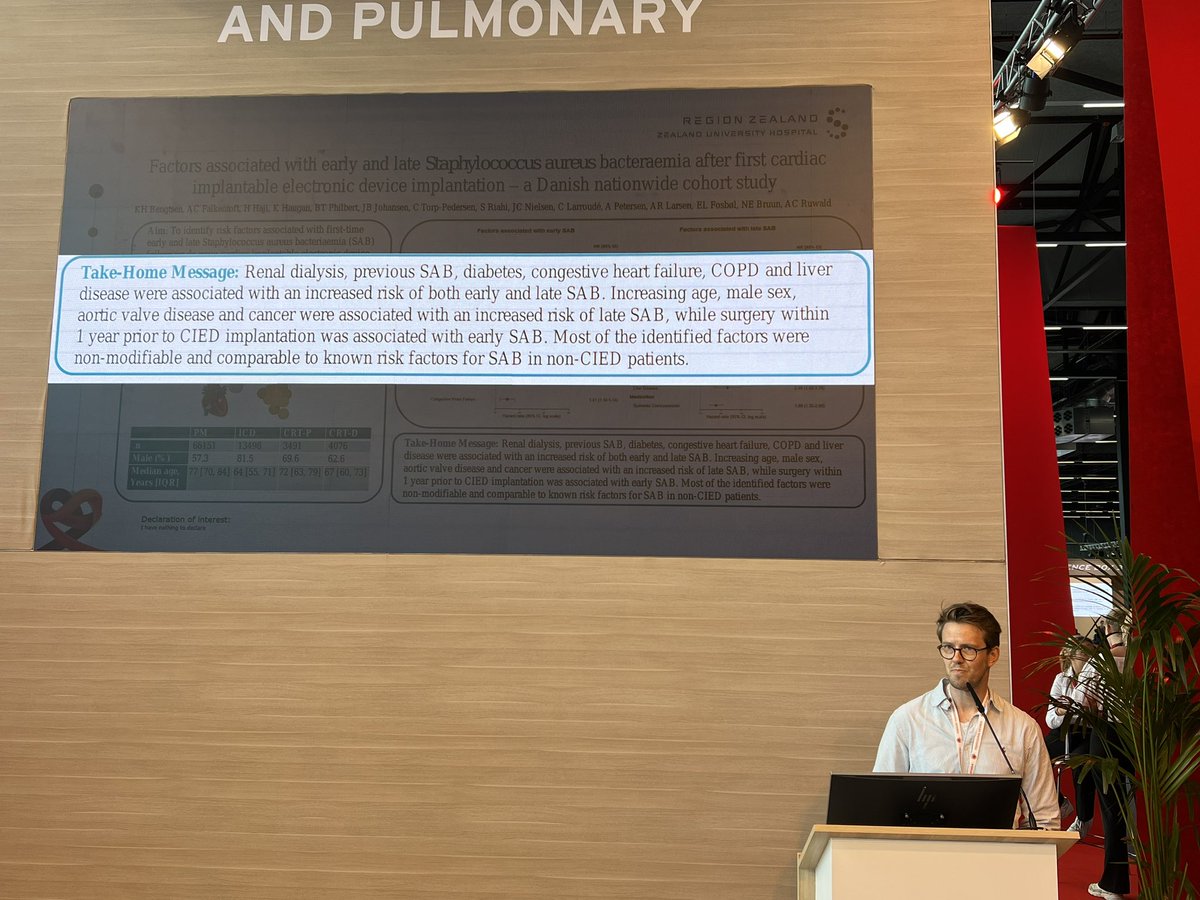
Many relevant findings from PhD student @kasperbengtsen in his national study on risk factors associated with early and late S. aureus bacteraemia in CIED pts presented at #ESCCongress 🫀🧫
Congratulations on the hard work!👏👏
#ESC2023#DCS_ESC23
Our new study demonstrates higher risk of MACE in ppl achieving initial remission of T2D. More attention to RF management with statins and RASi seems needed in lifestyle-treated individuals without glucose-lowering therapy. @CardiologyZuh@ARuwald @bochrajamal
Danish data show higher CV risk in individuals with initial remission of #T2D than in those with well-controlled T2D on glucose-lowering therapy. This appeared related to lower CV RF management with statins and RASi. @AFalkentoft@ARuwald@Filip_Knop https://t.co/j5wPhLtNZX 🔓
Beyond glucose control, the opportunity for risk factor management in PPL with new #T2D often remains unfulfilled leading to higher rates of #heartdisease#CVD@Filip_Knop@DiabetologiaJnl https://t.co/HF2sKXHh7E
What is the association between #frailty and time in hospital following #TAVR? Find out in @JAHA_AHA
Frail patients have an⬆️risk of death & complications. For these patients, life-expectancy is limited and time in hospital is central for quality of life, yet data remain sparse
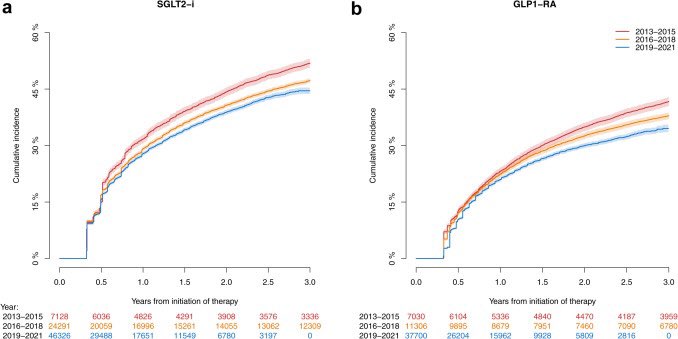
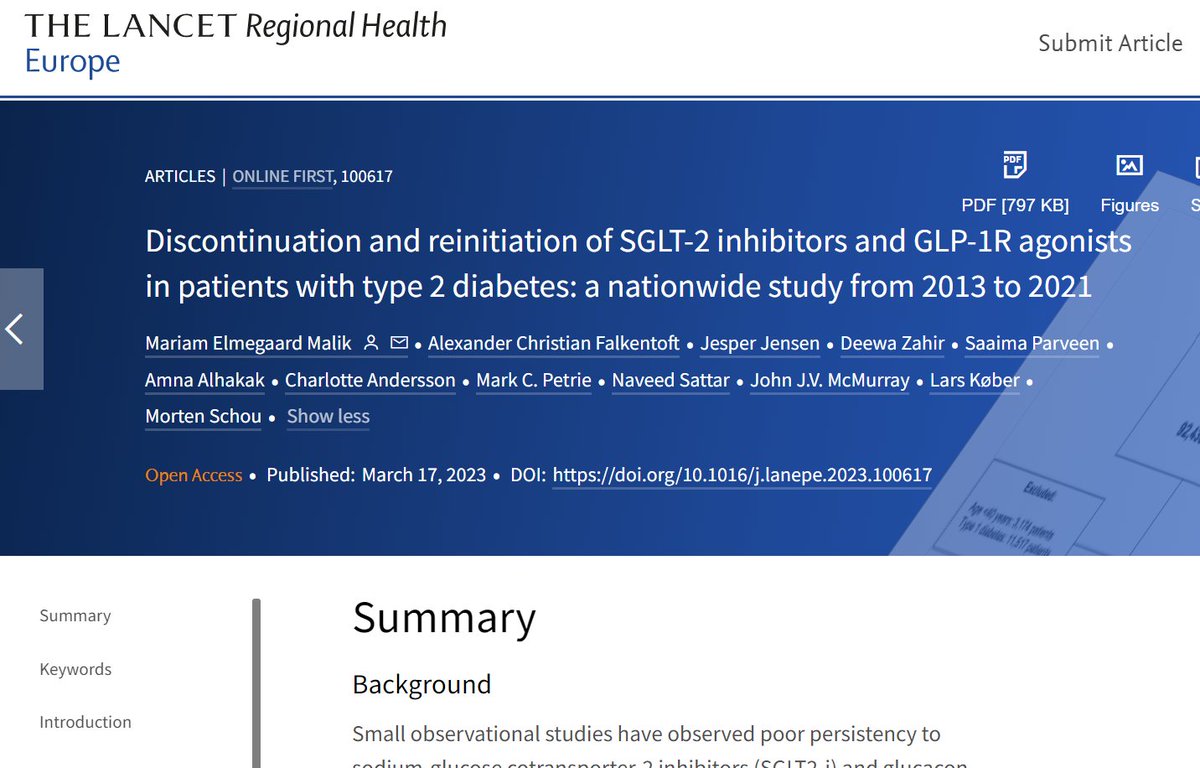
In this @TheLancet sdy @MariamElmegaard et al found that in 77,745 ptts w first time SGLT2-is and 56,037 GLP1-RAs the risk of discontinuing was 56% and 45%, respectively, w a decreased risk over the sdy-period
https://t.co/zJWKje8tpy
#Cardiotwitter@cardiology @diabetes
Data on all Danish first-time users of SGLT2is and GLP1-RAs from 2013 to 2021 show that ~50% discontinued therapy within five years, but a quarter of these reinitiated therapy during the following year.
Discontinuation rates decreasing with time.
https://t.co/DRY2zdHmYC
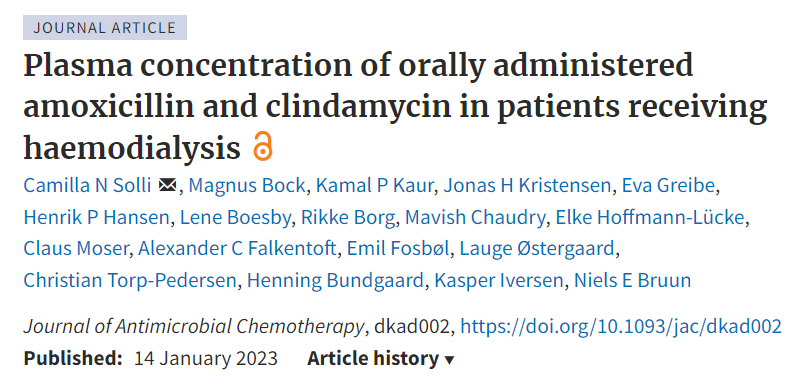
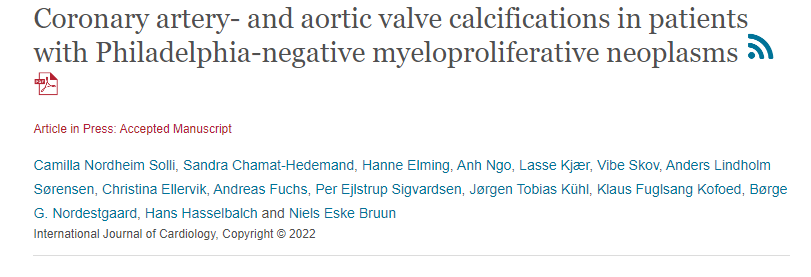
In this sdy, @cnsolli et al. found that 1 dose of amoxicillin/clavulanic acid 500/125 mg or clindamycin 600 mg within 30-120 min. prior to hemodialysis was sufficient to maintain prophylactic plasma concentrations throughout the whole duration.
🦠+💊=💀
https://t.co/aDwPK1zhfa
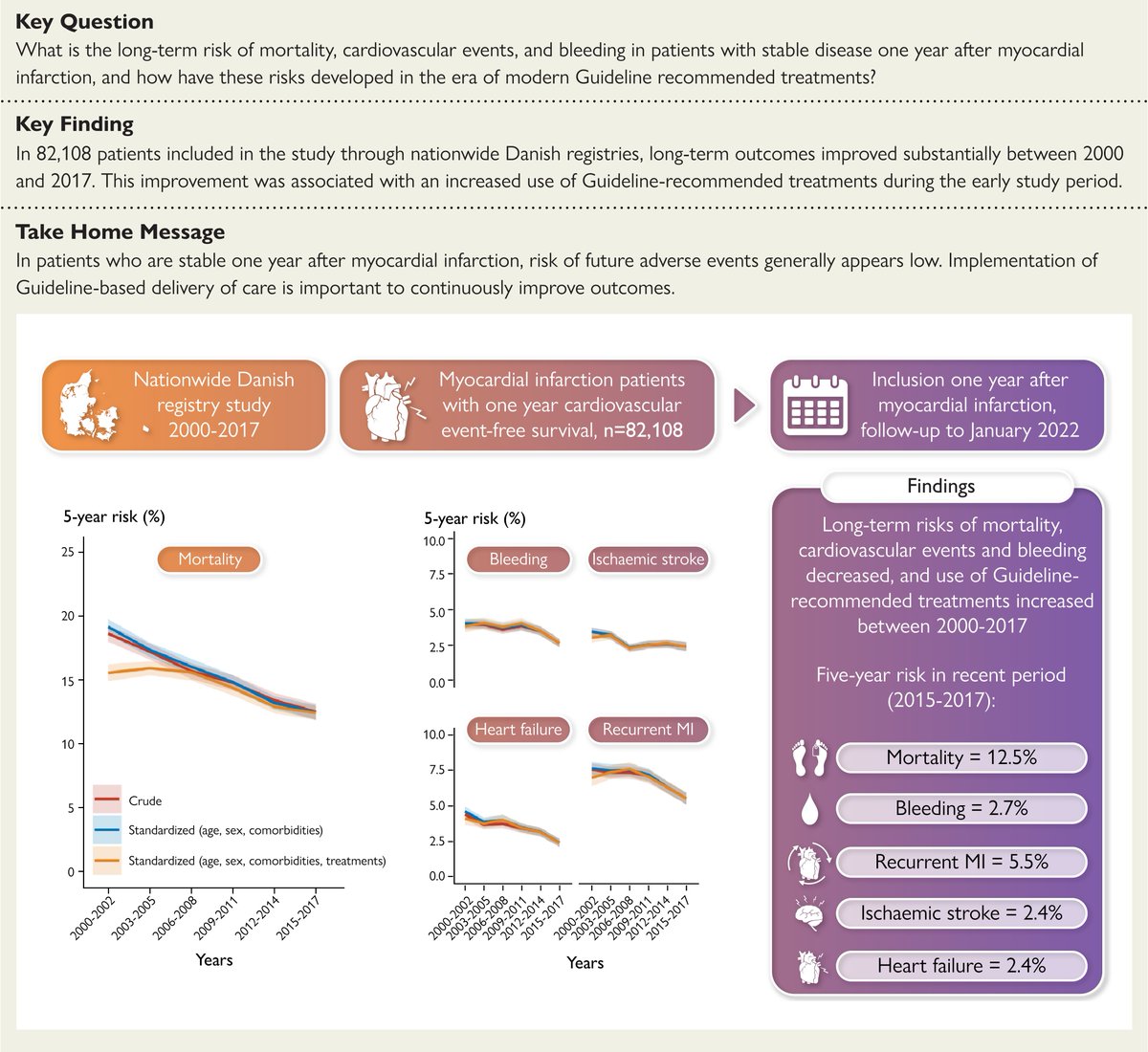
Improved outcomes after MI over time 📈
2️⃣0️⃣0️⃣0️⃣🆚2️⃣0️⃣1️⃣7️⃣
☠️Mortality, 18.6% to 12.5%
💔Recurrent MI, 7.5% to 5.5%
🩸Bleeding, 3.9% to 2.7%
Mortality was as low as 2.6% in 2015–17 for pts <60 years 👀
https://t.co/VW26roGqju
#CardioTwitter#Cardiology
Important contribution to the growing field of cardio-oncology.
How does cancer type & status impact the prognosis of ACS? What is the cause of death? How are they managed? All important questions addressed by @NinaNouhravesh
Find out below!
https://t.co/AhLqMSd7fS
Cardiovascular disease was the leading cause of death in pts w active- and non-active cancers 🦀
Sdy from @NinaNouhravesh et al in @AmericanHeartJ
👇
https://t.co/DIw8XsTZKv
@DanielMolager @BojerStege@CopCard@CardiologyZuh@cardio_dk Thank you for your interest. No we have not published the paper yet. The abstract is available at the ESC website https://t.co/CRUjpvGPRP
In this #EHJQCCO sdy @DanielMolager et al found influenza vaccine 💉 uptake is suboptimal among ptts w CVD, even w free-of-charge vaccinations 🧬
Vaccine uptake was particularly low among young patients 👦🏼👧🏾🧒🏽
🔗https://t.co/yzwuDgCozd
#cardiotwitter#Cardiology
In this @AnnalsofIM sdy @AndersHolt6 et al found that from 2000 to 2018, the use of PDE5 inhibitors🍆 increased 2️⃣0️⃣-fold among ptts with IHD who were taking nitrates
No significant increased 🛑of CV events were found in these ptts
🔗https://t.co/aOJT4bhfS4
#CardioTwitter