wait, you can describe an app and have floot build it for you?
floot turns a plain language idea into a working app or website, without coding..its new MCP setup also lets claude and chatgpt work with your projects.
i kinda want to throw a random app idea at this now😂
maxProseWidth is a small change but i’d use it 😂
wide terminal windows can get messy fast...
so..keeping code and tables full width makes a lot of sense too!
Claude Code 2.1.282 has been released.
86 CLI changes
Highlights:
• maxProseWidth caps prose in wide terminals for better readability while tables and code keep full width
• Startup notice and /status+claude doctor list ignored/telemetry-off vars explaining why telemetry disabled
• Fixed 400 errors from undecryptable web-search entries in conversation history, restoring failed requests
Full details are in thread ↓
@bcherny this feels like a bigger shift than just better context! once the project remembers your patterns and handles the threads.. coding starts feeling less like managing an ai session and more like working with a persistent teammate
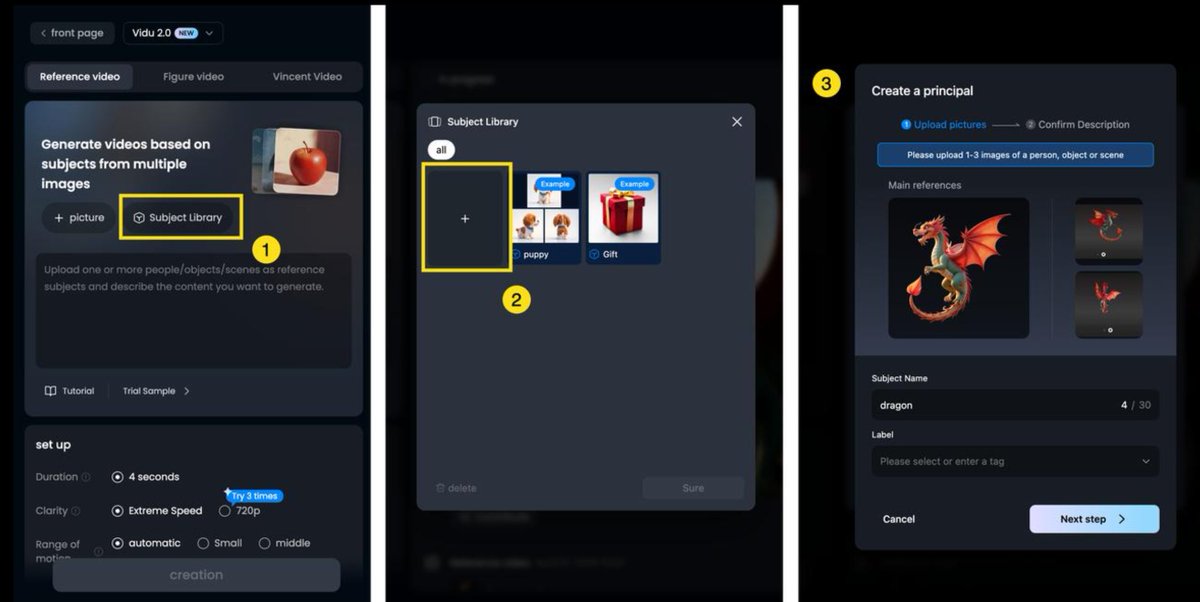
one of the best parts of vidu 2.0 is the subject library
upload a few reference images, save the subject, then reuse it in new videos
way easier to keep characters and objects consistent. if you’re using ai video, try multiple angles as references...
@IntCyberDigest if this is confirmed, the scale of it is seriously concerning... routing hundreds of thousands of customer prompts through another model and using those exchanges for training raises some major privacy questions🫢
bringing back tate langdon and james patrick march in the same season as a crossover event is the fan service payoff that ahs has been building toward for over a decade
since these two characters represent some of the show's most iconic and emotionally complex villain work and seeing peters return to both roles is a statement about how seriously fx is treating this season
google is turning spreadsheets into mini apps😊
give sheets a prompt and it can create an interactive tool using the spreadsheet as the data source
that's going to make a lot of internal tools much easier to build...
@koltregaskes i'm with you on the hallucination side!!
all the demos look great, but i want to know how often it confidently gets things wrong when you actually give it real work
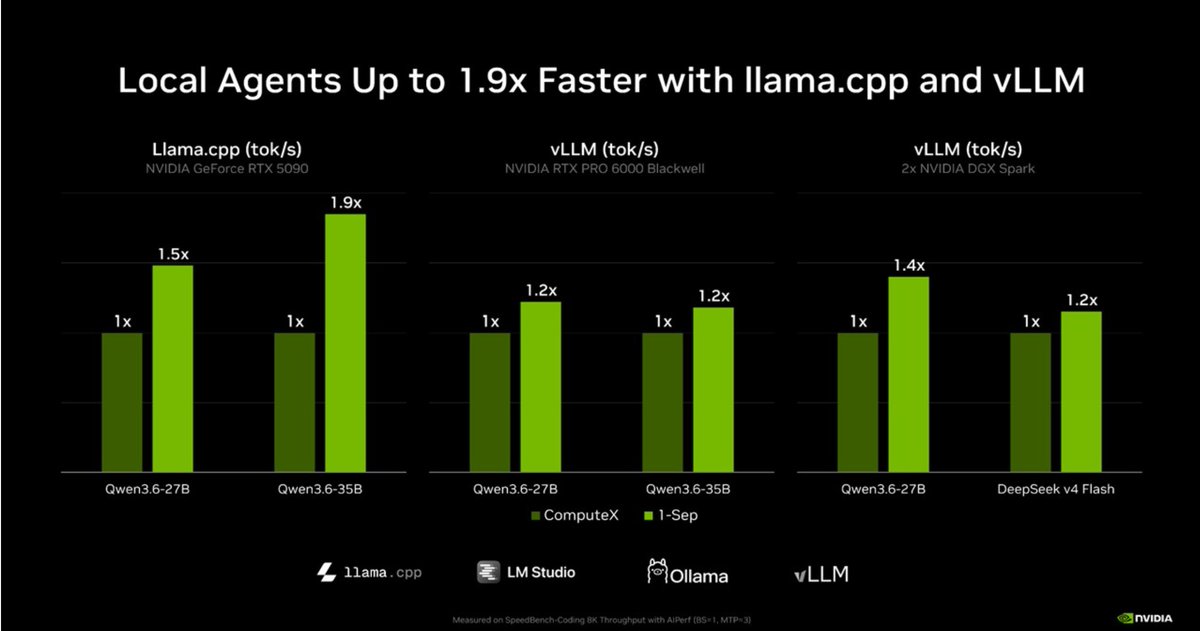
wait, 1.9x faster locally?
that's actually a pretty nice jump!!
the more these modes speed up on regular hardware, the more i'm starting to get why people want to run AI locally 😬
@shawnchauhan1 the chip is impressive 😌the lock in question is what makes me pause!
when one company controls the model, hardware and pricing. that's a lot of power in one place
the biggest productivity shift might be teaching ai by showing it!
you do the task once...ai watches the steps and turns them into a workflow it can reuse 🤖
that’s a productivity upgrade i can get behind!
@astropol0 everyone's speculating about the pro model while the flash model is just sitting there quietly winning benchmarks like it wasn't supposed to
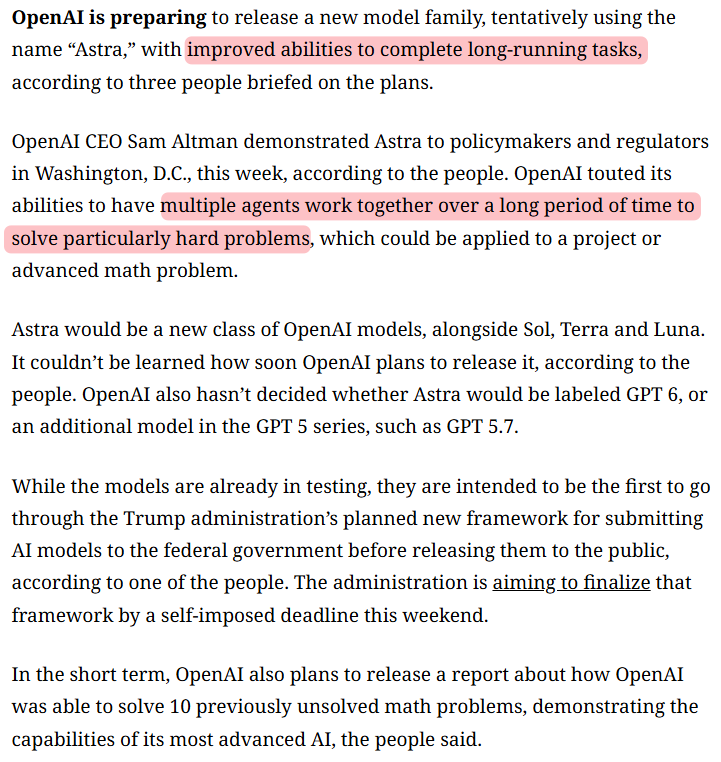
OpenAI's Astra sounds like it's built to be a true multi agent, long horizon model from the ground up not bolted on after the fact.
if it ships with native orchestration across Sol, Terra, and Luna, that's a real step change from single session agentic work
Prediction: OpenAI's Astra will be a breakthrough for long-horizon, multi-agent work in the same way Claude Code was a breakthrough for agentic coding in Winter '25.
Here's why I think so:
1. The Information reported that Astra is trained with the ability for "multiple agents to work together over a long period of time to solve particularly hard problems".
2. OpenAI has invested in inter-agent communication in Codex. GPT-5.6 Sol and Terra can communicate with each other while working in parallel, and last week Codex added the ability for Luna to work as a subagent in the same multi-agent v2 system.
3. Astra is rumored to be a new pre-train (unconfirmed), which means that OpenAI had the opportunity to train multi-agent communication into Astra end-to-end.
Much in the same way models trained inside an agent harness are more effective on agentic tasks than models without a harness, Astra will be trained inside a native multi-agent system like Codex's multi-agent v2 and be vastly more effective at multi-agent orchestration.
I predict that Astra will support multi-agent orchestration in Codex out of the box, and will seamlessly delegate tasks to more efficient but less capable models like Luna.
AND it will feel so magical because Astra will be a giant new pretrain that can do this on a level-approximating flawlessness.
Astra will probably be more expensive than Sol but it may not matter if it can orchestrate agents in Codex for you out of the box, maximizing efficiency.
We will find out Soon™
@testingcatalog "especially if you regularly test different subscriptions" is a very testingcatalog thing to highlight, but also correctly identifies who benefits most: people who bounce between claude code, cursor, and codex trying to figure out which one's actually better