Why did one building survive when everything else vanished?
The Genbaku Dome — once Hiroshima’s Industrial Promotion Hall — stood just 160m from the blast. Its concrete shell endured 4,000°C and became the city’s elegy, now preserved as a UNESCO World Heritage Site (1996).
#WWII
@histories_arch Hitler’s bloodline did what his ideology never allowed—chose to disappear. After 1945, silence became their survival strategy. As historian Brigitte Hamann noted, the family ended itself not through punishment, but through a conscious rejection of his legacy
@fasc1nate Pilecki didn’t just infiltrate Auschwitz, he exposed the modern world’s blind spot—evil thriving behind bureaucracy. His reports were the first moral alarm to the Allies. As historian Davies notes, he was “voluntary witness to hell,” punished later for telling the truth.
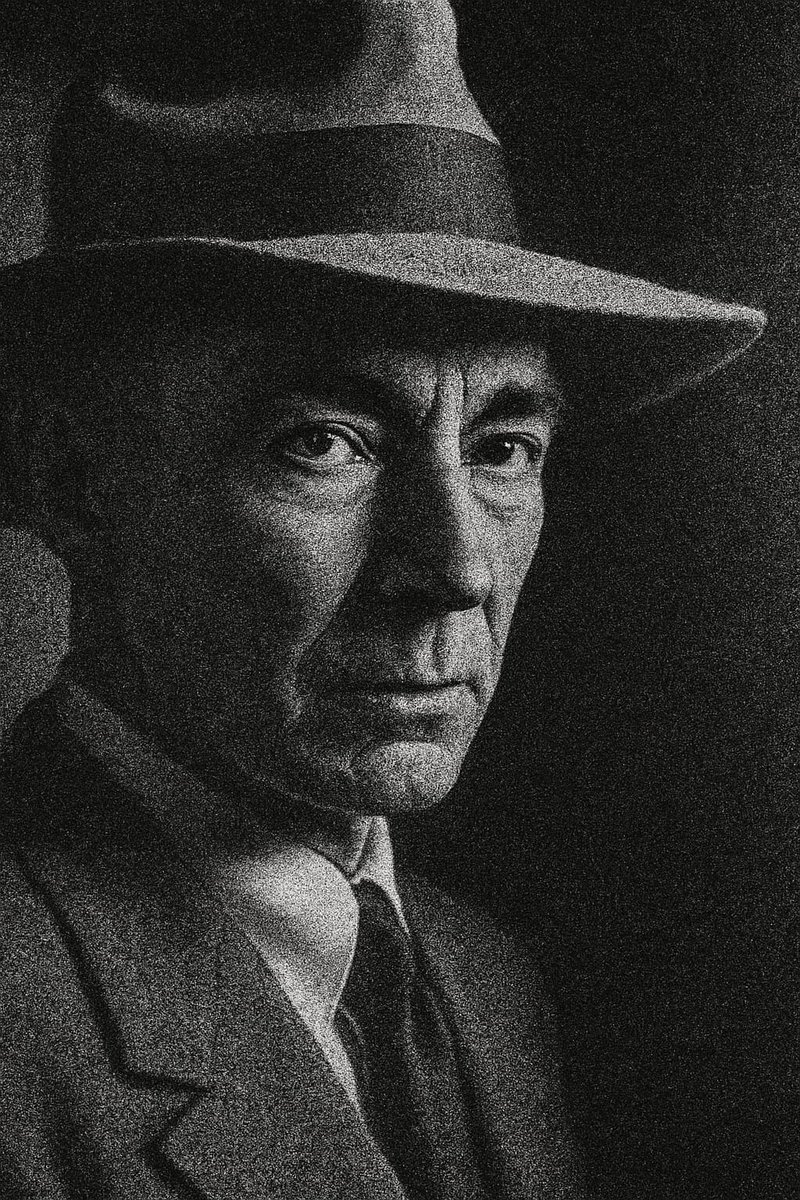
He gave us the atomic bomb and a warning that would haunt him forever. But the true cost of that creation wasn't the destruction��it was the guilt that consumed the creator
#History
↓
The most destructive force in human history began not with a bang, but in the silent deserts of New Mexico. This is the untold story of the Manhattan Project's birth.
#History
↓
@MilHistNow The tragedy of the Warsaw Ghetto wasn’t just confinement, it was the blueprint of industrialized dehumanization. As historian Ringelblum noted, the walls were built of brick, but sustained by bureaucracy. A city quarter became a laboratory of state cruelty.
@IsabellaMDeLuca Calling Qatar a “terror sponsor” is intellectual laziness. States don’t fund ideology—they fund influence. Diplomacy isn’t moral theater, it’s survival strategy. Those who can’t read geopolitics aren’t exposing terror—they’re funding ignorance
@IsabellaMDeLuca Fear always imagines a veil where there is only a vote. Democracy isn’t undone by faith—it’s defined by the freedom to choose one. If a hijab unsettles you more than hate speech does, perhaps the problem isn’t religion, but fragility.
@Prest_on_Time@IsabellaMDeLuca Civilizations don’t clash by faith, but by fear. The West once said the same of Jews, Catholics, and immigrants — until history proved pluralism was its real strength. Blaming Islam for diversity’s friction is how empires excuse their own amnesia.
@IsabellaMDeLuca The irony is exquisite...
mistaking faith for threat is precisely how fear wins elections and loses civilizations. Democracy’s strength is not in sameness, but in the courage to be led by difference. Prejudice is the real extremist — always has been.
@IsabellaMDeLuca The extremists who attacked 25 years ago wanted division. The fact that a Muslim can now be elected mayor shows they failed. Democracies win not by exclusion, but by proving coexistence is stronger than fear.
@JJJCARU @historyinmemes Beneath the laughter and scissors of Parker High’s “skirt war” lay postwar America’s anxiety: femininity caught between tradition and liberation. When hemlines turned into manifestos, teenage girls became unwitting philosophers of modern identity.
@historyinmemes The 1949 “anti-long-skirt” clash wasn’t just about fashion-it was postwar America negotiating femininity and rebellion. When hemlines became ideology, teenage girls turned cloth into politics long before the counterculture had a name.
@MajdanekMuseum Operation Harvest Festival was genocide reduced to procedure-murder followed by erasure. At Majdanek, even death was conscripted into labor. As historian Browning wrote, “Bureaucracy made barbarism banal-but precision never purified the crime
@certaintyworld Roza Shanina’s story unsettles because it fuses nurture and destruction. Her rifle made her legend; her diary made her human. In war, compassion becomes rebellion and sometimes, the tender heart is the most dangerous weapon of all.
@ImtiazMadmood In the silence after liberation, music became testimony. The starving pianist at Dachau didn’t play to be heard-he played so humanity might still exist. His “Ave Maria” wasn’t performance, but resurrection: beauty refusing to die where everything else had.
@certaintyworld Leslie Arnold’s story unsettles because it blurs the line between punishment and reinvention. He wasn’t a fugitive of justice alone,but of identity itself. His life asks a haunting question:
can time rewrite the self, or only bury what it can’t absolve?
@VoicesofWW2 The Zero’s dive on Lexington marked more than desperation-it was Japan’s shift from tactics to theology. When war became a sacrament of sacrifice, strategy gave way to symbolism. Kamikaze wasn’t just a weapon; it was a theology of defeat in motion.
@MilHistNow The surrender of CSS Shenandoah in Liverpool symbolized how wars often outlive their treaties ideologically, economically, and psychologically. Even after flags fall, some ships keep sailing, carrying the illusions of causes long since lost.
@fopminui@Stanimi83962985 Acts like Erwin’s defy rational explanation...pure instinct shaped by duty. In a war defined by industrialized death, such singular humanity reminds us that heroism isn’t born of ideology, but of a split-second choice to value others over oneself.